Vietnam Musical Instrument Market Size Growth Rate
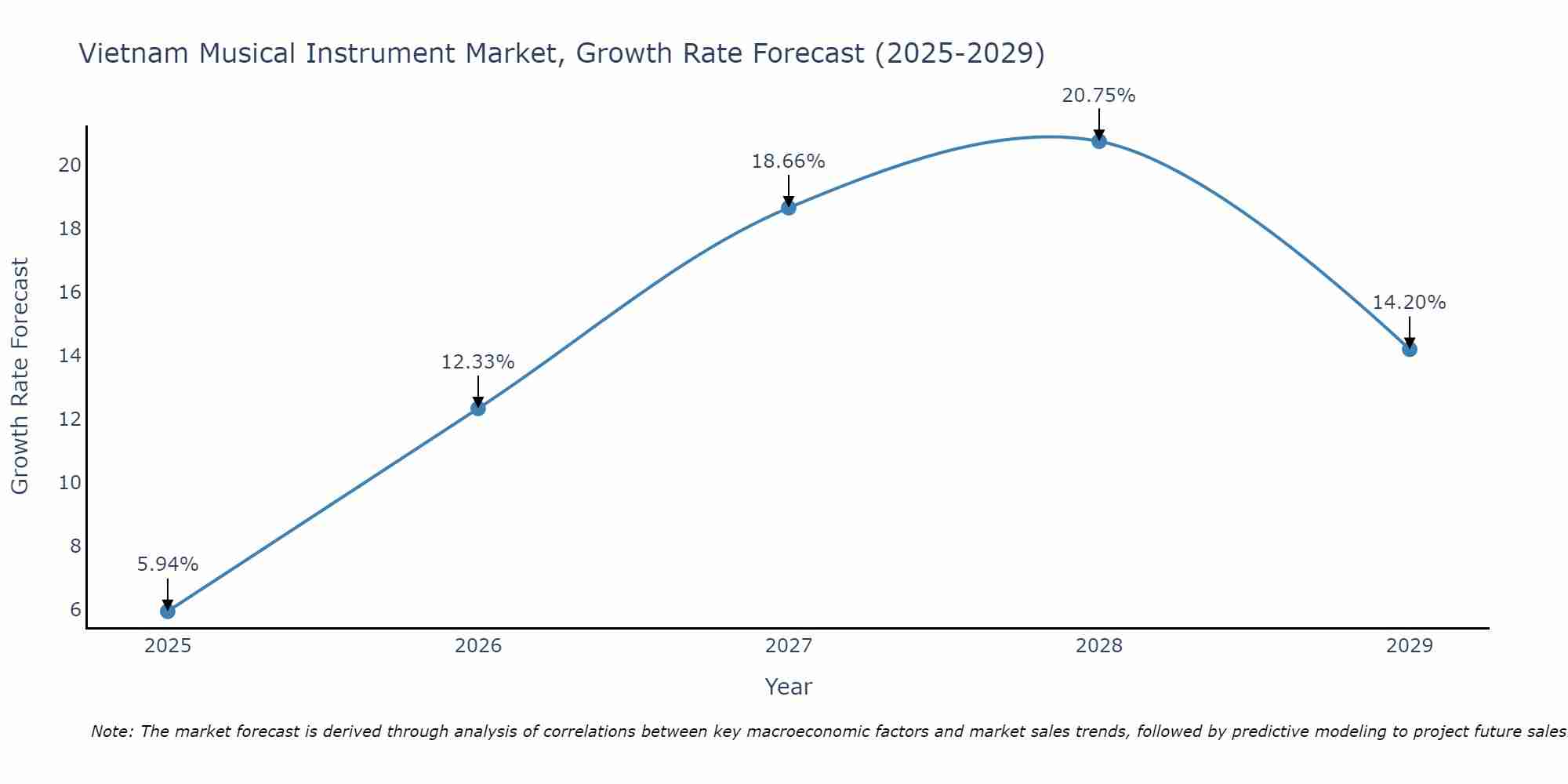
The Vietnam Musical Instrument Market is projected to witness mixed growth rate patterns during 2025 to 2029. The growth rate begins at 5.94% in 2025, climbs to a high of 20.75% in 2028, and moderates to 14.20% by 2029.
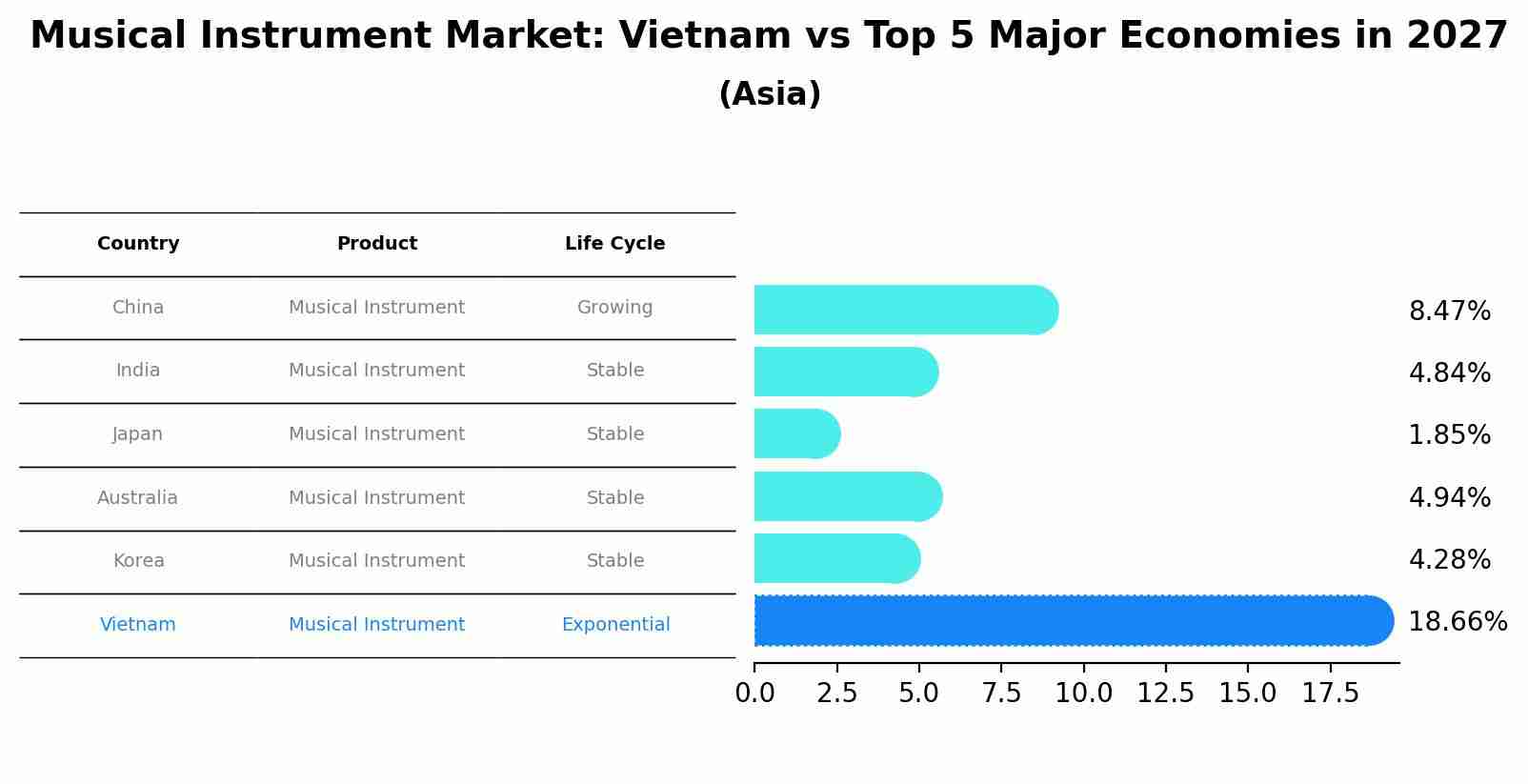
Musical Instrument Market: Vietnam vs Top 5 Major Economies in 2027 (Asia)
By 2027, the Musical Instrument market in Vietnam is anticipated to reach a growth rate of 18.66%, as part of an increasingly competitive Asia region, where China remains at the forefront, supported by India, Japan, Australia and South Korea, driving innovations and market adoption across sectors.
Vietnam Musical Instrument Market Synopsis
The musical instrument market in Vietnam has been steadily growing in recent years. Vietnam has a rich cultural heritage, and music plays a significant role in its traditions. As a result, there is a strong demand for musical instruments, both traditional and modern. Traditional instruments like the ??n b?u and ??n tranh are still widely used, but there is also a growing interest in Western instruments such as guitars and pianos. Additionally, the rise of music education programs and the increasing disposable income of the middle class have contributed to the expansion of this market. Local manufacturers and international brands are competing to meet the diverse needs of Vietnamese musicians, making it a vibrant and competitive market.
Drivers of the Market
In Vietnam, the musical instrument market has been growing steadily, with several factors contributing to its expansion. One significant driver is the increasing interest in music education and cultural preservation. As more schools and institutions offer music programs, there is a rising demand for a wide variety of musical instruments. Additionally, the popularity of music as a form of entertainment and self-expression has driven individuals to purchase musical instruments for personal use. The proliferation of music genres and styles has also led to a diverse demand for instruments, from traditional Vietnamese instruments to modern Western ones, further boosting the market.
Challenges of the Market
The Vietnam musical instrument market faces various challenges in today`s digital age. Traditional musical instruments face competition from digital alternatives, such as synthesizers and digital workstations. This shift in consumer preferences poses a challenge for manufacturers of traditional instruments to adapt and innovate. Additionally, ensuring the quality of musical instruments and the availability of skilled craftsmen to produce them is crucial. Economic factors can also impact consumers` purchasing power and willingness to invest in musical instruments, making the market sensitive to economic fluctuations. Furthermore, promoting music education and cultural preservation is a challenge in a rapidly changing society. Finally, the market must address sustainability concerns by adopting eco-friendly materials and production processes.
COVID-19 Impact on the Market
The COVID-19 pandemic has had a significant impact on various markets in Vietnam, including the musical instrument market. The restrictions on gatherings and closures of entertainment venues during the pandemic led to a decline in demand for musical instruments. Many musicians and music schools faced financial difficulties, affecting their purchasing power. However, as restrictions gradually eased, there was a resurgence of interest in music, driving a recovery in the market. Online music lessons and virtual performances became more popular, boosting the sales of digital instruments and recording equipment. Manufacturers and retailers had to adapt to these changing consumer behaviors, emphasizing online sales and delivery services.
Key Players in the Market
In the Vietnam musical instrument market, prominent companies like Yamaha Music Vietnam Co., Ltd., Kawai Piano Vietnam Co., Ltd., and Sonor Vietnam are leading the industry. They manufacture and distribute a wide range of musical instruments, serving the needs of musicians, schools, and music enthusiasts.
Key Highlights of the Report:
- Vietnam Musical Instrument Market Outlook
- Market Size of Vietnam Musical Instrument Market, 2024
- Forecast of Vietnam Musical Instrument Market, 2031
- Historical Data and Forecast of Vietnam Musical Instrument Revenues & Volume for the Period 2021-2031
- Vietnam Musical Instrument Market Trend Evolution
- Vietnam Musical Instrument Market Drivers and Challenges
- Vietnam Musical Instrument Price Trends
- Vietnam Musical Instrument Porter's Five Forces
- Vietnam Musical Instrument Industry Life Cycle
- Historical Data and Forecast of Vietnam Musical Instrument Market Revenues & Volume By Product for the Period 2021-2031
- Historical Data and Forecast of Vietnam Musical Instrument Market Revenues & Volume By String Instruments for the Period 2021-2031
- Historical Data and Forecast of Vietnam Musical Instrument Market Revenues & Volume By Pianos And Keyboards for the Period 2021-2031
- Historical Data and Forecast of Vietnam Musical Instrument Market Revenues & Volume By Drums And Percussion Instruments for the Period 2021-2031
- Historical Data and Forecast of Vietnam Musical Instrument Market Revenues & Volume By Others for the Period 2021-2031
- Vietnam Musical Instrument Import Export Trade Statistics
- Market Opportunity Assessment By Product
- Vietnam Musical Instrument Top Companies Market Share
- Vietnam Musical Instrument Competitive Benchmarking By Technical and Operational Parameters
- Vietnam Musical Instrument Company Profiles
- Vietnam Musical Instrument Key Strategic Recommendations






































