Vietnam Refrigeration and Heating Equipment Market Summary
The vietnam refrigeration and heating equipment market was estimated at USD 484 Million in 2025 and is projected to reach USD 680 Million by 2032, growing at a CAGR of 7.7% from 2026 to 2032.
Vietnam Refrigeration and Heating Equipment Market Year-wise Growth Rate and Key Drivers
This graph highlights how the Vietnam Refrigeration and Heating Equipment Market has steadily grown over the past five years, supported by major growth factors.
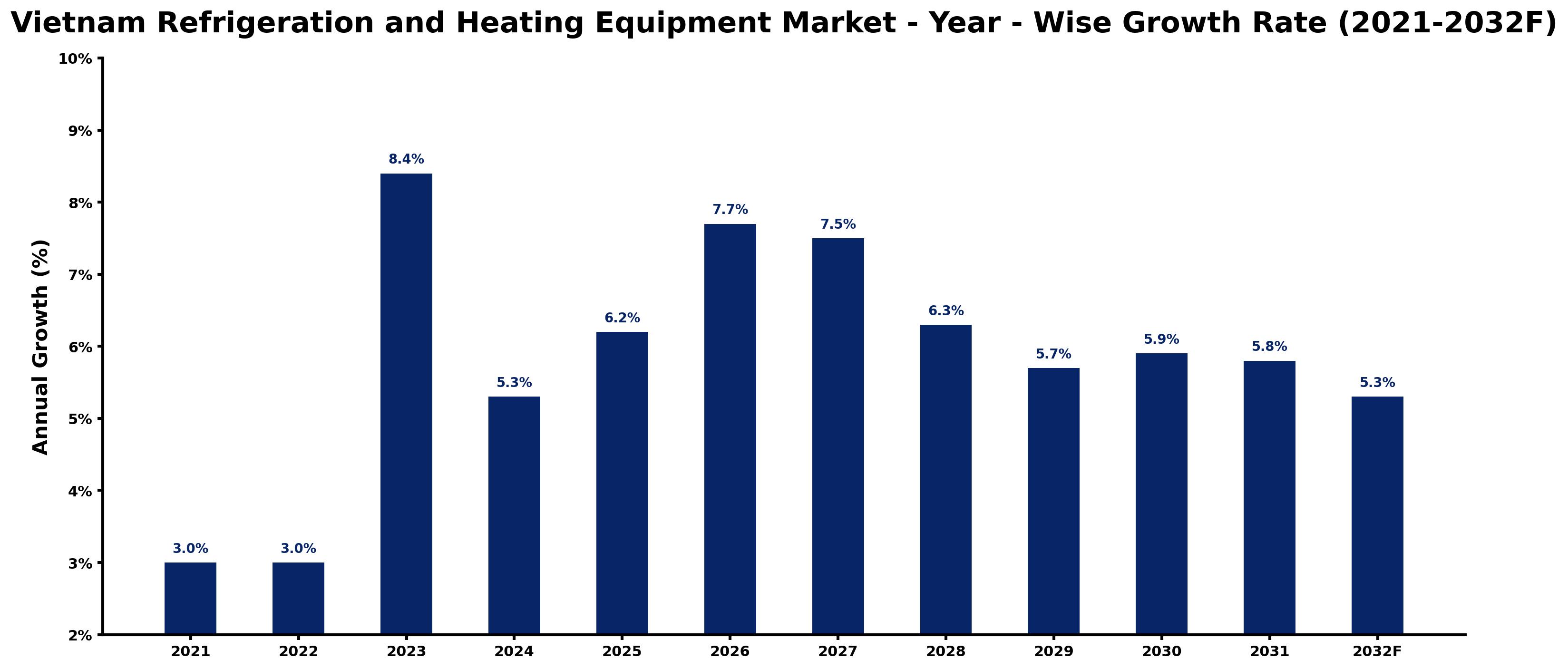
The table below presents the year wise growth rates along with the key drivers influencing the market
| Year | Growth Rate | Major Drivers |
| 2021 | 3.0% | Economy stabilizing post-COVID-19 fosters investments in infrastructure and appliance upgrades. |
| 2022 | 3.0% | Rural electrification projects enhance demand for efficient heating and cooling solutions. |
| 2023 | 8.4% | Urbanization accelerates, creating a need for residential and commercial refrigeration systems. |
| 2024 | 5.3% | Technological innovations in energy efficiency spark interest among environmentally conscious consumers. |
| 2025 | 6.2% | Increased disposable income leads households to upgrade to premium heating equipment. |
| 2026 | 7.7% | Manufacturing sector expansion boosts demand for industrial refrigeration and HVAC systems. |
| 2027 | 7.5% | Focus on sustainable practices catalyzes market for eco-friendly heating technologies. |
| 2028 | 6.3% | Emergence of smart home technologies encourages integration with heating and cooling systems. |
| 2029 | 5.7% | Enhanced logistics networks drive need for advanced cold chain refrigeration solutions. |
| 2030 | 5.9% | Regional climate change effects necessitate investment in resilient heating infrastructures. |
| 2031 | 5.8% | Competitive landscape sees local firms innovating to capture market share effectively. |
| 2032 | 5.3% | Consumer preferences shift towards multifunctional devices, reshaping product market offerings. |
Note - Market size estimations and growth projections presented in this report are based on 6Wresearch's advanced forecasting approach, validated with industry datasets as of June 2026.
Vietnam Refrigeration and Heating Equipment Market Synopsis
The Vietnam Refrigeration and Heating Equipment Market is projected to reach 7.7% and witness significant growth during the forecast period (2026-2032). This dynamic market encompasses a diverse array of products including refrigerators, freezers, air conditioners, heat pumps, water heaters, and broader HVAC (Heating, Ventilation, and Air Conditioning) systems. It effectively serves both residential and commercial sectors, satisfying the essential cooling and heating requirements of households and businesses alike.
Vietnam Refrigeration and Heating Equipment Market Growth Drivers
Several key factors are propelling the growth of the Vietnam refrigeration and heating equipment market. The first primary driver is the robust growth of Vietnam's economy, which in turn has led to increased disposable income among consumers. This economic uplift has significantly boosted demand for modern refrigeration and heating systems, particularly in residential areas. Additionally, urbanization continues to expand in Vietnam, fostering a greater need for commercial HVAC systems and refrigeration units across various sectors such as office buildings, hotels, restaurants, and retail establishments.
Technological advancements also play a crucial role in driving the market. The introduction of energy-efficient and eco-friendly systems has resonated with consumers seeking sustainable solutions that reduce their carbon footprint. Furthermore, with climate change contributing to rising temperatures and more frequent extreme weather conditions, the demand for efficient cooling and heating solutions has surged. This growing awareness underscores the urgency for systems that can provide reliable temperature control in varying climates.
Vietnam Refrigeration and Heating Equipment Market Challenges and Restraints
Despite its growth potential, the Vietnam refrigeration and heating equipment market faces several challenges. One significant issue is related to high energy consumption, particularly with older systems that may lack energy efficiency. The overall environmental impact of such systems can deter consumers who are increasingly conscious of sustainability.
Moreover, the market is characterized by intense competition, as both domestic and international players vie for market share. This competitive landscape can pose significant hurdles, particularly for new entrants aiming to establish themselves. Additionally, the initial investment needed for high-quality refrigeration and heating equipment can act as a barrier for certain consumer segments, especially those with lower income levels.
Vietnam Refrigeration and Heating Equipment Market Regional Analysis
The Vietnam refrigeration and heating equipment market is influenced by its geographic diversity, which affects consumer preferences and buying behavior. Urban areas, characterized by higher disposable income levels and a greater concentration of commercial establishments, typically exhibit stronger demand for advanced HVAC systems. In contrast, rural areas may prioritize cost-effective solutions, impacting the types of products that gain traction in those markets.
The northern regions, particularly Hanoi, experience distinct climatic conditions that necessitate specific heating solutions during colder months. In comparison, the southern regions, such as Ho Chi Minh City, see a predominance of cooling solutions driven by consistently high temperatures. Understanding these regional differences is crucial for stakeholders seeking to tailor their offerings effectively.
Vietnam Refrigeration and Heating Equipment Market Government Investment and Initiatives
Government policies play a pivotal role in shaping the Vietnam refrigeration and heating equipment market. The Vietnamese government has been proactive in promoting energy efficiency and the adoption of environmentally friendly technologies. Various initiatives aimed at improving energy standards for HVAC systems and incentivizing the use of green technologies are crucial to market development.
Public investment in infrastructure projects, particularly in urban areas, further contributes to the demand for advanced refrigeration and heating equipment. Development plans focus on modernizing urban facilities, which includes upgrading HVAC systems across public and commercial buildings. This strategic emphasis on infrastructure is likely to stimulate further growth in the market during the forecast period.
Vietnam Refrigeration and Heating Equipment Market Latest Developments (May 2025 - June 2026)
Recent developments within the Vietnam refrigeration and heating equipment market signal ongoing evolution and adaptation. The aftermath of the Covid-19 pandemic has led to shifts in consumer behavior and priorities, particularly regarding indoor air quality. As a result, there is an increased demand for advanced HVAC systems that offer improved air purification capabilities.
Moreover, manufacturers are increasingly focusing on enhancing the energy efficiency of their products in response to consumer demand for sustainable solutions. This trend has led to innovations in product design, featuring smart technology that allows for better energy management. The market is also seeing heightened competition among providers aiming to capture consumer interest through eco-friendly product offerings.
Vietnam Refrigeration and Heating Equipment Market - Key Attractiveness of the Report
- 10 Years of Market Numbers
- Historical Data Starting from 2022 to 2025
- Base Year: 2025
- Forecast Data until 2032
- Key Performance Indicators Impacting the Market
- Major Upcoming Developments and Projects
Key Highlights of the Report:
- Vietnam Refrigeration and Heating Equipment Market Outlook
- Market Size of Vietnam Refrigeration and Heating Equipment Market, 2025
- Forecast of Vietnam Refrigeration and Heating Equipment Market, 2032
- Historical Data and Forecast of Vietnam Refrigeration and Heating Equipment Revenues & Volume for the Period 2022-2032F
- Vietnam Refrigeration and Heating Equipment Market Trend Evolution
- Vietnam Refrigeration and Heating Equipment Market Drivers and Challenges
- Vietnam Refrigeration and Heating Equipment Price Trends
- Vietnam Refrigeration and Heating Equipment Porter's Five Forces
- Vietnam Refrigeration and Heating Equipment Industry Life Cycle
- Historical Data and Forecast of Vietnam Refrigeration and Heating Equipment Market Revenues & Volume By Heating equipments for the Period 2022-2032F
- Historical Data and Forecast of Vietnam Refrigeration and Heating Equipment Market Revenues & Volume By Heating Pumps for the Period 2022-2032F
- Historical Data and Forecast of Vietnam Refrigeration and Heating Equipment Market Revenues & Volume By Furnaces for the Period 2022-2032F
- Historical Data and Forecast of Vietnam Refrigeration and Heating Equipment Market Revenues & Volume By Boilers for the Period 2022-2032F
- Historical Data and Forecast of Vietnam Refrigeration and Heating Equipment Market Revenues & Volume By Space heaters for the Period 2022-2032F
- Historical Data and Forecast of Vietnam Refrigeration and Heating Equipment Market Revenues & Volume By Unitary heaters for the Period 2022-2032F
- Historical Data and Forecast of Vietnam Refrigeration and Heating Equipment Market Revenues & Volume By Others for the Period 2022-2032F
- Historical Data and Forecast of Vietnam Refrigeration and Heating Equipment Market Revenues & Volume By Cooling Equipments for the Period 2022-2032F
- Historical Data and Forecast of Vietnam Refrigeration and Heating Equipment Market Revenues & Volume By Cooling towers for the Period 2022-2032F
- Historical Data and Forecast of Vietnam Refrigeration and Heating Equipment Market Revenues & Volume By Chillers for the Period 2022-2032F
- Historical Data and Forecast of Vietnam Refrigeration and Heating Equipment Market Revenues & Volume By Coolers for the Period 2022-2032F
- Historical Data and Forecast of Vietnam Refrigeration and Heating Equipment Market Revenues & Volume By Air conditioners for the Period 2022-2032F
- Historical Data and Forecast of Vietnam Refrigeration and Heating Equipment Market Revenues & Volume By Others for the Period 2022-2032F
- Historical Data and Forecast of Vietnam Refrigeration and Heating Equipment Market Revenues & Volume By General Components for the Period 2022-2032F
- Historical Data and Forecast of Vietnam Refrigeration and Heating Equipment Market Revenues & Volume By Condensers for the Period 2022-2032F
- Historical Data and Forecast of Vietnam Refrigeration and Heating Equipment Market Revenues & Volume By Compressors for the Period 2022-2032F
- Historical Data and Forecast of Vietnam Refrigeration and Heating Equipment Market Revenues & Volume By Radiators for the Period 2022-2032F
- Historical Data and Forecast of Vietnam Refrigeration and Heating Equipment Market Revenues & Volume By Sensors for the Period 2022-2032F
- Historical Data and Forecast of Vietnam Refrigeration and Heating Equipment Market Revenues & Volume By Transducers for the Period 2022-2032F
- Historical Data and Forecast of Vietnam Refrigeration and Heating Equipment Market Revenues & Volume By Others for the Period 2022-2032F
- Historical Data and Forecast of Vietnam Refrigeration and Heating Equipment Market Revenues & Volume By End-User Industries for the Period 2022-2032F
- Historical Data and Forecast of Vietnam Refrigeration and Heating Equipment Market Revenues & Volume By Residential for the Period 2022-2032F
- Historical Data and Forecast of Vietnam Refrigeration and Heating Equipment Market Revenues & Volume By Commercial for the Period 2022-2032F
- Historical Data and Forecast of Vietnam Refrigeration and Heating Equipment Market Revenues & Volume By Healthcare Industry for the Period 2022-2032F
- Historical Data and Forecast of Vietnam Refrigeration and Heating Equipment Market Revenues & Volume By Educational and government institutions for the Period 2022-2032F
- Historical Data and Forecast of Vietnam Refrigeration and Heating Equipment Market Revenues & Volume By Others for the Period 2022-2032F
- Vietnam Refrigeration and Heating Equipment Import Export Trade Statistics
- Market Opportunity Assessment By Heating equipments
- Market Opportunity Assessment By Cooling Equipments
- Market Opportunity Assessment By General Components
- Market Opportunity Assessment By End-User Industries
- Vietnam Refrigeration and Heating Equipment Top Companies Market Share
- Vietnam Refrigeration and Heating Equipment Competitive Benchmarking By Technical and Operational Parameters
- Vietnam Refrigeration and Heating Equipment Company Profiles
- Vietnam Refrigeration and Heating Equipment Key Strategic Recommendations






































