Vietnam Soybean Oil Market Size Growth Rate
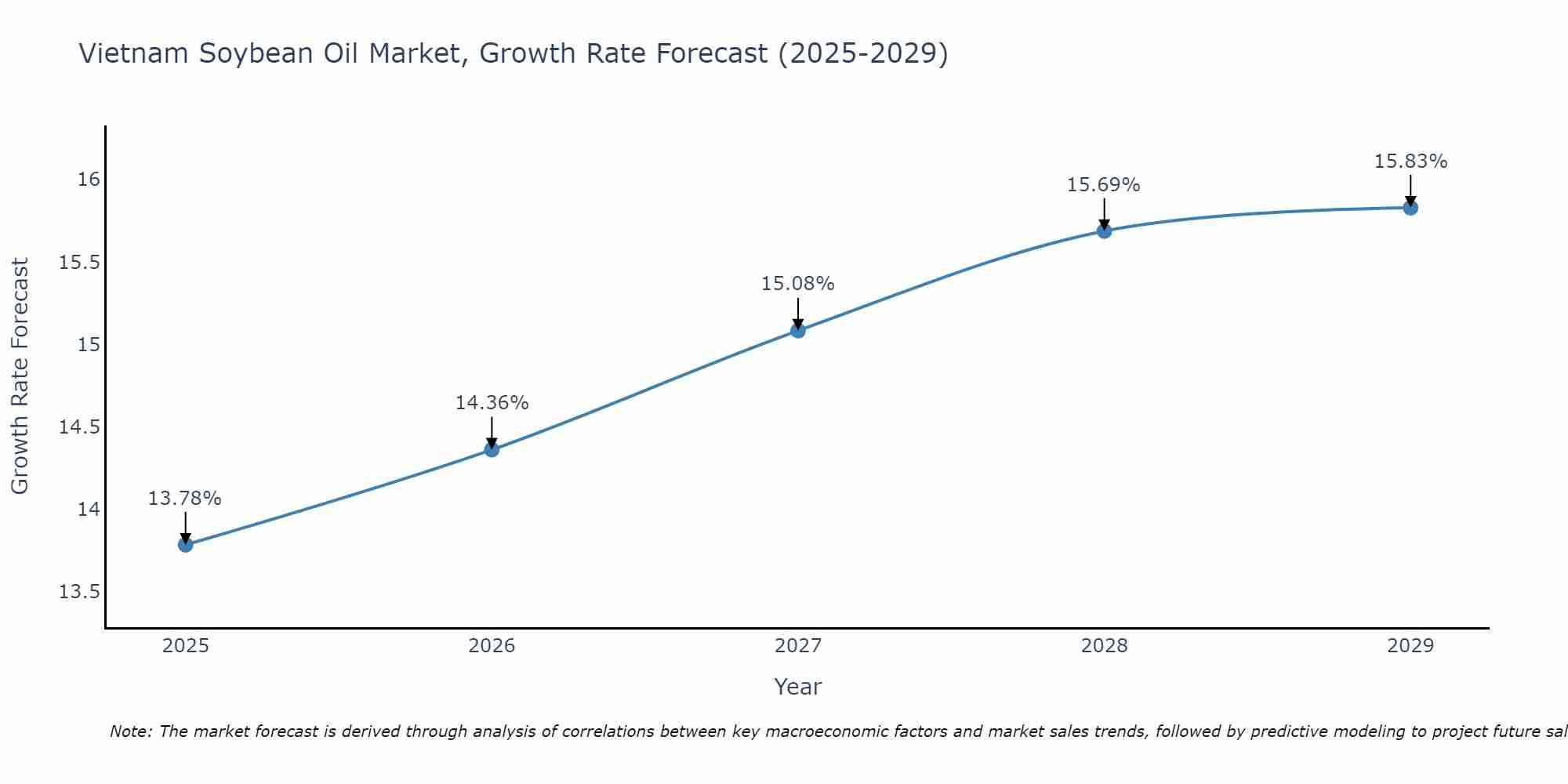
The Vietnam Soybean Oil Market is likely to experience consistent growth rate gains over the period 2025 to 2029. Commencing at 13.78% in 2025, growth builds up to 15.83% by 2029.
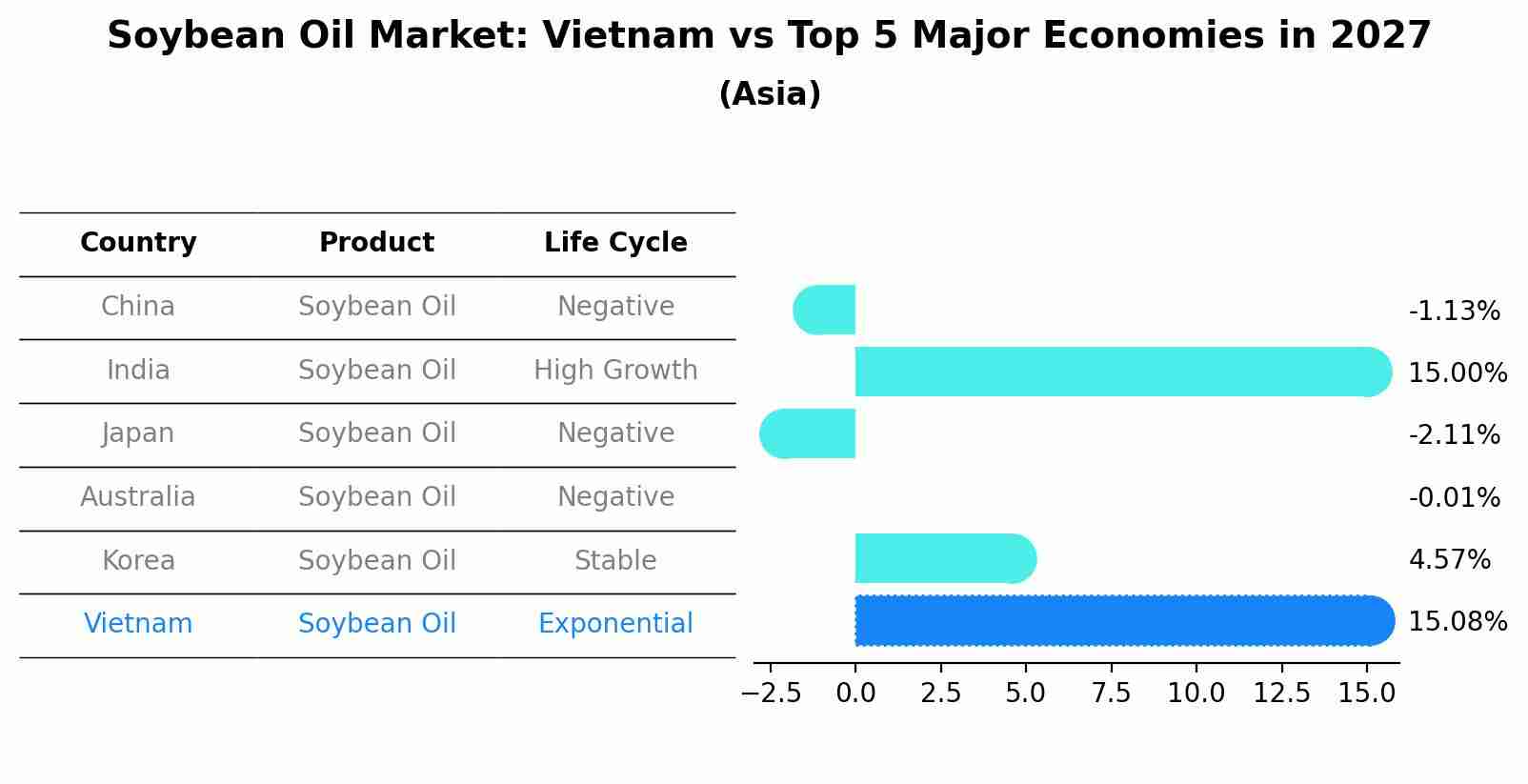
Soybean Oil Market: Vietnam vs Top 5 Major Economies in 2027 (Asia)
In the Asia region, the Soybean Oil market in Vietnam is projected to expand at a exponential growth rate of 15.08% by 2027. The largest economy is China, followed by India, Japan, Australia and South Korea.
Vietnam Soybean Oil Market Synopsis
Soybean oil is a widely used cooking oil in Vietnam, making the Vietnam soybean oil market a significant part of the edible oil industry. The market encompasses various cooking oil products, including refined and unrefined soybean oil. Consumer preferences, health consciousness, and the affordability of soybean oil influence market dynamics. The sector also faces competition from other edible oils, such as palm and vegetable oil, as consumers seek healthier and sustainable cooking options.
Drivers of the Market
The soybean oil market in Vietnam is primarily driven by the increasing consumption of vegetable oils, with soybean oil being a preferred choice. Changing dietary patterns and the shift towards healthier cooking oils have boosted its demand. Additionally, the government`s efforts to promote domestic oilseed production have played a role in supporting this market.
Challenges of the Market
The Vietnam soybean oil market faces challenges related to competition and consumer preferences. Soybean oil faces competition from other cooking oils, such as palm oil, vegetable oil, and sunflower oil, which may be perceived as healthier or more affordable options. Convincing consumers of the nutritional benefits and versatility of soybean oil can be a hurdle. Additionally, addressing concerns about genetically modified soybeans and their presence in soybean oil products is essential for consumer trust. The market may also face challenges related to fluctuations in global soybean markets and trade dynamics, which can impact soybean oil prices and supply. Ensuring the quality and safety of soybean oil products is crucial for consumer satisfaction. Lastly, regulatory compliance and labeling standards for soybean oil products can add complexity to the market.
COVID-19 Impact on the Market
The soybean oil market in Vietnam saw shifts in consumer preferences, with increased interest in cooking at home. This led to increased demand for soybean oil. To meet this demand, manufacturers adapted their production and packaging to ensure a steady supply of cooking oil to households.
Key Players in the Market
Leading the Vietnam soybean oil market is Bunge Vietnam Limited, a subsidiary of the global agribusiness giant Bunge Limited. They are known for their soybean processing facilities and the production of soybean oil used in various food applications.
Key Highlights of the Report:
- Vietnam Soybean Oil Market Outlook
- Market Size of Vietnam Soybean Oil Market, 2024
- Forecast of Vietnam Soybean Oil Market, 2031
- Historical Data and Forecast of Vietnam Soybean Oil Revenues & Volume for the Period 2021-2031
- Vietnam Soybean Oil Market Trend Evolution
- Vietnam Soybean Oil Market Drivers and Challenges
- Vietnam Soybean Oil Price Trends
- Vietnam Soybean Oil Porter's Five Forces
- Vietnam Soybean Oil Industry Life Cycle
- Historical Data and Forecast of Vietnam Soybean Oil Market Revenues & Volume By End-Use for the Period 2021-2031
- Historical Data and Forecast of Vietnam Soybean Oil Market Revenues & Volume By Food for the Period 2021-2031
- Historical Data and Forecast of Vietnam Soybean Oil Market Revenues & Volume By Feed for the Period 2021-2031
- Historical Data and Forecast of Vietnam Soybean Oil Market Revenues & Volume By Industrial for the Period 2021-2031
- Vietnam Soybean Oil Import Export Trade Statistics
- Market Opportunity Assessment By End-Use
- Vietnam Soybean Oil Top Companies Market Share
- Vietnam Soybean Oil Competitive Benchmarking By Technical and Operational Parameters
- Vietnam Soybean Oil Company Profiles
- Vietnam Soybean Oil Key Strategic Recommendations






































