Vietnam Volleyball Equipment Market Size, Share & Growth Rate
The Vietnam Volleyball Equipment Market was estimated at USD 788 Million in 2025 and is projected to reach USD 1118 Million by 2032, growing at a CAGR of 5.1% from 2026 to 2032. This upward trajectory is primarily driven by the increasing popularity of volleyball as both a recreational and competitive sport across the nation. The active promotion of volleyball in schools and communities continues to expand participation, which, in turn, amplifies the demand for essential equipment such as nets, balls, and protective gear.
Vietnam Volleyball Equipment Market Year-wise Growth Rate and Key Drivers
This graph highlights how the Vietnam Volleyball Equipment Market has steadily grown over the years, supported by major growth factors.
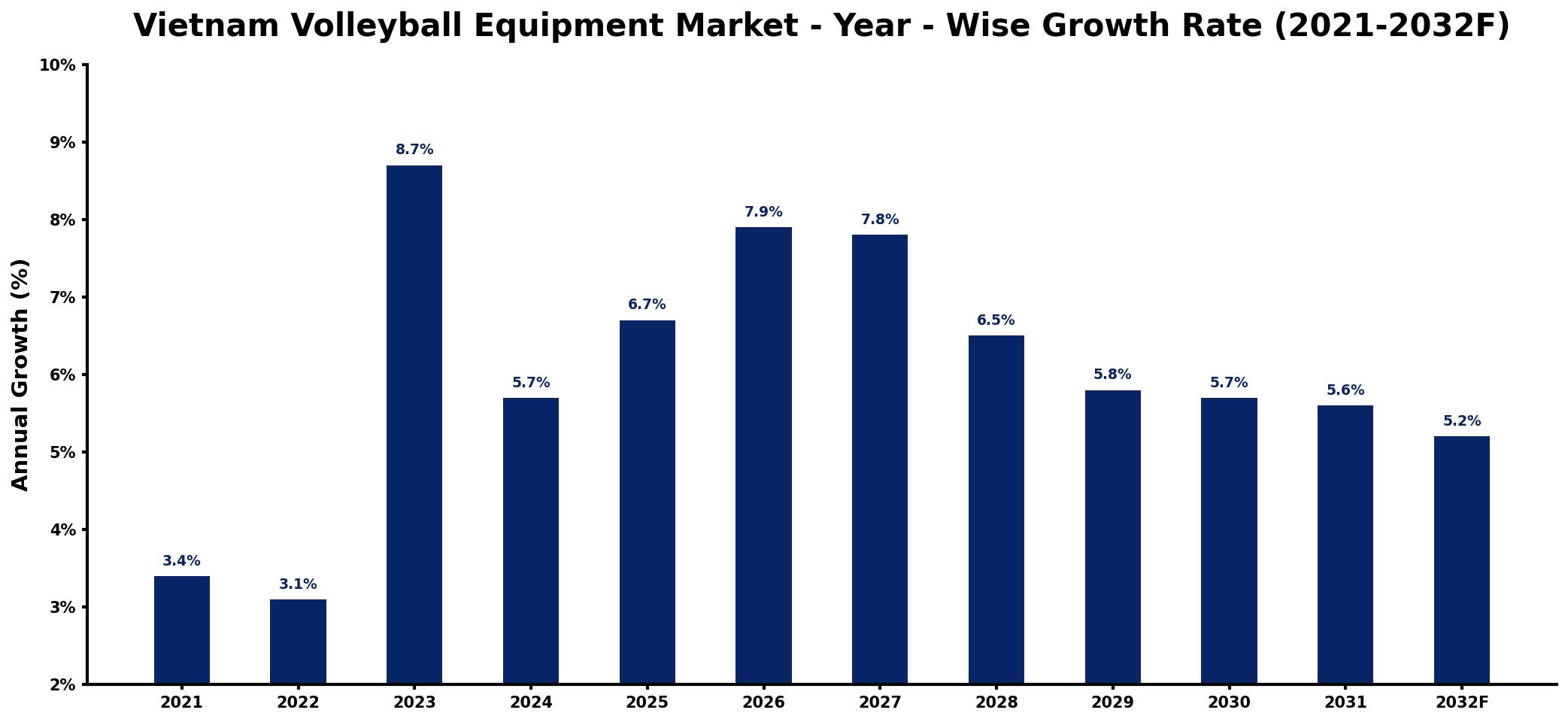
The table below presents the year‑wise growth rates along with the key drivers influencing the market
| Year | Growth Rate | Major Drivers |
| 2021 | 3.4% | Rising youth sports participation rates |
| 2022 | 3.1% | Increased investment in sports infrastructure |
| 2023 | 8.7% | Growing popularity of team sports |
| 2024 | 5.7% | Expansion of recreational leagues nationwide |
| 2025 | 6.7% | Surge in fitness awareness campaigns |
| 2026 | 7.9% | Strengthened community sports programs |
| 2027 | 7.8% | Boost in sponsorships for athletes |
| 2028 | 6.5% | Enhanced media coverage of events |
| 2029 | 5.8% | Increase in international competitions hosted |
| 2030 | 5.7% | Development of local training academies |
| 2031 | 5.6% | Wider availability of training resources |
| 2032 | 5.2% | Strengthening of school sports initiatives |
Note: Market size estimations and growth projections presented in this report are based on 6Wresearch's proprietary forecasting methodology, utilizing the latest available industry data, government publications, and primary research inputs.
Vietnam Volleyball Equipment Market Synopsis
In Vietnam, volleyball has transcended mere participation; it has cultivated a vibrant culture that resonates with enthusiasts from all walks of life. The sport enjoys robust support from educational institutions and local communities, creating a bustling market for volleyball equipment that caters to diverse needs.
The surge in community-driven activities and organized competitions has solidified volleyball's status as a favorite pastime. As both recreational players and competitive teams seek quality equipment, manufacturers are responding with a variety of products tailored to meet the specific demands of the Vietnamese market.
Vietnam Volleyball Equipment Market Key Takeaways
- Widespread participation in volleyball contributes to the steady growth of the equipment market.
- Investment in quality and affordable products is essential for meeting consumer demand.
- The influence of digital entertainment poses a challenge, requiring innovative marketing strategies.
- Post-pandemic recovery has revitalized demand for volleyball equipment as sports venues reopen.
- Collaboration between manufacturers and local communities enhances the sport's visibility and popularity.
Evaluation of Restraints in Vietnam Volleyball Equipment Market
The Vietnam volleyball equipment market faces several constraints that hinder its potential growth. One major issue is ensuring broad sport participation; while volleyball is popular, there are still regions where interest is lacking. The cost of equipment also presents a barrier, as many consumers seek affordable options amidst growing competition from various forms of digital entertainment that vie for leisure time. Additionally, the necessity for durable, high-quality products must be balanced with affordability to cater to a wider audience. This necessitates ongoing efforts from manufacturers to innovate and promote the sport effectively.
Vietnam Volleyball Equipment Market Trends
Recent trends in the Vietnam volleyball equipment market indicate a growing preference for specialized and technologically advanced gear, including performance-oriented volleyballs and durable nets. The integration of eco-friendly materials in product development is becoming increasingly significant as consumers are more aware of sustainability issues. Furthermore, social media and online platforms are playing pivotal roles in promoting volleyball-related events and products, enhancing community engagement and encouraging participation among younger demographics.
Vietnam Volleyball Equipment Market Opportunities
The Vietnam volleyball equipment market presents ample opportunities for growth, especially in rural areas where volleyball can be further promoted as a community sport. Investment in grassroots programs and school partnerships can significantly enhance participation. Additionally, focusing on digital marketing strategies to engage younger audiences can open new avenues for growth, alongside developing low-cost product lines that cater to budget-conscious consumers.
Government Initiatives in the Vietnam Volleyball Equipment Market
The Vietnamese government has shown a commitment to promoting sports as part of its national health and well-being strategy. Initiatives aimed at enhancing sports infrastructure, including volleyball courts and facilities, reflect this focus. Public spending on sports development, as well as programs that encourage youth involvement in athletics, are likely to foster an environment that supports the growth of the volleyball equipment market.
Future Insights of the Vietnam Volleyball Equipment Market
Looking ahead to 2026-2032, the Vietnam volleyball equipment market is poised for significant growth driven by continued interest in volleyball. As urbanization progresses and more people engage in recreational sports, there will likely be an increased demand for quality volleyball products. Innovations in product design and the introduction of smart equipment could reshape consumer preferences, further augmenting market expansion as brands align their offerings with the evolving needs of players.
Vietnam Volleyball Equipment Market Latest Developments (2025 - 2026)
In recent months, the Vietnam volleyball equipment market has seen a marked increase in product launches, especially those focused on sustainability and performance. Manufacturers are actively working on enhancing their supply chain capabilities to improve product availability and quality. Moreover, local communities have begun organizing more volleyball events, effectively stimulating interest and engagement with the sport. These developments indicate a positive direction for the market as it continues to rebound post-pandemic.
Vietnam Volleyball Equipment Market - Key Attractiveness of the Report
- 10 Years of Market Numbers
- Historical Data Starting from 2022 to 2025
- Base Year: 2025
- Forecast Data until 2032
- Key Performance Indicators Impacting the Market
- Major Upcoming Developments and Projects
Key Highlights of the Report:
- Vietnam Volleyball Equipment Market Outlook
- Market Size of Vietnam Volleyball Equipment Market, 2025
- Forecast of Vietnam Volleyball Equipment Market, 2032
- Historical Data and Forecast of Vietnam Volleyball Equipment Revenues & Volume for the Period 2022-2032F
- Vietnam Volleyball Equipment Market Trend Evolution
- Vietnam Volleyball Equipment Market Drivers and Challenges
- Vietnam Volleyball Equipment Price Trends
- Vietnam Volleyball Equipment Porter's Five Forces
- Vietnam Volleyball Equipment Industry Life Cycle
- Historical Data and Forecast of Vietnam Volleyball Equipment Market Revenues & Volume By Product for the Period 2022-2032F
- Historical Data and Forecast of Vietnam Volleyball Equipment Market Revenues & Volume By Balls for the Period 2022-2032F
- Historical Data and Forecast of Vietnam Volleyball Equipment Market Revenues & Volume By Shoes for the Period 2022-2032F
- Historical Data and Forecast of Vietnam Volleyball Equipment Market Revenues & Volume By Protective Gear for the Period 2022-2032F
- Historical Data and Forecast of Vietnam Volleyball Equipment Market Revenues & Volume By Others for the Period 2022-2032F
- Historical Data and Forecast of Vietnam Volleyball Equipment Market Revenues & Volume By Distribution channel for the Period 2022-2032F
- Historical Data and Forecast of Vietnam Volleyball Equipment Market Revenues & Volume By Offline for the Period 2022-2032F
- Historical Data and Forecast of Vietnam Volleyball Equipment Market Revenues & Volume By Online for the Period 2022-2032F
- Historical Data and Forecast of Vietnam Volleyball Equipment Market Revenues & Volume By Sports Discipline for the Period 2022-2032F
- Historical Data and Forecast of Vietnam Volleyball Equipment Market Revenues & Volume By Indoor Volleyball for the Period 2022-2032F
- Historical Data and Forecast of Vietnam Volleyball Equipment Market Revenues & Volume By Beach Volleyball for the Period 2022-2032F
- Vietnam Volleyball Equipment Import Export Trade Statistics
- Market Opportunity Assessment By Product
- Market Opportunity Assessment By Distribution channel
- Market Opportunity Assessment By Sports Discipline
- Vietnam Volleyball Equipment Top Companies Market Share
- Vietnam Volleyball Equipment Competitive Benchmarking By Technical and Operational Parameters
- Vietnam Volleyball Equipment Company Profiles
- Vietnam Volleyball Equipment Key Strategic Recommendations






































