Zambia Electrical Equipment Market Growth Rate Analysis (2025 - 2031)
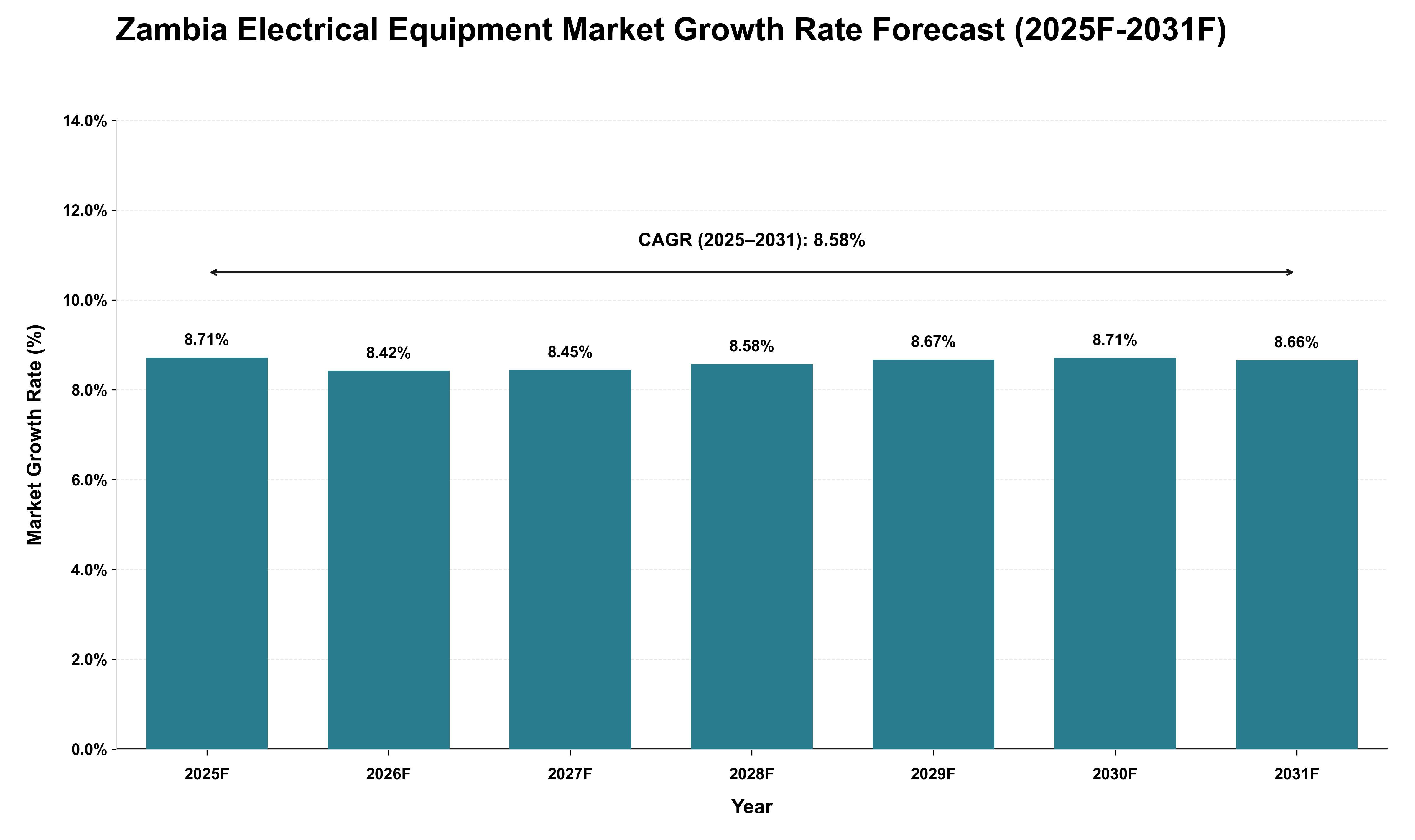
The Zambian electrical equipment market is projected to experience a compound annual growth rate of 8.58% from 2025 to 2031, reflecting robust end-use demand shifts driven by urbanization and infrastructural development. As the economy expands, increased investments in renewable energy and electrification initiatives will likely elevate the demand for electrical equipment, particularly in residential and commercial sectors. The annual growth rates indicate a consistent upward trajectory, with peaks in 2025 and 2030 at 8.71%, suggesting heightened activity in these years likely due to anticipated government projects or private sector investments. Additionally, Zambia's reliance on imports for electrical components may influence pricing dynamics and availability, further impacting market growth as global supply chains evolve. Overall, the interplay of domestic demand drivers and external supply factors will shape the landscape of Zambia's electrical equipment market during this forecast period.
Key Highlights of the Report:
- Zambia Electrical Equipment Market Outlook
- Market Size of Zambia Electrical Equipment Market, 2024
- Forecast of Zambia Electrical Equipment Market, 2031
- Historical Data and Forecast of Zambia Electrical Equipment Revenues & Volume for the Period 2021-2031
- Zambia Electrical Equipment Market Trend Evolution
- Zambia Electrical Equipment Market Drivers and Challenges
- Zambia Electrical Equipment Price Trends
- Zambia Electrical Equipment Porter`s Five Forces
- Zambia Electrical Equipment Industry Life Cycle
- Historical Data and Forecast of Zambia Electrical Equipment Market Revenues & Volume By Types for the Period 2021-2031
- Historical Data and Forecast of Zambia Electrical Equipment Market Revenues & Volume By Electronic and electrical wires and cables for the Period 2021-2031
- Historical Data and Forecast of Zambia Electrical Equipment Market Revenues & Volume By Batteries and accumulators for the Period 2021-2031
- Historical Data and Forecast of Zambia Electrical Equipment Market Revenues & Volume By Wiring devices for the Period 2021-2031
- Historical Data and Forecast of Zambia Electrical Equipment Market Revenues & Volume By Electric lighting equipment for the Period 2021-2031
- Historical Data and Forecast of Zambia Electrical Equipment Market Revenues & Volume By Others for the Period 2021-2031
- Historical Data and Forecast of Zambia Electrical Equipment Market Revenues & Volume By Applications for the Period 2021-2031
- Historical Data and Forecast of Zambia Electrical Equipment Market Revenues & Volume By Residential end-users for the Period 2021-2031
- Historical Data and Forecast of Zambia Electrical Equipment Market Revenues & Volume By Non-residential end-users for the Period 2021-2031
- Zambia Electrical Equipment Import Export Trade Statistics
- Market Opportunity Assessment By Types
- Market Opportunity Assessment By Applications
- Zambia Electrical Equipment Top Companies Market Share
- Zambia Electrical Equipment Competitive Benchmarking By Technical and Operational Parameters
- Zambia Electrical Equipment Company Profiles
- Zambia Electrical Equipment Key Strategic Recommendations






































