Zambia Organic Shampoo Market: Top 5 Importing Countries and Market Competition (HHI) Analysis
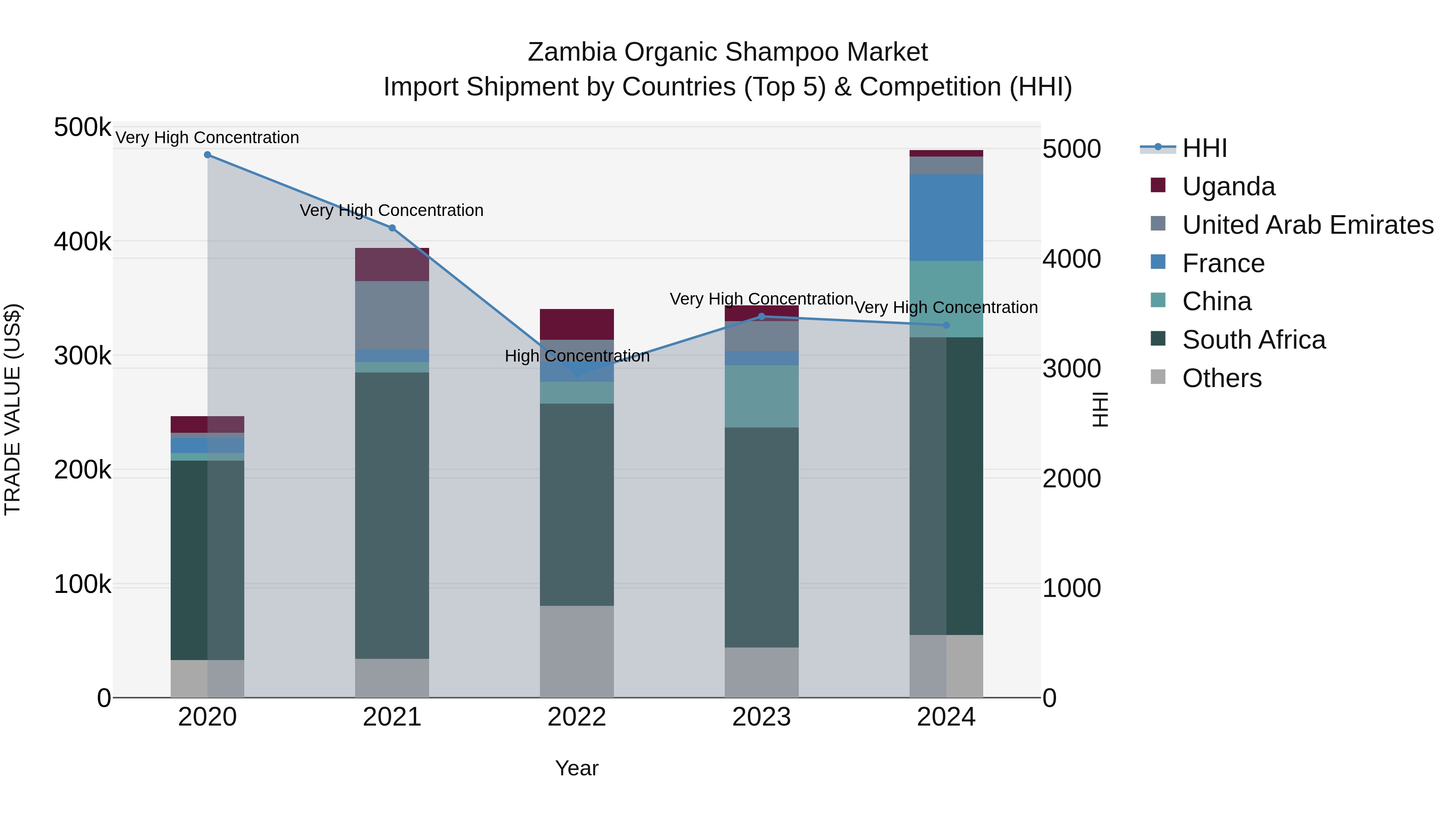
Zambia`s organic shampoo import market continues to thrive, with key shipments coming from top exporters such as South Africa, France, China, India, and the United Arab Emirates. The high concentration levels, as indicated by the Herfindahl-Hirschman Index (HHI), suggest a competitive landscape dominated by these major players. The impressive Compound Annual Growth Rate (CAGR) of 18.12% from 2020 to 2024 demonstrates strong demand for organic shampoo in Zambia. Furthermore, the remarkable growth rate of 39.51% from 2023 to 2024 indicates a rapid acceleration in market expansion, making it an attractive sector for further exploration and investment.
Zambia Organic Shampoo Market Overview
The Zambia Organic Shampoo Market is experiencing steady growth due to increasing consumer awareness about the benefits of organic and natural hair care products. With a rising focus on sustainability and eco-consciousness, more Zambian consumers are seeking out organic shampoos free from harsh chemicals like sulfates and parabens. Local and international brands are capitalizing on this trend by introducing a variety of organic shampoo products enriched with natural ingredients such as aloe vera, coconut oil, and shea butter. Factors such as the growing middle-class population, urbanization, and the desire for healthier lifestyles are driving the demand for organic shampoos in Zambia. The market is competitive, with players emphasizing product quality, eco-friendly packaging, and ethical sourcing practices to attract environmentally conscious consumers.
Zambia Organic Shampoo Market Trends and Opportunities
The Zambia organic shampoo market is experiencing a growing demand for natural and chemical-free hair care products due to increasing consumer awareness about the benefits of organic ingredients. Key trends in the market include the rise of eco-conscious consumers seeking sustainable and environmentally friendly options, as well as a preference for products with plant-based ingredients that promote hair health. Opportunities lie in expanding product offerings to cater to diverse hair types and concerns, such as dry scalp or damaged hair, as well as leveraging online platforms for marketing and distribution to reach a wider audience. Collaborations with local farmers and suppliers to source organic ingredients sustainably can also differentiate brands in the market and appeal to environmentally conscious consumers.
Zambia Organic Shampoo Market Challenges
In the Zambia organic shampoo market, a key challenge is the limited consumer awareness and education about the benefits of organic products compared to conventional shampoos. Many consumers in Zambia are not familiar with the concept of organic hair care products and may perceive them as expensive or less effective. Additionally, the lack of availability of a wide range of organic shampoo options in local stores and the relatively higher prices of organic shampoos compared to regular shampoos pose challenges for market penetration. Furthermore, ensuring consistent quality and sourcing of organic ingredients may also be a hurdle for organic shampoo manufacturers in Zambia. Overcoming these challenges will require targeted marketing efforts, consumer education initiatives, strategic pricing strategies, and partnerships with retailers to enhance product accessibility and awareness.
Zambia Organic Shampoo Market Drivers
The Zambia Organic Shampoo Market is primarily driven by a growing awareness and preference for natural and organic products among consumers. Increasing concerns about the harmful effects of chemicals found in traditional shampoos on both personal health and the environment have led to a shift towards organic alternatives. The rising trend of sustainability and ethical consumerism is also fueling the demand for organic shampoos in Zambia. Additionally, the availability of a wide range of organic shampoo products in the market, coupled with the promotion of organic beauty and personal care products through various marketing channels, is contributing to the market growth. Furthermore, the influence of social media and the endorsement of organic shampoos by influencers and celebrities are also driving consumer interest and adoption of organic hair care products in Zambia.
Zambia Organic Shampoo Market Government Policies
Government policies related to the Zambia Organic Shampoo Market focus on promoting organic and environmentally friendly products to support sustainable development and reduce the impact of harmful chemicals on consumers and the environment. The government has implemented regulations and standards to ensure that organic shampoos meet quality and safety requirements, as well as labeling guidelines to inform consumers accurately. Additionally, there are initiatives to support local organic farmers and producers, providing them with resources and incentives to grow and manufacture organic ingredients for the shampoo industry. Overall, the government aims to encourage the growth of the organic shampoo market in Zambia while safeguarding consumer health and environmental protection.
Zambia Organic Shampoo Market Future Outlook
The future outlook for the Zambia Organic Shampoo Market appears promising, driven by an increasing consumer preference for natural and chemical-free personal care products. Rising awareness about the benefits of organic ingredients, such as fewer harmful effects on the environment and personal health, is expected to fuel demand in the coming years. Moreover, the growing trend of sustainability and ethical consumerism is likely to further boost the market for organic shampoo in Zambia. As more consumers seek transparency in product ingredients and production processes, manufacturers are anticipated to innovate and expand their organic shampoo offerings to cater to this evolving demand. Overall, the Zambia Organic Shampoo Market is poised for steady growth and opportunities for market players to capitalize on the shifting consumer preferences towards organic and eco-friendly products.
Key Highlights of the Report:
- Zambia Organic Shampoo Market Outlook
- Market Size of Zambia Organic Shampoo Market, 2024
- Forecast of Zambia Organic Shampoo Market, 2031
- Historical Data and Forecast of Zambia Organic Shampoo Revenues & Volume for the Period 2021- 2031
- Zambia Organic Shampoo Market Trend Evolution
- Zambia Organic Shampoo Market Drivers and Challenges
- Zambia Organic Shampoo Price Trends
- Zambia Organic Shampoo Porter's Five Forces
- Zambia Organic Shampoo Industry Life Cycle
- Historical Data and Forecast of Zambia Organic Shampoo Market Revenues & Volume By Distribution Channel for the Period 2021- 2031
- Historical Data and Forecast of Zambia Organic Shampoo Market Revenues & Volume By Supermarkets/hypermarkets for the Period 2021- 2031
- Historical Data and Forecast of Zambia Organic Shampoo Market Revenues & Volume By Specialty stores for the Period 2021- 2031
- Historical Data and Forecast of Zambia Organic Shampoo Market Revenues & Volume By Online for the Period 2021- 2031
- Zambia Organic Shampoo Import Export Trade Statistics
- Market Opportunity Assessment By Distribution Channel
- Zambia Organic Shampoo Top Companies Market Share
- Zambia Organic Shampoo Competitive Benchmarking By Technical and Operational Parameters
- Zambia Organic Shampoo Company Profiles
- Zambia Organic Shampoo Key Strategic Recommendations






































