Zambia Retinol Market: Top 5 Importing Countries and Market Competition (HHI) Analysis
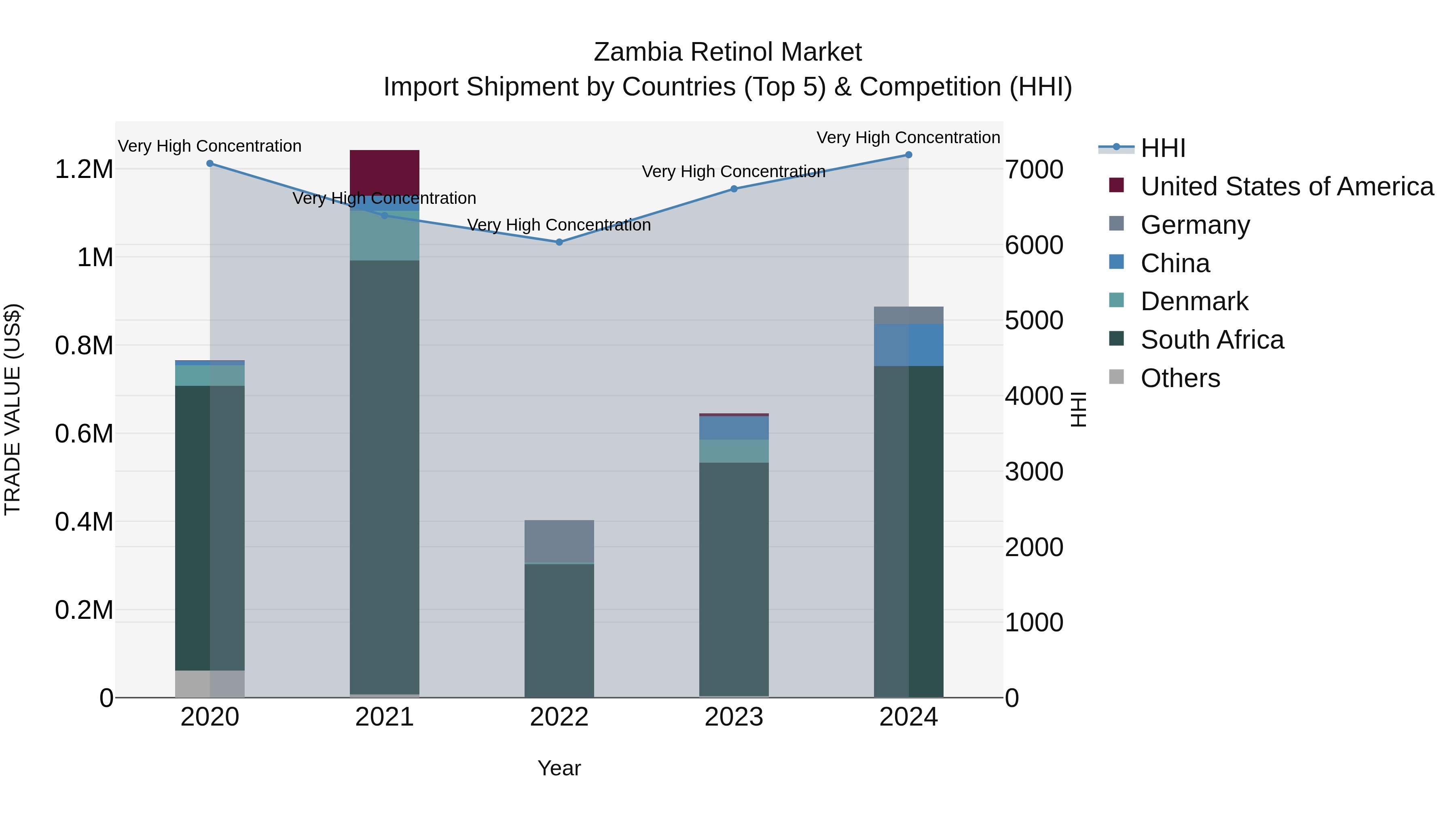
Zambia`s retinol import market continued to witness a significant influx of shipments in 2024, with key exporting countries including South Africa, China, Germany, Canada, and Denmark. The high Herfindahl-Hirschman Index (HHI) indicates a concentrated market, while the compound annual growth rate (CAGR) of 3.77% from 2020 to 2024 underscores steady expansion. Notably, the impressive growth rate of 37.6% from 2023 to 2024 signals a notable uptick in demand for retinol within Zambia.
Zambia Retinol Market Synopsis
The Zambia retinol market is experiencing steady growth driven by increasing awareness about skincare and the demand for anti-aging products. Retinol, a derivative of vitamin A, is known for its effectiveness in reducing wrinkles, fine lines, and improving skin texture. With a growing middle-class population and a rising trend towards beauty and personal care products, the demand for retinol-based skincare products is on the rise in Zambia. Local and international beauty brands are actively promoting retinol-infused creams, serums, and treatments in the Zambian market, catering to a diverse consumer base. As consumers become more conscious about skincare routines and seek products with proven benefits, the retinol market in Zambia is expected to continue its positive trajectory in the coming years.
Zambia Retinol Market Trends
The Zambia Retinol market is experiencing growth due to increasing awareness about skincare and the demand for products targeting anti-aging and skin rejuvenation. Consumers are seeking products containing retinol for its proven benefits in reducing wrinkles, fine lines, and improving skin texture. Key trends in the market include the introduction of innovative formulations combining retinol with other active ingredients for enhanced efficacy and minimal side effects. Opportunities exist for skincare companies to expand their product offerings with retinol-based solutions tailored to the specific needs of the Zambian market. Additionally, there is potential for partnerships with dermatologists and beauty influencers to educate consumers about the benefits of retinol and drive sales. Overall, the Zambia Retinol market presents a promising landscape for growth and innovation.
Zambia Retinol Market Challenges
In the Zambia Retinol Market, several challenges are faced, including limited awareness among consumers about the benefits and usage of retinol products. This lack of awareness often leads to low demand and uptake of retinol-based skincare products. Additionally, the availability of authentic and high-quality retinol products in the market can be a challenge, as counterfeit or ineffective products may flood the market, leading to consumer skepticism. Furthermore, the high cost of imported retinol products can also hinder market growth, making it less accessible to a wider population. Overcoming these challenges would require education campaigns to raise awareness, ensuring the availability of genuine products, and possibly exploring local production to make retinol more affordable and accessible to consumers in Zambia.
Zambia Retinol Market Investment Opportunities
The Zambia Retinol market is primarily driven by increasing consumer awareness about the benefits of retinol in skincare products, such as anti-aging properties and skin rejuvenation. The growing demand for products that target skin concerns like fine lines, wrinkles, and uneven skin tone has fueled the market growth. Additionally, the rising disposable income levels among the population have led to an increased willingness to invest in premium skincare products containing retinol. Furthermore, the expanding retail sector and the availability of a wide range of retinol-based products in both physical stores and online platforms have made it more convenient for consumers to access these products, further driving market growth in Zambia.
Zambia Retinol Market Government Policie
The Zambian government has implemented various policies to regulate the retinol market in the country. The Food and Drugs Act No. 7 of 2019 is a key piece of legislation that governs the quality, safety, and efficacy of retinol products. This act requires retinol products to undergo rigorous testing and approval processes before they can be sold in the market. Additionally, the government has put in place import regulations to ensure that only authorized retinol products enter the country, thereby safeguarding consumers from substandard or counterfeit products. The Ministry of Health works closely with regulatory bodies to monitor and enforce compliance with these policies, aiming to protect public health and maintain the integrity of the retinol market in Zambia.
Zambia Retinol Market Future Outlook
The Zambia Retinol market is poised for steady growth in the coming years due to increasing consumer awareness about skincare and a growing demand for anti-aging products. The market is expected to benefit from the rising disposable income levels, urbanization, and a shift towards premium quality skincare products. Additionally, the market is likely to witness a surge in demand for retinol-based products as consumers seek effective solutions for various skin concerns such as wrinkles, fine lines, and uneven skin tone. Manufacturers are anticipated to focus on product innovation and marketing strategies to capitalize on the growing trend of skincare routines and beauty consciousness among consumers in Zambia. Overall, the Zambia Retinol market is projected to show promising growth opportunities in the foreseeable future.
Key Highlights of the Report:
- Zambia Retinol Market Outlook
- Market Size of Zambia Retinol Market, 2024
- Forecast of Zambia Retinol Market, 2031
- Historical Data and Forecast of Zambia Retinol Revenues & Volume for the Period 2021- 2031
- Zambia Retinol Market Trend Evolution
- Zambia Retinol Market Drivers and Challenges
- Zambia Retinol Price Trends
- Zambia Retinol Porter's Five Forces
- Zambia Retinol Industry Life Cycle
- Historical Data and Forecast of Zambia Retinol Market Revenues & Volume By Type for the Period 2021- 2031
- Historical Data and Forecast of Zambia Retinol Market Revenues & Volume By Natural for the Period 2021- 2031
- Historical Data and Forecast of Zambia Retinol Market Revenues & Volume By Synthetic for the Period 2021- 2031
- Historical Data and Forecast of Zambia Retinol Market Revenues & Volume By Application for the Period 2021- 2031
- Historical Data and Forecast of Zambia Retinol Market Revenues & Volume By Personal Care & Cosmetics for the Period 2021- 2031
- Historical Data and Forecast of Zambia Retinol Market Revenues & Volume By Dietary Supplements for the Period 2021- 2031
- Historical Data and Forecast of Zambia Retinol Market Revenues & Volume By Food & Beverage for the Period 2021- 2031
- Historical Data and Forecast of Zambia Retinol Market Revenues & Volume By Animal Feed for the Period 2021- 2031
- Historical Data and Forecast of Zambia Retinol Market Revenues & Volume By Others for the Period 2021- 2031
- Zambia Retinol Import Export Trade Statistics
- Market Opportunity Assessment By Type
- Market Opportunity Assessment By Application
- Zambia Retinol Top Companies Market Share
- Zambia Retinol Competitive Benchmarking By Technical and Operational Parameters
- Zambia Retinol Company Profiles
- Zambia Retinol Key Strategic Recommendations






































