Zimbabwe Musical Instruments Market Growth Rate Analysis (2025 - 2031)
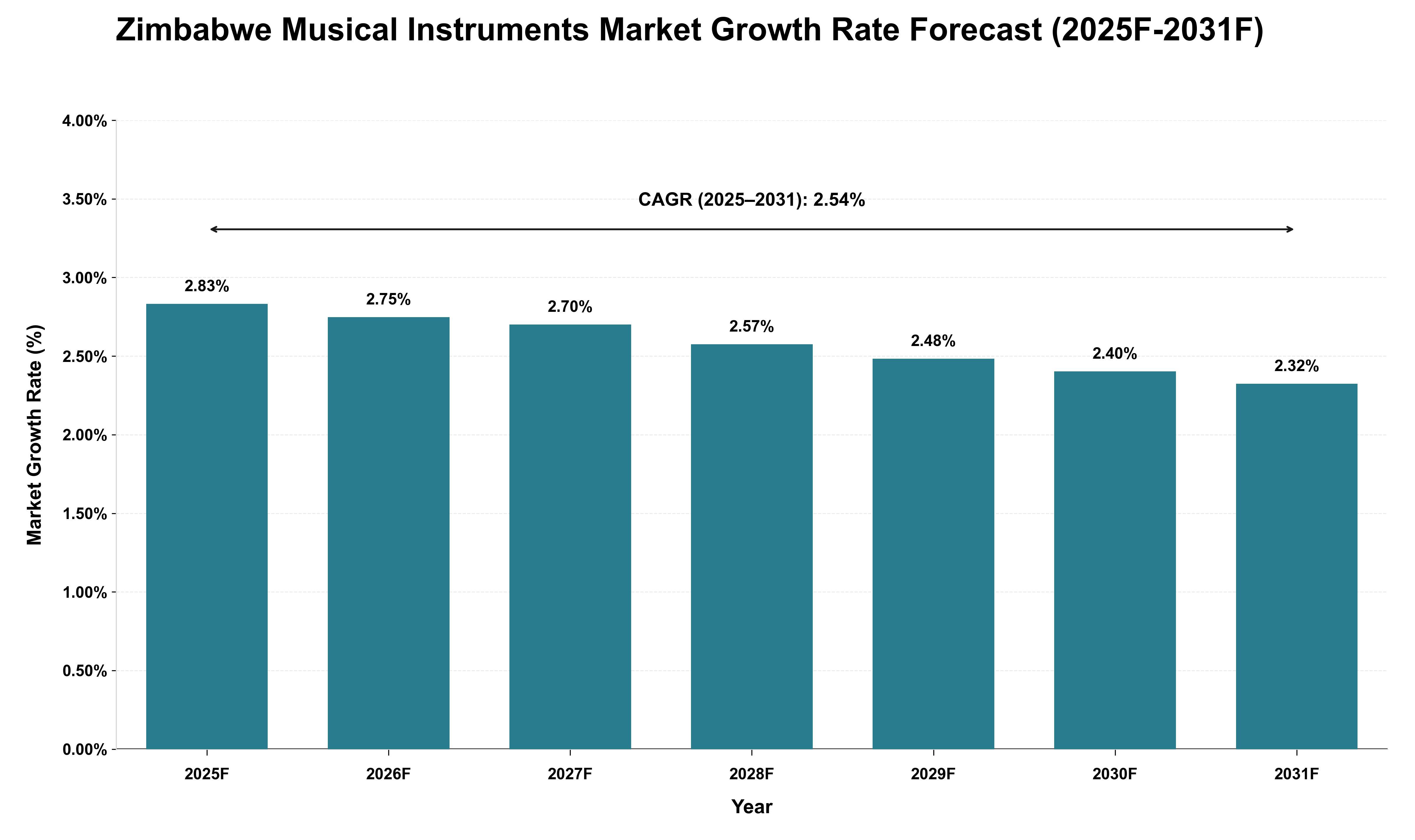
The forecasted growth trajectory for the Zimbabwe musical instruments market will exhibit a gradual deceleration, with the annual growth rates declining from 2.83% in 2025 to 2.32% by 2031. This trend reflects broader macroeconomic cycles, where initial consumer enthusiasm may wane as disposable incomes stabilize and import dependencies become more pronounced. The anticipated CAGR of 2.54% suggests that while demand for musical instruments will persist, it will likely be influenced by external economic factors such as currency fluctuations and trade policies affecting imports. Additionally, shifts in consumer preferences towards digital alternatives may further impact traditional instrument sales, contributing to the observed decline in growth rates over the forecast period. As such, stakeholders must navigate these evolving dynamics to sustain market engagement and capitalize on emerging opportunities within this sector.
Key Highlights of the Report:
- Zimbabwe Musical Instruments Market Outlook
- Market Size of Zimbabwe Musical Instruments Market, 2024
- Forecast of Zimbabwe Musical Instruments Market, 2031
- Historical Data and Forecast of Zimbabwe Musical Instruments Revenues & Volume for the Period 2021-2031
- Zimbabwe Musical Instruments Market Trend Evolution
- Zimbabwe Musical Instruments Market Drivers and Challenges
- Zimbabwe Musical Instruments Price Trends
- Zimbabwe Musical Instruments Porter`s Five Forces
- Zimbabwe Musical Instruments Industry Life Cycle
- Historical Data and Forecast of Zimbabwe Musical Instruments Market Revenues & Volume By Type for the Period 2021-2031
- Historical Data and Forecast of Zimbabwe Musical Instruments Market Revenues & Volume By Percussion Instruments for the Period 2021-2031
- Historical Data and Forecast of Zimbabwe Musical Instruments Market Revenues & Volume By String Instruments for the Period 2021-2031
- Historical Data and Forecast of Zimbabwe Musical Instruments Market Revenues & Volume By Piano & Key Instruments for the Period 2021-2031
- Historical Data and Forecast of Zimbabwe Musical Instruments Market Revenues & Volume By Organs & Air Blown Instruments for the Period 2021-2031
- Historical Data and Forecast of Zimbabwe Musical Instruments Market Revenues & Volume By Others for the Period 2021-2031
- Historical Data and Forecast of Zimbabwe Musical Instruments Market Revenues & Volume By End-users for the Period 2021-2031
- Historical Data and Forecast of Zimbabwe Musical Instruments Market Revenues & Volume By Commercial Events for the Period 2021-2031
- Historical Data and Forecast of Zimbabwe Musical Instruments Market Revenues & Volume By Personal Use for the Period 2021-2031
- Historical Data and Forecast of Zimbabwe Musical Instruments Market Revenues & Volume By Music Production/ Direction for the Period 2021-2031
- Historical Data and Forecast of Zimbabwe Musical Instruments Market Revenues & Volume By Others for the Period 2021-2031
- Zimbabwe Musical Instruments Import Export Trade Statistics
- Market Opportunity Assessment By Type
- Market Opportunity Assessment By End-users
- Zimbabwe Musical Instruments Top Companies Market Share
- Zimbabwe Musical Instruments Competitive Benchmarking By Technical and Operational Parameters
- Zimbabwe Musical Instruments Company Profiles
- Zimbabwe Musical Instruments Key Strategic Recommendations






































