Zimbabwe Soybean Meal Market Growth Rate Analysis (2025 - 2031)
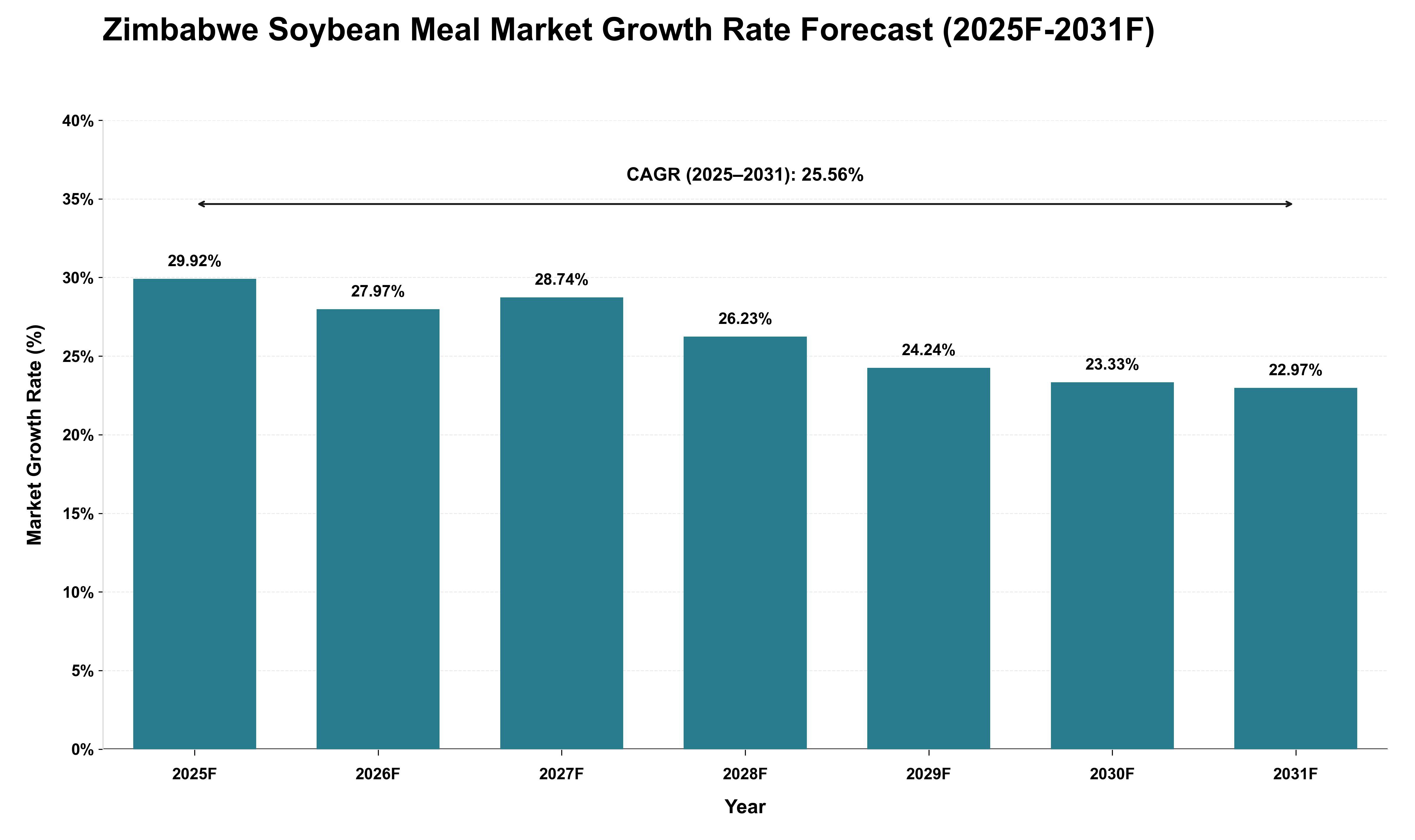
The Zimbabwe soybean meal market is projected to experience a robust compound annual growth rate of 25.56% from 2025 to 2031, reflecting significant demand dynamics driven by macroeconomic factors. The anticipated annual growth rates, peaking at 29.92% in 2025 and gradually tapering to 22.97% by 2031, suggest a strong initial surge likely fueled by increasing livestock production and a growing aquaculture sector that relies heavily on protein-rich feed sources. As global agricultural markets evolve, Zimbabwe's reliance on imports for soybean meal may create vulnerabilities; however, domestic production initiatives could mitigate these risks over time. Additionally, cyclical trends in commodity prices and shifts in consumer preferences towards sustainable protein sources will further influence market conditions. Overall, the forecast indicates a resilient trajectory for soybean meal as it aligns with broader economic recovery patterns and agricultural advancements within the region.
Key Highlights of the Report:
- Zimbabwe Soybean Meal Market Outlook
- Market Size of Zimbabwe Soybean Meal Market, 2024
- Forecast of Zimbabwe Soybean Meal Market, 2031
- Historical Data and Forecast of Zimbabwe Soybean Meal Revenues & Volume for the Period 2021-2031
- Zimbabwe Soybean Meal Market Trend Evolution
- Zimbabwe Soybean Meal Market Drivers and Challenges
- Zimbabwe Soybean Meal Price Trends
- Zimbabwe Soybean Meal Porter`s Five Forces
- Zimbabwe Soybean Meal Industry Life Cycle
- Historical Data and Forecast of Zimbabwe Soybean Meal Market Revenues & Volume By Application for the Period 2021-2031
- Historical Data and Forecast of Zimbabwe Soybean Meal Market Revenues & Volume By Animal Feed for the Period 2021-2031
- Historical Data and Forecast of Zimbabwe Soybean Meal Market Revenues & Volume By Food Industry for the Period 2021-2031
- Historical Data and Forecast of Zimbabwe Soybean Meal Market Revenues & Volume By Beverage for the Period 2021-2031
- Historical Data and Forecast of Zimbabwe Soybean Meal Market Revenues & Volume By Healthcare Products for the Period 2021-2031
- Zimbabwe Soybean Meal Import Export Trade Statistics
- Market Opportunity Assessment By Application
- Zimbabwe Soybean Meal Top Companies Market Share
- Zimbabwe Soybean Meal Competitive Benchmarking By Technical and Operational Parameters
- Zimbabwe Soybean Meal Company Profiles
- Zimbabwe Soybean Meal Key Strategic Recommendations






































