Algeria Textile Waste Market Summary
The algeria textile waste market was estimated at USD 445 Million in 2025 and is projected to reach USD 629 Million by 2032, growing at a CAGR of 5.9% from 2026 to 2032.
Algeria Textile Waste Market Year-wise Growth Rate and Key Drivers
This graph highlights how the Algeria Textile Waste Market has steadily grown over the past five years, supported by major growth factors.
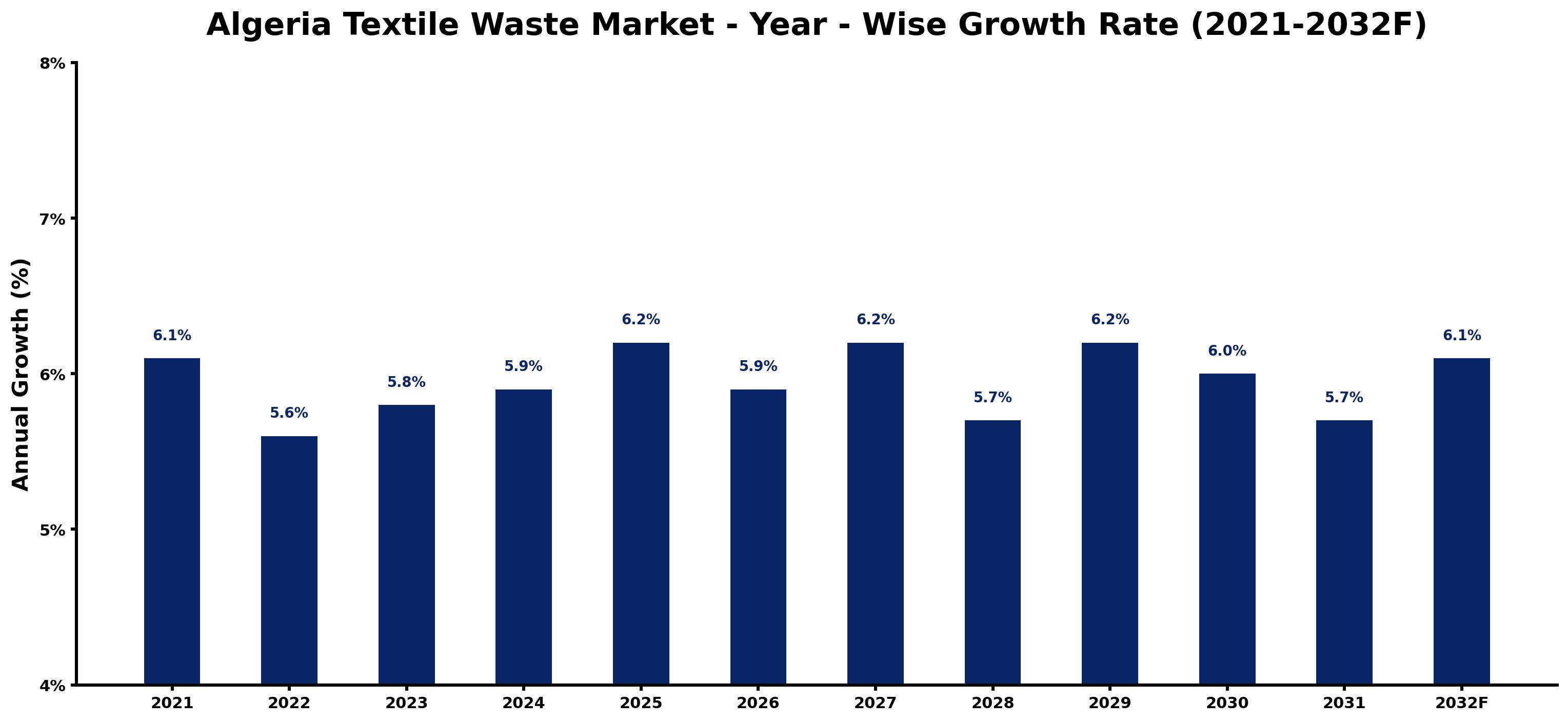
The table below presents the year wise growth rates along with the key drivers influencing the market
| Year | Growth Rate | Major Drivers |
| 2021 | 6.1% | Algeria's textile industry struggles with inefficient waste management practices and infrastructure. |
| 2022 | 5.6% | Local manufacturers begin exploring sustainable practices, eyeing textile waste recycling opportunities. |
| 2023 | 5.8% | International fashion brands are increasingly pressured to consider waste reduction in supply chains. |
| 2024 | 5.9% | Emerging startups focus on converting textile waste into new materials, attracting local investors. |
| 2025 | 6.2% | Public awareness campaigns advocate for recycling, shifting consumer perceptions about textile waste. |
| 2026 | 5.9% | Collaboration between NGOs and businesses fosters community-driven recycling initiatives across cities. |
| 2027 | 6.2% | Regional partnerships emerge, linking Algeria's textile sector with Mediterranean recycling networks. |
| 2028 | 5.7% | Technological innovations in fabric recycling equipment enhance processing efficiency and output. |
| 2029 | 6.2% | Government subsidies incentivize textile waste processing facilities, boosting market confidence significantly. |
| 2030 | 6.0% | Global sustainability trends influence Algerian designers to create eco-friendly textile collections. |
| 2031 | 5.7% | Textile waste becomes a key resource for local artisans, revitalizing traditional craft industries. |
| 2032 | 6.1% | Investment in circular economy principles positions Algeria as a leader in textile waste management. |
Note - Market size estimations and growth projections presented in this report are based on 6Wresearch's advanced forecasting approach, validated with industry datasets as of June 2026.
Algeria Textile Waste Market Synopsis
The Algeria Textile Waste Market is projected to reach 5.9% and witness significant growth during the forecast period (2026-2032). This growth is primarily driven by various socio-economic factors including a rising population and increasing living standards, which have led to a shift in consumer lifestyles. Rapid urbanization and industrialization further underpin the demand for sustainable textile waste management solutions. As the awareness of environmental issues grows, businesses are increasingly compelled to adopt efficient waste collection and recycling practices, thereby boosting the overall demand for textile waste management services in Algeria.
Algeria Textile Waste Market Growth Drivers
The growth of the Algeria Textile Waste Market is attributed to several key factors:
- Population Growth: Algeria's expanding populace contributes significantly to increased textile consumption, thereby enhancing textile waste generation necessitating effective waste management solutions.
- Changing Lifestyles: The shift towards urban living and modern lifestyles has resulted in higher consumption of textiles, leading to a greater need for efficient waste disposal and recycling methods.
- Sustainable Production Focus: As awareness of environmental impacts rises, companies are increasingly adopting sustainable production and waste management practices, further stimulating demand for this market.
- Government Initiatives: The Algerian government is promoting initiatives aimed at implementing circular economy practices, which include offering tax reliefs and incentives for sustainable approaches to textile waste management.
- Technological Advancements: Innovations in recycling technologies and waste processing methods are paving the way for more effective and efficient management of textile waste, creating further demand in the market.
Algeria Textile Waste Market Trends and Opportunities
The Algeria Textile Waste Market is witnessing several emerging trends that present new opportunities:
- Increased Recycling Initiatives: There is a marked trend towards enhancing recycling initiatives in the textile sector, supported by both public and private sector efforts to reduce waste.
- Sustainable Fashion Movement: A growing focus on sustainable fashion is influencing consumer behavior, prompting companies to adopt practices that facilitate textile waste reduction.
- Investment in Infrastructure: Investments in waste management infrastructure are on the rise, aimed at improving the efficiency and effectiveness of textile waste processing.
- Public Awareness Campaigns: Organizations and governmental bodies are running campaigns to educate the public on textile recycling, further driving participation in waste management programs.
- Collaborative Initiatives: Partnerships between businesses and environmental organizations are becoming more prevalent, focused on innovative waste management solutions and eco-friendly practices.
Algeria Textile Waste Market Challenges and Restraints
Despite the positive growth prospects, the Algeria Textile Waste Market faces certain challenges:
- Lack of Technical Expertise: A significant barrier to effective waste management lies in the shortage of technical expertise and trained personnel in the textile waste sector.
- Inadequate Infrastructure: Insufficient infrastructure for waste collection, sorting, and processing remains a critical issue that hinders efficient management of textile waste.
- Regulatory Barriers: Complex regulatory frameworks may deter companies from pursuing long-term investments in sustainable practices or technologies.
- Cost Implications: The initial costs associated with implementing advanced waste management technologies can be prohibitive for many businesses.
- Market Awareness: Low awareness regarding the importance of textile waste management among small businesses and individual consumers can impede overall market growth.
Algeria Textile Waste Market Government Investment and Initiatives
The Algerian government is actively involved in promoting a more sustainable approach to textile waste management through various policies and initiatives:
- Promotion of Circular Economy: Government programs aimed at promoting circular economy principles encourage businesses to minimize waste and enhance recycling efforts.
- Incentives for Sustainable Practices: The government provides incentives such as tax reliefs for businesses that adopt eco-friendly production and waste management techniques.
- Investment in Infrastructure Development: Public spending on improving waste management infrastructure aims to support better collection, sorting, and recycling capabilities across the textile sector.
- Partnerships with NGOs: Collaborations between the government and non-governmental organizations focus on raising awareness around textile waste issues and promoting responsible consumer behavior.
- Regulatory Support: The government is working to streamline regulations surrounding waste management, aiming to create an environment conducive to investment and innovation.
Algeria Textile Waste Market Latest Developments (May 2025 - June 2026)
Recent developments in the Algeria Textile Waste Market have underscored the ongoing shift towards more sustainable practices:
- Increased Government Focus: The government has intensified efforts to support sustainable textile waste management practices, including enhanced funding for recycling programs.
- Emergence of New Technologies: New technologies for recycling and waste processing have gained traction, providing innovative solutions to textile waste challenges.
- Collaboration Initiatives: Partnerships between industry stakeholders have been established to foster knowledge sharing and the implementation of best practices in waste management.
- Awareness Drives: Various campaigns aimed at educating consumers and businesses about textile waste management have been launched, leading to increased participation in recycling initiatives.
- Policy Updates: Regulatory frameworks have been updated to better support sustainable practices, reflecting the government's commitment to environmentally friendly waste management solutions.
Algeria Textile Waste Market - Key Attractiveness of the Report
- 10 Years of Market Numbers
- Historical Data Starting from 2022 to 2025
- Base Year: 2025
- Forecast Data until 2032
- Key Performance Indicators Impacting the Market
- Major Upcoming Developments and Projects
Key Highlights of the Report:
- Algeria Textile Waste Market Outlook
- Market Size of Algeria Textile Waste Market, 2025
- Forecast of Algeria Textile Waste Market, 2032F
- Historical Data and Forecast of Algeria Textile Waste Revenues & Volume for the Period 2022-2032F
- Algeria Textile Waste Market Trend Evolution
- Algeria Textile Waste Market Drivers and Challenges
- Algeria Textile Waste Price Trends
- Algeria Textile Waste Porter's Five Forces
- Algeria Textile Waste Industry Life Cycle
- Historical Data and Forecast of Algeria Textile Waste Market Revenues & Volume By Solution Types for the Period 2022-2032F
- Historical Data and Forecast of Algeria Textile Waste Market Revenues & Volume By Source Reduction Solutions for the Period 2022-2032F
- Historical Data and Forecast of Algeria Textile Waste Market Revenues & Volume By Landfills Solutions for the Period 2022-2032F
- Historical Data and Forecast of Algeria Textile Waste Market Revenues & Volume By Recycling Solutions for the Period 2022-2032F
- Historical Data and Forecast of Algeria Textile Waste Market Revenues & Volume By Incineration Solutions for the Period 2022-2032F
- Historical Data and Forecast of Algeria Textile Waste Market Revenues & Volume By Product Types for the Period 2022-2032F
- Historical Data and Forecast of Algeria Textile Waste Market Revenues & Volume By Spinning waste for the Period 2022-2032F
- Historical Data and Forecast of Algeria Textile Waste Market Revenues & Volume By Weaving waste for the Period 2022-2032F
- Historical Data and Forecast of Algeria Textile Waste Market Revenues & Volume By Knitting waste for the Period 2022-2032F
- Historical Data and Forecast of Algeria Textile Waste Market Revenues & Volume By Dyeing waste for the Period 2022-2032F
- Historical Data and Forecast of Algeria Textile Waste Market Revenues & Volume By Clothing waste for the Period 2022-2032F
- Historical Data and Forecast of Algeria Textile Waste Market Revenues & Volume By Consumer waste for the Period 2022-2032F
- Algeria Textile Waste Import Export Trade Statistics
- Market Opportunity Assessment By Solution Types
- Market Opportunity Assessment By Product Types
- Algeria Textile Waste Top Companies Market Share
- Algeria Textile Waste Competitive Benchmarking By Technical and Operational Parameters
- Algeria Textile Waste Company Profiles
- Algeria Textile Waste Key Strategic Recommendations






































