Angola Canned Tuna Market Growth Rate Analysis (2021-2031)
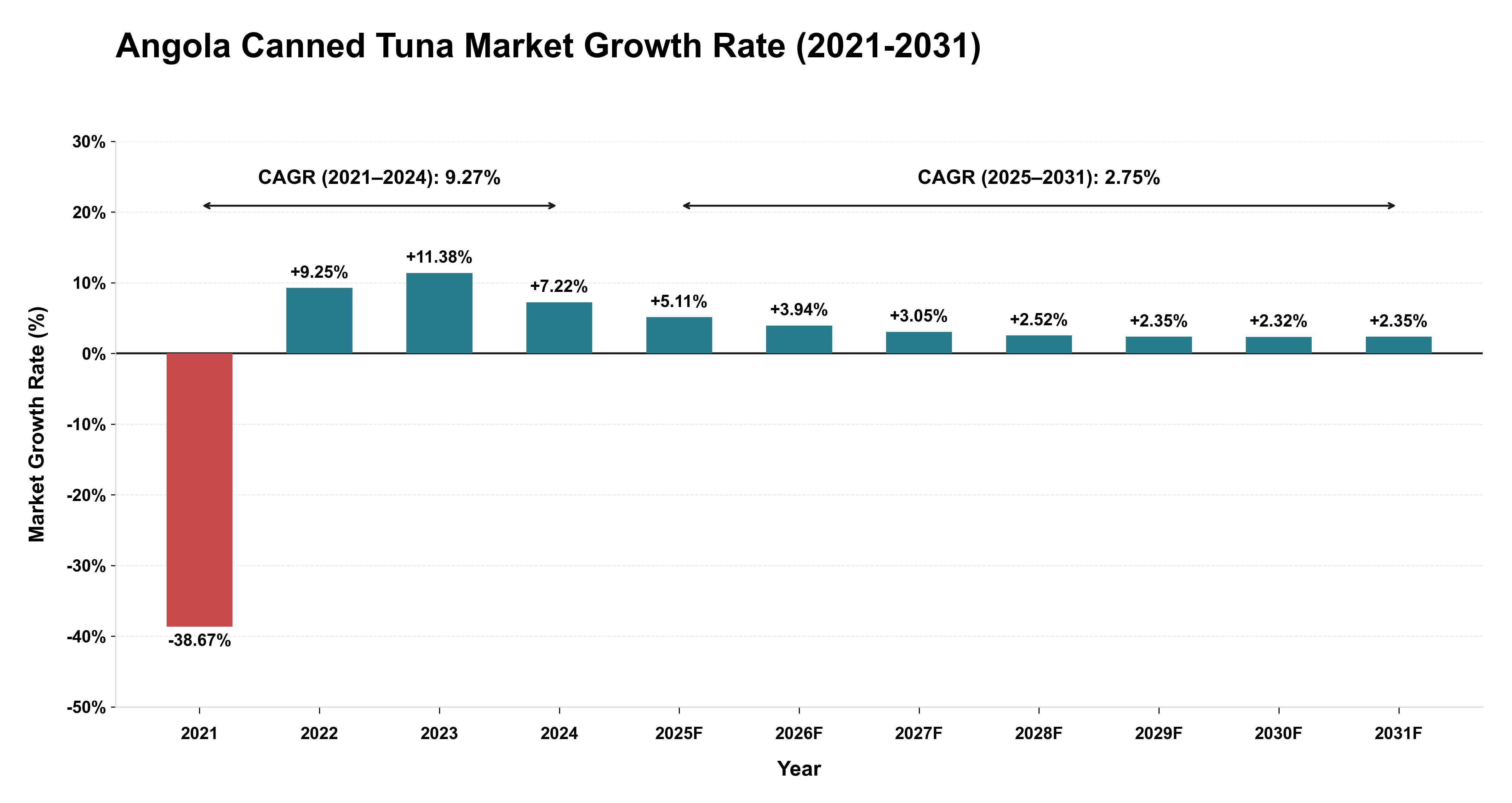
The Angola Canned Tuna market underwent a tumultuous period from 2021 to 2024, with a sharp contraction of -38.67% in 2021 followed by robust growth rates of 9.25%, 11.38%, and 7.22% in the subsequent years. This volatility likely stemmed from external shocks or internal industry adjustments. Looking ahead to the forecast period from 2025 to 2031, the market is projected to stabilize, showing slower growth with a CAGR of 2.75%. This deceleration indicates a maturing market landscape, reflecting normalization and saturation post the earlier turbulent fluctuations. Factors like evolving consumer preferences, competition from alternative protein sources, and cost pressures are expected to contribute to this more modest growth trajectory in the upcoming years.
Angola Canned Tuna Market Overview
Angola`s canned tuna market is significant due to the high demand for convenient, protein-rich food. Canned tuna is widely used in salads, sandwiches, and various dishes. The market is driven by urbanization, busy lifestyles, and the health benefits associated with tuna consumption. Challenges include competition from fresh and frozen alternatives, sustainability concerns, and fluctuating tuna prices. Sustainable sourcing practices and product innovations, such as ready-to-eat meal kits, can enhance market appeal.
Drivers of the market
The Angola Canned Tuna market is driven by the growing demand for protein-rich and convenient food products. The increasing consumer awareness of the health benefits of tuna, such as being a good source of omega-3 fatty acids, is boosting the demand for canned tuna. Additionally, the busy lifestyles of consumers and the rising preference for ready-to-eat meals are driving market growth. The expansion of the retail sector and the availability of various flavors and packaging options also contribute to the market.
Challenges of the market
In the Angola Canned Tuna market, challenges include securing a sustainable supply of tuna due to overfishing and stringent fishing regulations. Fluctuating raw material prices and competition from fresh and frozen tuna products affect market demand and profitability. The market also faces regulatory compliance issues concerning food safety and environmental standards. Additionally, high production and packaging costs, along with logistical challenges in transporting canned goods, further complicate market dynamics.
Government Policy of the market
The Angolan government has policies in place to support the canned tuna market by promoting sustainable fishing and local processing. These policies include regulations to prevent overfishing, subsidies for fishing equipment, and incentives for establishing tuna canning factories.
Key Highlights of the Report:
- Angola Canned Tuna Market Outlook
- Market Size of Angola Canned Tuna Market, 2024
- Forecast of Angola Canned Tuna Market, 2031
- Historical Data and Forecast of Angola Canned Tuna Revenues & Volume for the Period 2021-2031
- Angola Canned Tuna Market Trend Evolution
- Angola Canned Tuna Market Drivers and Challenges
- Angola Canned Tuna Price Trends
- Angola Canned Tuna Porter`s Five Forces
- Angola Canned Tuna Industry Life Cycle
- Historical Data and Forecast of Angola Canned Tuna Market Revenues & Volume By Product for the Period 2021-2031
- Historical Data and Forecast of Angola Canned Tuna Market Revenues & Volume By Skipjack for the Period 2021-2031
- Historical Data and Forecast of Angola Canned Tuna Market Revenues & Volume By Yellowfin for the Period 2021-2031
- Historical Data and Forecast of Angola Canned Tuna Market Revenues & Volume By Others for the Period 2021-2031
- Historical Data and Forecast of Angola Canned Tuna Market Revenues & Volume By Distribution Channel for the Period 2021-2031
- Historical Data and Forecast of Angola Canned Tuna Market Revenues & Volume By Hypermarket & Supermarket for the Period 2021-2031
- Historical Data and Forecast of Angola Canned Tuna Market Revenues & Volume By Specialty Stores for the Period 2021-2031
- Historical Data and Forecast of Angola Canned Tuna Market Revenues & Volume By Online for the Period 2021-2031
- Angola Canned Tuna Import Export Trade Statistics
- Market Opportunity Assessment By Product
- Market Opportunity Assessment By Distribution Channel
- Angola Canned Tuna Top Companies Market Share
- Angola Canned Tuna Competitive Benchmarking By Technical and Operational Parameters
- Angola Canned Tuna Company Profiles
- Angola Canned Tuna Key Strategic Recommendations






































