Antigua and Barbuda Fuel Oil Market Size Growth Rate
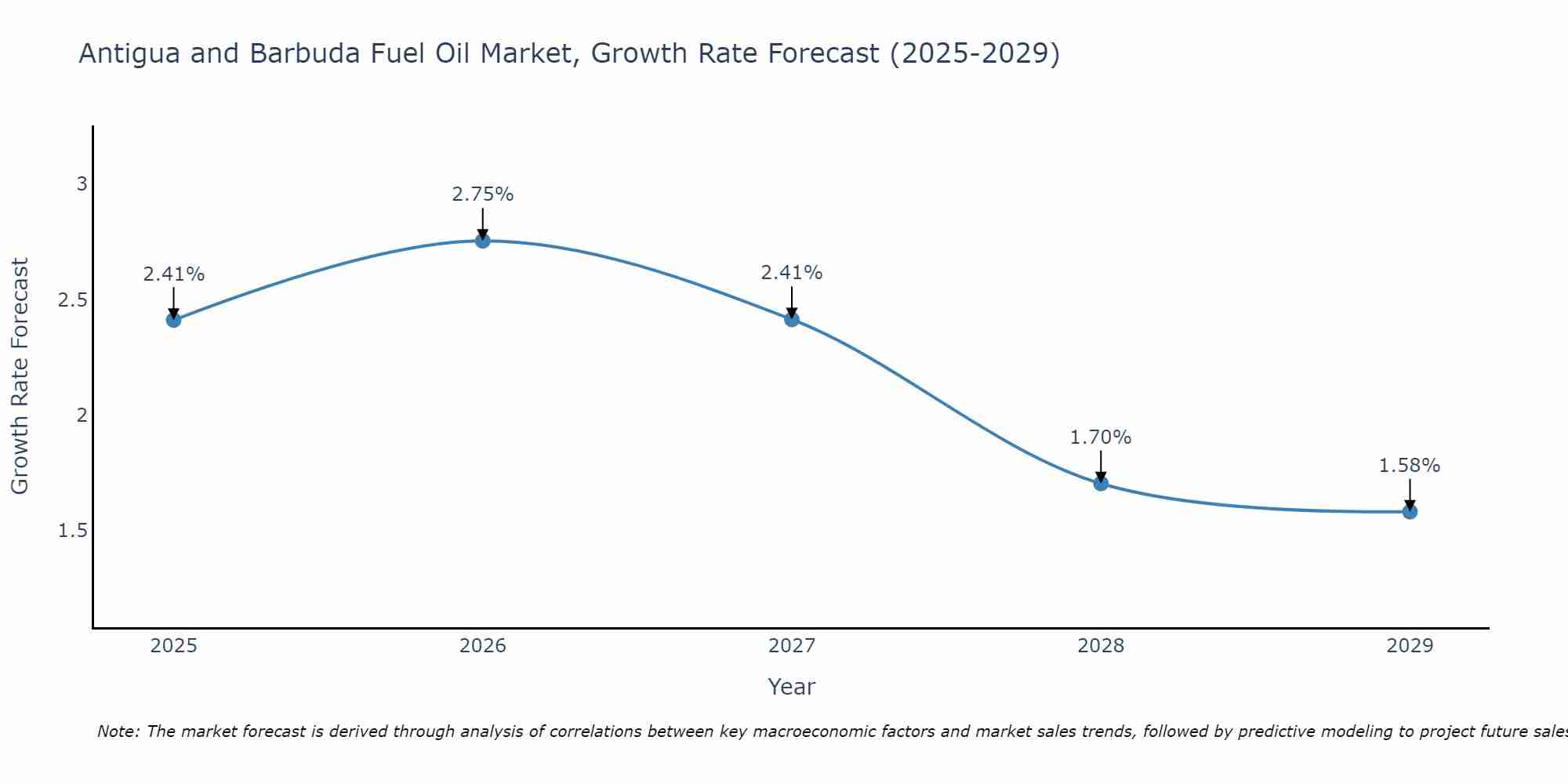
The Antigua and Barbuda Fuel Oil Market is projected to witness mixed growth rate patterns during 2025 to 2029. The growth rate begins at 2.41% in 2025, climbs to a high of 2.75% in 2026, and moderates to 1.58% by 2029.
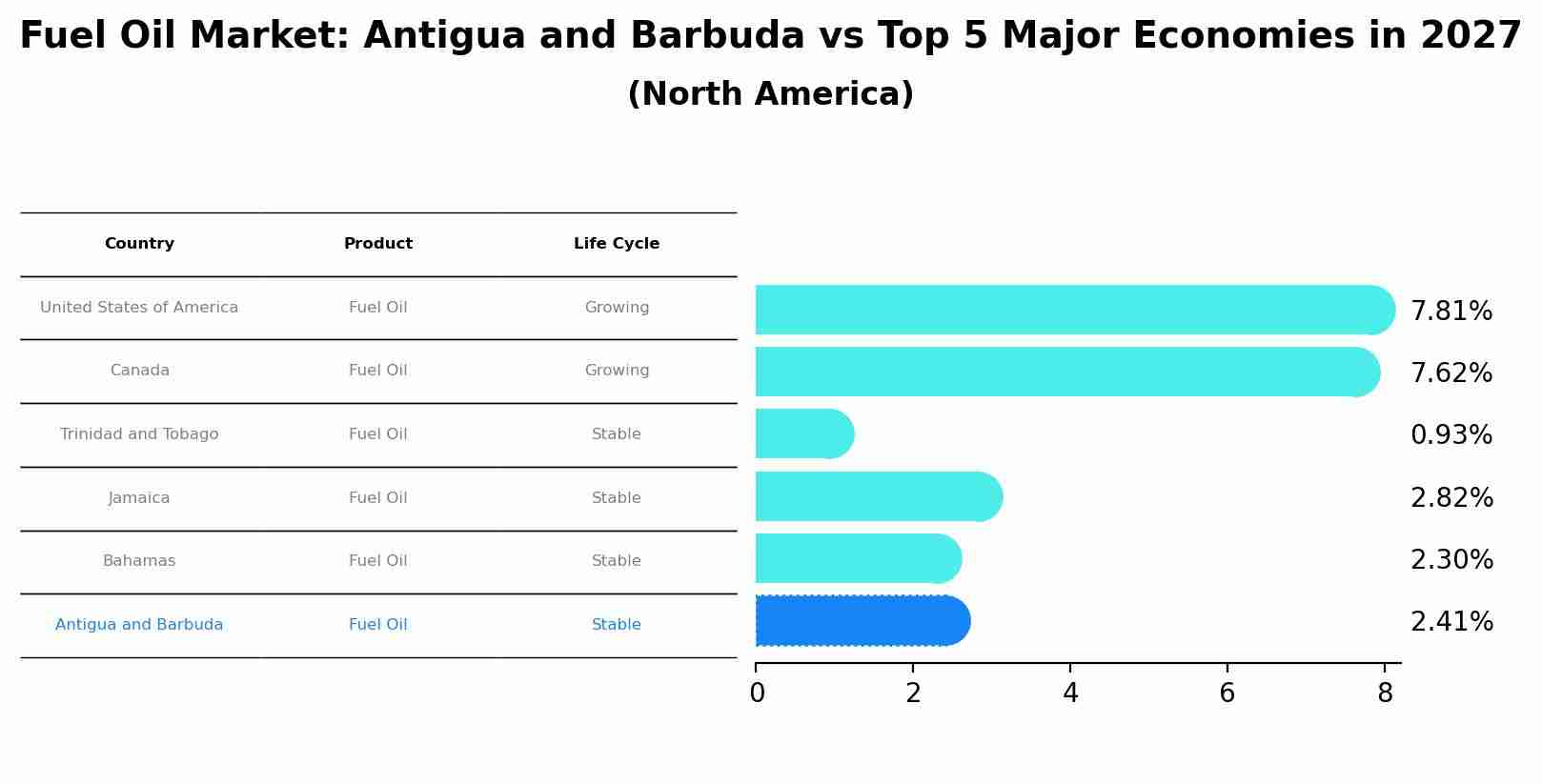
Fuel Oil Market: Antigua and Barbuda vs Top 5 Major Economies in 2027 (North America)
By 2027, Antigua and Barbuda's Fuel Oil market is forecasted to achieve a stable growth rate of 2.41%, with United States of America leading the North America region, followed by Canada, Trinidad and Tobago, Jamaica and Bahamas.
Antigua and Barbuda Fuel Oil Market Oveview
The fuel oil market in Antigua and Barbuda is growing as demand for this essential energy source increases in various applications, including power generation, heating, and marine transportation. Fuel oil is a critical component of the energy mix, providing reliable and efficient energy. Market expansion is supported by the growth of the energy and transportation sectors, the demand for stable and affordable energy sources, and advancements in fuel oil production and distribution technologies.
Drivers of the market
In Antigua and Barbuda, the fuel oil market is witnessing growth as energy companies and industrial sectors rely on fuel oil for power generation, marine bunkering, and heating applications. Fuel oil products, including residual and distillate fuels, provide cost-effective energy solutions for utilities, shipping fleets, and industrial facilities. Market expansion is driven by infrastructure investments, energy security initiatives, and regulatory compliance with fuel quality standards in maritime and energy sectors.
Challenges of the market
Antigua and Barbuda`s fuel oil market is influenced by fluctuating global oil prices and regulatory pressures to adopt cleaner energy sources. Dependency on imported fuel and infrastructure limitations for alternative energy solutions pose significant challenges.
Government Policy of the market
Government policies in Antigua and Barbuda affecting the fuel oil market focus on energy security and environmental sustainability. Regulations mandate the use of cleaner, low-sulfur fuel oils to reduce emissions. The government also encourages the development of alternative energy sources to decrease dependency on fuel oil.
Key Highlights of the Report:
- Antigua and Barbuda Fuel Oil Market Outlook
- Market Size of Antigua and Barbuda Fuel Oil Market, 2024
- Forecast of Antigua and Barbuda Fuel Oil Market, 2031
- Historical Data and Forecast of Antigua and Barbuda Fuel Oil Revenues & Volume for the Period 2021-2031
- Antigua and Barbuda Fuel Oil Market Trend Evolution
- Antigua and Barbuda Fuel Oil Market Drivers and Challenges
- Antigua and Barbuda Fuel Oil Price Trends
- Antigua and Barbuda Fuel Oil Porter`s Five Forces
- Antigua and Barbuda Fuel Oil Industry Life Cycle
- Historical Data and Forecast of Antigua and Barbuda Fuel Oil Market Revenues & Volume By Application for the Period 2021-2031
- Historical Data and Forecast of Antigua and Barbuda Fuel Oil Market Revenues & Volume By Marine for the Period 2021-2031
- Historical Data and Forecast of Antigua and Barbuda Fuel Oil Market Revenues & Volume By Industrial for the Period 2021-2031
- Historical Data and Forecast of Antigua and Barbuda Fuel Oil Market Revenues & Volume By Others for the Period 2021-2031
- Antigua and Barbuda Fuel Oil Import Export Trade Statistics
- Market Opportunity Assessment By Application
- Antigua and Barbuda Fuel Oil Top Companies Market Share
- Antigua and Barbuda Fuel Oil Competitive Benchmarking By Technical and Operational Parameters
- Antigua and Barbuda Fuel Oil Company Profiles
- Antigua and Barbuda Fuel Oil Key Strategic Recommendations






































