Argentina Bisphenol a Market: Import Trend Analysis
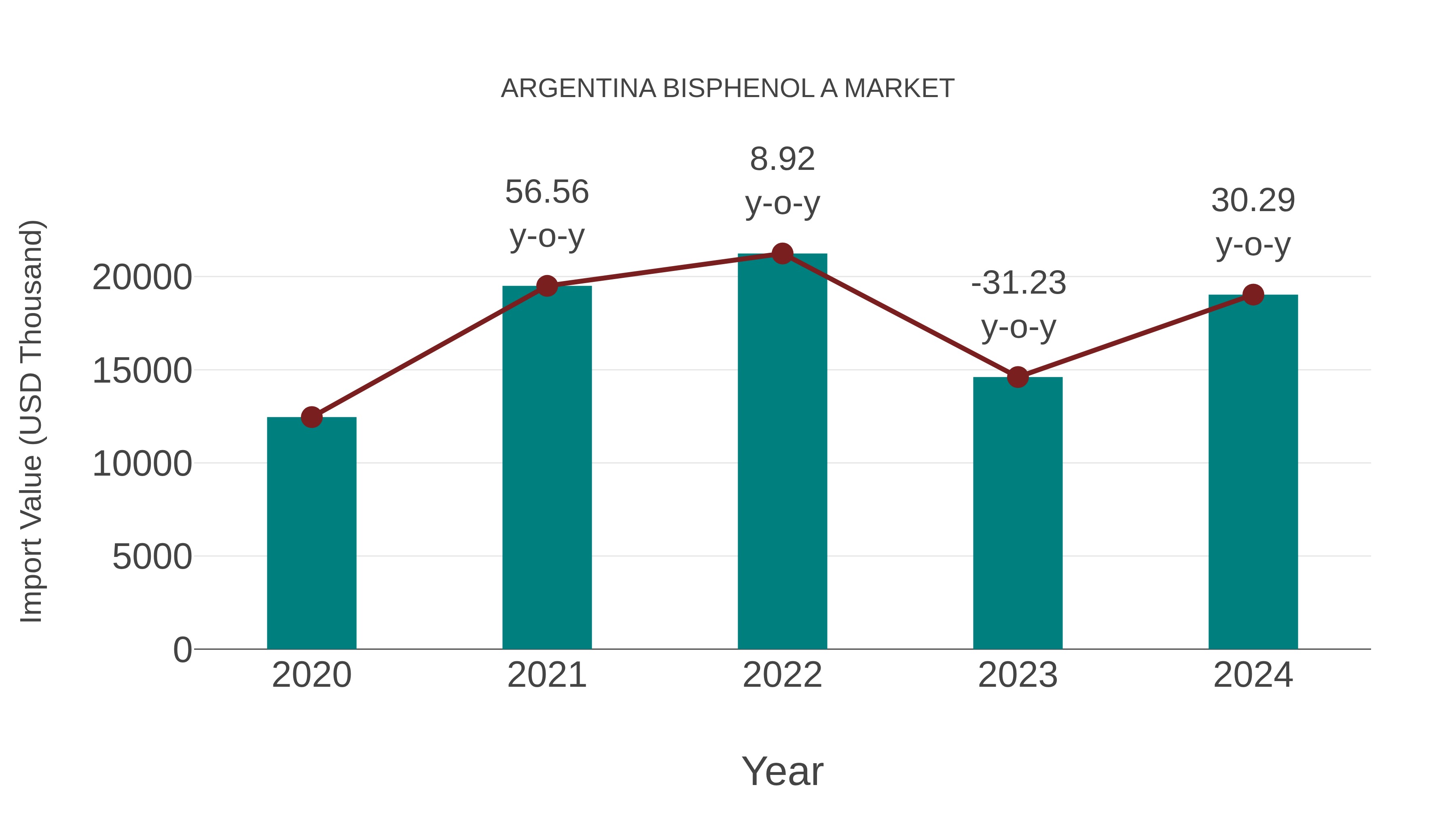
Argentina`s import trend for bisphenol A in the market showed a notable growth rate of 30.29% from 2023 to 2024, with a compound annual growth rate (CAGR) of 11.18% from 2020 to 2024. This uptrend can be attributed to increased demand for raw materials in the manufacturing sector, indicating a positive momentum in import activity driven by market stability and consistent demand.
Argentina Bisphenol A Market Overview
The Argentina Bisphenol A market is experiencing steady growth driven by the increasing demand for the chemical in various industries such as automotive, construction, electronics, and packaging. Bisphenol A is widely used in the production of polycarbonate plastics, epoxy resins, and other consumer goods due to its high heat resistance and durability. The market is also influenced by regulations aimed at restricting the use of Bisphenol A in certain products, leading to a shift towards alternative materials. Key players in the Argentina Bisphenol A market include domestic manufacturers as well as international companies striving to expand their presence in the region. Overall, the market is expected to continue growing as industries recognize the importance of Bisphenol A in their manufacturing processes while also adapting to changing regulatory environments.
Argentina Bisphenol A Market Trends
As of recent years, the Argentina Bisphenol A market has been experiencing a shift towards more sustainable and eco-friendly alternatives due to increasing awareness about the potential health risks associated with Bisphenol A. Consumers are showing a preference for BPA-free products in industries such as food and beverage packaging, healthcare, and personal care products. This trend is also being driven by regulatory measures aimed at reducing the use of Bisphenol A in various applications. Companies in the Argentina Bisphenol A market are thus focusing on developing and promoting alternative solutions that are perceived as safer and more environmentally friendly. Overall, the market is witnessing a transition towards more sustainable practices and products in response to growing concerns over the use of Bisphenol A.
Argentina Bisphenol A Market Challenges
In the Argentina Bisphenol A market, one of the main challenges faced is increasing regulatory scrutiny and restrictions on the use of Bisphenol A in various products due to its potential health risks. This has led to a shift towards alternative materials, impacting the demand for Bisphenol A. Additionally, the market faces competition from substitute products offering similar properties but without the perceived health concerns associated with Bisphenol A. Economic factors and fluctuations in raw material prices also pose challenges for manufacturers in maintaining competitive pricing. Furthermore, consumer awareness and preferences for Bisphenol A-free products are influencing purchasing decisions, creating a need for market players to innovate and adapt to changing market dynamics to stay relevant and competitive in the Argentina Bisphenol A market.
Argentina Bisphenol A Market Investment Opportunities
The Argentina Bisphenol A (BPA) market offers various investment opportunities due to the increasing demand for BPA in the production of polycarbonate plastics and epoxy resins. With the growing automotive, construction, and electronics industries in Argentina, there is a steady demand for BPA as a key ingredient in these sectors. Investors can consider opportunities in BPA production facilities, distribution networks, and research and development for innovative BPA applications. Additionally, with the increasing focus on sustainable and eco-friendly alternatives to traditional plastics, investments in bio-based or BPA-free alternatives also present growth potential in the Argentina market. Overall, the Argentina BPA market provides a range of investment avenues for those looking to capitalize on the country`s industrial growth and evolving regulatory landscape.
Argentina Bisphenol A Market Government Policy
The Argentine government has taken steps to regulate the use of Bisphenol A (BPA) in various products to protect public health. In 2010, Argentina banned the use of BPA in baby bottles, sippy cups, and pacifiers due to concerns about its potential health risks. Additionally, the government has implemented regulations requiring manufacturers to label products containing BPA to inform consumers of its presence. These regulations aim to reduce exposure to BPA, which has been linked to various health issues, including hormone disruption and potential developmental problems. The government continues to monitor and assess the use of BPA in different industries to ensure compliance with safety standards and protect the well-being of the population.
Argentina Bisphenol A Market Future Outlook
The future outlook for the Argentina Bisphenol A market is expected to be positive, driven by increasing demand from various end-use industries such as automotive, electronics, and packaging. The market is likely to witness steady growth due to the rising adoption of Bisphenol A in the production of polycarbonate resins and epoxy resins, which are widely used in manufacturing processes. Additionally, the growing awareness regarding the harmful effects of alternative chemicals is expected to further fuel the demand for Bisphenol A in Argentina. However, regulatory pressures and increasing concerns over the environmental impact of Bisphenol A could pose challenges to market growth. Overall, with the expanding industrial applications and technological advancements, the Argentina Bisphenol A market is poised for growth in the coming years.
Key Highlights of the Report:
- Argentina Bisphenol A Market Outlook
- Market Size of Argentina Bisphenol A Market, 2025
- Forecast of Argentina Bisphenol A Market, 2032
- Historical Data and Forecast of Argentina Bisphenol A Revenues & Volume for the Period 2022 - 2032F
- Argentina Bisphenol A Market Trend Evolution
- Argentina Bisphenol A Market Drivers and Challenges
- Argentina Bisphenol A Price Trends
- Argentina Bisphenol A Porter's Five Forces
- Argentina Bisphenol A Industry Life Cycle
- Historical Data and Forecast of Argentina Bisphenol A Market Revenues & Volume By Application for the Period 2022 - 2032F
- Historical Data and Forecast of Argentina Bisphenol A Market Revenues & Volume By Polycarbonate Resin for the Period 2022 - 2032F
- Historical Data and Forecast of Argentina Bisphenol A Market Revenues & Volume By Epoxy Resin for the Period 2022 - 2032F
- Historical Data and Forecast of Argentina Bisphenol A Market Revenues & Volume By Unsaturated Polyester Resins for the Period 2022 - 2032F
- Historical Data and Forecast of Argentina Bisphenol A Market Revenues & Volume By Flame Retardants for the Period 2022 - 2032F
- Historical Data and Forecast of Argentina Bisphenol A Market Revenues & Volume By Others for the Period 2022 - 2032F
- Historical Data and Forecast of Argentina Bisphenol A Market Revenues & Volume By End-use for the Period 2022 - 2032F
- Historical Data and Forecast of Argentina Bisphenol A Market Revenues & Volume By Eye wear for the Period 2022 - 2032F
- Historical Data and Forecast of Argentina Bisphenol A Market Revenues & Volume By Automotive component for the Period 2022 - 2032F
- Historical Data and Forecast of Argentina Bisphenol A Market Revenues & Volume By Electronics for the Period 2022 - 2032F
- Historical Data and Forecast of Argentina Bisphenol A Market Revenues & Volume By Wind Energy Composites for the Period 2022 - 2032F
- Historical Data and Forecast of Argentina Bisphenol A Market Revenues & Volume By Paint and Coating for the Period 2022 - 2032F
- Historical Data and Forecast of Argentina Bisphenol A Market Revenues & Volume By Green House for the Period 2022 - 2032F
- Historical Data and Forecast of Argentina Bisphenol A Market Revenues & Volume By Others for the Period 2022 - 2032F
- Argentina Bisphenol A Import Export Trade Statistics
- Market Opportunity Assessment By Application
- Market Opportunity Assessment By End-use
- Argentina Bisphenol A Top Companies Market Share
- Argentina Bisphenol A Competitive Benchmarking By Technical and Operational Parameters
- Argentina Bisphenol A Company Profiles
- Argentina Bisphenol A Key Strategic Recommendations






































