Argentina Cloud Applications Market Size & Growth Rate (2026-2032)
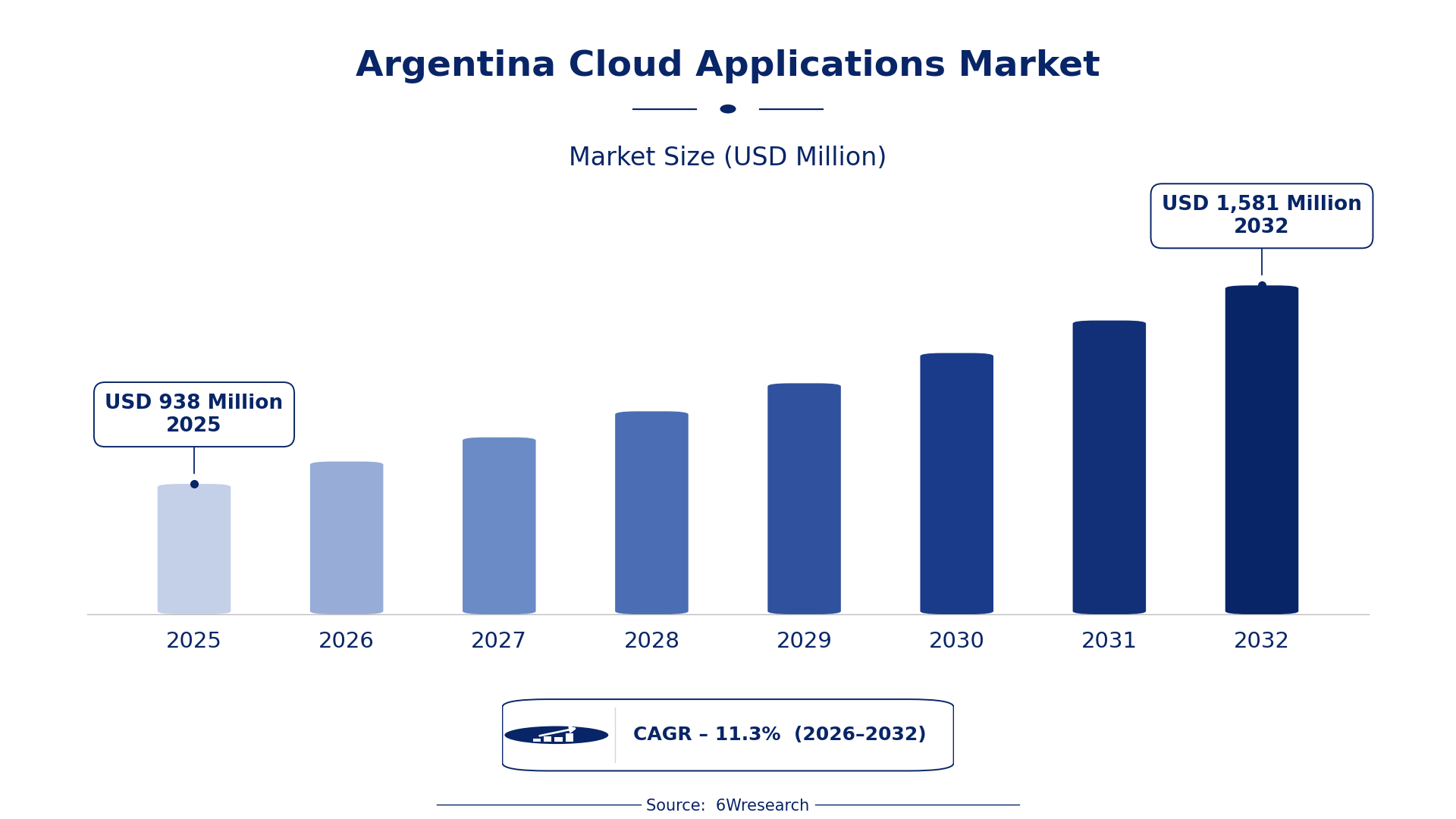
The Argentina Cloud Applications Market was estimated at USD 938 Million in 2025 and is projected to reach USD 1581 Million by 2032, growing at a CAGR of 11.3% from 2026 to 2032.
Argentina Cloud Applications Market Synopsis
In recent years, the Argentina Cloud Applications Market has surged as organizations recognize the transformative potential of cloud-based solutions. This momentum is not merely a trend; it reflects a fundamental shift in how businesses operate, particularly within key sectors like banking, healthcare, and manufacturing. As these industries evolve, the demand for cloud applications is set to intensify.
The future of this market looks promising, driven by the relentless push for digital transformation and the adoption of software-as-a-service (SaaS) models. Companies are increasingly prioritizing agility, cost savings, and enhanced productivity, making cloud applications an essential component of their strategic planning. However, the transition isn't without its hurdles, particularly concerning data security and privacy concerns that organizations must address.
Argentina Cloud Applications Market Year-wise Growth Rate and Key Drivers
This graph illustrates the annual growth rates of the Argentina Cloud Applications Market from 2021 to 2032, highlighting a steady upward trajectory and projected expansion over the forecast period.
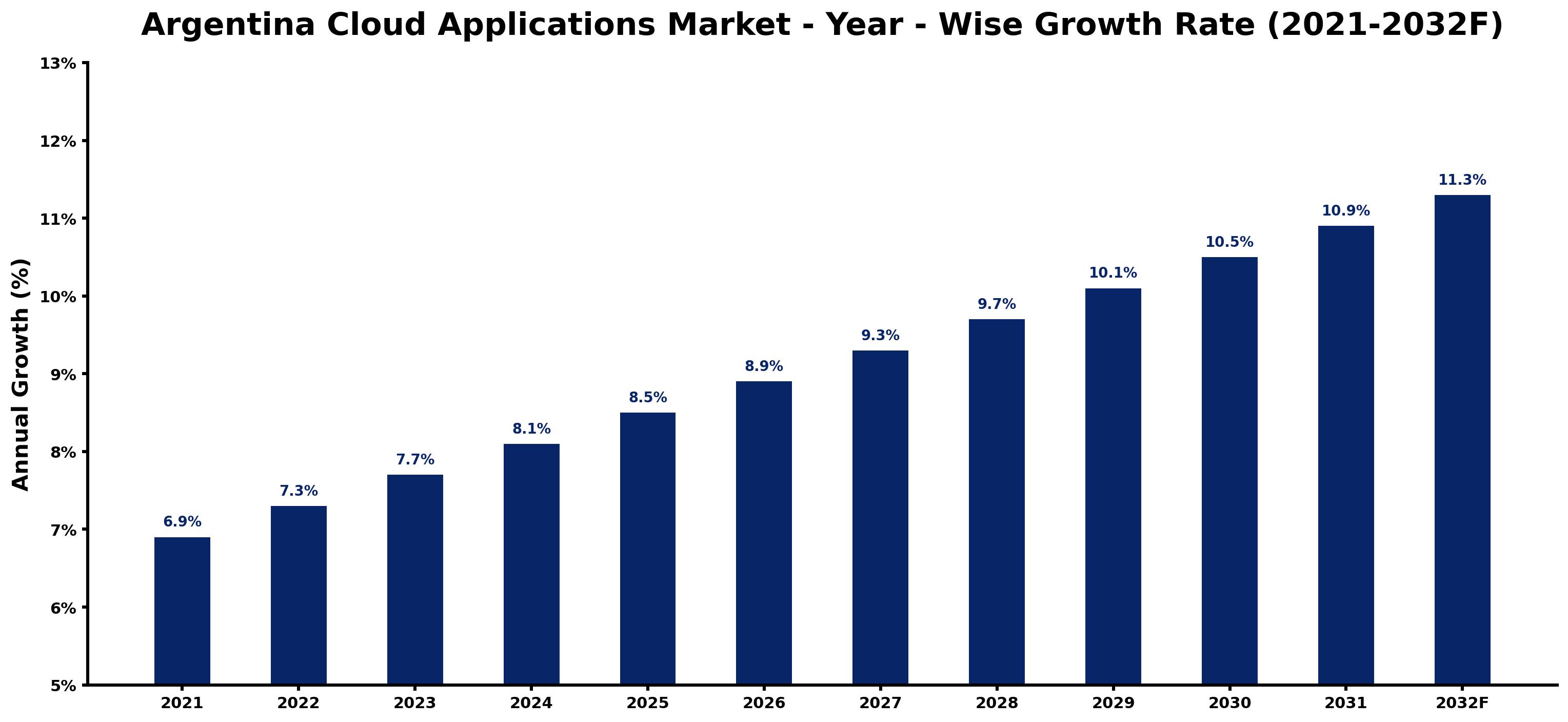
The table below presents the year‑wise growth rates along with the key drivers influencing the market
| Year | Growth Rate | Major Drivers |
| 2021 | 6.9% | COVID-19 recovery spurring investments in remote collaboration tools |
| 2022 | 7.3% | Increased adoption of cloud for e-commerce transformation activities |
| 2023 | 7.7% | Strong growth in fintech driving cloud-based solutions |
| 2024 | 8.1% | Local startups leveraging cloud for innovative service delivery |
| 2025 | 8.5% | Digital banking reforms boosting cloud security applications need |
| 2026 | 8.9% | Rising e-health initiatives enhancing cloud deployment for services |
| 2027 | 9.3% | Telecommunications upgrades enabling broader cloud accessibility nationwide |
| 2028 | 9.7% | Government push for smart agriculture utilizing cloud technologies |
| 2029 | 10.1% | Emerging tech incubators fostering cloud innovation in startups |
| 2030 | 10.5% | Increased foreign investment incentivizing cloud infrastructure development |
| 2031 | 10.9% | Regulatory changes streamlining data protection for cloud usage |
| 2032 | 11.3% | Large enterprises enhancing operational flexibility through cloud migration |
Note: Market size estimations and growth projections presented in this report are based on 6Wresearch's proprietary forecasting methodology, utilizing the latest available industry data, government publications, and primary research inputs.
Argentina Cloud Applications Market Key Takeaways
Below are some of the specific key takeaways from the market, including:
- Growing adoption of cloud applications is reshaping operational efficiency across various sectors.
- Software-as-a-Service (SaaS) solutions are leading the charge in cloud application growth.
- Digital transformation initiatives are key drivers behind the shift to cloud-based systems.
- Concerns around data security continue to challenge full-scale adoption of cloud solutions.
- The government is actively implementing policies to foster innovation and support cloud technology uptake.
Evaluation of Restraints in Argentina Cloud Applications Market
While the Argentina Cloud Applications Market shows significant promise, it is not without its challenges. A notable restraint is the hesitation among some businesses to fully transition from traditional on-premises systems to cloud-based platforms. This reluctance often stems from concerns about data security and privacy, particularly in sectors where sensitive information is prevalent. Organizations fear potential breaches and the implications of losing control over their data. This reluctance can slow down the overall market growth, as companies weigh the benefits of cloud applications against these valid concerns.
Argentina Cloud Applications Market Trends
Several trends are shaping the Argentina Cloud Applications Market. First, the increasing integration of artificial intelligence (AI) and machine learning (ML) into cloud applications is enhancing functionalities, enabling businesses to derive deeper insights from their data. Second, the shift toward mobile-first strategies is driving demand for cloud solutions that support remote work and accessibility. Third, the emphasis on sustainability is prompting organizations to adopt cloud applications that offer energy-efficient solutions. These trends indicate a shift not only in technology but also in the way businesses view operational efficiency.
Argentina Cloud Applications Market Opportunities
The Argentina Cloud Applications Market presents several growth opportunities. As businesses continue to embrace digital transformation, the demand for tailored cloud solutions is rising. Specific sectors such as healthcare and education are ripe for innovation, offering potential for specialized applications that cater to their unique needs. on top of that, as regulatory frameworks evolve to support cloud adoption, there will be more encouragement for small and medium enterprises to invest in these technologies. The increasing mobile penetration further complements this growth, as organizations seek solutions that can be accessed from anywhere.
Government Initiatives in the Argentina Cloud Applications Market
The Argentine government is actively supporting the growth of the cloud applications market by implementing a variety of initiatives aimed at promoting digital transformation across industries. Recognizing the importance of cloud technology in enhancing business efficiency, these initiatives are crucial for fostering an environment conducive to innovation. Effective policies and supportive frameworks are necessary to encourage the uptake of cloud solutions among businesses.
- A recent initiative introduced tax incentives for businesses adopting cloud-based applications to stimulate growth.
- Currently, a national digital infrastructure upgrade program is underway to enhance internet connectivity and access to cloud technologies.
- A planned public-private initiative aims to expand access to cloud computing resources in rural areas by 2028.
- The government has launched funding programs for research and development in cloud technology to foster innovation.
Future Insights of the Argentina Cloud Applications Market
Looking ahead to 2026-2032, the Argentina Cloud Applications Market is expected to continue its upward trajectory. The combination of increasing digital transformation efforts, along with government support, will likely drive further adoption of cloud solutions. Organizations will increasingly recognize the need for agility and scalability in their operations. As the market matures, the focus will shift toward more sophisticated applications, including advanced analytics and AI-driven solutions, reshaping the competitive landscape.
Argentina Cloud Applications Market Latest Developments
In the past year, the Argentina Cloud Applications Market has seen several notable developments reflecting the growing interest and investment in cloud technologies. Companies are increasingly looking to modernize their operations through cloud solutions, resulting in a flurry of activities aimed at enhancing service offerings and expanding market reach.
- A leading regional operator launched an updated cloud-based CRM platform in early 2025, enhancing user experience and integration capabilities.
- In Q1 2025, a major technology vendor rolled out a new suite of cloud applications tailored for the healthcare sector, addressing specific industry needs.
- A strategic partnership was announced in mid-2025 between two firms to develop innovative cloud solutions focused on small and medium enterprises.
- Upcoming in late 2025, a nationwide campaign is set to promote cloud literacy among businesses to support the adoption of digital solutions.
Argentina Cloud Applications Market - Key Attractiveness of the Report
- 10 Years of Market Numbers
- Historical Data Starting from 2022 to 2025
- Base Year: 2025
- Forecast Data until 2032
- Key Performance Indicators Impacting the Market
- Major Upcoming Developments and Projects
Key Highlights of the Report:
- Argentina Cloud Applications Market Outlook
- Market Size of Argentina Cloud Applications Market, 2025
- Forecast of Argentina Cloud Applications Market, 2032
- Historical Data and Forecast of Argentina Cloud Applications Revenues & Volume for the Period 2022-2032F
- Argentina Cloud Applications Market Trend Evolution
- Argentina Cloud Applications Market Drivers and Challenges
- Argentina Cloud Applications Price Trends
- Argentina Cloud Applications Porter's Five Forces
- Argentina Cloud Applications Industry Life Cycle
- Historical Data and Forecast of Argentina Cloud Applications Market Revenues & Volume By Application for the Period 2022-2032F
- Historical Data and Forecast of Argentina Cloud Applications Market Revenues & Volume By ERP for the Period 2022-2032F
- Historical Data and Forecast of Argentina Cloud Applications Market Revenues & Volume By CRM for the Period 2022-2032F
- Historical Data and Forecast of Argentina Cloud Applications Market Revenues & Volume By HCM for the Period 2022-2032F
- Historical Data and Forecast of Argentina Cloud Applications Market Revenues & Volume By SCM for the Period 2022-2032F
- Historical Data and Forecast of Argentina Cloud Applications Market Revenues & Volume By Content Management for the Period 2022-2032F
- Historical Data and Forecast of Argentina Cloud Applications Market Revenues & Volume By BI for the Period 2022-2032F
- Historical Data and Forecast of Argentina Cloud Applications Market Revenues & Volume By Analytics for the Period 2022-2032F
- Historical Data and Forecast of Argentina Cloud Applications Market Revenues & Volume By Vertical for the Period 2022-2032F
- Historical Data and Forecast of Argentina Cloud Applications Market Revenues & Volume By Banking, Financial Services, and Insurance (BFSI) for the Period 2022-2032F
- Historical Data and Forecast of Argentina Cloud Applications Market Revenues & Volume By Energy and Utilities for the Period 2022-2032F
- Historical Data and Forecast of Argentina Cloud Applications Market Revenues & Volume By Government and Public Sector for the Period 2022-2032F
- Historical Data and Forecast of Argentina Cloud Applications Market Revenues & Volume By Healthcare and Life Sciences for the Period 2022-2032F
- Historical Data and Forecast of Argentina Cloud Applications Market Revenues & Volume By Manufacturing for the Period 2022-2032F
- Historical Data and Forecast of Argentina Cloud Applications Market Revenues & Volume By Retail and Consumer Goods for the Period 2022-2032F
- Historical Data and Forecast of Argentina Cloud Applications Market Revenues & Volume By Telecommunications for the Period 2022-2032F
- Historical Data and Forecast of Argentina Cloud Applications Market Revenues & Volume By Transportation and Logistics for the Period 2022-2032F
- Historical Data and Forecast of Argentina Cloud Applications Market Revenues & Volume By Organization Size for the Period 2022-2032F
- Historical Data and Forecast of Argentina Cloud Applications Market Revenues & Volume By Small and Medium-sized Enterprises (SMEs) for the Period 2022-2032F
- Historical Data and Forecast of Argentina Cloud Applications Market Revenues & Volume By Large Enterprises for the Period 2022-2032F
- Argentina Cloud Applications Import Export Trade Statistics
- Market Opportunity Assessment By Application
- Market Opportunity Assessment By Vertical
- Market Opportunity Assessment By Organization Size
- Argentina Cloud Applications Top Companies Market Share
- Argentina Cloud Applications Competitive Benchmarking By Technical and Operational Parameters
- Argentina Cloud Applications Company Profiles
- Argentina Cloud Applications Key Strategic Recommendations






































