Argentina Electrical Equipment Market Summary
The argentina electrical equipment market was estimated at USD 264 Million in 2025 and is projected to reach USD 365 Million by 2032, growing at a CAGR of 5.3% from 2026 to 2032.
Argentina Electrical Equipment Market Year-wise Growth Rate and Key Drivers
This graph highlights how the Argentina Electrical Equipment Market has steadily grown over the past five years, supported by major growth factors.
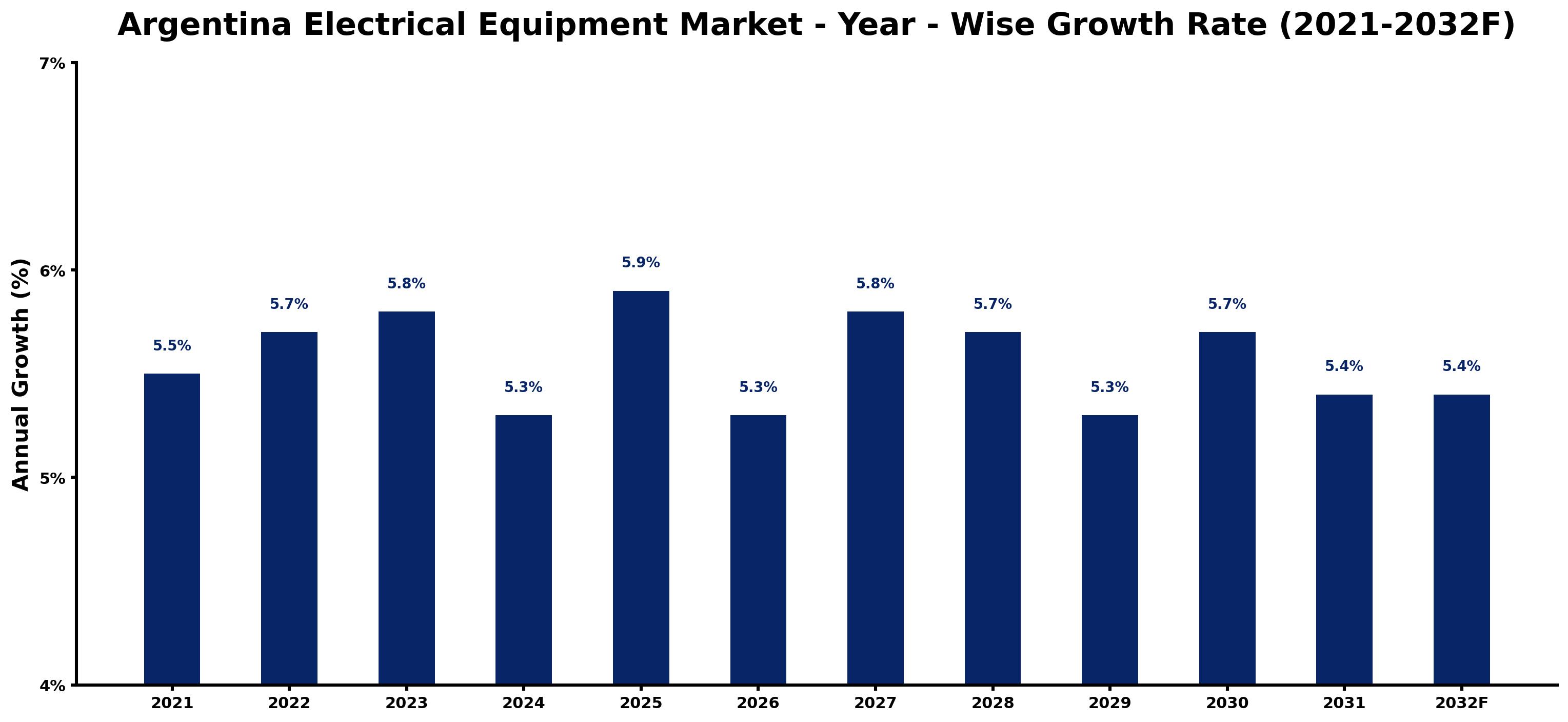
The table below presents the year wise growth rates along with the key drivers influencing the market
| Year | Growth Rate | Major Drivers |
| 2021 | 5.5% | Post-lockdown demand for electrical equipment in construction projects begins to recover. |
| 2022 | 5.7% | Investments in renewable energy sources stimulate the electrical equipment sector significantly. |
| 2023 | 5.8% | Technological upgrades in power distribution networks address inefficiencies and boost performance. |
| 2024 | 5.3% | Corporate budgets prioritize smart grid technologies to enhance energy management systems. |
| 2025 | 5.9% | Increased urbanization drives infrastructure development, creating demand for electrical components. |
| 2026 | 5.3% | Local manufacturers focus on producing energy-efficient equipment to meet sustainability goals. |
| 2027 | 5.8% | International partnerships facilitate knowledge transfer, enhancing local industry capabilities considerably. |
| 2028 | 5.7% | Emergence of electric vehicles accelerates the need for charging infrastructure installation. |
| 2029 | 5.3% | Shift towards digitized supply chains optimizes inventory management in electrical equipment sectors. |
| 2030 | 5.7% | Consumer awareness of energy conservation influences purchasing decisions for electrical products. |
| 2031 | 5.4% | Aging infrastructure prompts modernization projects, necessitating advanced electrical solutions and equipment. |
| 2032 | 5.4% | Evolving residential demands push for integrated smart home technologies in electrical installations. |
Note - Market size estimations and growth projections presented in this report are based on 6Wresearch's advanced forecasting approach, validated with industry datasets as of June 2026.
Argentina Electrical Equipment Market Synopsis
The Argentina Electrical Equipment Market is projected to reach 5.3% and witness significant growth during the forecast period (2026-2032). This market is being shaped by a multitude of factors including the increasing demand for electrical products such as transformers, circuit breakers, wires, cables, and various lighting solutions. The escalating industrial development, coupled with substantial infrastructure projects and heightened investments in renewable energy sources, is driving this growth trajectory.
Argentina Electrical Equipment Market Growth Drivers
The expansion of the Argentina Electrical Equipment Market is influenced by several key drivers:
- The industrial sector's growth is propelling demand for advanced electrical equipment needed for manufacturing processes and facility management, thereby fostering market expansion.
- Infrastructure projects, particularly in urban areas, are necessitating the installation of reliable electrical systems, further contributing to the demand for electrical devices.
- Investment in renewable energy sources such as wind and solar is not only creating a robust market for specialized electrical equipment but is also enhancing the push for energy-efficient solutions.
- Technological advancements, particularly the shift towards smart grids and smart homes, are increasing the market's appeal, as consumers are increasingly seeking automation and efficiency.
- Growing environmental awareness is motivating both businesses and consumers to switch to energy-efficient electrical products, providing a significant boost to market growth.
Argentina Electrical Equipment Market Trends and Opportunities
The Argentina Electrical Equipment Market is currently witnessing pivotal trends that present numerous opportunities:
- There is a marked shift towards sustainable electrical solutions, with increased adoption of LED lighting and energy-efficient appliances signaling a clear market direction.
- Smart home technologies are gaining traction, presenting a lucrative opportunity for manufacturers specializing in smart electrical devices and automation systems.
- The renewable energy sector's growth is ushering in demand for related electrical infrastructure, particularly in solar panel and wind turbine applications.
- Government incentives aimed at promoting energy efficiency are fostering an environment conducive to innovation and development within the electrical equipment sector.
- The rising trend of digitization within industries is driving the need for sophisticated electrical systems, which promises further market expansion in the coming years.
Argentina Electrical Equipment Market Challenges and Restraints
Despite the promising growth of the Argentina Electrical Equipment Market, several challenges persist that could restrain its progress:
- Economic instability and ongoing currency fluctuations can significantly impact production costs, leading to potential setbacks for manufacturers and suppliers.
- The highly competitive landscape, which includes both local and international firms, creates pricing pressures that may affect market stability and profitability.
- Infrastructure constraints, particularly in rural areas, could hinder the penetration of advanced electrical solutions, limiting market reach.
- Regulatory uncertainties can complicate compliance, leading to hesitancy among potential investors and complicating operational efficiencies.
- Fluctuations in the prices of raw materials and potential supply chain disruptions pose additional risks to manufacturing capabilities and product availability.
Argentina Electrical Equipment Market Investment Opportunities
In light of the current dynamics, several promising investment opportunities are emerging within the Argentina Electrical Equipment Market:
- The rising demand for renewable energy solutions, especially in solar and wind energy sectors, is creating significant opportunities for investments in electrical components and systems.
- Government incentives and subsidies for renewable energy projects enhance the attractiveness of entering the electrical equipment sector, encouraging further investments.
- Investment in energy storage solutions and technologies presents a lucrative opportunity, particularly as the market adapts to fluctuating energy demands.
- The increasing focus on energy efficiency and sustainable practices among consumers paves the way for innovative product development and market entry potential.
- As Argentina transitions towards a more sustainable energy landscape, investments in smart electrical systems that facilitate energy management are likely to thrive.
Argentina Electrical Equipment Market Government Investment and Initiatives
Government policies play a critical role in shaping the Argentina Electrical Equipment Market. Initiatives aimed at boosting domestic production include import restrictions and tariffs designed to protect local industries. The government is also encouraging technological innovation through various incentives directed toward local manufacturers. Furthermore, initiatives promoting energy efficiency and renewable sources are driving demand for specific electrical products, such as solar panels and energy-efficient appliances. Regulations designed to ensure safety and compliance with international standards further strengthen consumer trust within the market, ultimately fostering stability and growth.
Argentina Electrical Equipment Market Latest Developments (May 2025 - June 2026)
From May 2025 to June 2026, the Argentina Electrical Equipment Market has experienced several notable developments. The focus on environmental sustainability has intensified, with a significant rise in renewable energy projects prompting increased demand for related electrical infrastructure. Technological innovations, especially in smart electrical systems, are becoming more prevalent, enhancing the capabilities of traditional electrical equipment. Additionally, collaborations between private and public sectors are emerging to address regulatory challenges and improve product offerings. As the market adapts to the evolving energy landscape, the emphasis on quality and sustainability continues to drive growth momentum.
Argentina Electrical Equipment Market - Key Attractiveness of the Report
- 10 Years of Market Numbers
- Historical Data Starting from 2022 to 2025
- Base Year: 2025
- Forecast Data until 2032
- Key Performance Indicators Impacting the Market
- Major Upcoming Developments and Projects
Key Highlights of the Report:
- Argentina Electrical Equipment Market Outlook
- Market Size of Argentina Electrical Equipment Market, 2025
- Forecast of Argentina Electrical Equipment Market, 2032F
- Historical Data and Forecast of Argentina Electrical Equipment Revenues & Volume for the Period 2022-2032F
- Argentina Electrical Equipment Market Trend Evolution
- Argentina Electrical Equipment Market Drivers and Challenges
- Argentina Electrical Equipment Price Trends
- Argentina Electrical Equipment Porter's Five Forces
- Argentina Electrical Equipment Industry Life Cycle
- Historical Data and Forecast of Argentina Electrical Equipment Market Revenues & Volume By Types for the Period 2022-2032F
- Historical Data and Forecast of Argentina Electrical Equipment Market Revenues & Volume By Electronic and electrical wires and cables for the Period 2022-2032F
- Historical Data and Forecast of Argentina Electrical Equipment Market Revenues & Volume By Batteries and accumulators for the Period 2022-2032F
- Historical Data and Forecast of Argentina Electrical Equipment Market Revenues & Volume By Wiring devices for the Period 2022-2032F
- Historical Data and Forecast of Argentina Electrical Equipment Market Revenues & Volume By Electric lighting equipment for the Period 2022-2032F
- Historical Data and Forecast of Argentina Electrical Equipment Market Revenues & Volume By Others for the Period 2022-2032F
- Historical Data and Forecast of Argentina Electrical Equipment Market Revenues & Volume By Applications for the Period 2022-2032F
- Historical Data and Forecast of Argentina Electrical Equipment Market Revenues & Volume By Residential end-users for the Period 2022-2032F
- Historical Data and Forecast of Argentina Electrical Equipment Market Revenues & Volume By Non-residential end-users for the Period 2022-2032F
- Argentina Electrical Equipment Import Export Trade Statistics
- Market Opportunity Assessment By Types
- Market Opportunity Assessment By Applications
- Argentina Electrical Equipment Top Companies Market Share
- Argentina Electrical Equipment Competitive Benchmarking By Technical and Operational Parameters
- Argentina Electrical Equipment Company Profiles
- Argentina Electrical Equipment Key Strategic Recommendations






































