Argentina Ergonomic Chair Market Size, Share & Growth Rate
The Argentina Ergonomic Chair Market was estimated at USD 1188 Million in 2025 and is projected to reach USD 2150 Million by 2032, growing at a CAGR of 8.8% from 2026 to 2032. This upward trajectory is primarily fueled by an increasing focus on employee well-being and productivity, particularly as businesses adapt to hybrid and remote working arrangements. Furthermore, the rising awareness of the adverse effects of prolonged sitting on health has heightened the demand for ergonomic seating solutions across various sectors in Argentina.
Argentina Ergonomic Chair Market Year-wise Growth Rate and Key Drivers
This graph highlights how the Argentina Ergonomic Chair Market has steadily grown over the years, supported by major growth factors.
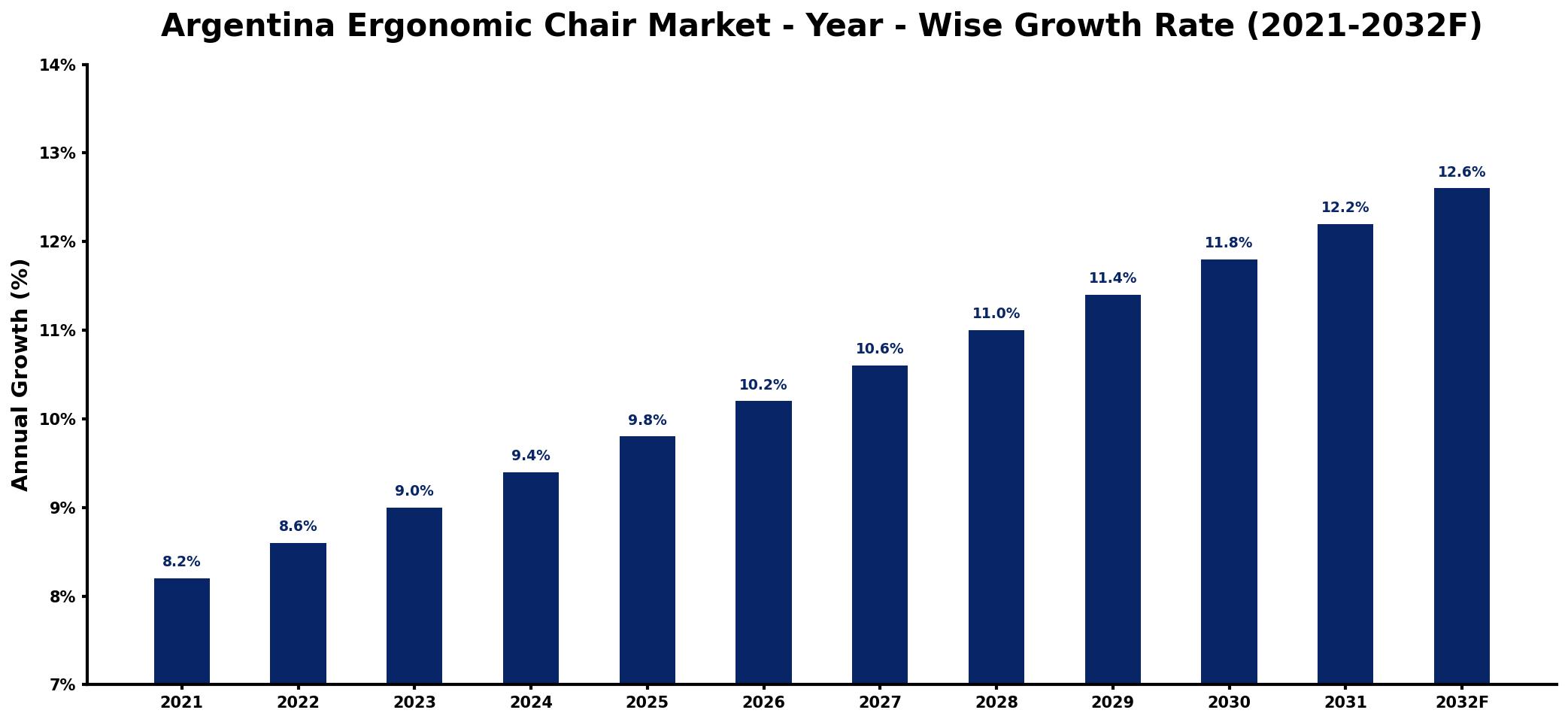
The table below presents the year‑wise growth rates along with the key drivers influencing the market
| Year | Growth Rate | Major Drivers |
| 2021 | 8.2% | rising awareness of health benefits |
| 2022 | 8.6% | increased remote work prevalence |
| 2023 | 9.0% | growing focus on employee wellness |
| 2024 | 9.4% | expansion of home office market |
| 2025 | 9.8% | surge in corporate wellness programs |
| 2026 | 10.2% | enhanced design innovations introduced |
| 2027 | 10.6% | expanding healthcare application demand |
| 2028 | 11.0% | growing demand from tech companies |
| 2029 | 11.4% | improved raw material availability |
| 2030 | 11.8% | increased adoption of smart technologies |
| 2031 | 12.2% | growing awareness of posture correction |
| 2032 | 12.6% | increased collaborations with healthcare professionals |
Note: Market size estimations and growth projections presented in this report are based on 6Wresearch's proprietary forecasting methodology, utilizing the latest available industry data, government publications, and primary research inputs.
Argentina Ergonomic Chair Market Synopsis
The recent momentum in the Argentina Ergonomic Chair Market reflects a broader trend towards health-conscious work environments, yet significant opportunities for growth remain on the horizon. As businesses increasingly recognize the value of ergonomic chairs in mitigating health issues, the market is expected to expand robustly, propelled by innovative designs and features tailored to diverse user needs.
With a notable shift towards flexible work setups and a heightened focus on sustainability, manufacturers are introducing ergonomic chairs that not only enhance comfort but also incorporate eco-friendly materials. This evolution aligns with changing consumer preferences and regulatory frameworks, further establishing a solid foundation for future growth in the Argentina Ergonomic Chair Market.
Argentina Ergonomic Chair Market Key Takeaways
- The market is experiencing significant growth due to heightened awareness around workplace ergonomics.
- Innovative features such as adjustable lumbar support and eco-friendly materials are increasingly in demand.
- Online sales channels are emerging as a popular option for customers seeking convenience in purchasing ergonomic chairs.
- Investment opportunities lie in manufacturing ergonomic chairs that cater to various industries.
- Government policies are promoting workplace safety, further boosting market demand.
Evaluation of Restraints in Argentina Ergonomic Chair Market
Despite the promising outlook, the Argentina Ergonomic Chair Market is confronted with several restraints. Economic instability has led to fluctuations in consumer purchasing power, often deterring investments in higher-priced ergonomic solutions. Moreover, the presence of counterfeit products poses a significant challenge, undermining the credibility of genuine brands. Additionally, limited consumer awareness regarding the benefits of ergonomic furniture restricts the market's potential, necessitating targeted educational initiatives to expand the consumer base.
Argentina Ergonomic Chair Market Trends
Current trends in the Argentina Ergonomic Chair Market highlight a growing demand for advanced ergonomic features. Adjustable lumbar support, multi-position tilt mechanisms, and personalized designs are shaping the products offered. Additionally, an increasing emphasis on sustainability is reflected in the rising preference for chairs made from eco-friendly materials. As more companies adopt flexible working arrangements, ergonomic chairs are becoming essential investments in employee well-being, enhancing comfort, productivity, and overall workplace satisfaction.
Argentina Ergonomic Chair Market Opportunities
The Argentina Ergonomic Chair Market offers substantial investment opportunities as organizations place greater emphasis on employee health. Manufacturers can capitalize on this trend by developing a diverse range of ergonomic chairs, tailored to various work environments, from corporate offices to home setups. Incorporating innovative features such as adjustable settings and breathable materials can effectively differentiate products and attract a broader customer base. Additionally, the market's sustained growth presents attractive avenues for investors seeking to support ergonomic solutions in an evolving work landscape.
Government Initiatives in the Argentina Ergonomic Chair Market
The Argentine government has been proactive in fostering a healthier work environment through various initiatives aimed at promoting ergonomic standards. Regulations now mandate employers to provide ergonomic furniture to enhance employee comfort and productivity, directly addressing musculoskeletal disorders. Tax incentives and subsidies are also available to businesses investing in ergonomic solutions, demonstrating a commitment to workplace health. Collaborative efforts with industry associations help develop guidelines that ensure the quality and effectiveness of ergonomic chairs across the market.
Future Insights of the Argentina Ergonomic Chair Market
Looking ahead to 2026-2032, the Argentina Ergonomic Chair Market is set for continued expansion. As organizations invest in creating ergonomic workspaces and prioritize employee well-being, the demand for ergonomic chairs will likely soar. With the integration of new technologies and innovative designs, manufacturers will need to adapt to evolving consumer preferences while ensuring sustainable practices. As awareness about the benefits of ergonomic furniture grows, the market is poised to transform, reflecting a future where comfort and health are integral to work environments.
Argentina Ergonomic Chair Market Latest Developments (2025 - 2026)
The Argentina Ergonomic Chair Market is witnessing several notable developments, with manufacturers increasingly focusing on enhancing product functionality and user experience. Recent trends indicate a shift towards online retailing, with brands investing in e-commerce platforms to reach a wider audience. Collaborative efforts between designers and health experts are driving innovations that prioritize user well-being. Furthermore, sustainability initiatives are becoming a focal point for manufacturers, aligning with growing consumer demands for eco-conscious products.
Argentina Ergonomic Chair Market - Key Attractiveness of the Report
- 10 Years of Market Numbers
- Historical Data Starting from 2022 to 2025
- Base Year: 2025
- Forecast Data until 2032
- Key Performance Indicators Impacting the Market
- Major Upcoming Developments and Projects
Key Highlights of the Report:
- Argentina Ergonomic Chair Market Outlook
- Market Size of Argentina Ergonomic Chair Market, 2025
- Forecast of Argentina Ergonomic Chair Market, 2032
- Historical Data and Forecast of Argentina Ergonomic Chair Revenues & Volume for the Period 2022-2032F
- Argentina Ergonomic Chair Market Trend Evolution
- Argentina Ergonomic Chair Market Drivers and Challenges
- Argentina Ergonomic Chair Price Trends
- Argentina Ergonomic Chair Porter's Five Forces
- Argentina Ergonomic Chair Industry Life Cycle
- Historical Data and Forecast of Argentina Ergonomic Chair Market Revenues & Volume By Application for the Period 2022-2032F
- Historical Data and Forecast of Argentina Ergonomic Chair Market Revenues & Volume By Enterprise Procurement for the Period 2022-2032F
- Historical Data and Forecast of Argentina Ergonomic Chair Market Revenues & Volume By Government Procurement for the Period 2022-2032F
- Historical Data and Forecast of Argentina Ergonomic Chair Market Revenues & Volume By School Procurement for the Period 2022-2032F
- Historical Data and Forecast of Argentina Ergonomic Chair Market Revenues & Volume By Individual Procurement for the Period 2022-2032F
- Historical Data and Forecast of Argentina Ergonomic Chair Market Revenues & Volume By Other for the Period 2022-2032F
- Argentina Ergonomic Chair Import Export Trade Statistics
- Market Opportunity Assessment By Application
- Argentina Ergonomic Chair Top Companies Market Share
- Argentina Ergonomic Chair Competitive Benchmarking By Technical and Operational Parameters
- Argentina Ergonomic Chair Company Profiles
- Argentina Ergonomic Chair Key Strategic Recommendations






































