Argentina Functional Apparel Market Size, Share & Growth Rate
The Argentina Functional Apparel Market was estimated at USD 1453 Million in 2025 and is projected to reach USD 2130 Million by 2032, growing at a CAGR of 5.6% from 2026 to 2032. This remarkable trajectory is fueled by a heightened consumer focus on health and fitness, alongside a surge in outdoor activities. The integration of advanced materials that offer moisture-wicking, UV protection, and odor control is resonating well with a populace increasingly committed to active lifestyles.
Argentina Functional Apparel Market Year-wise Growth Rate and Key Drivers
This graph highlights how the Argentina Functional Apparel Market has steadily grown over the years, supported by major growth factors.
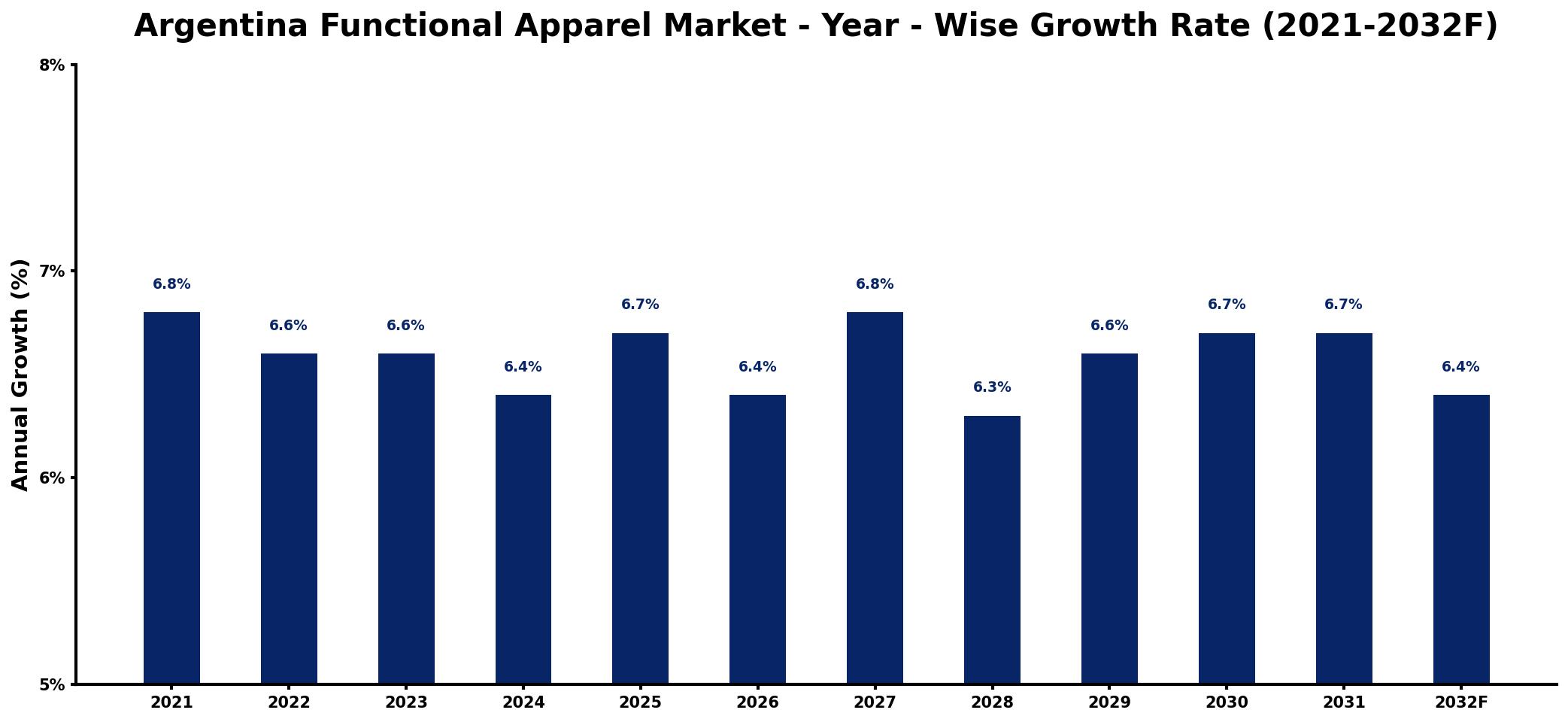
The table below presents the year‑wise growth rates along with the key drivers influencing the market
| Year | Growth Rate | Major Drivers |
| 2021 | 6.8% | Rising consumer health awareness |
| 2022 | 6.6% | Increased outdoor activity participation |
| 2023 | 6.6% | Growth in e-commerce platforms |
| 2024 | 6.4% | Expansion of fitness trends |
| 2025 | 6.7% | Innovative textile technology advancements |
| 2026 | 6.4% | Sustainability initiatives gaining traction |
| 2027 | 6.8% | Investment in local manufacturing |
| 2028 | 6.3% | Emergence of new brands |
| 2029 | 6.6% | Collaboration between fitness influencers |
| 2030 | 6.7% | Customization options attracting customers |
| 2031 | 6.7% | Growth of wellness lifestyle market |
| 2032 | 6.4% | Integration of smart technology |
Note: Market size estimations and growth projections presented in this report are based on 6Wresearch's proprietary forecasting methodology, utilizing the latest available industry data, government publications, and primary research inputs.
Argentina Functional Apparel Market Synopsis
Currently, the Argentina Functional Apparel Market is experiencing vibrant growth, largely spurred by evolving consumer preferences for versatile, high-performance clothing. As more individuals engage in fitness and outdoor pursuits, the appeal of apparel that combines comfort and functionality is undeniable.
Diverse product offerings tailored for sports, outdoor recreation, and athleisure are gaining traction, as brands innovate to integrate technology with style. This blend not only meets functional needs but also aligns with the aesthetic values of the modern consumer.
Argentina Functional Apparel Market Key Takeaways
- Increased consumer awareness about health and fitness is driving demand.
- Technological advancements in fabric production are enhancing product appeal.
- Athleisure wear is becoming a significant segment within the functional apparel category.
- Investment in sustainable practices is shaping brand strategies and consumer choices.
- Government support is facilitating innovations and compliance within the industry.
Evaluation of Restraints in Argentina Functional Apparel Market
Despite its promising growth, the Argentina Functional Apparel Market faces several restraints. A key challenge lies in effectively educating consumers about the tangible benefits of functional clothing. Many potential buyers remain unaware of how these garments enhance performance and comfort. Additionally, price sensitivity plays a significant role, as some consumers may opt for more affordable alternatives, diluting the market for high-end functional apparel. Balancing style with durability and performance necessitates ongoing innovation and substantial investment in research and development, further complicating the market landscape.
Argentina Functional Apparel Market Trends
The trend toward health-conscious living is not just a passing fad; it is reshaping consumer behavior and preferences. In Argentina, there is a notable shift towards athleisure, where apparel is designed to transition seamlessly from workout to daily wear. Brands are increasingly focusing on sustainable materials, responding to consumer demand for eco-friendly products that do not compromise on quality or performance. Innovations in smart textiles, such as temperature regulation and built-in sensors, are also emerging, positioning functional apparel at the forefront of technological advancement.
Argentina Functional Apparel Market Opportunities
As the market expands, there are considerable growth opportunities for companies willing to innovate. The increasing interest in outdoor recreation—ranging from hiking to cycling—presents a ripe avenue for brands to develop specialized apparel. Additionally, as consumers become more environmentally conscious, there is a demand for sustainable functional apparel that meets high performance standards while being eco-friendly. Collaborations between tech firms and apparel manufacturers could lead to groundbreaking developments in smart clothing, opening new segments within the market.
Government Initiatives in the Argentina Functional Apparel Market
The Argentine government has undertaken various initiatives to bolster the growth of the functional apparel market. Policies are aimed at promoting research and development in textile technologies and providing incentives for manufacturers focusing on functional fabric innovation. Compliance with stringent safety and quality standards is also emphasized, ensuring that products meet consumer expectations. Additionally, financial assistance and tax breaks are available for companies committing to advancements within the functional apparel sector, further stimulating market activity.
Future Insights of the Argentina Functional Apparel Market
Looking ahead to 2026-2032, the Argentina Functional Apparel Market is poised for substantial growth. The convergence of health trends with technological advancements is likely to redefine product offerings and consumer experiences. Brands that adapt to the increasing demand for versatile, stylish, and functional clothing will likely thrive. Additionally, the rise of conscious consumerism will compel companies to invest in sustainable practices and transparency, fostering deeper connections with their target audiences.
Argentina Functional Apparel Market Latest Developments (2025 - 2026)
Recent industry developments indicate a strong move towards innovation in the functional apparel sector. Companies are unveiling new product lines that incorporate cutting-edge technologies to enhance comfort and performance. Collaborations with research institutions are being formed to explore advanced material applications. Consumer interest in sustainability is prompting brands to launch eco-friendly collections, reflecting a growing commitment to environmental responsibility in product manufacturing.
Argentina Functional Apparel Market - Key Attractiveness of the Report
- 10 Years of Market Numbers
- Historical Data Starting from 2022 to 2025
- Base Year: 2025
- Forecast Data until 2032
- Key Performance Indicators Impacting the Market
- Major Upcoming Developments and Projects
Key Highlights of the Report:
- Argentina Functional Apparel Market Outlook
- Market Size of Argentina Functional Apparel Market, 2025
- Forecast of Argentina Functional Apparel Market, 2032
- Historical Data and Forecast of Argentina Functional Apparel Revenues & Volume for the Period 2022-2032F
- Argentina Functional Apparel Market Trend Evolution
- Argentina Functional Apparel Market Drivers and Challenges
- Argentina Functional Apparel Price Trends
- Argentina Functional Apparel Porter's Five Forces
- Argentina Functional Apparel Industry Life Cycle
- Historical Data and Forecast of Argentina Functional Apparel Market Revenues & Volume By Product Type for the Period 2022-2032F
- Historical Data and Forecast of Argentina Functional Apparel Market Revenues & Volume By Sportswear for the Period 2022-2032F
- Historical Data and Forecast of Argentina Functional Apparel Market Revenues & Volume By Activewear for the Period 2022-2032F
- Historical Data and Forecast of Argentina Functional Apparel Market Revenues & Volume By Protective Clothing for the Period 2022-2032F
- Historical Data and Forecast of Argentina Functional Apparel Market Revenues & Volume By Others for the Period 2022-2032F
- Historical Data and Forecast of Argentina Functional Apparel Market Revenues & Volume By Application for the Period 2022-2032F
- Historical Data and Forecast of Argentina Functional Apparel Market Revenues & Volume By Sports Industry for the Period 2022-2032F
- Historical Data and Forecast of Argentina Functional Apparel Market Revenues & Volume By Outdoor Clothing for the Period 2022-2032F
- Historical Data and Forecast of Argentina Functional Apparel Market Revenues & Volume By Healthcare sector for the Period 2022-2032F
- Historical Data and Forecast of Argentina Functional Apparel Market Revenues & Volume By Distribution Channel for the Period 2022-2032F
- Historical Data and Forecast of Argentina Functional Apparel Market Revenues & Volume By Offline Store for the Period 2022-2032F
- Historical Data and Forecast of Argentina Functional Apparel Market Revenues & Volume By Online Store for the Period 2022-2032F
- Argentina Functional Apparel Import Export Trade Statistics
- Market Opportunity Assessment By Product Type
- Market Opportunity Assessment By Application
- Market Opportunity Assessment By Distribution Channel
- Argentina Functional Apparel Top Companies Market Share
- Argentina Functional Apparel Competitive Benchmarking By Technical and Operational Parameters
- Argentina Functional Apparel Company Profiles
- Argentina Functional Apparel Key Strategic Recommendations






































