Argentina Lumber Market Size Growth Rate
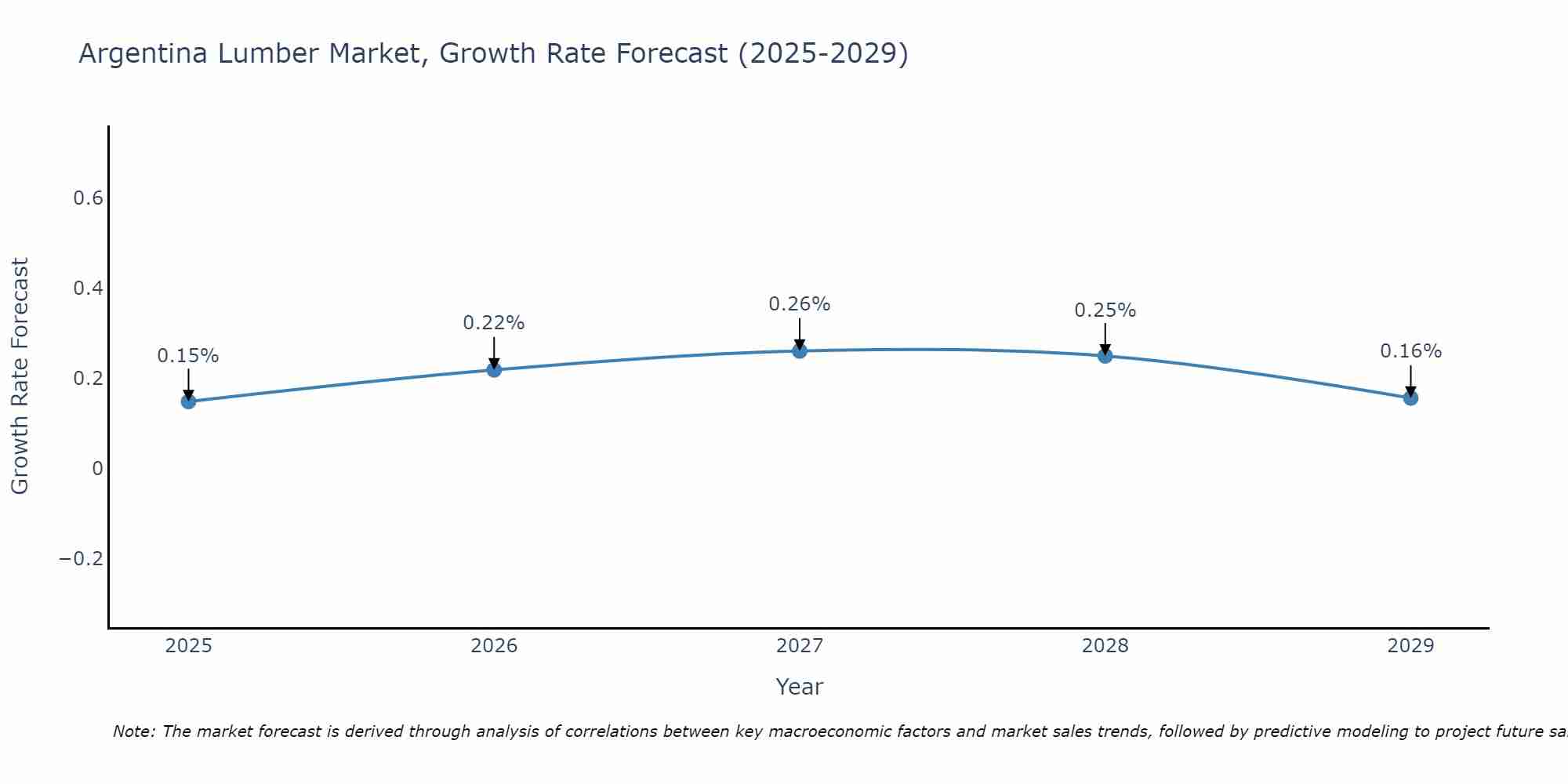
The Argentina Lumber Market is projected to witness mixed growth rate patterns during 2025 to 2029. The growth rate begins at 0.15% in 2025, climbs to a high of 0.26% in 2027, and moderates to 0.16% by 2029.
Argentina Lumber Market Synopsis
The Lumber market in Argentina is experiencing steady demand, driven by construction activities, furniture manufacturing, and infrastructure development projects. Lumber products, including hardwoods and softwoods, are essential building materials used in residential, commercial, and industrial construction projects. With the growing urban population and infrastructure investments, the demand for quality lumber products is expected to remain robust in Argentina, presenting opportunities for domestic producers and importers alike.
Drivers of the market
The Lumber market in Argentina is experiencing growth fueled by the expanding construction and furniture manufacturing industries. Lumber, also known as timber or wood, is a vital raw material used in various applications such as building construction, furniture production, and paper manufacturing. With the increasing urbanization and infrastructure development in Argentina, there is a rising demand for high-quality lumber products sourced from sustainable forest management practices. Moreover, the growing trend towards eco-friendly and renewable building materials is driving the adoption of lumber in construction projects across the country. Additionally, government initiatives aimed at promoting sustainable forestry and supporting the timber industry are further boosting market growth in Argentina.
Challenges of the market
The Argentina Lumber Market faces several challenges that impact its sustainability and competitiveness in domestic and international markets. One significant challenge is the management and conservation of native forests, which are the primary sources of timber resources in the region. Balancing the demand for lumber with the need for forest preservation requires sustainable forestry practices, land-use planning, and regulatory enforcement to prevent deforestation and habitat loss. Additionally, addressing illegal logging and timber trade poses governance and law enforcement challenges, requiring collaboration among government agencies, industry stakeholders, and civil society organizations. Moreover, fluctuations in global lumber prices and demand volatility in key export markets create market uncertainty and investment risks for timber producers and exporters in Argentina, necessitating diversification strategies and value-added product development initiatives.
Government Policy of the market
Argentina government has implemented policies to regulate and promote sustainable forestry practices in the lumber market to ensure the long-term viability of the country`s forest resources. Recognizing the environmental, economic, and social benefits of sustainable forestry management, the government has introduced regulations to control deforestation, promote reforestation, and prevent illegal logging activities. These policies include land use planning regulations, forest certification programs, and incentives for landowners to implement sustainable forestry practices. Additionally, the government works with industry stakeholders to develop standards and guidelines for the sustainable harvesting and processing of timber products, ensuring compliance with environmental and social criteria. By promoting sustainable forestry management practices, the government aims to preserve biodiversity, mitigate climate change, and support the growth of the lumber industry in Argentina.
Key Highlights of the Report:
- Argentina Lumber Market Outlook
- Market Size of Argentina Lumber Market, 2025
- Forecast of Argentina Lumber Market, 2032
- Historical Data and Forecast of Argentina Lumber Revenues & Volume for the Period 2022-2032F
- Argentina Lumber Market Trend Evolution
- Argentina Lumber Market Drivers and Challenges
- Argentina Lumber Price Trends
- Argentina Lumber Porter's Five Forces
- Argentina Lumber Industry Life Cycle
- Historical Data and Forecast of Argentina Lumber Market Revenues & Volume By Types for the Period 2022-2032F
- Historical Data and Forecast of Argentina Lumber Market Revenues & Volume By Hardwood Lumber for the Period 2022-2032F
- Historical Data and Forecast of Argentina Lumber Market Revenues & Volume By Softwood Lumber for the Period 2022-2032F
- Historical Data and Forecast of Argentina Lumber Market Revenues & Volume By Application for the Period 2022-2032F
- Historical Data and Forecast of Argentina Lumber Market Revenues & Volume By Construction for the Period 2022-2032F
- Historical Data and Forecast of Argentina Lumber Market Revenues & Volume By Furniture for the Period 2022-2032F
- Historical Data and Forecast of Argentina Lumber Market Revenues & Volume By Flooring for the Period 2022-2032F
- Historical Data and Forecast of Argentina Lumber Market Revenues & Volume By Moldings for the Period 2022-2032F
- Historical Data and Forecast of Argentina Lumber Market Revenues & Volume By Others for the Period 2022-2032F
- Argentina Lumber Import Export Trade Statistics
- Market Opportunity Assessment By Types
- Market Opportunity Assessment By Application
- Argentina Lumber Top Companies Market Share
- Argentina Lumber Competitive Benchmarking By Technical and Operational Parameters
- Argentina Lumber Company Profiles
- Argentina Lumber Key Strategic Recommendations






































