Australia Outdoor Furniture Market Size Growth Rate
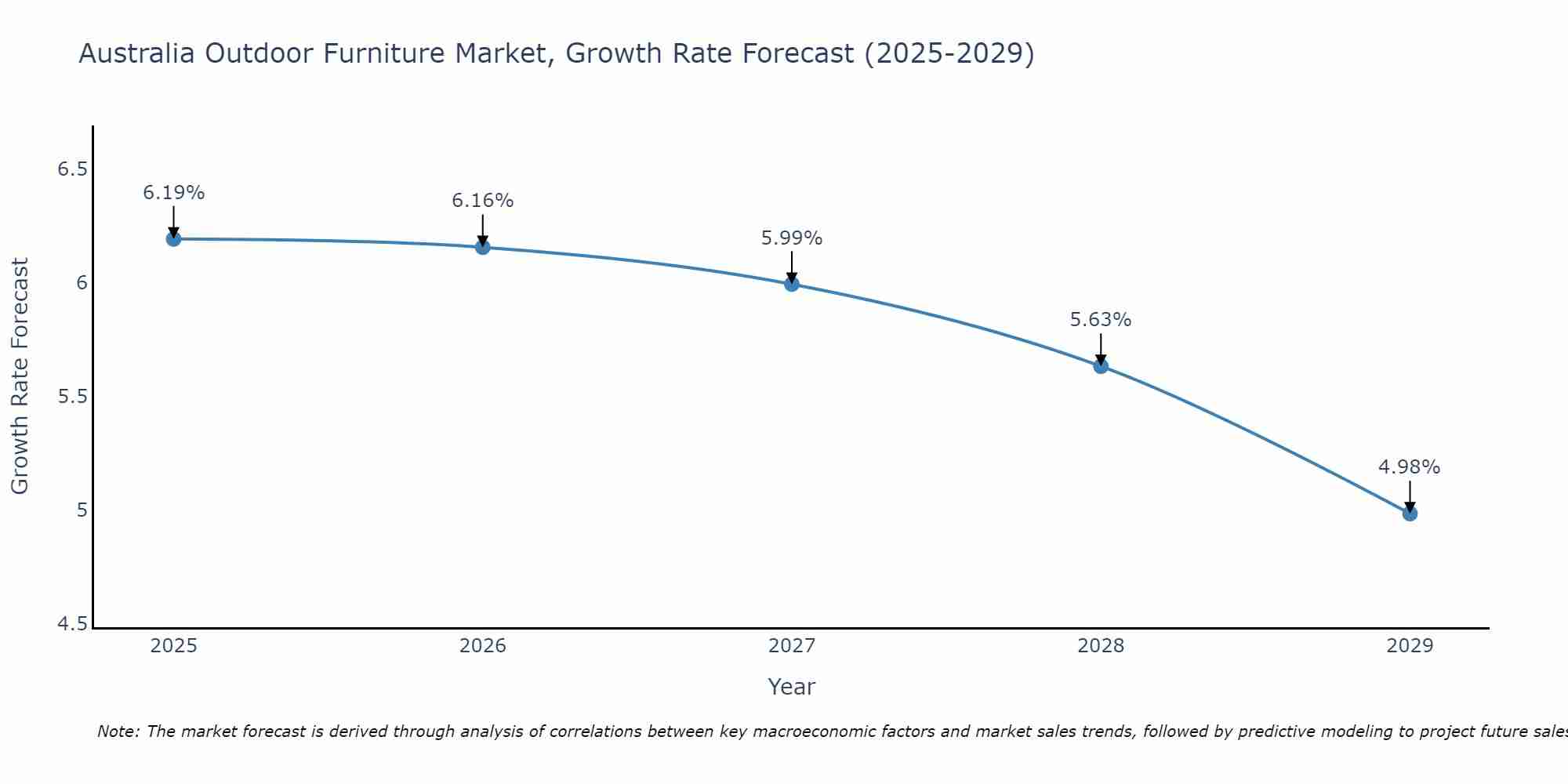
The Australia Outdoor Furniture Market may undergo a gradual slowdown in growth rates between 2025 and 2029. Although the growth rate starts strong at 6.19% in 2025, it steadily loses momentum, ending at 4.98% by 2029.
Australia Outdoor Furniture Market Synopsis
The outdoor furniture market in Australia is witnessing growth due to rising interest in patio and garden aesthetics. The hospitality and residential sectors are driving demand for durable, weather-resistant furniture. Eco-friendly materials, modular designs, and smart furniture solutions with built-in heating or lighting features are shaping market trends.
Drivers of the market
The outdoor furniture market in Australia is driven by the country`s strong culture of outdoor living, increased spending on home improvement, and the rising popularity of eco-friendly and durable furniture. Consumers are opting for stylish and weather-resistant materials such as aluminum, teak, and synthetic wicker, while the growth of the tourism and hospitality sector, including resorts and hotels, also fuels demand. Urbanization and a focus on enhancing outdoor spaces, particularly in residential and commercial properties, further accelerate market expansion.
Challenges of the market
The outdoor furniture market in Australia faces challenges due to fluctuating raw material costs, particularly wood, metal, and synthetic materials, which impact manufacturing expenses. Harsh weather conditions, including extreme heat, UV exposure, and heavy rainfall, necessitate durable and weather-resistant designs, increasing production costs. Competition from low-cost imports, especially from China and Southeast Asia, further pressures local manufacturers to maintain competitive pricing. Additionally, consumer demand is highly seasonal, with sales peaking during warmer months and slowing in colder seasons, creating inventory management challenges.
Investment opportunities in the Market
The growing demand for aesthetic and durable outdoor furniture in Australia, driven by tourism and residential landscaping, creates opportunities for sustainable materials, weather-resistant designs, and smart outdoor furniture innovations.
Government Policy of the market
The outdoor furniture market in Australia is regulated under consumer safety and environmental sustainability policies to ensure that products meet durability, fire resistance, and weatherproofing standards. The Australian Competition and Consumer Commission (ACCC) enforces quality regulations for outdoor furniture, particularly regarding UV protection and resistance to extreme weather conditions. Import policies require that foreign-manufactured outdoor furniture meets Australian Standards (AS) before distribution. Additionally, government initiatives promoting eco-friendly materials encourage the adoption of sustainable and recycled materials in outdoor furniture manufacturing.
Key Highlights of the Report:
- Australia Outdoor Furniture Market Outlook
- Market Size of Australia Outdoor Furniture Market, 2024
- Forecast of Australia Outdoor Furniture Market, 2031
- Historical Data and Forecast of Australia Outdoor Furniture Revenues & Volume for the Period 2018 - 2031
- Australia Outdoor Furniture Market Trend Evolution
- Australia Outdoor Furniture Market Drivers and Challenges
- Australia Outdoor Furniture Price Trends
- Australia Outdoor Furniture Porter's Five Forces
- Australia Outdoor Furniture Industry Life Cycle
- Historical Data and Forecast of Australia Outdoor Furniture Market Revenues & Volume By Material for the Period 2018 - 2031
- Historical Data and Forecast of Australia Outdoor Furniture Market Revenues & Volume By Wood for the Period 2018 - 2031
- Historical Data and Forecast of Australia Outdoor Furniture Market Revenues & Volume By Metal for the Period 2018 - 2031
- Historical Data and Forecast of Australia Outdoor Furniture Market Revenues & Volume By Plastic for the Period 2018 - 2031
- Historical Data and Forecast of Australia Outdoor Furniture Market Revenues & Volume By Other Materials for the Period 2018 - 2031
- Historical Data and Forecast of Australia Outdoor Furniture Market Revenues & Volume By Product for the Period 2018 - 2031
- Historical Data and Forecast of Australia Outdoor Furniture Market Revenues & Volume By Chair for the Period 2018 - 2031
- Historical Data and Forecast of Australia Outdoor Furniture Market Revenues & Volume By Tables for the Period 2018 - 2031
- Historical Data and Forecast of Australia Outdoor Furniture Market Revenues & Volume By Seating sets for the Period 2018 - 2031
- Historical Data and Forecast of Australia Outdoor Furniture Market Revenues & Volume By Loungers and Daybeds for the Period 2018 - 2031
- Historical Data and Forecast of Australia Outdoor Furniture Market Revenues & Volume By Dining Sets for the Period 2018 - 2031
- Historical Data and Forecast of Australia Outdoor Furniture Market Revenues & Volume By Other Products for the Period 2018 - 2031
- Historical Data and Forecast of Australia Outdoor Furniture Market Revenues & Volume By Market Type for the Period 2018 - 2031
- Historical Data and Forecast of Australia Outdoor Furniture Market Revenues & Volume By Organised for the Period 2018 - 2031
- Historical Data and Forecast of Australia Outdoor Furniture Market Revenues & Volume By Unorganised for the Period 2018 - 2031
- Historical Data and Forecast of Australia Outdoor Furniture Market Revenues & Volume By End User for the Period 2018 - 2031
- Historical Data and Forecast of Australia Outdoor Furniture Market Revenues & Volume By Commercial for the Period 2018 - 2031
- Historical Data and Forecast of Australia Outdoor Furniture Market Revenues & Volume By Residential for the Period 2018 - 2031
- Historical Data and Forecast of Australia Outdoor Furniture Market Revenues & Volume By Distribution Channel for the Period 2018 - 2031
- Historical Data and Forecast of Australia Outdoor Furniture Market Revenues & Volume By Offline for the Period 2018 - 2031
- Historical Data and Forecast of Australia Outdoor Furniture Market Revenues & Volume By Retail and Contractors for the Period 2018 - 2031
- Historical Data and Forecast of Australia Outdoor Furniture Market Revenues & Volume By Hypermarkets for the Period 2018 - 2031
- Historical Data and Forecast of Australia Outdoor Furniture Market Revenues & Volume By Supermarkets for the Period 2018 - 2031
- Historical Data and Forecast of Australia Outdoor Furniture Market Revenues & Volume By Specialty Stores for the Period 2018 - 2031
- Historical Data and Forecast of Australia Outdoor Furniture Market Revenues & Volume By Online for the Period 2018 - 2031
- Australia Outdoor Furniture Import Export Trade Statistics
- Market Opportunity Assessment By Material
- Market Opportunity Assessment By Product
- Market Opportunity Assessment By Market Type
- Market Opportunity Assessment By Distribution Channel
- Australia Outdoor Furniture Top Companies Market Share
- Australia Outdoor Furniture Competitive Benchmarking By Technical and Operational Parameters
- Australia Outdoor Furniture Company Profiles
- Australia Outdoor Furniture Key Strategic Recommendations






































