Australia Sawn Wood Market: Import Trend Analysis
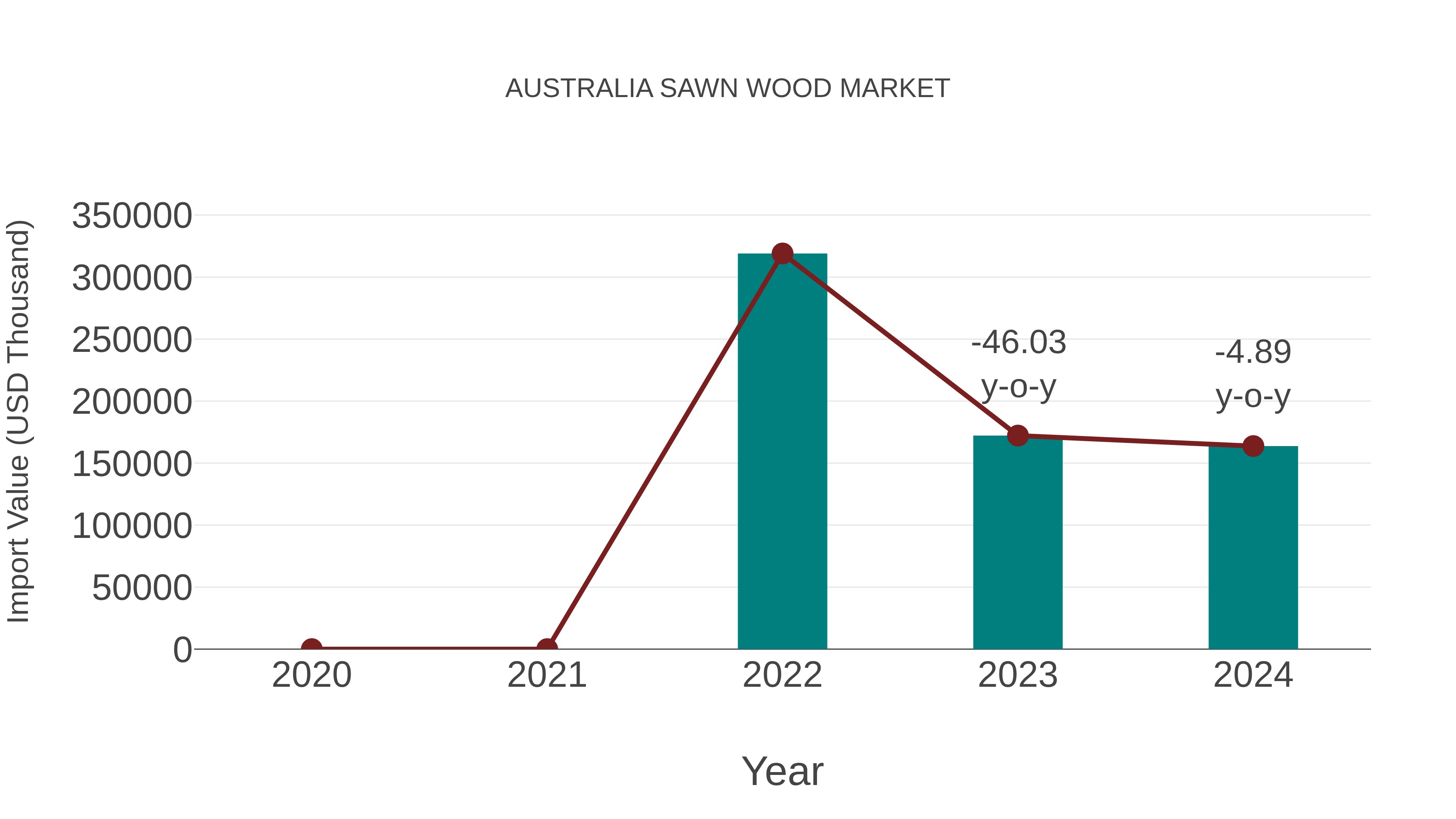
In the Australia sawn wood market, the import trend experienced a decline with a growth rate of -4.89% from 2023 to 2024, resulting in a compound annual growth rate (CAGR) of -28.36% for the period 2020-2024. This negative import momentum could be attributed to shifts in demand or changes in trade policies affecting market stability.
Australia Sawn Wood Market Synopsis
The sawn wood market in Australia is influenced by demand from the construction, furniture, and packaging industries. Sustainable forestry practices and timber certification standards are key factors shaping market growth. The rising trend of prefabricated wooden structures and eco-friendly building materials further supports industry expansion.
Drivers of the market
The sawn wood market in Australia is expanding due to rising construction activities and furniture manufacturing. The preference for sustainable and durable wood materials is shaping market trends. Additionally, the export of high-quality Australian timber is supporting market growth.
Challenges of the market
The sawn wood market in Australia experiences difficulties due to fluctuating timber prices and regulatory restrictions on logging activities. The demand for sustainable wood products requires certification compliance, increasing operational costs. Additionally, competition from engineered wood products reduces the reliance on traditional sawn wood.
Investment opportunities in the Market
The sawn wood market in Australia is growing due to demand in residential and commercial construction. Investors can explore opportunities in sustainable timber processing, investing in advanced sawing technologies for precision cutting, and expanding domestic and export sales by targeting the green building sector.
Government Policy of the market
The sawn wood market in Australia is regulated under forestry laws and trade policies that promote sustainable logging and wood processing. The government enforces strict guidelines on timber harvesting to prevent deforestation and protect native forests. Import regulations require foreign sawn wood to comply with biosecurity measures to prevent the introduction of pests and diseases. Additionally, sustainability certifications encourage the use of responsibly sourced timber in construction and furniture manufacturing.
Key Highlights of the Report:
- Australia Sawn Wood Market Outlook
- Market Size of Australia Sawn Wood Market, 2025
- Forecast of Australia Sawn Wood Market, 2032
- Historical Data and Forecast of Australia Sawn Wood Revenues & Volume for the Period 2022-2032F
- Australia Sawn Wood Market Trend Evolution
- Australia Sawn Wood Market Drivers and Challenges
- Australia Sawn Wood Price Trends
- Australia Sawn Wood Porter's Five Forces
- Australia Sawn Wood Industry Life Cycle
- Historical Data and Forecast of Australia Sawn Wood Market Revenues & Volume By Type for the Period 2022-2032F
- Historical Data and Forecast of Australia Sawn Wood Market Revenues & Volume By Hard Wood for the Period 2022-2032F
- Historical Data and Forecast of Australia Sawn Wood Market Revenues & Volume By Soft Wood for the Period 2022-2032F
- Australia Sawn Wood Import Export Trade Statistics
- Market Opportunity Assessment By Type
- Australia Sawn Wood Top Companies Market Share
- Australia Sawn Wood Competitive Benchmarking By Technical and Operational Parameters
- Australia Sawn Wood Company Profiles
- Australia Sawn Wood Key Strategic Recommendations






































