Australia Washable Markers Market: Import Trend Analysis
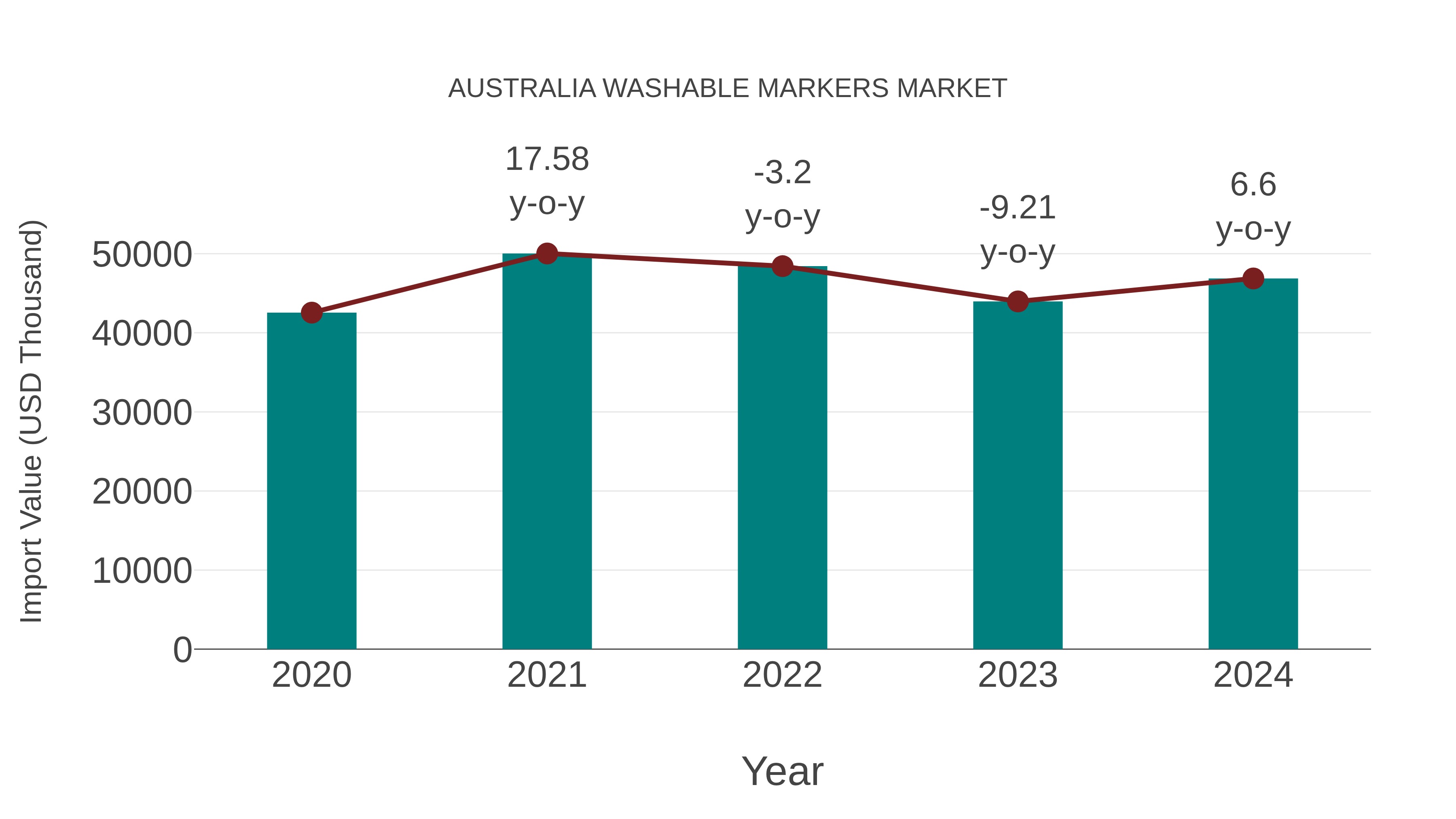
Australia`s import trend for the washable markers market saw a growth rate of 6.6% from 2023 to 2024, with a compound annual growth rate (CAGR) of 2.45% from 2020 to 2024. This increase in imports can be attributed to a steady demand shift towards environmentally friendly and sustainable stationery products, reflecting a broader market preference for eco-conscious goods during this period.
Australia Washable Markers Market Overview
The washable markers market in Australia has witnessed steady growth owing to increasing demand from both children and adult consumers. With a focus on sustainability and non-toxic products, manufacturers are innovating to meet evolving consumer preferences. The market is competitive, with key players investing in product development and marketing strategies to maintain their market share.
Drivers of the market
The Australia washable markers market is primarily driven by the increasing demand from educational institutions, creative industries, and households. With a growing emphasis on sustainable and non-toxic products, consumers are opting for washable markers that are environmentally friendly and safe for children. Moreover, the rise in DIY crafts and art projects further boosts the demand for washable markers, as they offer convenience and ease of use.
Challenges of the market
The washable markers market in Australia faces challenges in terms of environmental sustainability. While washable markers offer convenience, there is growing concern about their impact on the environment, particularly regarding plastic waste and chemical pollution. Manufacturers in this market are increasingly pressured to develop markers that are not only washable but also eco-friendly and biodegradable.
Government Policy of the market
The Australia government implements policies to regulate the use of chemicals in manufacturing washable markers, ensuring compliance with safety standards. Additionally, environmental regulations are in place to govern the disposal of marker waste, encouraging companies to adopt sustainable practices.
Key Highlights of the Report:
- Australia Washable Markers Market Outlook
- Market Size of Australia Washable Markers Market, 2025
- Forecast of Australia Washable Markers Market, 2032
- Historical Data and Forecast of Australia Washable Markers Revenues & Volume for the Period 2022-2032F
- Australia Washable Markers Market Trend Evolution
- Australia Washable Markers Market Drivers and Challenges
- Australia Washable Markers Price Trends
- Australia Washable Markers Porter's Five Forces
- Australia Washable Markers Industry Life Cycle
- Historical Data and Forecast of Australia Washable Markers Market Revenues & Volume By Washability for the Period 2022-2032F
- Historical Data and Forecast of Australia Washable Markers Market Revenues & Volume By Basic- Washable for the Period 2022-2032F
- Historical Data and Forecast of Australia Washable Markers Market Revenues & Volume By Super-washable for the Period 2022-2032F
- Historical Data and Forecast of Australia Washable Markers Market Revenues & Volume By End User for the Period 2022-2032F
- Historical Data and Forecast of Australia Washable Markers Market Revenues & Volume By Children for the Period 2022-2032F
- Historical Data and Forecast of Australia Washable Markers Market Revenues & Volume By Professionals for the Period 2022-2032F
- Australia Washable Markers Import Export Trade Statistics
- Market Opportunity Assessment By Washability
- Market Opportunity Assessment By End User
- Australia Washable Markers Top Companies Market Share
- Australia Washable Markers Competitive Benchmarking By Technical and Operational Parameters
- Australia Washable Markers Company Profiles
- Australia Washable Markers Key Strategic Recommendations






































