Azerbaijan Applicant Tracking System Market Size & Growth Rate (2026-2032)
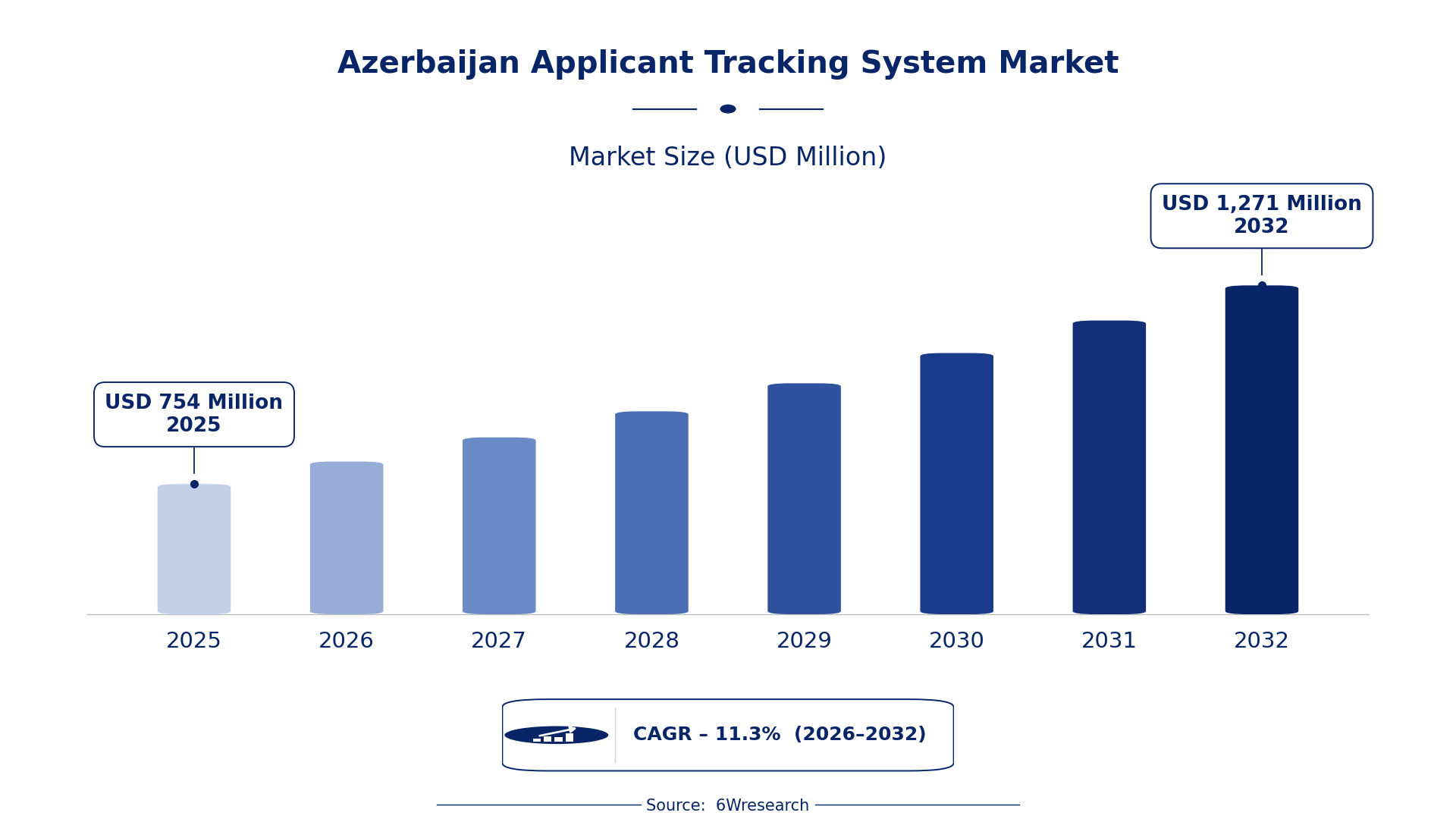
The Azerbaijan Applicant Tracking System Market was estimated at USD 754 Million in 2025 and is projected to reach USD 1271 Million by 2032, growing at a CAGR of 11.3% from 2026 to 2032.
Azerbaijan Applicant Tracking System Market Synopsis
In recent years, the Azerbaijan Applicant Tracking System (ATS) market has gained traction as organizations prioritize efficiency in their hiring processes. This momentum, however, is just the beginning; the market is set to evolve significantly as new technologies and methodologies are integrated into recruitment practices.
As businesses across various sectors adapt to digitalization, the demand for sophisticated ATS solutions is surging. Companies are increasingly recognizing the need for enhanced candidate experiences and streamlined hiring procedures, positioning the ATS market for remarkable growth in the near future.
Azerbaijan Applicant Tracking System Market Year-wise Growth Rate and Key Drivers
This graph illustrates the annual growth rates of the Azerbaijan Applicant Tracking System Market from 2021 to 2032, highlighting a steady upward trajectory and projected expansion over the forecast period.
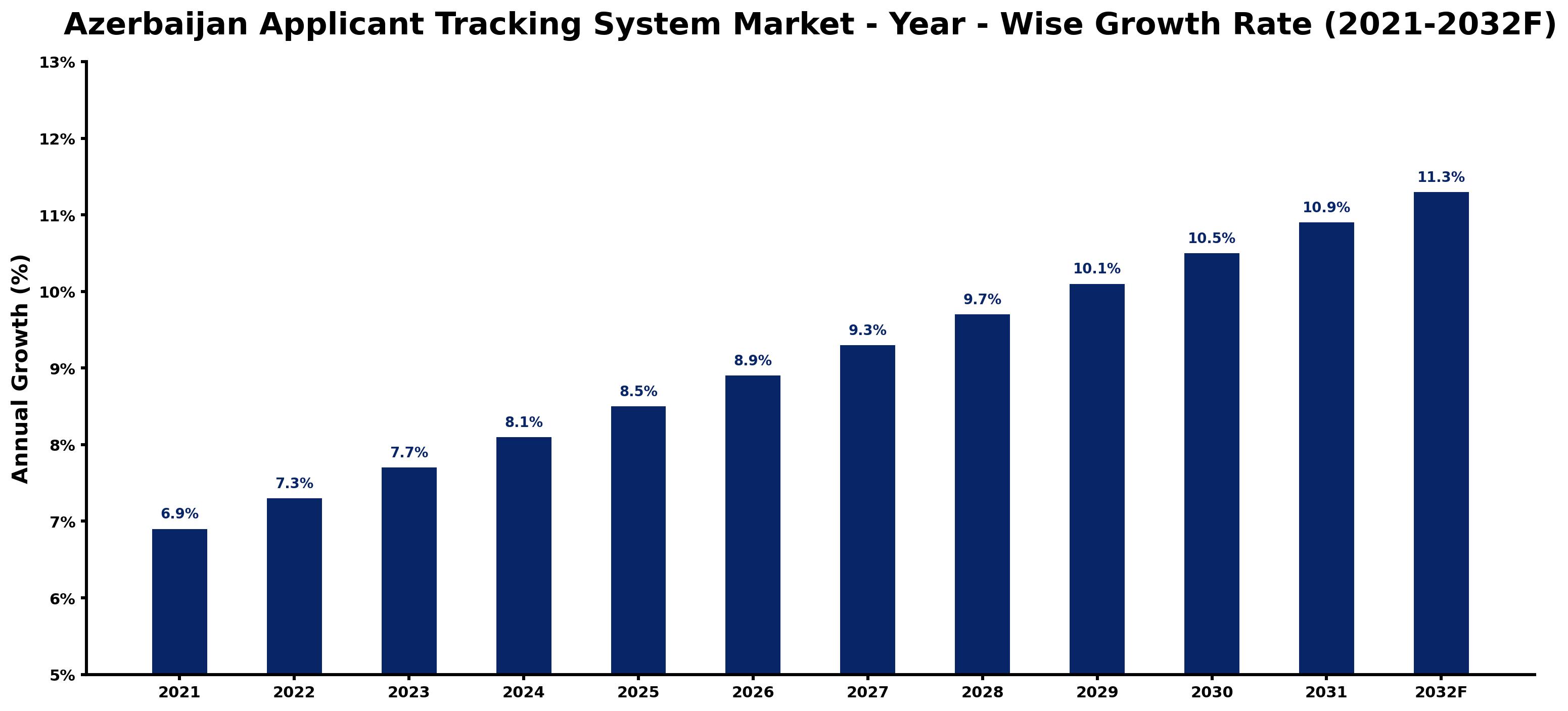
The table below presents the year‑wise growth rates along with the key drivers influencing the market
| Year | Growth Rate | Major Drivers |
| 2021 | 6.9% | Increased compliance with labor laws by the Ministry of Labour. |
| 2022 | 7.3% | Rising recruitment needs in tech startups across Baku. |
| 2023 | 7.7% | Adoption of remote hiring practices post-pandemic across sectors. |
| 2024 | 8.1% | Investment in youth employment initiatives by Azerbaijani government. |
| 2025 | 8.5% | Emerging trends in personalized job matching algorithms locally. |
| 2026 | 8.9% | Growing emphasis on workforce analytics by HR departments. |
| 2027 | 9.3% | Increased integration of AI tools for recruitment processes. |
| 2028 | 9.7% | Establishment of new educational institutions producing skilled graduates. |
| 2029 | 10.1% | Enhanced focus on employee engagement strategies among firms. |
| 2030 | 10.5% | Government incentives for companies adopting digital HR technologies. |
| 2031 | 10.9% | Rise of agile work structures in multinational corporations. |
| 2032 | 11.3% | Strategic partnerships between HR tech firms and educational bodies. |
Note: Market size estimations and growth projections presented in this report are based on 6Wresearch's proprietary forecasting methodology, utilizing the latest available industry data, government publications, and primary research inputs.
Azerbaijan Applicant Tracking System Market Key Takeaways
Below are some of the specific key takeaways from the market, including:
- The shift towards cloud-based ATS solutions is reshaping recruitment processes across industries.
- AI-driven features are becoming essential tools for candidate sourcing and screening.
- SMEs face challenges in adopting ATS technology, which hinders overall market penetration.
- Investment opportunities exist in user-friendly and localized ATS solutions.
- Government regulations are fostering a secure environment for ATS adoption and innovation.
Evaluation of Restraints in Azerbaijan Applicant Tracking System Market
Despite the growth potential, the Azerbaijan ATS market faces notable restraints. Limited awareness among small and medium-sized enterprises (SMEs) regarding the benefits of ATS technology is a primary concern. Many SMEs continue to rely on traditional recruitment methods, which can lead to inefficiencies and missed opportunities. Additionally, apprehensions around data security and compliance with privacy regulations contribute to reluctance in adopting ATS solutions.
Integration complexities with existing HR systems also pose a significant barrier. Without standardized ATS offerings, organizations may struggle to find solutions that align with their specific needs. Addressing these challenges requires comprehensive education efforts and customized solutions tailored to the local market.
Azerbaijan Applicant Tracking System Market Trends
The Azerbaijan ATS market is witnessing a pronounced trend toward cloud-based platforms. This transition is driven by the need for flexibility, allowing organizations to manage recruitment processes remotely and collaboratively. Enhanced mobile accessibility is also gaining momentum, catering to a workforce that increasingly relies on smartphones for job applications.
on top of that, there is a growing focus on incorporating AI technologies within ATS tools. Predictive analytics for candidate sourcing, along with automated job postings, are becoming standard features that enhance recruitment efficiency. As these trends evolve, businesses that adopt innovative, data-driven solutions will likely outperform their competitors.
Azerbaijan Applicant Tracking System Market Opportunities
Opportunities in the Azerbaijan ATS market are abundant as the country embraces digital transformation. The increasing emphasis on effective talent acquisition presents a clear demand for advanced ATS solutions. Companies that provide intuitive interfaces, strong analytics capabilities, and seamless integration with existing HR systems are positioned to capture significant market share.
Localized solutions tailored to the specific needs of Azerbaijani businesses will further enhance attractiveness for investors. As firms continue to invest in optimizing their recruitment processes, strategic investments in innovative ATS providers could yield substantial returns.
Government Initiatives in the Azerbaijan Applicant Tracking System Market
The Azerbaijani government is actively shaping the ATS market through various regulatory measures focused on data protection and cybersecurity. Ensuring compliance with these laws not only protects personal information but also builds trust in digital recruitment processes. By promoting advanced cybersecurity measures, the government is fostering a secure environment for ATS adoption across sectors.
- A data protection regulation implemented in early 2025 mandates compliance for companies handling recruitment data.
- A national initiative focusing on enhancing cybersecurity protocols for digital recruitment platforms is currently underway.
- Future policies aimed at promoting fair competition among ATS providers are expected to launch by mid-2026.
- A public-private partnership program aimed at improving technological infrastructure for recruitment processes is planned for late 2026.
Future Insights of the Azerbaijan Applicant Tracking System Market
Looking ahead to 2026-2032, the Azerbaijan ATS market is likely to experience transformative growth driven by technological advancements and a greater emphasis on efficient talent management. With an increasing number of job openings and a focus on improving candidate experiences, organizations will demand more sophisticated ATS solutions.
The rising trend of remote work will further influence recruitment strategies, compelling ATS providers to innovate continuously. Companies that integrate AI capabilities and mobile functionalities will not only meet current demands but also set the stage for future market leadership.
Azerbaijan Applicant Tracking System Market Latest Developments
In the past year, the Azerbaijan ATS market has seen a wave of activity, with several companies investing in advanced solutions to enhance recruitment processes. As organizations recognize the importance of efficient hiring practices, the development of innovative tools has become a priority.
- A major technology vendor launched a new cloud-based ATS solution in Q2 2025, designed for seamless integration with existing HR systems.
- An initiative focused on developing AI-driven candidate screening tools is currently underway, aimed at improving the efficiency of recruitment processes.
- Several local firms have begun implementing mobile-friendly ATS applications, responding to the growing use of smartphones in job applications, with rollouts expected by mid-2026.
- A strategic partnership between recruitment agencies and technology firms is being established to enhance ATS functionalities, with plans to finalize agreements by late 2025.
Azerbaijan Applicant Tracking System Market - Key Attractiveness of the Report
- 10 Years of Market Numbers
- Historical Data Starting from 2022 to 2025
- Base Year: 2025
- Forecast Data until 2032
- Key Performance Indicators Impacting the Market
- Major Upcoming Developments and Projects
Key Highlights of the Report:
- Azerbaijan Applicant Tracking System Market Outlook
- Market Size of Azerbaijan Applicant Tracking System Market, 2025
- Forecast of Azerbaijan Applicant Tracking System Market, 2032
- Historical Data and Forecast of Azerbaijan Applicant Tracking System Revenues & Volume for the Period 2022-2032F
- Azerbaijan Applicant Tracking System Market Trend Evolution
- Azerbaijan Applicant Tracking System Market Drivers and Challenges
- Azerbaijan Applicant Tracking System Price Trends
- Azerbaijan Applicant Tracking System Porter's Five Forces
- Azerbaijan Applicant Tracking System Industry Life Cycle
- Historical Data and Forecast of Azerbaijan Applicant Tracking System Market Revenues & Volume By Component for the Period 2022-2032F
- Historical Data and Forecast of Azerbaijan Applicant Tracking System Market Revenues & Volume By Software for the Period 2022-2032F
- Historical Data and Forecast of Azerbaijan Applicant Tracking System Market Revenues & Volume By Services for the Period 2022-2032F
- Historical Data and Forecast of Azerbaijan Applicant Tracking System Market Revenues & Volume By Organization Size for the Period 2022-2032F
- Historical Data and Forecast of Azerbaijan Applicant Tracking System Market Revenues & Volume By SMEs for the Period 2022-2032F
- Historical Data and Forecast of Azerbaijan Applicant Tracking System Market Revenues & Volume By Large Enterprises for the Period 2022-2032F
- Historical Data and Forecast of Azerbaijan Applicant Tracking System Market Revenues & Volume By Deployment Mode for the Period 2022-2032F
- Historical Data and Forecast of Azerbaijan Applicant Tracking System Market Revenues & Volume By On-Premises for the Period 2022-2032F
- Historical Data and Forecast of Azerbaijan Applicant Tracking System Market Revenues & Volume By Cloud for the Period 2022-2032F
- Historical Data and Forecast of Azerbaijan Applicant Tracking System Market Revenues & Volume By Vertical for the Period 2022-2032F
- Historical Data and Forecast of Azerbaijan Applicant Tracking System Market Revenues & Volume By BFSI for the Period 2022-2032F
- Historical Data and Forecast of Azerbaijan Applicant Tracking System Market Revenues & Volume By Government for the Period 2022-2032F
- Historical Data and Forecast of Azerbaijan Applicant Tracking System Market Revenues & Volume By Manufacturing for the Period 2022-2032F
- Historical Data and Forecast of Azerbaijan Applicant Tracking System Market Revenues & Volume By Telecom and IT for the Period 2022-2032F
- Historical Data and Forecast of Azerbaijan Applicant Tracking System Market Revenues & Volume By Consumer Goods and Retail for the Period 2022-2032F
- Historical Data and Forecast of Azerbaijan Applicant Tracking System Market Revenues & Volume By Healthcare and Lifesciencs for the Period 2022-2032F
- Historical Data and Forecast of Azerbaijan Applicant Tracking System Market Revenues & Volume By Energy and Utilities for the Period 2022-2032F
- Historical Data and Forecast of Azerbaijan Applicant Tracking System Market Revenues & Volume By Transportation and Logistics for the Period 2022-2032F
- Azerbaijan Applicant Tracking System Import Export Trade Statistics
- Market Opportunity Assessment By Component
- Market Opportunity Assessment By Organization Size
- Market Opportunity Assessment By Deployment Mode
- Market Opportunity Assessment By Vertical
- Azerbaijan Applicant Tracking System Top Companies Market Share
- Azerbaijan Applicant Tracking System Competitive Benchmarking By Technical and Operational Parameters
- Azerbaijan Applicant Tracking System Company Profiles
- Azerbaijan Applicant Tracking System Key Strategic Recommendations






































