Azerbaijan Nickel Market Size Growth Rate
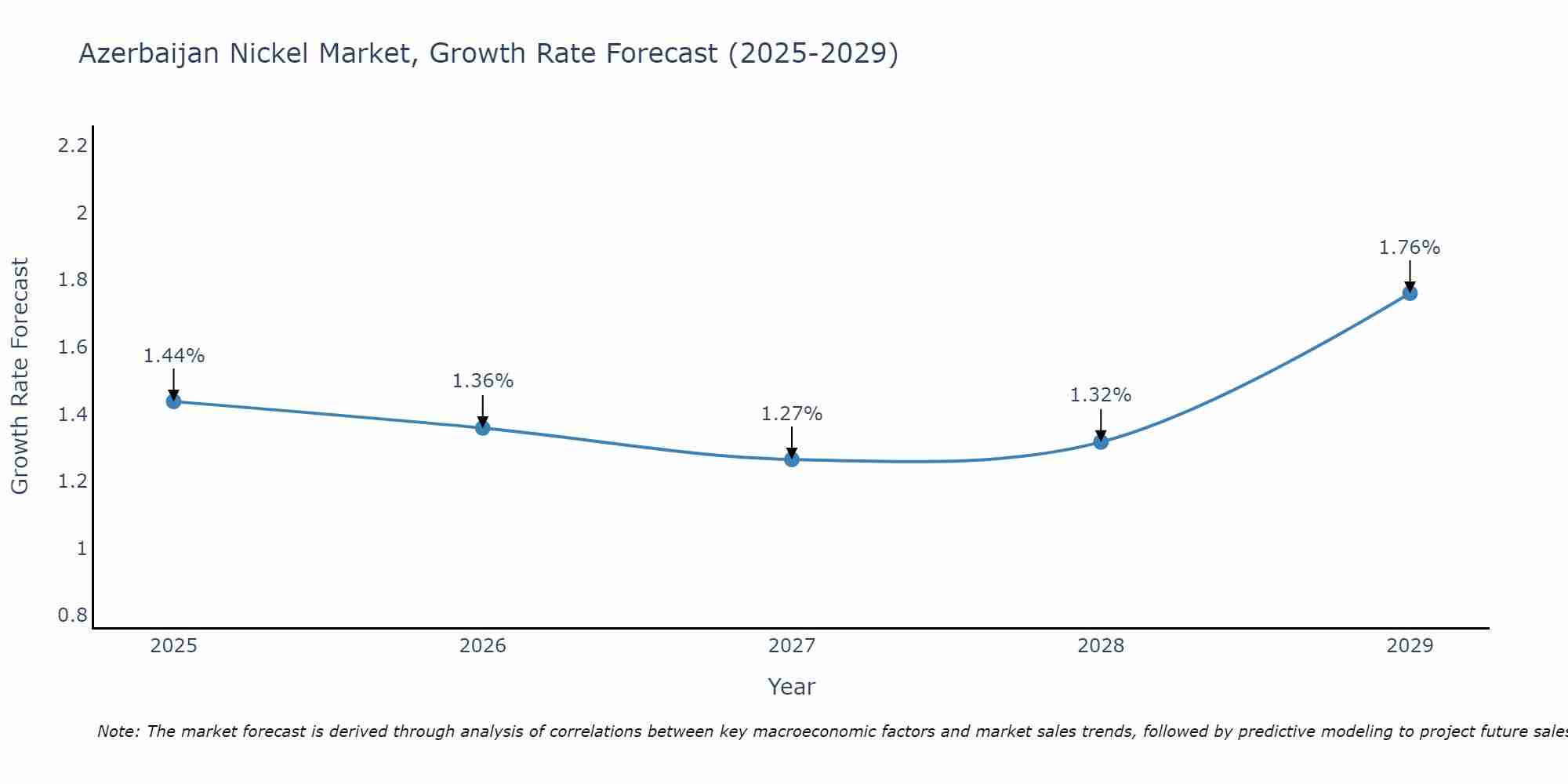
The Azerbaijan Nickel Market is projected to witness mixed growth rate patterns during 2025 to 2029. From 1.44% in 2025, the growth rate steadily ascends to 1.76% in 2029.
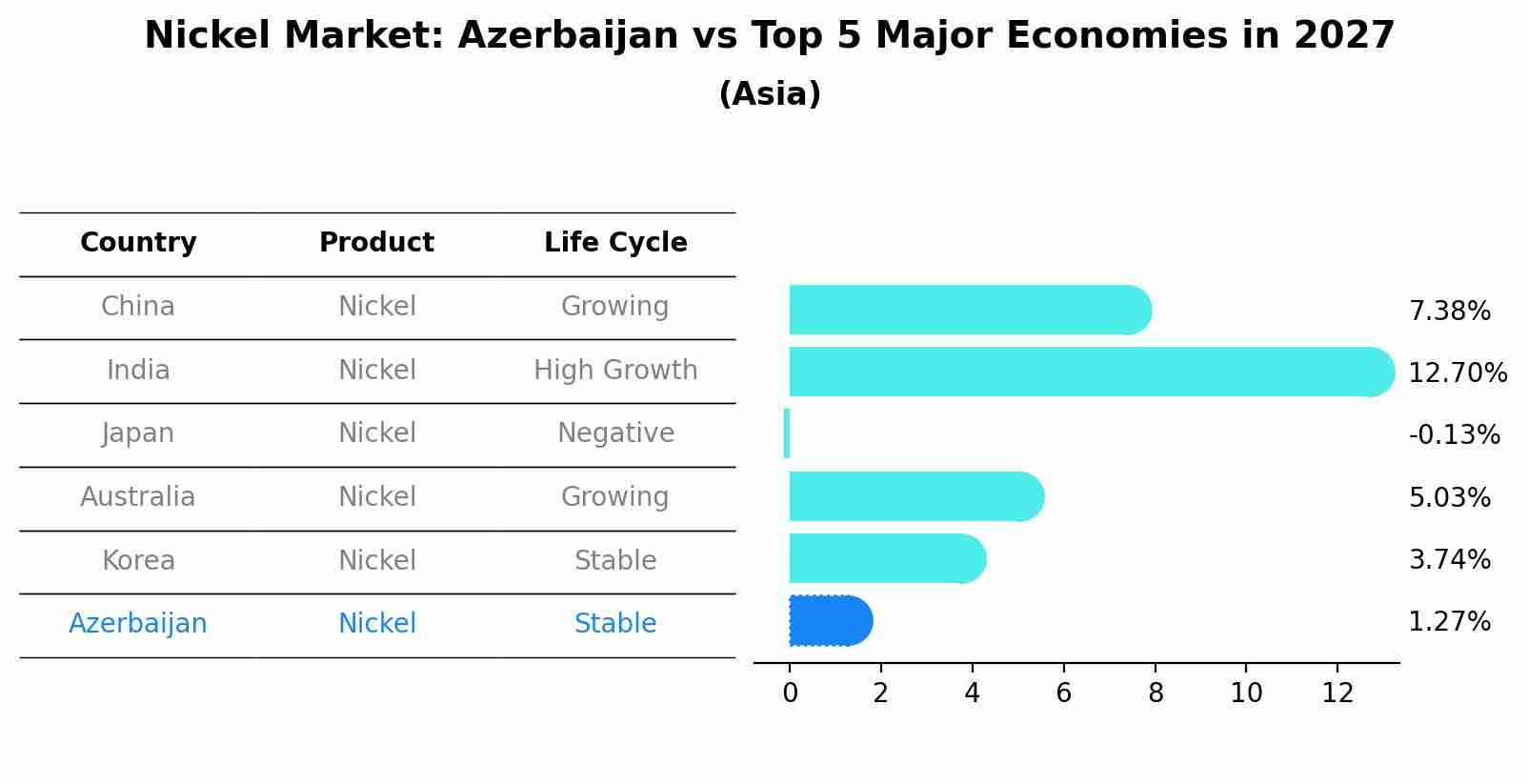
Nickel Market: Azerbaijan vs Top 5 Major Economies in 2027 (Asia)
The Nickel market in Azerbaijan is projected to grow at a stable growth rate of 1.27% by 2027, within the Asia region led by China, along with other countries like India, Japan, Australia and South Korea, collectively shaping a dynamic and evolving market environment driven by innovation and increasing adoption of emerging technologies.
azerbaijan nickel market Synopsis
The Azerbaijan nickel market is expected to grow at a significant rate during the period 2020-2026. This growth can be attributed to the increasing demand for nickel from various industries, including automotive and construction. The country has also seen an increase in its production of refined nickel due to improved processing technologies and investments in new facilities. Moreover, government initiatives such as tax incentives have encouraged local companies to invest in nickel refining operations which will further boost the demand for the metal in Azerbaijan. Additionally, rising domestic consumption of stainless steel products is likely to drive up usage levels of Nickel across different industrial sectors within the country over forecast period.
Key Highlights of the Report:
- Azerbaijan Nickel Market Outlook
- Market Size of Azerbaijan Nickel Market, 2019
- Forecast of Azerbaijan Nickel Market, 2026
- Historical Data and Forecast of Azerbaijan Nickel Revenues & Volume for the Period 2016 - 2026
- Azerbaijan Nickel Market Trend Evolution
- Azerbaijan Nickel Market Drivers and Challenges
- Azerbaijan Nickel Price Trends
- Azerbaijan Nickel Porter's Five Forces
- Azerbaijan Nickel Industry Life Cycle
- Historical Data and Forecast of Azerbaijan Nickel Market Revenues & Volume By Applications for the Period 2016 - 2026
- Historical Data and Forecast of Azerbaijan Nickel Market Revenues & Volume By Stainless Steel for the Period 2016 - 2026
- Historical Data and Forecast of Azerbaijan Nickel Market Revenues & Volume By Super Magnets for the Period 2016 - 2026
- Historical Data and Forecast of Azerbaijan Nickel Market Revenues & Volume By Electroplating Chemicals for the Period 2016 - 2026
- Historical Data and Forecast of Azerbaijan Nickel Market Revenues & Volume By Rechargeable Batteries for the Period 2016 - 2026
- Historical Data and Forecast of Azerbaijan Nickel Market Revenues & Volume By Others for the Period 2016 - 2026
- Azerbaijan Nickel Import Export Trade Statistics
- Market Opportunity Assessment By Applications
- Azerbaijan Nickel Top Companies Market Share
- Azerbaijan Nickel Competitive Benchmarking By Technical and Operational Parameters
- Azerbaijan Nickel Company Profiles
- Azerbaijan Nickel Key Strategic Recommendations






































