Bahrain Electrolytic Iron Market Size, Share & Growth Rate
The Bahrain Electrolytic Iron Market was estimated at USD 995 Million in 2025 and is projected to reach USD 1821 Million by 2032, growing at a CAGR of 9.0% from 2026 to 2032. This growth trajectory is primarily driven by Bahrains ongoing industrial diversification, particularly in pharmaceuticals and electronics, where the demand for high-purity materials is increasing. As the nation strives to establish a competitive edge in these specialized sectors, the need for electrolytic iron is anticipated to rise steadily.
Bahrain Electrolytic Iron Market Year-wise Growth Rate and Key Drivers
This graph highlights how the Bahrain Electrolytic Iron Market has steadily grown over the years, supported by major growth factors.
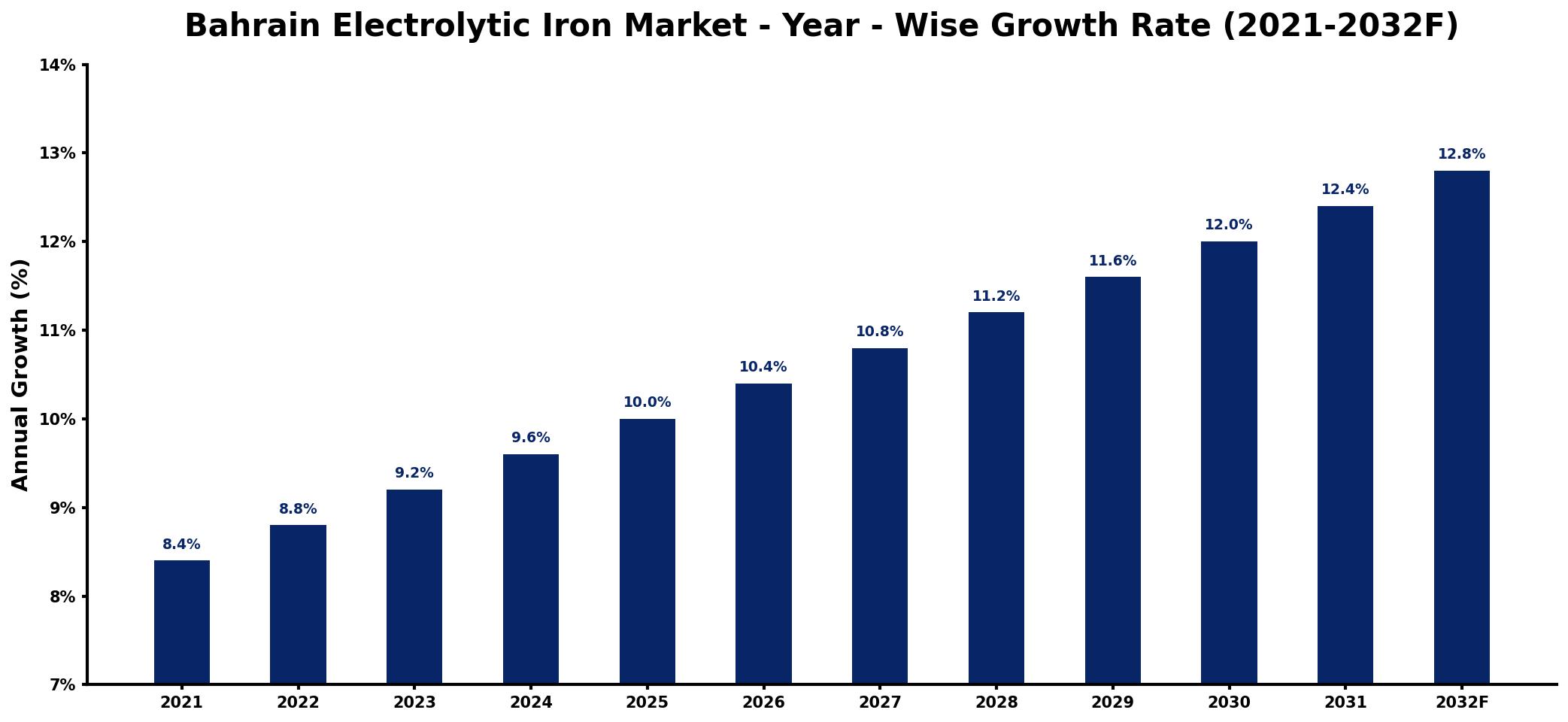
The table below presents the year‑wise growth rates along with the key drivers influencing the market
| Year | Growth Rate | Major Drivers |
| 2021 | 8.4% | Rising construction sector investments |
| 2022 | 8.8% | Increased demand from manufacturing |
| 2023 | 9.2% | Growing renewable energy projects |
| 2024 | 9.6% | Expansion of automotive industry |
| 2025 | 10.0% | Boost in infrastructure developments |
| 2026 | 10.4% | Surge in export opportunities |
| 2027 | 10.8% | Technological advancements in production |
| 2028 | 11.2% | Growing interest in sustainable materials |
| 2029 | 11.6% | Increased government support initiatives |
| 2030 | 12.0% | Rising urbanization and population growth |
| 2031 | 12.4% | rising infrastructure development spending |
| 2032 | 12.8% | Growing focus on recycling initiatives |
Note: Market size estimations and growth projections presented in this report are based on 6Wresearch's proprietary forecasting methodology, utilizing the latest available industry data, government publications, and primary research inputs.
Bahrain Electrolytic Iron Market Synopsis
The Bahrain Electrolytic Iron Market is characterized by its niche but significant presence, primarily catering to sectors such as pharmaceuticals and electronics assembly. With a growing emphasis on quality and purity in industrial inputs, the demand for electrolytic iron is gradually gaining traction, despite the market's modest scale.
Currently, Bahrain lacks domestic production facilities for electrolytic iron, making it reliant on international suppliers to meet its needs. This reliance, however, presents both challenges and opportunities as local industries evolve and seek to establish more self-sustaining supply chains.
Bahrain Electrolytic Iron Market Key Takeaways
- The market is primarily driven by the growing demand for high-purity applications in pharmaceuticals and electronics.
- Bahrain currently imports all its electrolytic iron, creating opportunities for local production initiatives.
- Government support is crucial in facilitating advanced production technologies in the electrolytic iron sector.
- Investment prospects are strong as the country diversifies its industrial base into higher-value manufacturing segments.
- Challenges such as supply chain dependency may impact market stability, necessitating strategic solutions.
Evaluation of Restraints in Bahrain Electrolytic Iron Market
The Bahrain Electrolytic Iron Market faces several restraints that could hinder its growth potential. The high production costs associated with electrolytic iron are a primary concern, given that the process requires specialized equipment and substantial energy inputs. Additionally, the dependency on imports for essential raw materials, including iron ore and scrap metal, exposes the market to potential supply chain disruptions. Fluctuating global prices of these raw materials could also impact profitability and long-term investment in the sector, prompting the need for strategies that bolster local sourcing and production capabilities.
Bahrain Electrolytic Iron Market Trends
Several key trends are shaping the Bahrain Electrolytic Iron Market. First, the increasing emphasis on high-purity metals in advanced applications, particularly within pharmaceuticals and electronics, is driving demand. Furthermore, there is a noticeable shift towards sustainable practices in production, pushing industries to seek eco-friendly methods of sourcing and manufacturing electrolytic iron. Technological advancements are also playing a pivotal role, with innovations leading to more efficient production processes, thus potentially reducing costs over time.
Bahrain Electrolytic Iron Market Opportunities
The market offers a plethora of growth and investment opportunities, especially as Bahrain expands its pharmaceutical and electronics industries. Investors have the chance to establish facilities that manufacture electrolytic iron locally, addressing the current import dependence. Moreover, ventures focused on developing high-purity applications will find fertile ground in Bahrains evolving industrial landscape, particularly as local businesses seek to enhance their competitive edge in specialty manufacturing. The ongoing push for innovation and quality standards creates additional avenues for players in the electrolytic iron sector.
Government Initiatives in the Bahrain Electrolytic Iron Market
The Bahraini government is actively promoting the growth of its electrolytic iron market by supporting the development of advanced production technologies. Various initiatives aim to encourage investments in local manufacturing to reduce reliance on imports and strengthen the supply chain. Additionally, the Bahrain Economic Development Board (EDB) plays a critical role in facilitating market entry for companies looking to capitalize on the growing demand for high-purity materials. Stringent regulations ensure that products meet high-quality and environmental standards, fostering a robust industrial environment.
Future Insights of the Bahrain Electrolytic Iron Market
Looking ahead to 2026-2032, the Bahrain Electrolytic Iron Market is set to undergo significant transformation. As the country advances its industrial capabilities, the shift towards higher-value manufacturing will drive increased demand for electrolytic iron. Moreover, technological innovations will likely enhance production efficiency, potentially lowering costs and encouraging local production initiatives. The long-term outlook remains positive, underpinned by government support and a growing focus on quality and sustainability in industrial practices.
Bahrain Electrolytic Iron Market Latest Developments (2025 - 2026)
In recent months, there has been a notable focus on enhancing local production capabilities in the Bahrain Electrolytic Iron Market. Initiatives aimed at attracting foreign investment and fostering technology transfer are being prioritized. Additionally, local companies are exploring strategic partnerships to bolster their supply chains and ensure stable access to high-purity iron. These developments signal a commitment to reducing import dependency and establishing Bahrain as a competitive player in the electrolytic iron industry.
Bahrain Electrolytic Iron Market - Key Attractiveness of the Report
- 10 Years of Market Numbers
- Historical Data Starting from 2022 to 2025
- Base Year: 2025
- Forecast Data until 2032
- Key Performance Indicators Impacting the Market
- Major Upcoming Developments and Projects
Key Highlights of the Report:
- Bahrain Electrolytic Iron Market Outlook
- Market Size of Bahrain Electrolytic Iron Market, 2025
- Forecast of Bahrain Electrolytic Iron Market, 2032
- Historical Data and Forecast of Bahrain Electrolytic Iron Revenues & Volume for the Period 2022-2032F
- Bahrain Electrolytic Iron Market Trend Evolution
- Bahrain Electrolytic Iron Market Drivers and Challenges
- Bahrain Electrolytic Iron Price Trends
- Bahrain Electrolytic Iron Porter's Five Forces
- Bahrain Electrolytic Iron Industry Life Cycle
- Historical Data and Forecast of Bahrain Electrolytic Iron Market Revenues & Volume By Type for the Period 2022-2032F
- Historical Data and Forecast of Bahrain Electrolytic Iron Market Revenues & Volume By High Purity for the Period 2022-2032F
- Historical Data and Forecast of Bahrain Electrolytic Iron Market Revenues & Volume By Low Purity for the Period 2022-2032F
- Historical Data and Forecast of Bahrain Electrolytic Iron Market Revenues & Volume By Application for the Period 2022-2032F
- Historical Data and Forecast of Bahrain Electrolytic Iron Market Revenues & Volume By Electronic Components for the Period 2022-2032F
- Historical Data and Forecast of Bahrain Electrolytic Iron Market Revenues & Volume By Research for the Period 2022-2032F
- Historical Data and Forecast of Bahrain Electrolytic Iron Market Revenues & Volume By Special Alloys for the Period 2022-2032F
- Historical Data and Forecast of Bahrain Electrolytic Iron Market Revenues & Volume By Others for the Period 2022-2032F
- Bahrain Electrolytic Iron Import Export Trade Statistics
- Market Opportunity Assessment By Type
- Market Opportunity Assessment By Application
- Bahrain Electrolytic Iron Top Companies Market Share
- Bahrain Electrolytic Iron Competitive Benchmarking By Technical and Operational Parameters
- Bahrain Electrolytic Iron Company Profiles
- Bahrain Electrolytic Iron Key Strategic Recommendations






































