Bahrain Fuel Oil Market: Import Trend Analysis
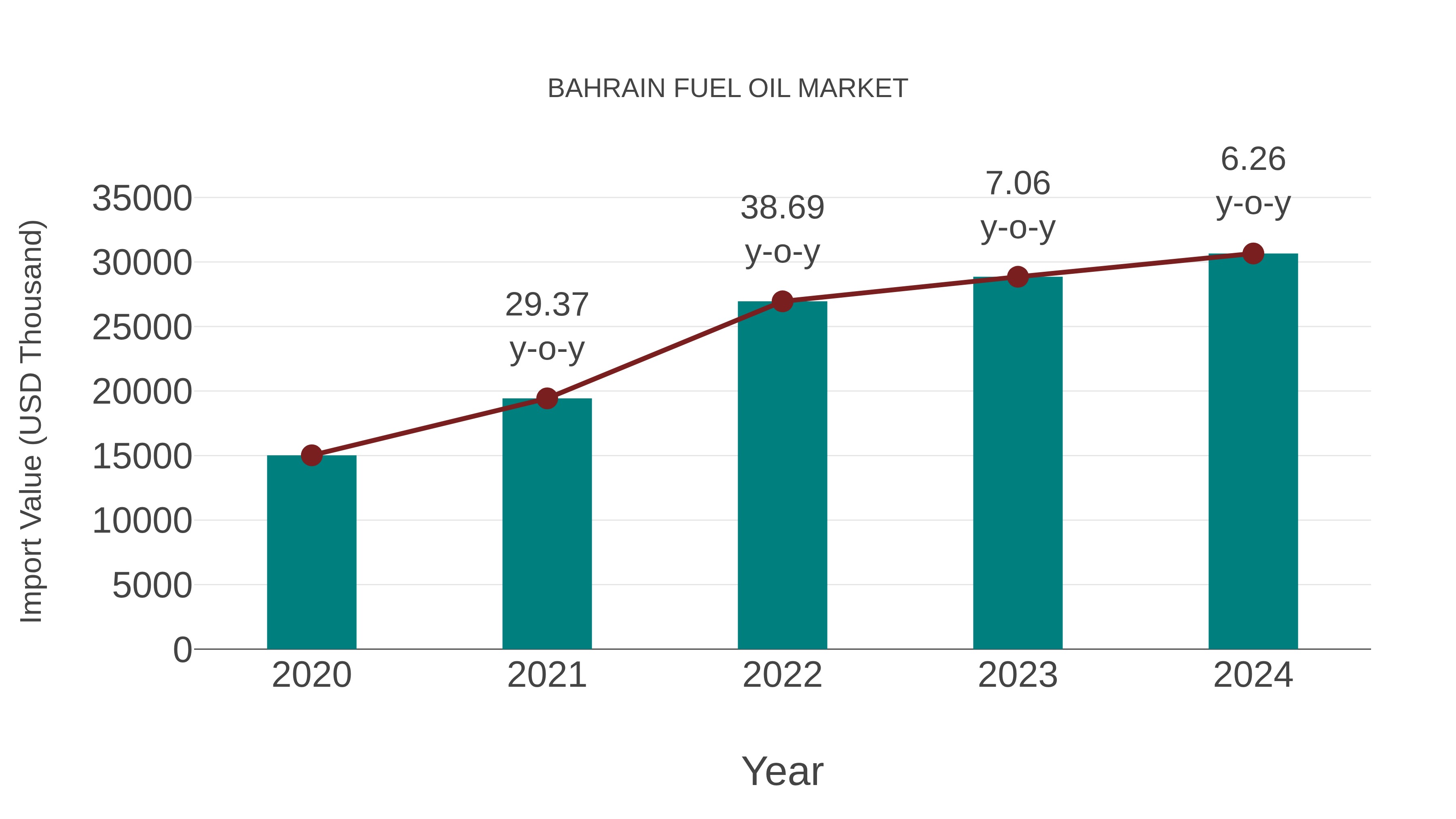
In the Bahrain fuel oil market, import trends showed a growth rate of 6.26% from 2023 to 2024, with a compound annual growth rate (CAGR) of 19.53% for the period 2020-2024. This upward import momentum could be attributed to a consistent demand shift towards fuel oil products in the region, indicating market stability and sustained interest in this energy source.
Fuel Oil Market: Bahrain vs Top 5 Major Economies in 2027 (Middle East)
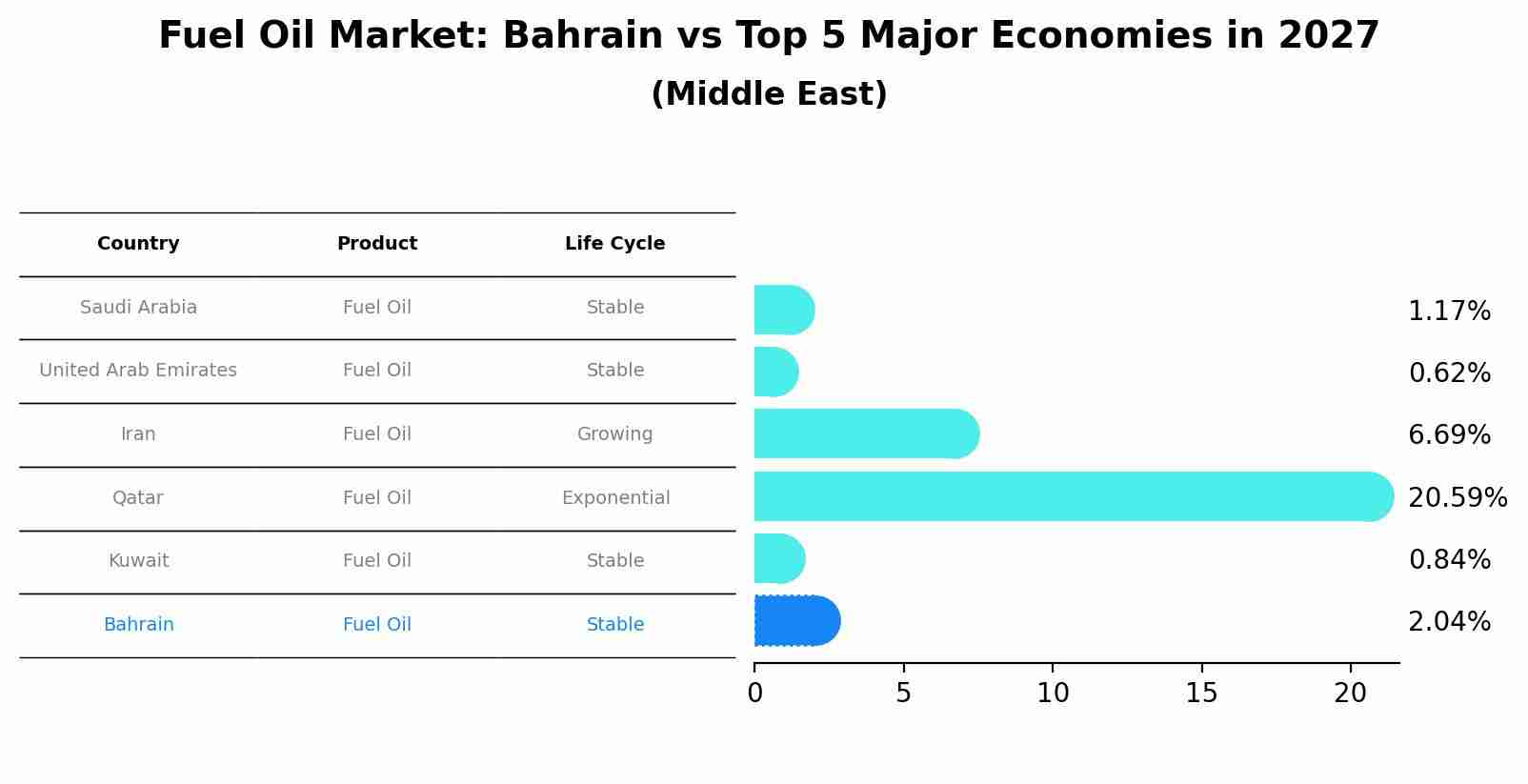
By 2027, the Fuel Oil market in Bahrain is anticipated to reach a growth rate of 2.04%, as part of an increasingly competitive Middle East region, where Saudi Arabia remains at the forefront, supported by United Arab Emirates, Iran, Qatar and Kuwait, driving innovations and market adoption across sectors.
Bahrain Fuel Oil Market
The Bahrain Fuel Oil market is a crucial segment of the country`s energy landscape, catering to various sectors including power generation, industrial processes, and marine transportation. With Bahrain ambitious plans for economic diversification and infrastructure development, the demand for fuel oil remains robust. However, factors such as fluctuating oil prices, environmental concerns, and the emergence of alternative energy sources are shaping the dynamics of the fuel oil market in Bahrain.
Drivers of the market
In the Bahrain fuel oil market, several drivers are shaping its growth trajectory. One of the primary drivers is the expanding industrial sector in the country, which relies heavily on fuel oil for various processes such as power generation and manufacturing. The growth of industries such as petrochemicals, refining, and shipping drives the demand for fuel oil in Bahrain.
Challenges of the market
Bahrain fuel oil market encounters challenges related to fluctuating oil prices, geopolitical tensions, and environmental concerns. Additionally, competition from alternative energy sources poses a threat to the traditional fuel oil industry.
Government Policy of the market
In Bahrain, the fuel oil market operates under government regulations designed to ensure stability and reliability in the supply chain. The government closely monitors the import, export, and distribution of fuel oil to maintain adequate reserves and prevent shortages. Additionally, there are policies in place to encourage the adoption of cleaner fuel alternatives and reduce environmental impact. These policies include subsidies for companies investing in renewable energy sources and incentives for consumers to switch to cleaner-burning fuels. Moreover, the government collaborates with industry stakeholders to address challenges such as price volatility and geopolitical risks that may affect the fuel oil market.
Key Highlights of the Report:
- Bahrain Fuel Oil Market Outlook
- Market Size of Bahrain Fuel Oil Market, 2024
- Forecast of Bahrain Fuel Oil Market, 2031
- Historical Data and Forecast of Bahrain Fuel Oil Revenues & Volume for the Period 2018 - 2031
- Bahrain Fuel Oil Market Trend Evolution
- Bahrain Fuel Oil Market Drivers and Challenges
- Bahrain Fuel Oil Price Trends
- Bahrain Fuel Oil Porter's Five Forces
- Bahrain Fuel Oil Industry Life Cycle
- Historical Data and Forecast of Bahrain Fuel Oil Market Revenues & Volume By Application for the Period 2018 - 2031
- Historical Data and Forecast of Bahrain Fuel Oil Market Revenues & Volume By Marine for the Period 2018 - 2031
- Historical Data and Forecast of Bahrain Fuel Oil Market Revenues & Volume By Industrial for the Period 2018 - 2031
- Historical Data and Forecast of Bahrain Fuel Oil Market Revenues & Volume By Others for the Period 2018 - 2031
- Bahrain Fuel Oil Import Export Trade Statistics
- Market Opportunity Assessment By Application
- Bahrain Fuel Oil Top Companies Market Share
- Bahrain Fuel Oil Competitive Benchmarking By Technical and Operational Parameters
- Bahrain Fuel Oil Company Profiles
- Bahrain Fuel Oil Key Strategic Recommendations






































