Bahrain Non-grape Wine Market Summary
The bahrain non-grape wine market was estimated at USD 1203 Million in 2025 and is projected to reach USD 2017 Million by 2032, growing at a CAGR of 8.8% from 2026 to 2032.
Bahrain Non-grape Wine Market Year-wise Growth Rate and Key Drivers
This graph highlights how the Bahrain Non-grape Wine Market has steadily grown over the past five years, supported by major growth factors.
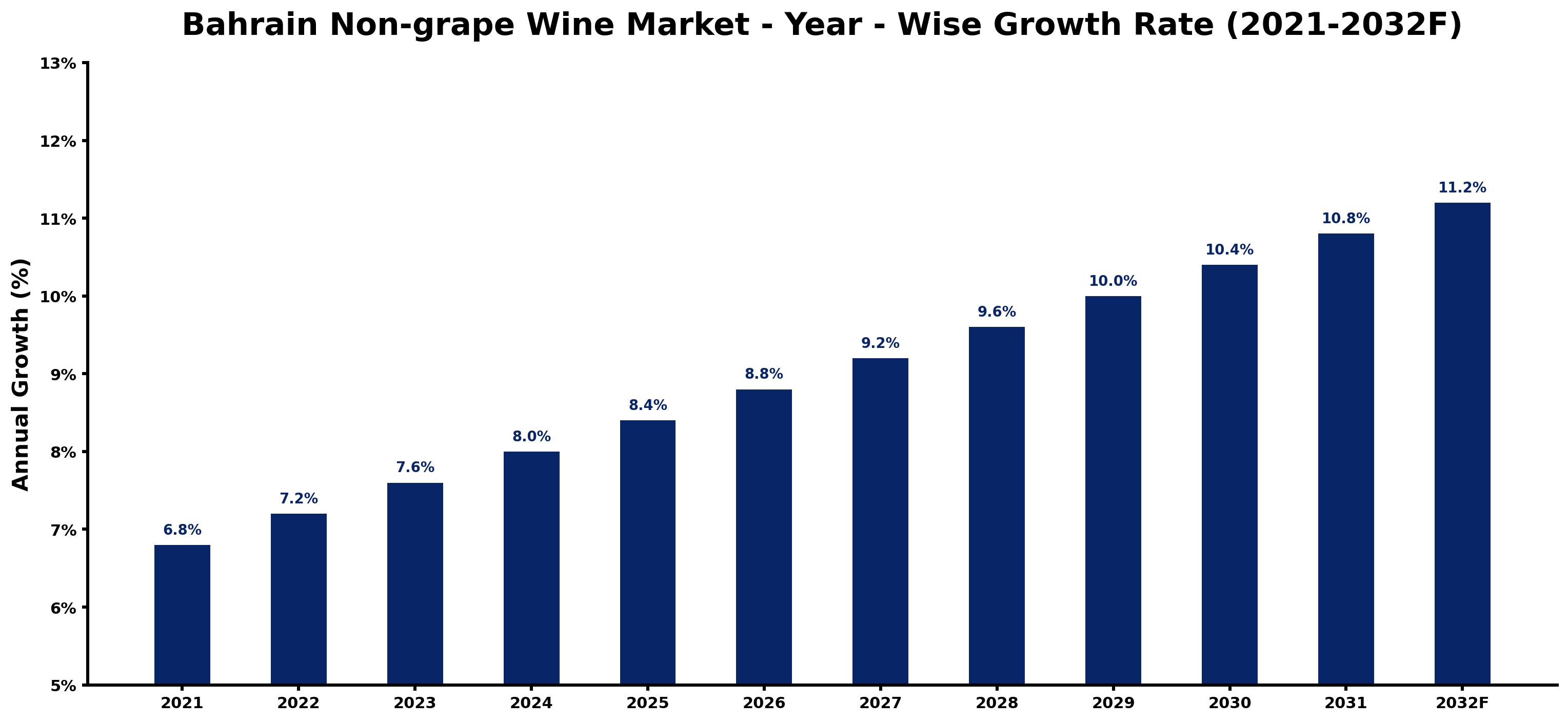
The table below presents the year wise growth rates along with the key drivers influencing the market
| Year | Growth Rate | Major Drivers |
| 2021 | 6.8% | Increased interest in diverse beverage options fuels non-grape wine exploration. |
| 2022 | 7.2% | Cultural shifts towards inclusivity encourage experimentation with alternative wine varieties. |
| 2023 | 7.6% | Social gatherings resume, prompting higher consumption of non-grape wines in Bahrain. |
| 2024 | 8.0% | Local producers enhance product offerings, emphasizing flavors appealing to regional tastes. |
| 2025 | 8.4% | Online retail platforms expand, providing broader access to niche wine selections. |
| 2026 | 8.8% | Bahrain's tourism growth attracts international wine brands, enriching market diversity. |
| 2027 | 9.2% | Health-conscious consumers gravitate towards lower-alcohol, organic non-grape wine options. |
| 2028 | 9.6% | Regional festivals celebrate local and international non-grape wines, boosting visibility. |
| 2029 | 10.0% | Increased expatriate population introduces varied palates, enhancing market demand. |
| 2030 | 10.4% | Culinary trends highlight pairings with non-grape wines, driving restaurant collaborations. |
| 2031 | 10.8% | Sustainability awareness prompts interest in eco-friendly non-grape wine production methods. |
| 2032 | 11.2% | Bahrain's evolving culinary landscape integrates non-grape wines, solidifying market presence. |
Note - Market size estimations and growth projections presented in this report are based on 6Wresearch's advanced forecasting approach, validated with industry datasets as of June 2026.
Bahrain Non-grape Wine Market Synopsis
The Bahrain Non-grape Wine Market is projected to reach 8.8% and witness significant growth during the forecast period (2026-2032). This market, while niche, is poised for development as consumer preferences shift towards innovative beverages made from alternative fruits such as pomegranates, dates, apples, and berries. The appeal of these non-grape wines lies in their unique flavor profiles and the perception of being healthier options compared to traditional grape wines. As the hospitality industry in Bahrain expands, coupled with a burgeoning wine culture, the non-grape segment is expected to capture an increasing share of consumer interest.
Bahrain Non-grape Wine Market Growth Drivers
Several factors are catalyzing the growth of the Bahrain Non-grape Wine Market. First, a rising consumer inclination towards artisanal and locally produced beverages is driving demand for unique non-grape wines that highlight local fruit varieties. Second, consumers are increasingly aware of the health benefits associated with non-grape wines, which are often rich in antioxidants and natural sugars. Third, the evolving wine culture in Bahrain reflects a willingness to explore diverse and innovative beverage options among the populace. Fourth, the hospitality sector's expansion is laying the groundwork for increased availability and promotion of non-grape wines in bars, restaurants, and retail outlets. Finally, the trend towards organic and sustainably produced beverages aligns with the growing consumer preference for natural ingredients, further propelling market growth.
Bahrain Non-grape Wine Market Challenges and Restraints
Despite the potential for growth, the Bahrain Non-grape Wine Market encounters several challenges. Cultural and religious norms significantly influence consumer acceptance of alcoholic products, including non-grape wines. The prevalence of Islamic values restricts the market's scope, as many consumers may view alcoholic beverages unfavorably. Furthermore, low awareness and understanding of non-grape wine alternatives, such as fruit-based wines, hinder market penetration. Regulatory hurdles related to import regulations and licensing further complicate the landscape, posing barriers for both local producers and international brands wishing to enter the market. Lastly, limited domestic production capabilities may deter investment and restrict the market's growth potential.
Bahrain Non-grape Wine Market Investment Opportunities
The non-grape wine sector in Bahrain presents several investment opportunities, particularly for those interested in niche markets. Investors can explore avenues for importing unique non-grape wines that cater to local tastes, especially those made from fruits native to the region. Opportunities also exist within the non-alcoholic segment, with fruit-based wines marketed as premium products emphasizing health and wellness. By focusing on sustainable and organic production methods, investors can align with the increasing consumer preference for environmentally friendly products. Additionally, partnerships with local hospitality businesses can facilitate market entry, allowing for the promotion and distribution of non-grape wines through established channels. Finally, there is potential for innovation in packaging and branding to create a distinct identity for non-grape wines that resonates with consumers.
Bahrain Non-grape Wine Market Government Investment and Initiatives
The Bahraini government plays a crucial role in shaping the environment for the non-grape wine market. Through various regulatory frameworks, the government ensures that the import and sale of non-grape wines align with safety and quality standards. There are initiatives focused on promoting local production of alternative wine varieties, fostering a sustainable industry that adheres to health guidelines. Government policies also facilitate responsible consumption by regulating licensing requirements for the sale of alcoholic beverages, including non-grape wines. Additionally, public spending directed toward the hospitality sector indirectly supports the growth of the non-grape wine market, as more establishments begin to offer diverse beverage options to attract customers. Such initiatives collectively create a conducive environment for the expansion and acceptance of non-grape wines in Bahrain.
Bahrain Non-grape Wine Market Latest Developments (May 2025 - June 2026)
Recent developments within the Bahrain Non-grape Wine Market indicate a gradual shift towards greater acceptance and demand for alternative wines. As consumer preferences evolve, more establishments in the hospitality sector are adding non-grape wines to their menus, reflecting a growing trend towards diversity in beverage offerings. There has been an uptick in local producers experimenting with new fruit blends, responding to consumer interest in unique flavors. Initiatives aimed at educating consumers about the benefits and flavors of non-grape wines are gaining traction, helping to dispel myths and enhance acceptance. Regulatory bodies have begun streamlining processes related to the licensing of non-grape wines, potentially easing market entry for new products. Furthermore, ongoing discussions at the governmental level suggest an openness to refine policies that could further support the market's growth.
Bahrain Non-grape Wine Market - Key Attractiveness of the Report
- 10 Years of Market Numbers
- Historical Data Starting from 2022 to 2025
- Base Year: 2025
- Forecast Data until 2032
- Key Performance Indicators Impacting the Market
- Major Upcoming Developments and Projects
Key Highlights of the Report:
- Bahrain Non-grape Wine Market Outlook
- Market Size of Bahrain Non-grape Wine Market, 2025
- Forecast of Bahrain Non-grape Wine Market, 2032F
- Historical Data and Forecast of Bahrain Non-grape Wine Revenues & Volume for the Period 2022-2032F
- Bahrain Non-grape Wine Market Trend Evolution
- Bahrain Non-grape Wine Market Drivers and Challenges
- Bahrain Non-grape Wine Price Trends
- Bahrain Non-grape Wine Porter's Five Forces
- Bahrain Non-grape Wine Industry Life Cycle
- Historical Data and Forecast of Bahrain Non-grape Wine Market Revenues & Volume By Product Type for the Period 2022-2032F
- Historical Data and Forecast of Bahrain Non-grape Wine Market Revenues & Volume By Fermented Fruit Wine for the Period 2022-2032F
- Historical Data and Forecast of Bahrain Non-grape Wine Market Revenues & Volume By Distilled Fruit Wine for the Period 2022-2032F
- Historical Data and Forecast of Bahrain Non-grape Wine Market Revenues & Volume By Preparation Fruit Wine for the Period 2022-2032F
- Historical Data and Forecast of Bahrain Non-grape Wine Market Revenues & Volume By Sparkling Fruit Wine for the Period 2022-2032F
- Historical Data and Forecast of Bahrain Non-grape Wine Market Revenues & Volume By Application for the Period 2022-2032F
- Historical Data and Forecast of Bahrain Non-grape Wine Market Revenues & Volume By Household for the Period 2022-2032F
- Historical Data and Forecast of Bahrain Non-grape Wine Market Revenues & Volume By Commercial for the Period 2022-2032F
- Bahrain Non-grape Wine Import Export Trade Statistics
- Market Opportunity Assessment By Product Type
- Market Opportunity Assessment By Application
- Bahrain Non-grape Wine Top Companies Market Share
- Bahrain Non-grape Wine Competitive Benchmarking By Technical and Operational Parameters
- Bahrain Non-grape Wine Company Profiles
- Bahrain Non-grape Wine Key Strategic Recommendations






































