Bahrain Non-woven Fabric Market: Import Trend Analysis
In 2024, Bahrain non-woven fabric market experienced a notable increase in imports. This trend was driven by growing demand from various industries such as healthcare, automotive, and construction. The surge in imports reflects the market`s reliance on foreign suppliers to meet domestic needs.
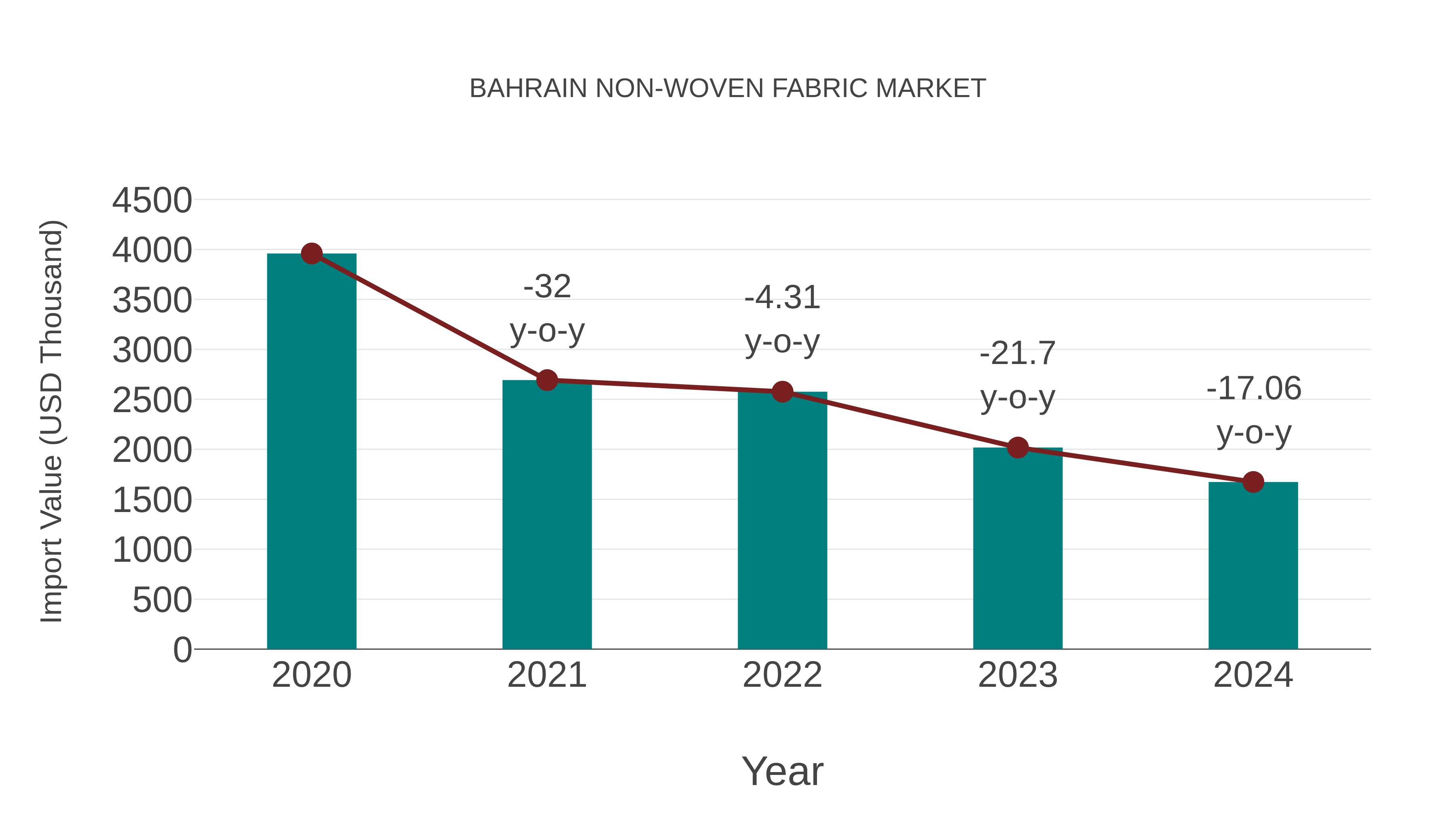
Bahrain Non-Woven Fabric Market Overview
The Bahrain non-woven fabric market is witnessing steady growth due to its diverse range of applications in industries such as healthcare, automotive, and construction. Non-woven fabrics are made by bonding fibers together without the need for weaving or knitting, which makes them a cost-effective and versatile material. In Bahrain, the demand for non-woven fabrics is driven by their use in hygiene products like diapers and sanitary pads, as well as their increasing adoption in medical applications, such as surgical drapes and face masks. The market is further bolstered by the rising demand for sustainable and eco-friendly materials, as non-woven fabrics offer recyclable options.
Trends of the market
The non-woven fabric market in Bahrain is gaining momentum due to its diverse applications in industries ranging from healthcare to automotive and construction. Non-woven fabrics, which are made by bonding fibers together without the need for weaving or knitting, offer unique advantages such as high strength, breathability, and low cost. With increasing demand for disposable medical products like masks, gowns, and surgical drapes, alongside growth in the automotive and filtration sectors, the market for non-woven fabrics in Bahrain is poised for expansion.
Challenges of the market
Non-woven fabric manufacturers in Bahrain face scalability issues, with most players operating at limited capacity. Dependence on imported raw materials like polypropylene and polyester raises production costs. Fluctuating oil prices affect raw material prices, while limited innovation and R&D locally hinder product diversification. Regulatory frameworks supporting eco-friendly alternatives are also lacking.
Investment opportunities in the Market
Non-woven fabrics are essential in hygiene products, medical supplies, and filtration. Bahrain presents an opportunity for investors to establish manufacturing or distribution hubs serving GCC countries. Expanding healthcare infrastructure and rising hygiene awareness post-pandemic further increase demand for these versatile materials.
Government Policy of the market
The Bahrain government promotes sustainable manufacturing practices in the textile sector, including non-woven fabrics. Environmental regulations encourage the use of recyclable and biodegradable materials, aligning with Bahrains commitments to environmental protection and waste reduction. Supportive policies help manufacturers meet Gulf regional standards, enhancing trade opportunities.
Key Highlights of the Report:
- Bahrain Non-Woven Fabric Market Outlook
- Market Size of Bahrain Non-Woven Fabric Market, 2025
- Forecast of Bahrain Non-Woven Fabric Market, 2032
- Historical Data and Forecast of Bahrain Non-Woven Fabric Revenues & Volume for the Period 2022 - 2032F
- Bahrain Non-Woven Fabric Market Trend Evolution
- Bahrain Non-Woven Fabric Market Drivers and Challenges
- Bahrain Non-Woven Fabric Price Trends
- Bahrain Non-Woven Fabric Porter's Five Forces
- Bahrain Non-Woven Fabric Industry Life Cycle
- Historical Data and Forecast of Bahrain Non-Woven Fabric Market Revenues & Volume By Technology for the Period 2022 - 2032F
- Historical Data and Forecast of Bahrain Non-Woven Fabric Market Revenues & Volume By Spun-Bond for the Period 2022 - 2032F
- Historical Data and Forecast of Bahrain Non-Woven Fabric Market Revenues & Volume By Wet Laid for the Period 2022 - 2032F
- Historical Data and Forecast of Bahrain Non-Woven Fabric Market Revenues & Volume By Dry Laid for the Period 2022 - 2032F
- Historical Data and Forecast of Bahrain Non-Woven Fabric Market Revenues & Volume By Others for the Period 2022 - 2032F
- Historical Data and Forecast of Bahrain Non-Woven Fabric Market Revenues & Volume By Material for the Period 2022 - 2032F
- Historical Data and Forecast of Bahrain Non-Woven Fabric Market Revenues & Volume By Polyester for the Period 2022 - 2032F
- Historical Data and Forecast of Bahrain Non-Woven Fabric Market Revenues & Volume By Polypropylene for the Period 2022 - 2032F
- Historical Data and Forecast of Bahrain Non-Woven Fabric Market Revenues & Volume By Polyethylene for the Period 2022 - 2032F
- Historical Data and Forecast of Bahrain Non-Woven Fabric Market Revenues & Volume By Rayon for the Period 2022 - 2032F
- Historical Data and Forecast of Bahrain Non-Woven Fabric Market Revenues & Volume By Others for the Period 2022 - 2032F
- Historical Data and Forecast of Bahrain Non-Woven Fabric Market Revenues & Volume By End-User Industry for the Period 2022 - 2032F
- Historical Data and Forecast of Bahrain Non-Woven Fabric Market Revenues & Volume By Construction for the Period 2022 - 2032F
- Historical Data and Forecast of Bahrain Non-Woven Fabric Market Revenues & Volume By Textiles for the Period 2022 - 2032F
- Historical Data and Forecast of Bahrain Non-Woven Fabric Market Revenues & Volume By Healthcare for the Period 2022 - 2032F
- Historical Data and Forecast of Bahrain Non-Woven Fabric Market Revenues & Volume By Automotive for the Period 2022 - 2032F
- Historical Data and Forecast of Bahrain Non-Woven Fabric Market Revenues & Volume By Others for the Period 2022 - 2032F
- Bahrain Non-Woven Fabric Import Export Trade Statistics
- Market Opportunity Assessment By Technology
- Market Opportunity Assessment By Material
- Market Opportunity Assessment By End-User Industry
- Bahrain Non-Woven Fabric Top Companies Market Share
- Bahrain Non-Woven Fabric Competitive Benchmarking By Technical and Operational Parameters
- Bahrain Non-Woven Fabric Company Profiles
- Bahrain Non-Woven Fabric Key Strategic Recommendations






































