Bahrain Polypropylene Woven Bags and Sacks Market: Import Trend Analysis
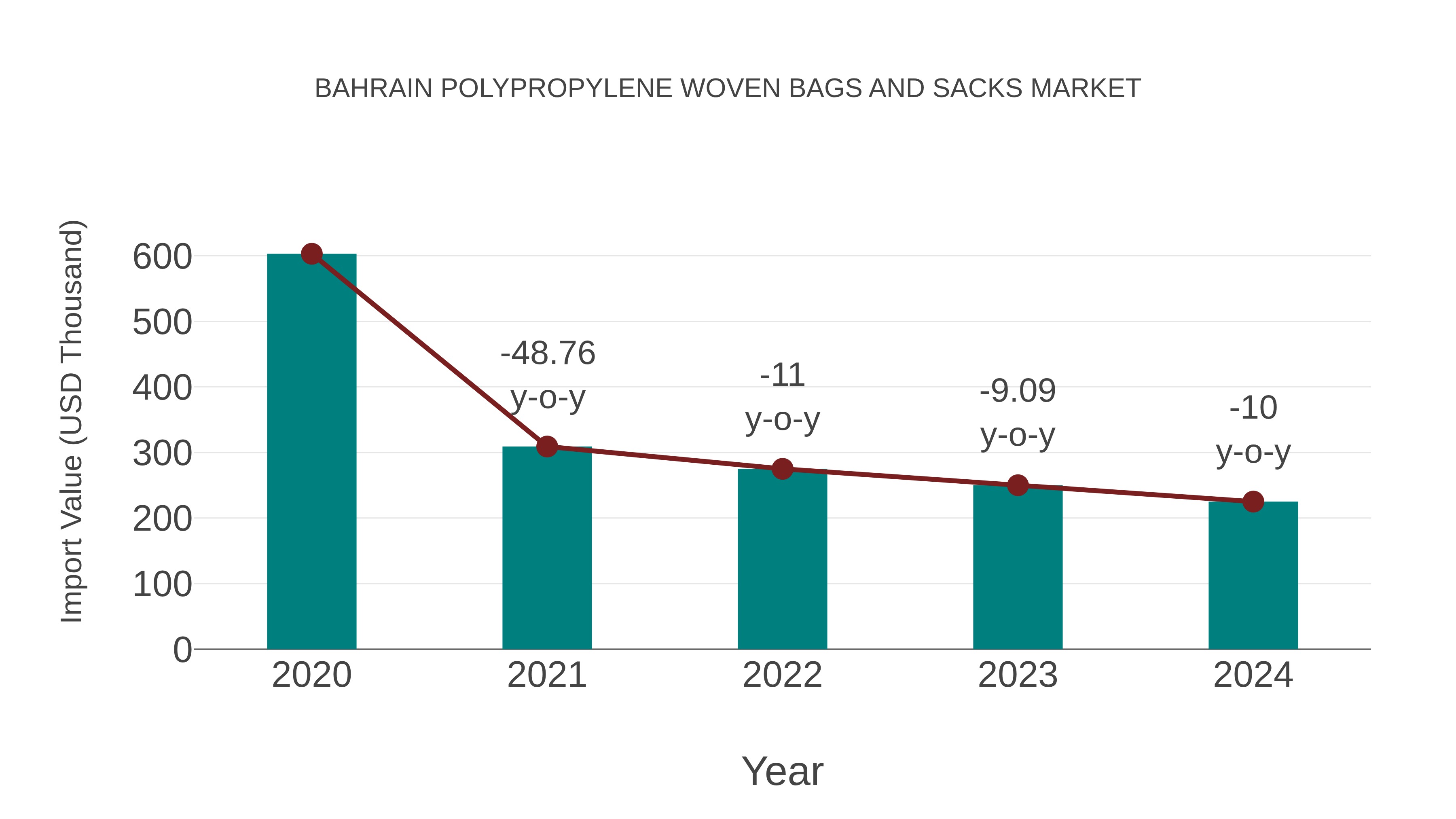
In 2024, Bahrain import of polypropylene woven bags and sacks increased steadily, reflecting a growing demand within the market. This trend suggests a positive outlook for the industry with a potential for further growth in the near term.
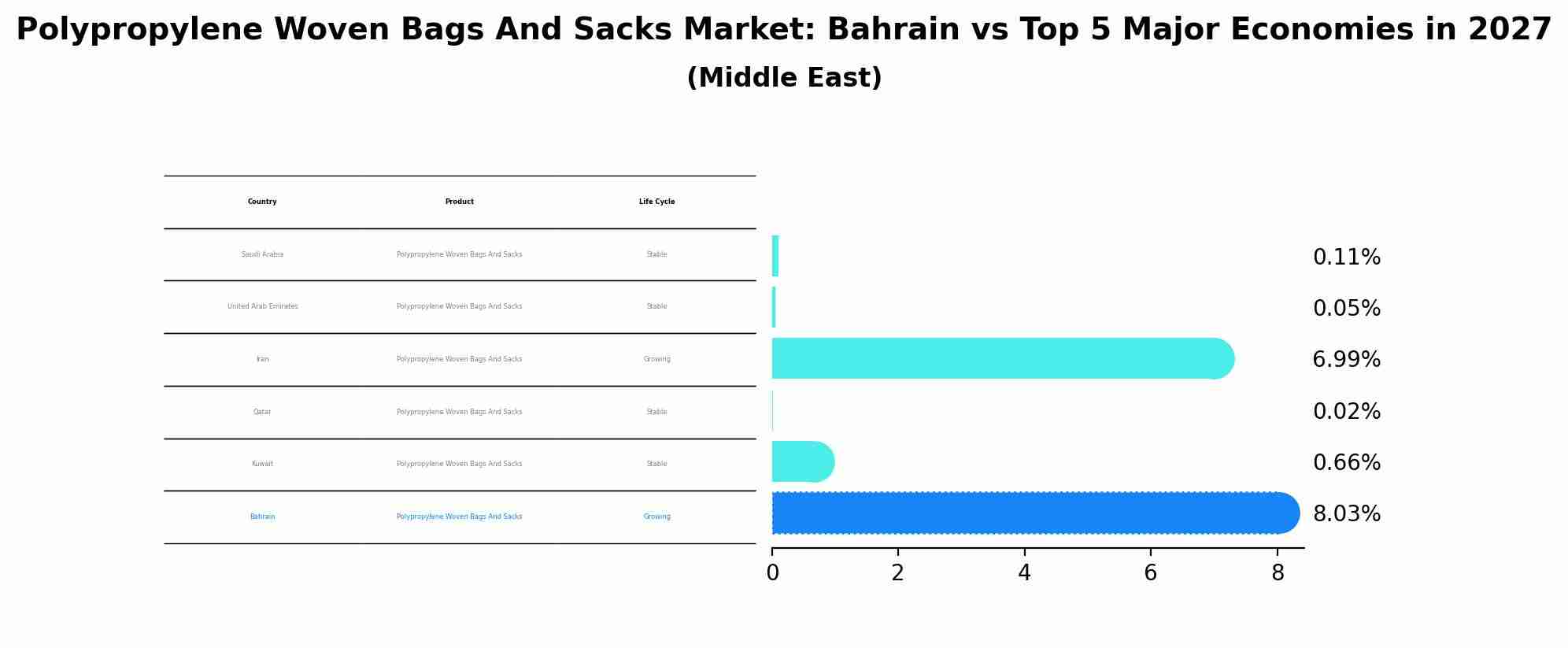
Polypropylene Woven Bags And Sacks Market: Bahrain vs Top 5 Major Economies in 2027 (Middle East)
Bahrain's Polypropylene Woven Bags And Sacks market is anticipated to experience a growing growth rate of 8.03% by 2027, reflecting trends observed in the largest economy Saudi Arabia, followed by United Arab Emirates, Iran, Qatar and Kuwait.
Bahrain Polypropylene Woven Bags And Sacks Market Synopsis
Bahrains polypropylene woven bags and sacks market is driven by their use in packaging agricultural produce, cement, fertilizers, and industrial materials. These sacks offer excellent strength, reusability, and cost-effectiveness. The market is also seeing a shift toward laminated and BOPP-coated variants for improved branding and moisture resistance.
Trends of the market
Polypropylene woven bags and sacks continue to dominate Bahrains bulk packaging sector, especially for agricultural products, fertilizers, cement, and food grains. Their durability, lightweight nature, and resistance to moisture make them highly suitable for transport and storage. The market is seeing innovation in design with UV protection and printed branding features, and a gradual transition toward eco-friendlier manufacturing processes is gaining momentum among local producers.
Challenges of the market
In Bahrain, polypropylene woven bags are used extensively in agriculture, construction, and industrial packaging. The demand is driven by durability, cost-efficiency, and recyclability. Challenges include limited domestic manufacturing capacity, import tariffs, and quality inconsistencies in low-cost alternatives. Furthermore, competition from bulk container systems and changing government policies on plastic packaging impact long-term growth prospects.
Investment opportunities in the Market
The polypropylene woven bags and sacks market in Bahrain presents opportunities driven by the regions booming manufacturing and agricultural sectors. Polypropylene woven bags are widely used for packaging products such as grains, chemicals, fertilizers, and other bulk goods. As the demand for eco-friendly packaging solutions increases, investors can focus on producing woven sacks that are durable, lightweight, and made from sustainable materials. Offering custom designs, such as printed bags for branding purposes, can cater to the needs of businesses seeking cost-effective, high-quality packaging solutions.
Government Policy of the market
Polypropylene woven bags and sacks are widely used in Bahrain for agricultural, construction, and industrial packaging purposes due to their durability, cost-efficiency, and recyclability. However, the market is challenged by limited domestic manufacturing capacity, import tariffs, and quality inconsistencies in low-cost alternatives. Furthermore, competition from bulk container systems and changing government policies regarding plastic packaging affect long-term growth prospects for the polypropylene woven bags market.
Key Highlights of the Report:
- Bahrain Polypropylene Woven Bags And Sacks Market Outlook
- Market Size of Bahrain Polypropylene Woven Bags And Sacks Market, 2021
- Forecast of Bahrain Polypropylene Woven Bags And Sacks Market, 2031
- Historical Data and Forecast of Bahrain Polypropylene Woven Bags And Sacks Revenues & Volume for the Period 2018 - 2031
- Bahrain Polypropylene Woven Bags And Sacks Market Trend Evolution
- Bahrain Polypropylene Woven Bags And Sacks Market Drivers and Challenges
- Bahrain Polypropylene Woven Bags And Sacks Price Trends
- Bahrain Polypropylene Woven Bags And Sacks Porter's Five Forces
- Bahrain Polypropylene Woven Bags And Sacks Industry Life Cycle
- Historical Data and Forecast of Bahrain Polypropylene Woven Bags And Sacks Market Revenues & Volume By Product Type for the Period 2018 - 2031
- Historical Data and Forecast of Bahrain Polypropylene Woven Bags And Sacks Market Revenues & Volume By Valve Bags for the Period 2018 - 2031
- Historical Data and Forecast of Bahrain Polypropylene Woven Bags And Sacks Market Revenues & Volume By Gusseted Bags for the Period 2018 - 2031
- Historical Data and Forecast of Bahrain Polypropylene Woven Bags And Sacks Market Revenues & Volume By Block Bottom Bags for the Period 2018 - 2031
- Historical Data and Forecast of Bahrain Polypropylene Woven Bags And Sacks Market Revenues & Volume By Pinch Bottom Bags for the Period 2018 - 2031
- Historical Data and Forecast of Bahrain Polypropylene Woven Bags And Sacks Market Revenues & Volume By Open Mouth Bags for the Period 2018 - 2031
- Historical Data and Forecast of Bahrain Polypropylene Woven Bags And Sacks Market Revenues & Volume By Other Product Type for the Period 2018 - 2031
- Historical Data and Forecast of Bahrain Polypropylene Woven Bags And Sacks Market Revenues & Volume By Bag Type for the Period 2018 - 2031
- Historical Data and Forecast of Bahrain Polypropylene Woven Bags And Sacks Market Revenues & Volume By Laminated Polypropylene Woven Bags for the Period 2018 - 2031
- Historical Data and Forecast of Bahrain Polypropylene Woven Bags And Sacks Market Revenues & Volume By Non Laminated Polypropylene Woven Bags for the Period 2018 - 2031
- Historical Data and Forecast of Bahrain Polypropylene Woven Bags And Sacks Market Revenues & Volume By End-Use for the Period 2018 - 2031
- Historical Data and Forecast of Bahrain Polypropylene Woven Bags And Sacks Market Revenues & Volume By Building & Construction for the Period 2018 - 2031
- Historical Data and Forecast of Bahrain Polypropylene Woven Bags And Sacks Market Revenues & Volume By Agriculture & Allied Industries for the Period 2018 - 2031
- Historical Data and Forecast of Bahrain Polypropylene Woven Bags And Sacks Market Revenues & Volume By Food for the Period 2018 - 2031
- Historical Data and Forecast of Bahrain Polypropylene Woven Bags And Sacks Market Revenues & Volume By Retail & Shopping for the Period 2018 - 2031
- Historical Data and Forecast of Bahrain Polypropylene Woven Bags And Sacks Market Revenues & Volume By Other End-Use for the Period 2018 - 2031
- Bahrain Polypropylene Woven Bags And Sacks Import Export Trade Statistics
- Market Opportunity Assessment By Product Type
- Market Opportunity Assessment By Bag Type
- Market Opportunity Assessment By End-Use
- Bahrain Polypropylene Woven Bags And Sacks Top Companies Market Share
- Bahrain Polypropylene Woven Bags And Sacks Competitive Benchmarking By Technical and Operational Parameters
- Bahrain Polypropylene Woven Bags And Sacks Company Profiles
- Bahrain Polypropylene Woven Bags And Sacks Key Strategic Recommendations






































