Bangladesh Washable Markers Market Size, Share & Growth Rate
The Bangladesh Washable Markers Market was estimated at USD 396 Million in 2025 and is projected to reach USD 547 Million by 2032, growing at a CAGR of 4.7% from 2026 to 2032. This growth is primarily driven by the increasing demand from the education sector, where creativity and art education are gaining more emphasis. Additionally, the popularity of washable markers for childrens art activities further stimulates market expansion.
Bangladesh Washable Markers Market Year-wise Growth Rate and Key Drivers
This graph highlights how the Bangladesh Washable Markers Market has steadily grown over the years, supported by major growth factors.
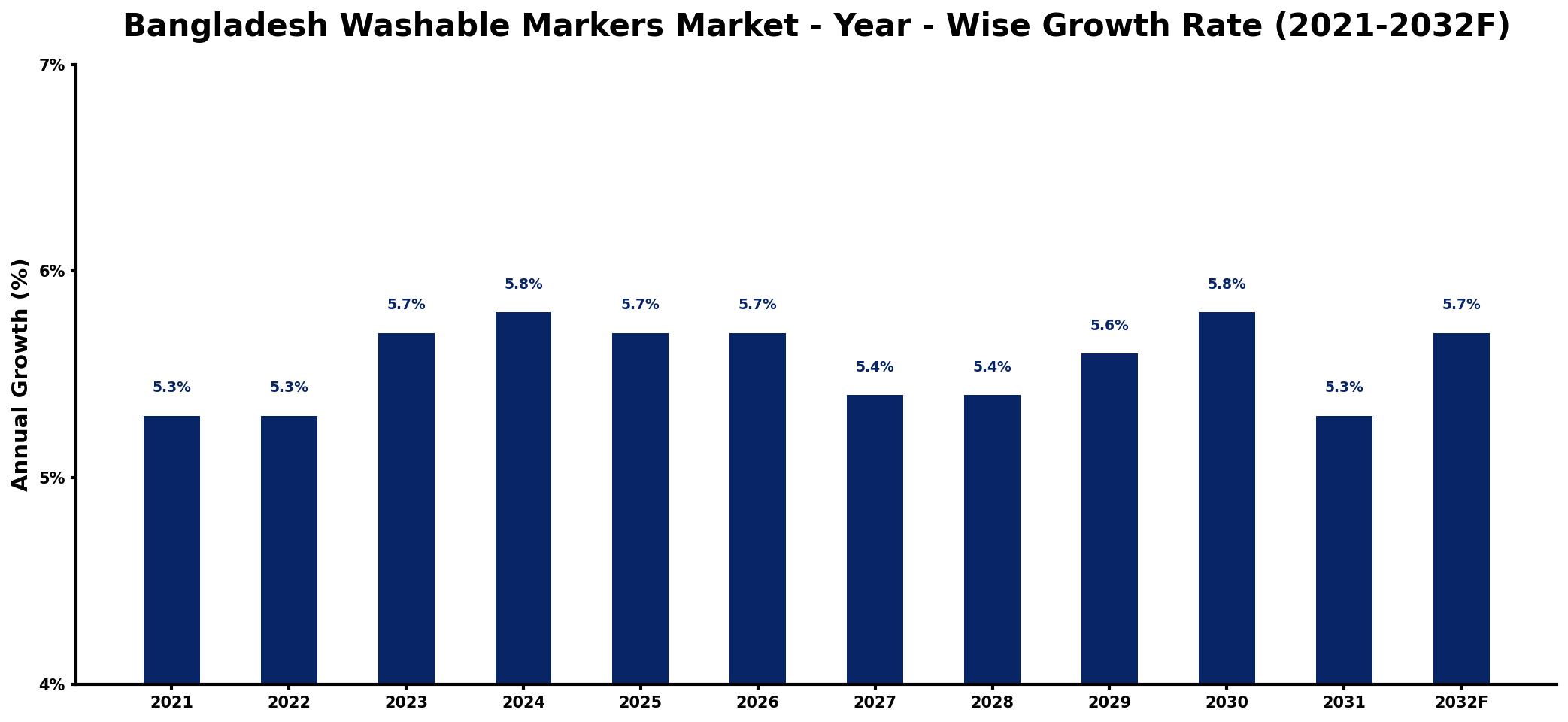
The table below presents the year‑wise growth rates along with the key drivers influencing the market
| Year | Growth Rate | Major Drivers |
| 2021 | 5.3% | Increased demand for educational tools |
| 2022 | 5.3% | Growth in creative arts sector |
| 2023 | 5.7% | Rise in school enrollment rates |
| 2024 | 5.8% | Expansion of retail distribution networks |
| 2025 | 5.7% | Increased investment in art supplies |
| 2026 | 5.7% | Surge in online shopping trends |
| 2027 | 5.4% | rising end-use demand growth |
| 2028 | 5.4% | increased domestic production output |
| 2029 | 5.6% | Increased popularity of art classes |
| 2030 | 5.8% | improved processing technologies adoption |
| 2031 | 5.3% | increased overall sector activity |
| 2032 | 5.7% | Rising demand for eco-friendly products |
Note: Market size estimations and growth projections presented in this report are based on 6Wresearch's proprietary forecasting methodology, utilizing the latest available industry data, government publications, and primary research inputs.
Bangladesh Washable Markers Market Synopsis
The Bangladesh Washable Markers Market is witnessing a noteworthy surge as parents and educators prioritize safe and non-toxic art supplies for children. With a burgeoning interest in creative expression, both among young learners and adult enthusiasts, the market is becoming increasingly vibrant.
As local manufacturers enhance their offerings, the market is also benefiting from an influx of eco-friendly products designed to minimize environmental impact. This trend not only satisfies growing consumer demand for sustainability but also aligns with educational initiatives emphasizing responsible art practices.
Bangladesh Washable Markers Market Key Takeaways
- The market is projected to grow from USD 396 Million in 2025 to USD 547 Million by 2032.
- Rising demand from the education sector is a key driver of growth in washable markers.
- Eco-friendly and non-toxic products are gaining traction among consumers, reflecting a shift towards sustainability.
- Digital marketing strategies are increasingly important for manufacturers aiming to expand their reach.
- Ongoing innovation in product features, such as dual-tip and scented markers, is enhancing consumer appeal.
Evaluation of Restraints in Bangladesh Washable Markers Market
The Bangladesh Washable Markers Market faces several constraints that could limit its potential. Intense competition among local and international brands often leads to pricing pressures, challenging manufacturers to maintain quality while keeping costs low. The prevalence of counterfeit products can undermine consumer trust, further complicating market dynamics. Additionally, manufacturers must navigate fluctuating raw material costs and stringent regulatory requirements to ensure compliance without sacrificing profitability. These factors require strategic planning and constant adaptation to market demands.
Bangladesh Washable Markers Market Trends
A significant trend in the Bangladesh Washable Markers Market is the increasing consumer preference for eco-friendly and non-toxic markers. Parents and educators alike are gravitating towards water-based options that are easier to clean and safe for children. Furthermore, the demand for vibrant colors and longer-lasting ink is driving innovation, prompting manufacturers to introduce a variety of features, including dual tips and scented options. The rise of online sales platforms is also reshaping how products reach consumers, allowing for greater accessibility and engagement.
Bangladesh Washable Markers Market Opportunities
Investment opportunities in the Bangladesh Washable Markers Market are abundant, especially in developing and marketing products tailored to meet the needs of schools and households. There is a distinct potential for brands that focus on safety and sustainability, offering washable markers that appeal to environmentally conscious consumers. By capitalizing on e-commerce and digital marketing strategies, companies can effectively expand their customer base and establish a robust market presence. Targeting local production can also reduce reliance on imports and enhance market stability.
Government Initiatives in the Bangladesh Washable Markers Market
The Bangladeshi government has taken significant steps to regulate the washable markers market, emphasizing product safety and quality standards. These regulations aim to minimize harmful chemicals in art supplies, particularly to protect children. Furthermore, the government is encouraging local production initiatives, intending to boost domestic manufacturing capabilities and reduce dependency on imports. Environmental sustainability is a focal point, with policies designed to promote eco-friendly materials and recycling practices within the industry.
Future Insights of the Bangladesh Washable Markers Market
The future of the Bangladesh Washable Markers Market looks promising, as a growing population and improving disposable incomes are expected to spur continued demand. The increasing focus on art and crafts in both educational settings and at home suggests that the market will experience steady growth. Moreover, the ongoing shift towards online shopping indicates a transformative era for product accessibility and consumer engagement. As manufacturers innovate with new colors and features, the market is poised for enhanced competition and diversity.
Bangladesh Washable Markers Market Latest Developments (2025 - 2026)
Recent developments in the Bangladesh Washable Markers Market include a noticeable increase in product launches focusing on eco-friendly materials and innovative designs. Companies are investing in marketing campaigns to raise awareness about the benefits of washable markers for children's creativity. Additionally, the expansion of online retail channels is allowing consumers easier access to a wider variety of products, enhancing the overall shopping experience. Collaborations with educational institutions are also emerging, promoting the use of washable markers in classrooms.
Bangladesh Washable Markers Market - Key Attractiveness of the Report
- 10 Years of Market Numbers
- Historical Data Starting from 2022 to 2025
- Base Year: 2025
- Forecast Data until 2032
- Key Performance Indicators Impacting the Market
- Major Upcoming Developments and Projects
Key Highlights of the Report:
- Bangladesh Washable Markers Market Outlook
- Market Size of Bangladesh Washable Markers Market, 2025
- Forecast of Bangladesh Washable Markers Market, 2032
- Historical Data and Forecast of Bangladesh Washable Markers Revenues & Volume for the Period 2022-2032F
- Bangladesh Washable Markers Market Trend Evolution
- Bangladesh Washable Markers Market Drivers and Challenges
- Bangladesh Washable Markers Price Trends
- Bangladesh Washable Markers Porter's Five Forces
- Bangladesh Washable Markers Industry Life Cycle
- Historical Data and Forecast of Bangladesh Washable Markers Market Revenues & Volume By Washability for the Period 2022-2032F
- Historical Data and Forecast of Bangladesh Washable Markers Market Revenues & Volume By Basic- Washable for the Period 2022-2032F
- Historical Data and Forecast of Bangladesh Washable Markers Market Revenues & Volume By Super-washable for the Period 2022-2032F
- Historical Data and Forecast of Bangladesh Washable Markers Market Revenues & Volume By End User for the Period 2022-2032F
- Historical Data and Forecast of Bangladesh Washable Markers Market Revenues & Volume By Children for the Period 2022-2032F
- Historical Data and Forecast of Bangladesh Washable Markers Market Revenues & Volume By Professionals for the Period 2022-2032F
- Bangladesh Washable Markers Import Export Trade Statistics
- Market Opportunity Assessment By Washability
- Market Opportunity Assessment By End User
- Bangladesh Washable Markers Top Companies Market Share
- Bangladesh Washable Markers Competitive Benchmarking By Technical and Operational Parameters
- Bangladesh Washable Markers Company Profiles
- Bangladesh Washable Markers Key Strategic Recommendations






































