Botswana Propylene Glycol Market Size Growth Rate
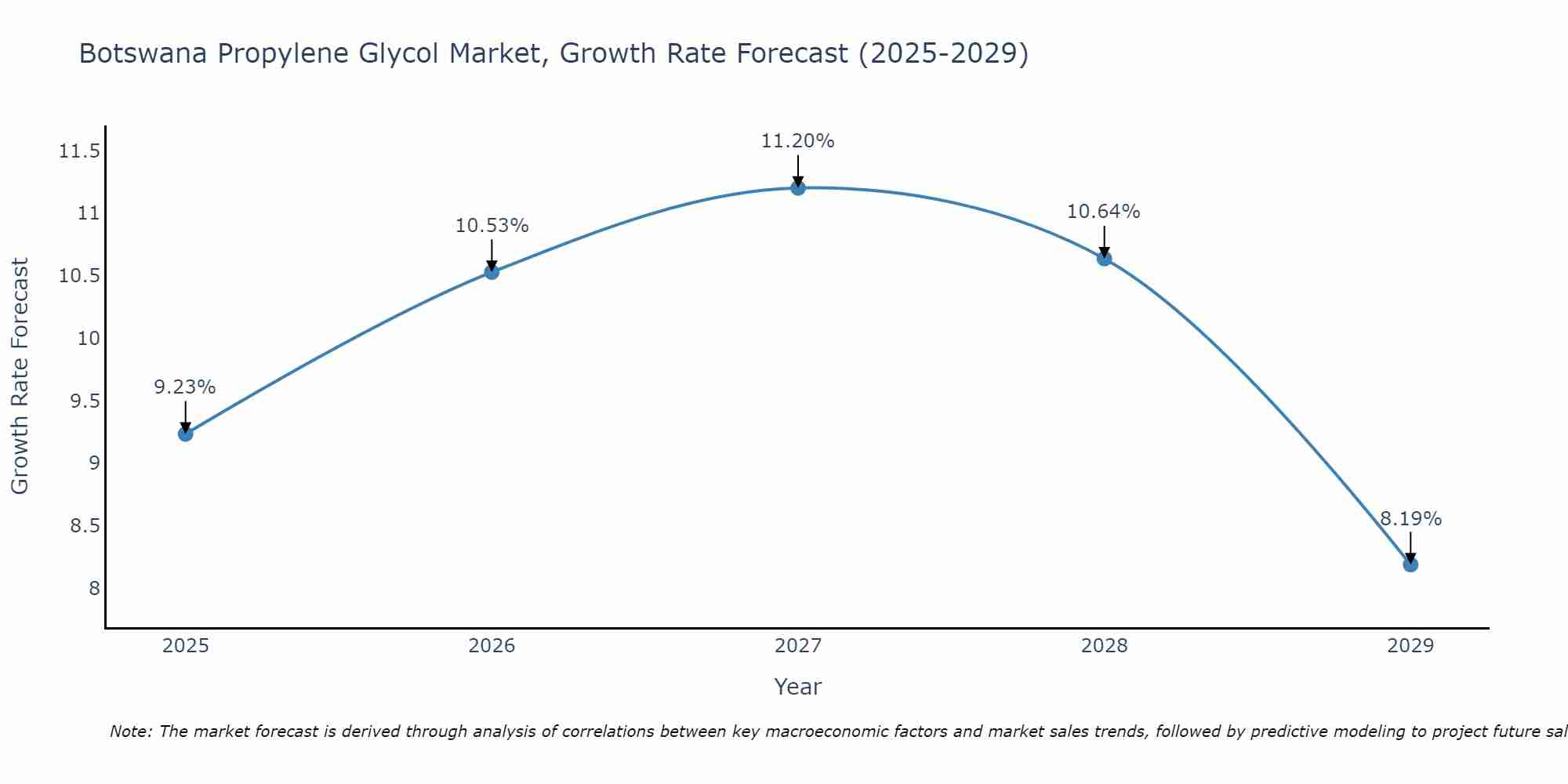
The Botswana Propylene Glycol Market is projected to witness mixed growth rate patterns during 2025 to 2029. Starting at 9.23% in 2025, the market peaks at 11.20% in 2027, and settles at 8.19% by 2029.
Propylene Glycol Market: Botswana vs Top 5 Major Economies in 2027 (Africa)
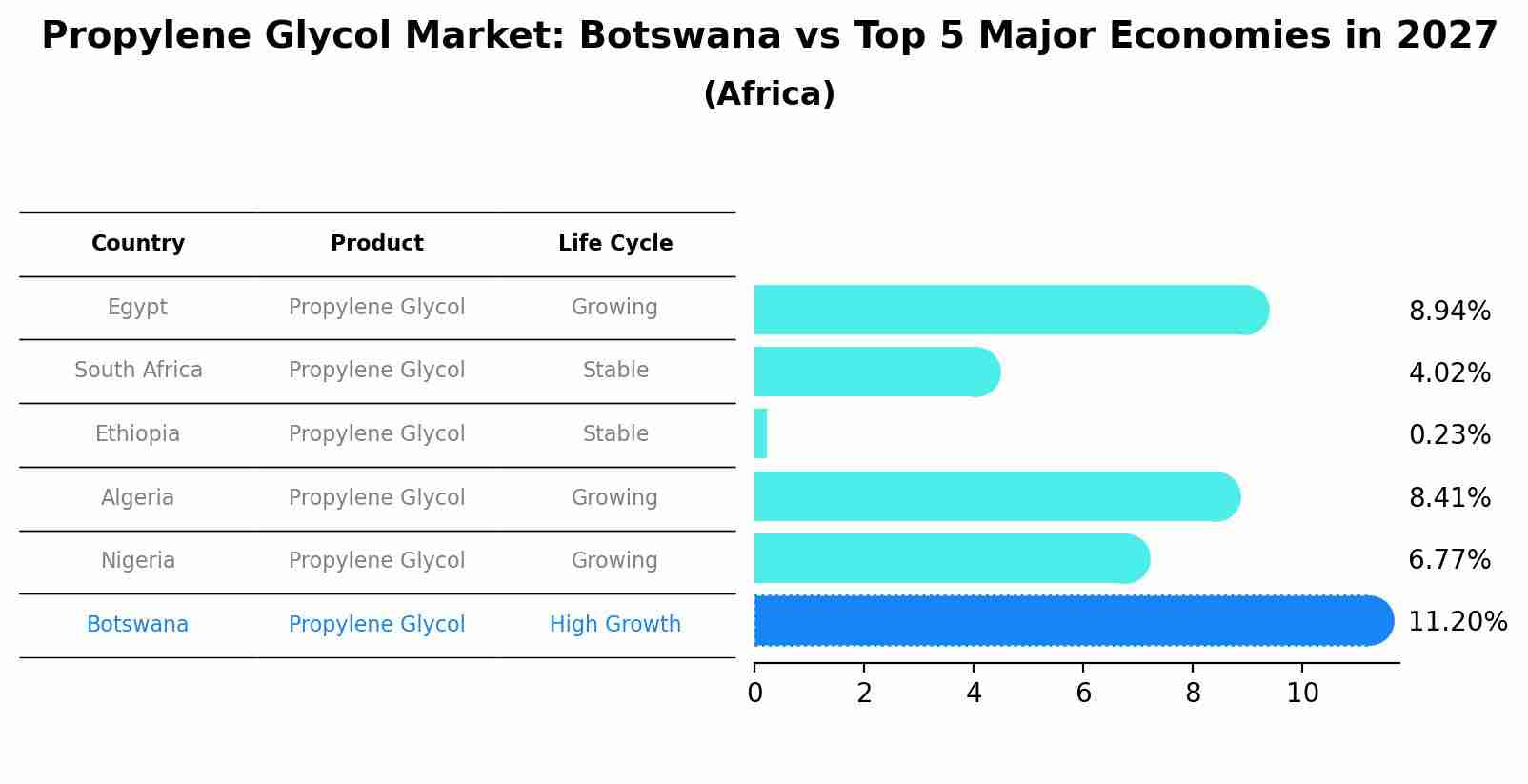
The Propylene Glycol market in Botswana is projected to grow at a high growth rate of 11.20% by 2027, highlighting the country's increasing focus on advanced technologies within the Africa region, where Egypt holds the dominant position, followed closely by South Africa, Ethiopia, Algeria and Nigeria, shaping overall regional demand.
Botswana Propylene Glycol Market Overview
Botswana`s propylene glycol market is growing as propylene glycol is used in a wide range of applications, including pharmaceuticals, food processing, and personal care products. Its versatility and safety profile make it a popular choice for various industrial and consumer products.
Drivers of the market
The Botswana propylene glycol market is influenced by the growing demand for propylene glycol in various applications, including food and beverage, pharmaceuticals, and industrial processes. Propylene glycol is used as a solvent, humectant, and additive due to its versatile properties. The growth of the food and beverage industry, advancements in propylene glycol production technologies, and the focus on developing high-quality and cost-effective solutions drive market demand. Additionally, the rising emphasis on product safety and regulatory compliance supports market growth.
Challenges of the market
Challenges in the Botswana propylene glycol market include high production costs and limited local manufacturing capabilities. The market`s reliance on imported propylene glycol exposes it to global price fluctuations and supply chain disruptions. Additionally, integrating propylene glycol into various industrial and consumer applications requires adherence to performance and safety standards. To overcome these challenges, there is a need for advancements in local manufacturing technologies and increased investment in infrastructure to enhance the availability and affordability of propylene glycol.
Government Policy of the market
Government policies related to the Botswana Propylene Glycol Market focus on ensuring the safety and quality of propylene glycol products. The government regulates propylene glycol to meet industry standards and environmental regulations. Policies support research and development in propylene glycol applications and promote the use of sustainable production practices. Additionally, there are incentives for local manufacturing and initiatives to improve safety and efficiency.
Key Highlights of the Report:
- Botswana Propylene Glycol Market Outlook
- Market Size of Botswana Propylene Glycol Market, 2025
- Forecast of Botswana Propylene Glycol Market, 2032
- Historical Data and Forecast of Botswana Propylene Glycol Revenues & Volume for the Period 2022-2032F
- Botswana Propylene Glycol Market Trend Evolution
- Botswana Propylene Glycol Market Drivers and Challenges
- Botswana Propylene Glycol Price Trends
- Botswana Propylene Glycol Porter`s Five Forces
- Botswana Propylene Glycol Industry Life Cycle
- Historical Data and Forecast of Botswana Propylene Glycol Market Revenues & Volume By Application for the Period 2022-2032F
- Historical Data and Forecast of Botswana Propylene Glycol Market Revenues & Volume By Unsaturated Polyester Resins,Functional Fluids,Food, Drug, and Cosmetics,Liquid Detergent,Paints and Coating,Others for the Period 2022-2032F
- Botswana Propylene Glycol Import Export Trade Statistics
- Market Opportunity Assessment By Application
- Botswana Propylene Glycol Top Companies Market Share
- Botswana Propylene Glycol Competitive Benchmarking By Technical and Operational Parameters
- Botswana Propylene Glycol Company Profiles
- Botswana Propylene Glycol Key Strategic Recommendations






































