Brazil Asphalt Market Summary
The brazil asphalt market was estimated at USD 194 Million in 2025 and is projected to reach USD 230 Million by 2032, growing at a CAGR of 3.1% from 2026 to 2032.
Brazil Asphalt Market Year-wise Growth Rate and Key Drivers
This graph highlights how the Brazil Asphalt Market has steadily grown over the years, supported by major growth factors.
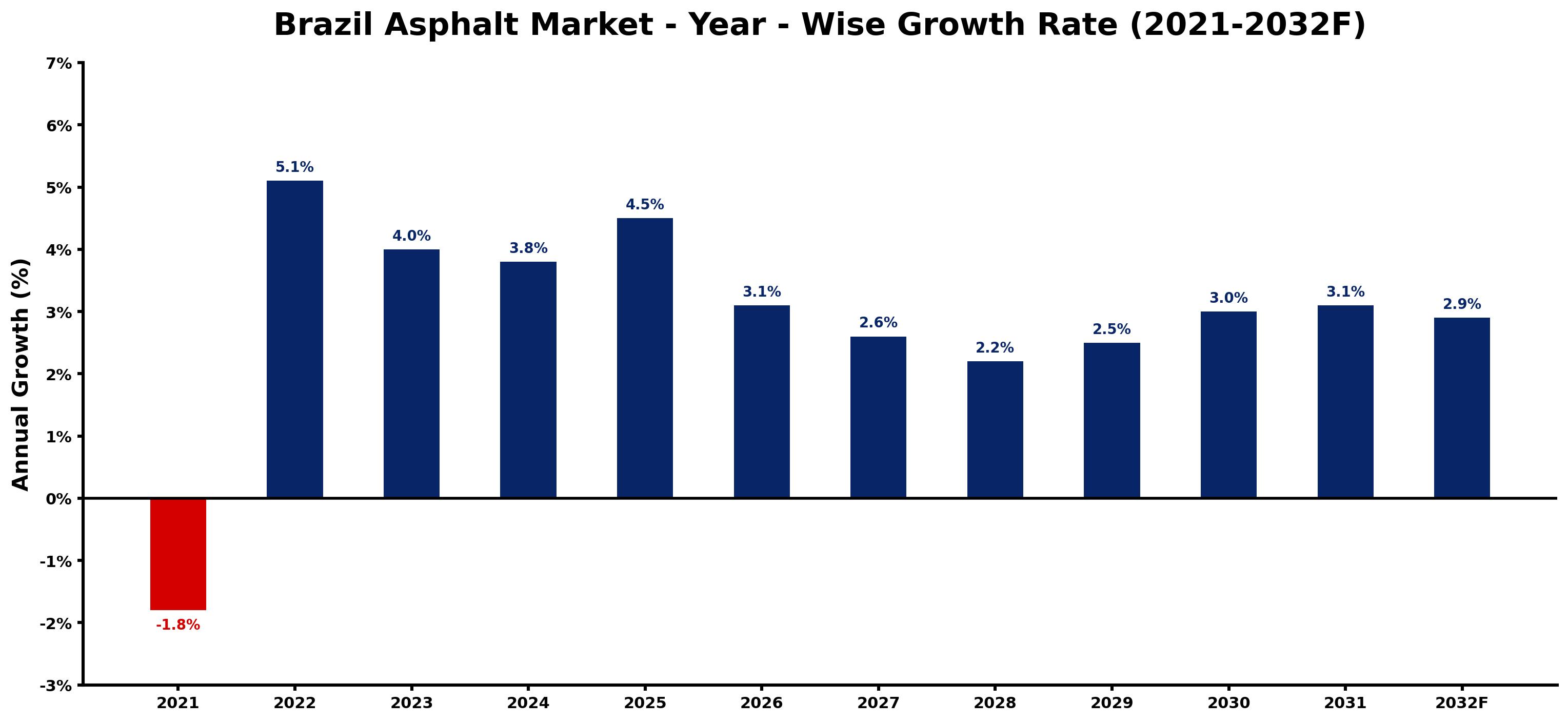
The table below presents the year wise growth rates along with the key drivers influencing the market
| Year | Growth Rate | Major Drivers |
| 2021 | -1.8% | A surge in alternative road construction materials diminished the demand for traditional asphalt in infrastructure projects. |
| 2022 | 5.1% | Increasing urbanization accelerated infrastructure projects across major Brazilian cities. |
| 2023 | 4.0% | Significant investments in road maintenance highlighted aging infrastructure challenges nationwide. |
| 2024 | 3.8% | Growing interest in sustainable materials influenced asphalt production techniques and sourcing. |
| 2025 | 4.5% | Construction of new highways focused on connecting remote regions to urban centers. |
| 2026 | 3.1% | Technological innovations improved asphalt recycling processes, enhancing sustainability efforts. |
| 2027 | 2.6% | Private sector partnerships emerged to tackle public infrastructure projects more efficiently. |
| 2028 | 2.2% | Increased foreign investment flowed into Brazil's transportation sector, boosting asphalt demand. |
| 2029 | 2.5% | Adaptation to climate change prompted new standards for durable road surfaces. |
| 2030 | 3.0% | Urban mobility initiatives prioritized pedestrian-friendly roads, changing asphalt use patterns. |
| 2031 | 3.1% | Emerging logistics hubs required enhanced road networks for efficient product distribution. |
| 2032 | 2.9% | Local governments began prioritizing eco-friendly materials in public works projects. |
Note - Market size estimations and growth projections presented in this report are based on 6Wresearch's advanced forecasting approach, validated with industry datasets as of June 2026.
Brazil Asphalt Market Synopsis
The Brazil Asphalt Market is projected to reach 3.1% and witness significant growth during the forecast period (2026-2032). This market serves as a crucial component in the nation's infrastructure and construction domains, with asphalt being extensively utilized in road construction, roofing, and waterproofing applications. As Brazil continues to enhance its infrastructure framework, the demand for asphalt products is set to escalate, signaling robust market dynamics.
Brazil Asphalt Market Growth Drivers
Several factors are propelling the growth of the Brazil Asphalt Market. Primarily, the surge in infrastructure development projects underpins the increasing demand for asphalt. The following key drivers are noteworthy:
- Government initiatives focusing on transportation infrastructure improvement are stimulating asphalt consumption across various applications.
- Urbanization trends are leading to a heightened requirement for quality paving and construction materials, further enhancing the need for asphalt in building roads and other facilities.
- Technological advancements in asphalt production processes are improving the efficiency and sustainability of asphalt products, thereby attracting more investments in the sector.
- As economic activities expand, the necessity for reliable construction materials, including asphalt, is on the rise, particularly in densely populated urban centers.
- The construction industry's recovery post-pandemic is driving asphalt demand, as numerous projects were delayed and are now being revived or initiated.
Brazil Asphalt Market Challenges and Restraints
Despite the positive outlook, the Brazil Asphalt Market faces several challenges that could hinder its growth trajectory. Key challenges include:
- Dependency on government infrastructure projects makes the market vulnerable to fluctuations in economic conditions and political stability, impacting project funding.
- Volatility in oil prices directly affects asphalt production costs, leading to unpredictable pricing for end users and impacting overall market stability.
- Supply chain disruptions, stemming from global economic uncertainties, can affect the availability of necessary raw materials, thus delaying production timelines.
- Environmental concerns surrounding asphalt production and its application necessitate investments in sustainable practices, which could increase operational costs.
- Competition from alternative materials, which claim lower environmental impact, poses a potential threat to the traditional asphalt market, prompting the need for innovation.
Brazil Asphalt Market Government Investment and Initiatives
The Brazilian government plays a pivotal role in fostering the resilience and growth of the asphalt market through various policies and initiatives. Notable government actions include:
- Implementation of comprehensive regulations aimed at ensuring quality standards in asphalt production and road construction, which contribute to enhanced safety and durability.
- Public spending on infrastructure and transport projects reflects the government's commitment to modernizing road networks, benefiting the asphalt sector significantly.
- Incentives for recycling initiatives are being introduced to encourage the use of reclaimed asphalt pavement, reducing waste and promoting sustainability.
- Investments in research and development for innovative asphalt materials and techniques ensure that Brazil remains competitive on a global level while addressing environmental challenges.
- Collaborations between governmental bodies and private sectors aim to boost asphalt industry growth while maintaining economic stability during fluctuating market conditions.
Brazil Asphalt Market Latest Developments (May 2025 - June 2026)
Recent developments in the Brazil Asphalt Market from May 2025 to June 2026 indicate a dynamic environment, with several initiatives and trends emerging. These advancements reflect a mix of technological, regulatory, and economic factors that shape the market landscape:
- Significant investments in smart road infrastructure are on the rise, utilizing advanced materials that incorporate asphalt to enhance durability and reduce maintenance costs.
- The government has launched new public-private partnerships aimed at expediting infrastructure projects, which directly boosts asphalt demand in upcoming years.
- Research findings promoting the benefits of using recycled asphalt are gaining traction, leading to increased adoption of eco-friendly practices within the industry.
- Technological innovation in asphalt mixing and application processes is being implemented, improving efficiency and reducing environmental footprints.
- Market players are increasingly focusing on developing sustainable asphalt products to comply with emerging environmental regulations, enhancing market competitiveness.
Brazil Asphalt Market - Key Attractiveness of the Report
- 10 Years of Market Numbers
- Historical Data Starting from 2022 to 2025
- Base Year: 2025
- Forecast Data until 2032
- Key Performance Indicators Impacting the Market
- Major Upcoming Developments and Projects
Key Highlights of the Report:
- Brazil Asphalt Market Outlook
- Market Size of Brazil Asphalt Market, 2025
- Forecast of Brazil Asphalt Market, 2032
- Historical Data and Forecast of Brazil Asphalt Revenues & Volume for the Period 2022-2032F
- Brazil Asphalt Market Trend Evolution
- Brazil Asphalt Market Drivers and Challenges
- Brazil Asphalt Price Trends
- Brazil Asphalt Porter's Five Forces
- Brazil Asphalt Industry Life Cycle
- Historical Data and Forecast of Brazil Asphalt Market Revenues & Volume By Type for the Period 2022-2032F
- Historical Data and Forecast of Brazil Asphalt Market Revenues & Volume By Paving Petroleum Asphalt for the Period 2022-2032F
- Historical Data and Forecast of Brazil Asphalt Market Revenues & Volume By Industrial Petroleum Asphalt for the Period 2022-2032F
- Historical Data and Forecast of Brazil Asphalt Market Revenues & Volume By Others for the Period 2022-2032F
- Historical Data and Forecast of Brazil Asphalt Market Revenues & Volume By Application for the Period 2022-2032F
- Historical Data and Forecast of Brazil Asphalt Market Revenues & Volume By Paving for the Period 2022-2032F
- Historical Data and Forecast of Brazil Asphalt Market Revenues & Volume By Roofing for the Period 2022-2032F
- Historical Data and Forecast of Brazil Asphalt Market Revenues & Volume By Others for the Period 2022-2032F
- Brazil Asphalt Import Export Trade Statistics
- Market Opportunity Assessment By Type
- Market Opportunity Assessment By Application
- Brazil Asphalt Top Companies Market Share
- Brazil Asphalt Competitive Benchmarking By Technical and Operational Parameters
- Brazil Asphalt Company Profiles
- Brazil Asphalt Key Strategic Recommendations






































