Brazil Brooms And Mops Market Size, Share & Growth Rate
The Brazil Brooms And Mops Market was estimated at USD 283 Million in 2025 and is projected to reach USD 337 Million by 2032, growing at a CAGR of 2.5% from 2026 to 2032. This upward trajectory is primarily fueled by increased urbanization, which in turn drives demand for effective cleaning solutions across various sectors. Additionally, heightened awareness surrounding hygiene and sanitation is prompting both residential and commercial consumers to seek out durable and efficient cleaning tools, bolstering market growth.
Brazil Brooms And Mops Market Year-wise Growth Rate and Key Drivers
This graph highlights how the Brazil Brooms And Mops Market has steadily grown over the years, supported by major growth factors.
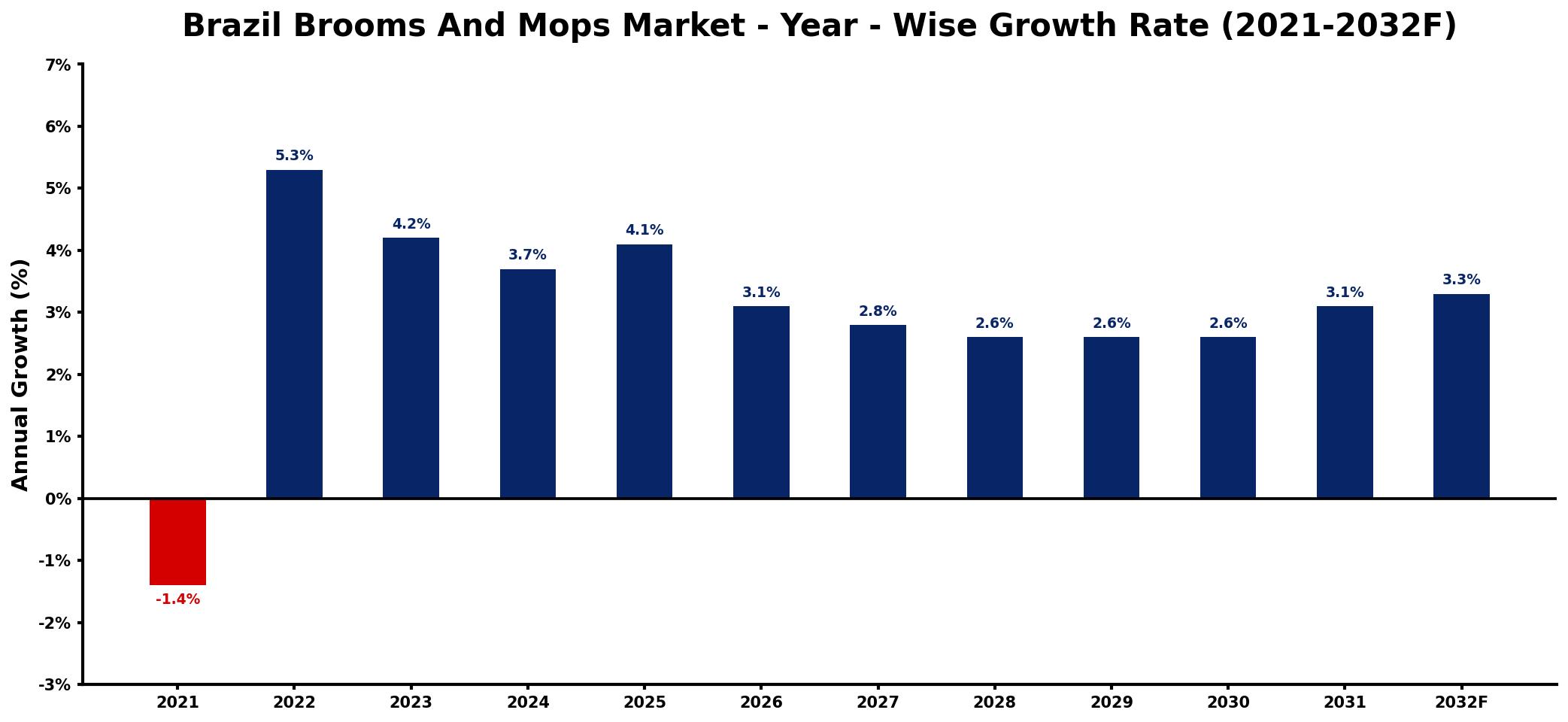
The table below presents the year‑wise growth rates along with the key drivers influencing the market
| Year | Growth Rate | Major Drivers |
| 2021 | -1.4% | decreased household cleaning demand |
| 2022 | 5.3% | increased consumer spending confidence |
| 2023 | 4.2% | expansion of home cleaning services |
| 2024 | 3.7% | growing eco-friendly product popularity |
| 2025 | 4.1% | rising urban population density |
| 2026 | 3.1% | increased focus on hygiene standards |
| 2027 | 2.8% | growth in online retail channels |
| 2028 | 2.6% | demand for multifunctional cleaning tools |
| 2029 | 2.6% | expanding manufacturing base activity |
| 2030 | 2.6% | increased awareness of sustainability |
| 2031 | 3.1% | rising export shipment volumes |
| 2032 | 3.3% | rising disposable income levels |
Note: Market size estimations and growth projections presented in this report are based on 6Wresearch's proprietary forecasting methodology, utilizing the latest available industry data, government publications, and primary research inputs.
Brazil Brooms And Mops Market Synopsis
In Brazil, the market for brooms and mops is experiencing robust growth driven by an escalating commitment to cleanliness. With urban living becoming more prevalent, households and businesses alike are investing in reliable cleaning solutions to meet the rising standards of hygiene.
Current trends indicate that manufacturers are increasingly focused on innovation, emphasizing sustainable materials and ergonomic designs. As consumers prioritize environmentally friendly products, the market is adapting to include options that align with these values, enhancing their appeal.
Brazil Brooms And Mops Market Key Takeaways
- The market is anticipated to grow steadily, driven by urbanization and increasing hygiene awareness.
- Innovations in design and materials are reshaping consumer preferences and market dynamics.
- Manufacturers are focusing on sustainability to meet changing consumer demands.
- Government regulations are helping to set quality standards in production processes.
- The hospitality sector's expansion is creating additional demand for cleaning tools.
Evaluation of Restraints in Brazil Brooms And Mops Market
While the Brazil Brooms and Mops market presents numerous growth opportunities, it faces specific restraints that could hamper progress. One significant challenge is the demand for durable and eco-friendly materials. As consumer expectations rise, manufacturers are tasked with balancing sustainability with affordability. Moreover, fluctuations in raw material prices introduce uncertainty, impacting production costs and potentially straining competitive pricing. This complexity requires industry players to adopt innovative strategies and maintain operational agility to thrive amidst changing market conditions.
Brazil Brooms And Mops Market Trends
Currently, there is a shift towards ergonomic designs that enhance user experience and effectiveness. This trend is particularly important for consumers who prioritize comfort during cleaning tasks. Additionally, the introduction of advanced materials, including biodegradable options, is gaining traction as eco-conscious consumers actively seek sustainable products. Furthermore, digital technology is finding its way into the market, with smart mops and cleaning systems appealing to tech-savvy consumers looking for convenience and efficiency.
Brazil Brooms And Mops Market Opportunities
Amidst evolving market dynamics, there are several promising growth opportunities within the Brazil Brooms and Mops market. The rising demand from the hospitality sector, including hotels and restaurants, presents a lucrative avenue for manufacturers to explore. Furthermore, as more consumers become environmentally conscious, opportunities abound in developing innovative, eco-friendly cleaning solutions. This market also encourages investment in marketing strategies that highlight the benefits of durable and ergonomic designs, appealing directly to health-conscious and quality-focused consumers.
Government Initiatives in the Brazil Brooms And Mops Market
The Brazilian government plays a vital role in shaping the brooms and mops market through policies aimed at enhancing public health and sanitation. These initiatives focus on ensuring the quality and durability of cleaning products, encouraging manufacturers to meet higher hygiene standards. Additionally, there are efforts directed at promoting recycling and waste reduction in the production processes, aligning the market with broader environmental sustainability goals.
Future Insights of the Brazil Brooms And Mops Market
Looking ahead to 2026-2032, the Brazil Brooms and Mops market is expected to continue its growth trajectory, driven by urbanization and an ongoing commitment to cleanliness. The increasing demand for sustainable and durable cleaning tools will further shape market dynamics, compelling manufacturers to innovate. As government policies reinforce the importance of hygiene, and as consumer preferences lean toward environmentally friendly products, the market is poised for transformation. Strategic investments in product development and consumer engagement will be crucial for companies aiming to capture a larger market share in this evolving landscape.
Brazil Brooms And Mops Market Latest Developments (2025 - 2026)
In recent months, the Brazilian brooms and mops market has witnessed significant advancements in product offerings and manufacturing techniques. Companies are increasingly emphasizing sustainable practices, focusing on materials that reduce environmental impact. New product lines featuring ergonomic designs are also emerging, enhancing usability for both residential and commercial users. Additionally, trends indicate growing collaborations among manufacturers to leverage technology, aiming to integrate smart features into traditional cleaning tools.
Brazil Brooms And Mops Market - Key Attractiveness of the Report
- 10 Years of Market Numbers
- Historical Data Starting from 2022 to 2025
- Base Year: 2025
- Forecast Data until 2032
- Key Performance Indicators Impacting the Market
- Major Upcoming Developments and Projects
Key Highlights of the Report:
- Brazil Brooms And Mops Market Outlook
- Market Size of Brazil Brooms And Mops Market, 2025
- Forecast of Brazil Brooms And Mops Market, 2032
- Historical Data and Forecast of Brazil Brooms And Mops Revenues & Volume for the Period 2022-2032F
- Brazil Brooms And Mops Market Trend Evolution
- Brazil Brooms And Mops Market Drivers and Challenges
- Brazil Brooms And Mops Price Trends
- Brazil Brooms And Mops Porter's Five Forces
- Brazil Brooms And Mops Industry Life Cycle
- Historical Data and Forecast of Brazil Brooms And Mops Market Revenues & Volume By Product Type for the Period 2022-2032F
- Historical Data and Forecast of Brazil Brooms And Mops Market Revenues & Volume By Mops for the Period 2022-2032F
- Historical Data and Forecast of Brazil Brooms And Mops Market Revenues & Volume By Brooms for the Period 2022-2032F
- Historical Data and Forecast of Brazil Brooms And Mops Market Revenues & Volume By Applications for the Period 2022-2032F
- Historical Data and Forecast of Brazil Brooms And Mops Market Revenues & Volume By Home Use for the Period 2022-2032F
- Historical Data and Forecast of Brazil Brooms And Mops Market Revenues & Volume By Commercial Use for the Period 2022-2032F
- Brazil Brooms And Mops Import Export Trade Statistics
- Market Opportunity Assessment By Product Type
- Market Opportunity Assessment By Applications
- Brazil Brooms And Mops Top Companies Market Share
- Brazil Brooms And Mops Competitive Benchmarking By Technical and Operational Parameters
- Brazil Brooms And Mops Company Profiles
- Brazil Brooms And Mops Key Strategic Recommendations






































