Brazil Cameras Market Summary
The brazil cameras market was estimated at USD 190 Million in 2025 and is projected to reach USD 225 Million by 2032, growing at a CAGR of 3.1% from 2026 to 2032.
Brazil Cameras Market Year-wise Growth Rate and Key Drivers
This graph highlights how the Brazil Cameras Market has steadily grown over the past five years, supported by major growth factors.
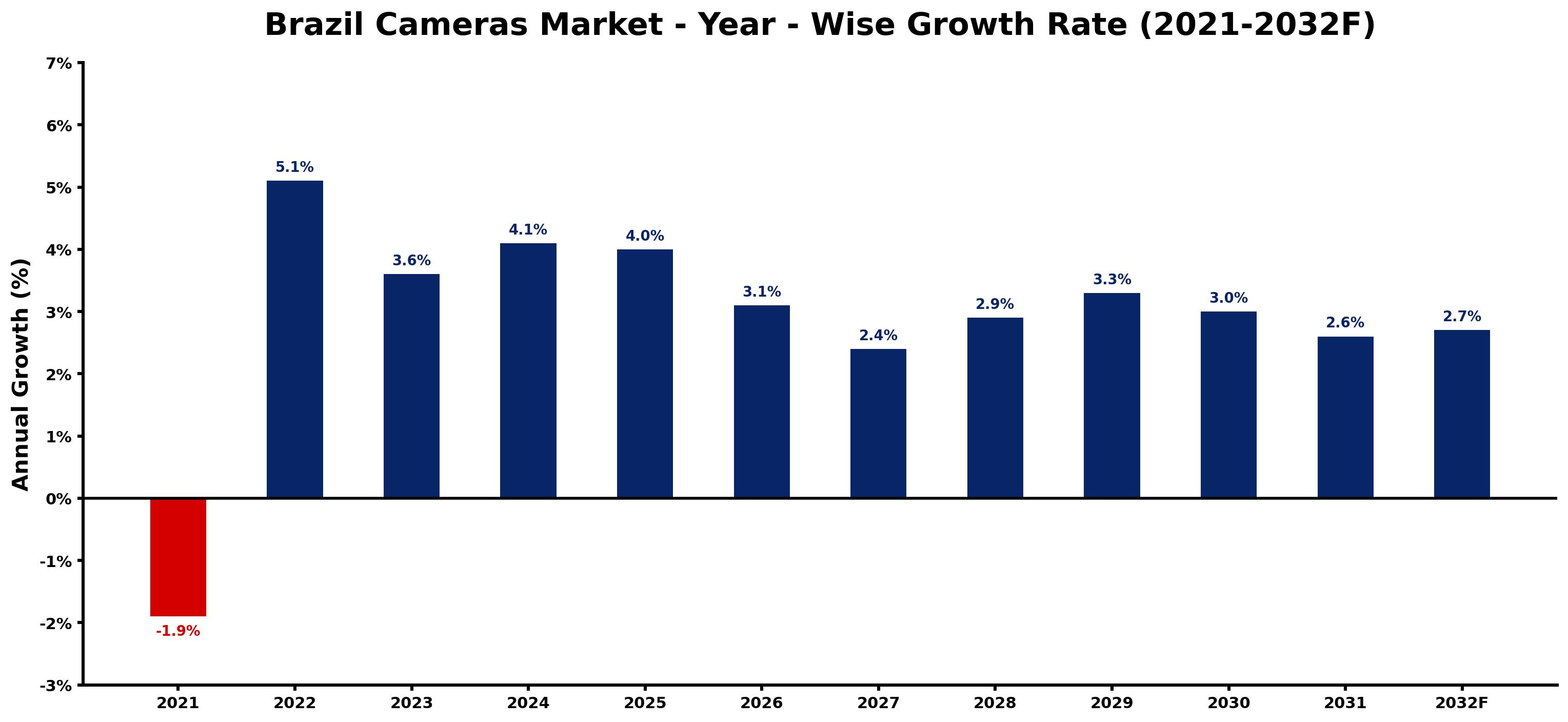
The table below presents the year wise growth rates along with the key drivers influencing the market
| Year | Growth Rate | Major Drivers |
| 2021 | -1.9% | Supply chain disruptions caused by the pandemic hindered product availability, limiting consumer purchases in the camera market. |
| 2022 | 5.1% | Emerging influencers on social media platforms drive camera accessory purchases significantly. |
| 2023 | 3.6% | Local brands introduce affordable models targeting younger demographics seeking creative outlets. |
| 2024 | 4.1% | Technological innovations in mirrorless cameras attract professional photographers back to upgrades. |
| 2025 | 4.0% | Campaigns promoting eco-friendly materials in cameras boost consumer preferences for sustainable options. |
| 2026 | 3.1% | Increased interest in travel photography encourages purchases of compact, versatile cameras. |
| 2027 | 2.4% | Integration of AI features in cameras enhances user experience and market appeal. |
| 2028 | 2.9% | Virtual reality content creation expands demand for specialized camera equipment and accessories. |
| 2029 | 3.3% | Collaborations between tech firms and retailers improve access to cutting-edge camera technology. |
| 2030 | 3.0% | Growing online education platforms foster interest in photography skills and equipment investment. |
| 2031 | 2.6% | Local events and festivals promote regional photography, increasing community engagement and sales. |
| 2032 | 2.7% | Economic stabilization post-pandemic encourages discretionary spending on premium camera gear. |
Note - Market size estimations and growth projections presented in this report are based on 6Wresearch's advanced forecasting approach, validated with industry datasets as of June 2026.
Brazil Cameras Market Synopsis
The Brazil Cameras Market is projected to reach 3.1% and witness significant growth during the forecast period (2026-2032). This dynamic market is being shaped by various factors, including a surge in photography and videography as both hobbies and professional activities. The rise of social media platforms has further amplified the demand for high-quality imaging devices, compelling consumers to invest in both traditional digital cameras and advanced DSLRs.
Brazil Cameras Market Growth Drivers
The growth trajectory of the Brazil Cameras Market is underpinned by several key drivers:
- The increasing popularity of photography, driven by both personal and professional pursuits, has created a burgeoning demand for cameras. Enthusiasts often seek superior imaging quality and features that enhance their creative expression.
- Technological advancements, particularly in high-resolution sensors and connectivity options, have elevated the user experience, making modern cameras more appealing to consumers.
- The rising influence of social media has encouraged users to invest in cameras that can deliver high-quality visual content, allowing them to stand out in a crowded digital landscape.
- The expanding middle-class population in Brazil, with greater disposable income, has contributed to a notable increase in camera purchases, further stimulating market growth.
- E-commerce platforms have facilitated access to a diverse range of cameras, enabling consumers to make informed choices and encouraging competitive pricing among manufacturers.
Brazil Cameras Market Trends and Opportunities
Recent trends within the Brazil Cameras Market highlight several opportunities for growth and innovation:
- The shift toward mirrorless camera technology is gaining momentum, as these devices offer significant advantages in terms of size, weight, and performance, appealing to both amateurs and professionals alike.
- Artificial intelligence integration within cameras is becoming increasingly common, providing users with features such as scene recognition, automated adjustments, and enhanced editing capabilities.
- Collaboration with social media platforms is creating new avenues for camera manufacturers, allowing for the development of products specifically designed for content creators.
- As sustainability becomes a greater focus, there is an opportunity for the market to innovate in eco-friendly camera designs and manufacturing processes, appealing to environmentally conscious consumers.
- The demand for augmented reality features in cameras may provide a new frontier for innovation, attracting tech-savvy users who seek interactive photography experiences.
Brazil Cameras Market Challenges and Restraints
Despite the robust growth, the Brazil Cameras Market faces challenges that could impede progress:
- The rapid evolution of smartphone technology poses a significant threat to standalone cameras, as many consumers opt for the convenience of devices that already integrate high-quality imaging capabilities.
- The migration from traditional film cameras to digital alternatives has resulted in a decline in specific market segments, leading to the necessity for manufacturers to adapt their product offerings.
- The economic landscape in Brazil may introduce volatility, affecting consumer spending habits and overall market demand.
- To remain relevant, manufacturers must consistently invest in research and development, focusing on advanced features and technologies that resonate with discerning consumers.
- Marketing strategies must be tailored to target photography enthusiasts effectively, ensuring that the unique value propositions of standalone cameras are clearly communicated.
Brazil Cameras Market Government Investment and Initiatives
Government policies play a vital role in shaping the Brazil Cameras Market. These initiatives include:
- Regulations focusing on intellectual property protection are critical to ensuring fair competition within the market, safeguarding both consumers and manufacturers from infringement issues.
- Import regulations are enforced to stabilize international trade, which can affect the pricing and availability of cameras within Brazil.
- Support for local manufacturing and research initiatives is evident, as the government encourages innovation through various incentives aimed at boosting domestic production capabilities.
- Consumer rights protections are prioritized, ensuring that buyers are aware of their rights and that companies adhere to standards that meet consumer expectations.
- Public spending on technological advancement programs indirectly benefits the cameras market by fostering an environment conducive to innovation and growth.
Brazil Cameras Market Latest Developments (May 2025 - June 2026)
The latest developments in the Brazil Cameras Market from May 2025 to June 2026 indicate a period of notable evolution:
- Emerging technologies such as artificial intelligence and augmented reality have been integrated into new camera models, reflecting a trend towards enhanced user experiences.
- The market has witnessed an increase in collaborations between camera manufacturers and software developers focused on creating camera apps that enhance functionality.
- Consumer interest in travel and outdoor photography has surged, prompting manufacturers to design sturdy, weather-resistant camera options tailored for these activities.
- New marketing strategies have been employed, targeting the growing demographic of young photographers and content creators on social media, recognizing their influence as trendsetters.
- Sustainability initiatives have gained traction, with companies exploring eco-friendly materials and processes to appeal to environmentally conscious consumers.
Brazil Cameras Market - Key Attractiveness of the Report
- 10 Years of Market Numbers
- Historical Data Starting from 2022 to 2025
- Base Year: 2025
- Forecast Data until 2032
- Key Performance Indicators Impacting the Market
- Major Upcoming Developments and Projects
Key Highlights of the Report:
- Brazil Cameras Market Outlook
- Market Size of Brazil Cameras Market, 2025
- Forecast of Brazil Cameras Market, 2032
- Historical Data and Forecast of Brazil Cameras Revenues & Volume for the Period 2022-2032F
- Brazil Cameras Market Trend Evolution
- Brazil Cameras Market Drivers and Challenges
- Brazil Cameras Price Trends
- Brazil Cameras Porter's Five Forces
- Brazil Cameras Industry Life Cycle
- Historical Data and Forecast of Brazil Cameras Market Revenues & Volume By Product Type for the Period 2022-2032F
- Historical Data and Forecast of Brazil Cameras Market Revenues & Volume By Built-in Lens Camera for the Period 2022-2032F
- Historical Data and Forecast of Brazil Cameras Market Revenues & Volume By Interchangeable Lens Camera for the Period 2022-2032F
- Historical Data and Forecast of Brazil Cameras Market Revenues & Volume By DSLR for the Period 2022-2032F
- Historical Data and Forecast of Brazil Cameras Market Revenues & Volume By Non-reflex for the Period 2022-2032F
- Historical Data and Forecast of Brazil Cameras Market Revenues & Volume By Application for the Period 2022-2032F
- Historical Data and Forecast of Brazil Cameras Market Revenues & Volume By Commercial for the Period 2022-2032F
- Historical Data and Forecast of Brazil Cameras Market Revenues & Volume By Residential for the Period 2022-2032F
- Historical Data and Forecast of Brazil Cameras Market Revenues & Volume By Distribution Channel for the Period 2022-2032F
- Historical Data and Forecast of Brazil Cameras Market Revenues & Volume By Online for the Period 2022-2032F
- Historical Data and Forecast of Brazil Cameras Market Revenues & Volume By Offline for the Period 2022-2032F
- Brazil Cameras Import Export Trade Statistics
- Market Opportunity Assessment By Product Type
- Market Opportunity Assessment By Application
- Market Opportunity Assessment By Distribution Channel
- Brazil Cameras Top Companies Market Share
- Brazil Cameras Competitive Benchmarking By Technical and Operational Parameters
- Brazil Cameras Company Profiles
- Brazil Cameras Key Strategic Recommendations






































