Mexico Cameras Market Summary
The mexico cameras market was estimated at USD 135 Million in 2025 and is projected to reach USD 156 Million by 2032, growing at a CAGR of 1.0% from 2026 to 2032.
Mexico Cameras Market Year-wise Growth Rate and Key Drivers
This graph highlights how the Mexico Cameras Market has steadily grown over the past five years, supported by major growth factors.
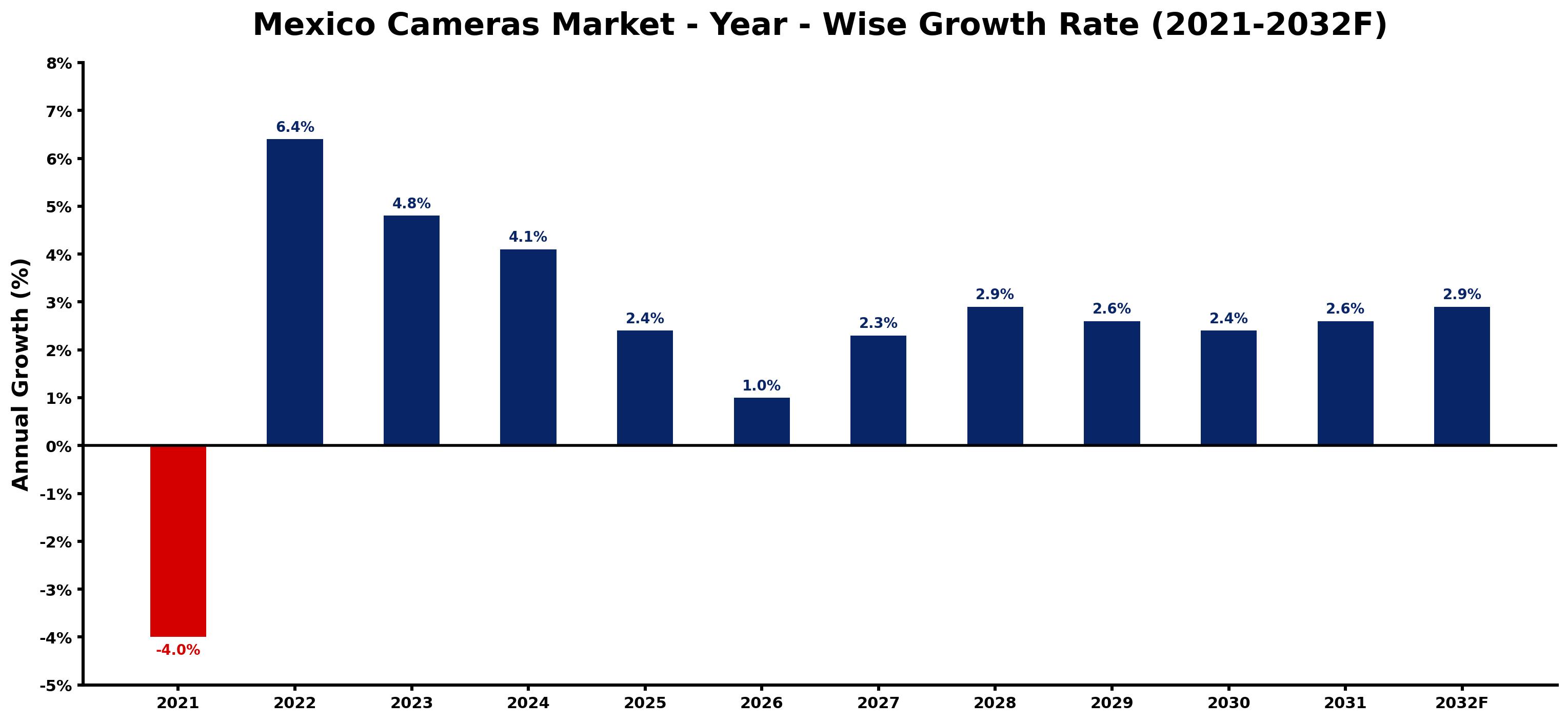
The table below presents the year wise growth rates along with the key drivers influencing the market
| Year | Growth Rate | Major Drivers |
| 2021 | -4.0% | Supply chain disruptions triggered by the pandemic stifled product availability and hindered sales in the camera market. |
| 2022 | 6.4% | Local influencers and social media campaigns impact consumer preferences significantly. |
| 2023 | 4.8% | Advancements in smartphone camera technologies create competitive pressure on cameras. |
| 2024 | 4.1% | Rise in travel and outdoor activities boosts demand for portable camera systems. |
| 2025 | 2.4% | Increased interest in content creation fuels sales of high-quality cameras. |
| 2026 | 1.0% | Youth engagement in photography showcases a potential for long-term market growth. |
| 2027 | 2.3% | Instagram and TikTok drive innovative marketing strategies for camera brands. |
| 2028 | 2.9% | Professional photography services experience a revival, influencing camera purchases. |
| 2029 | 2.6% | Emergence of affordable mirrorless cameras attracts budget-conscious consumers. |
| 2030 | 2.4% | Technological innovations in imaging enhance quality, appealing to discerning customers. |
| 2031 | 2.6% | Sustainable manufacturing practices gain traction, aligning with environmentally conscious consumers. |
| 2032 | 2.9% | Enhanced online retail platforms improve accessibility for diverse consumer segments. |
Note - Market size estimations and growth projections presented in this report are based on 6Wresearch's advanced forecasting approach, validated with industry datasets as of June 2026.
Mexico Cameras Market Synopsis
The Mexico Cameras Market is projected to reach 1.0% and witness significant growth during the forecast period (2026-2032). This expansion is largely driven by technological advancements in camera systems, a rising consumer interest in photography, and the increasing influence of social media platforms. As both amateurs and professionals delve deeper into photography, the demand for high-performance and feature-rich cameras continues to grow, leading to a dynamic evolution within the market.
Mexico Cameras Market Growth Drivers
The Mexico Cameras Market is experiencing a robust influx of factors contributing to its growth. These include:
- Technological Innovations: The continuous development of advanced technologies, such as high-resolution sensors and smart features, has reshaped consumer expectations and preferences.
- Photography as a Hobby: A significant uptick in photography as a recreational activity has prompted many consumers to invest in quality camera equipment, thus stimulating market growth.
- Influence of Social Media: The rise of platforms like Instagram and TikTok encourages users to share high-quality visual content, leading to an increased demand for sophisticated camera systems.
- Increased Accessibility: The proliferation of online tutorials and photography workshops has made photography more accessible, promoting consumer interest and market penetration.
- Compact Camera Systems: The shift towards more compact and lightweight camera models aligns with consumer demand, allowing for increased portability without compromising on quality.
Mexico Cameras Market Challenges and Restraints
The Mexico Cameras Market faces several challenges that could impact its growth trajectory. Key obstacles include:
- Smartphone Competition: The dominance of smartphones equipped with advanced camera functionalities poses a significant threat to traditional camera sales, compelling manufacturers to innovate.
- Rapid Technological Changes: The fast-paced nature of technological advancements requires manufacturers to keep up with consumer demands, which can strain resources and budgets.
- Changing Consumer Preferences: A growing preference for multifunctional devices over standalone cameras necessitates a strategic rethink in marketing and product development.
- Price Sensitivity: Economic fluctuations may impact consumer purchasing power, making it essential for manufacturers to offer competitively priced options.
- Niche Market Identification: With changing consumption patterns, identifying and capitalizing on niche markets where traditional cameras still hold appeal is critical for sustained growth.
Mexico Cameras Market Trends and Opportunities
An analysis of the Mexico Cameras Market reveals several trends and opportunities that can be leveraged for growth:
- Rising Demand for Video Content: The growing emphasis on video content creation for social media platforms presents opportunities for manufacturers to develop cameras that cater specifically to videographers.
- Integration of AI Technologies: Incorporating artificial intelligence functionalities in camera systems can enhance user experience and streamline the photography process, making it appealing to tech-savvy consumers.
- Environmental Sustainability: There is increasing consumer interest in eco-friendly products, presenting a chance for manufacturers to innovate with sustainable materials and practices.
- Educational Initiatives: Investments in education about photography can foster a more informed consumer base, leading to higher rates of camera adoption.
- Customization and Personalization: Offering customizable camera features or accessories that cater to individual preferences can create a unique selling proposition in the market.
Mexico Cameras Market Government Investment and Initiatives
The Mexican government has demonstrated a commitment to fostering the growth of creative industries, which includes the cameras market. Policies that support local filmmakers and artists through tax incentives and funding opportunities are instrumental in enhancing the production and consumption of domestic content. Moreover, the government is intensifying efforts to combat piracy and protect intellectual property rights, ensuring that content creators have a secure environment to innovate and thrive. These initiatives not only contribute to the sustainability of the cameras market but also promote the overall growth of visual arts in Mexico.
Mexico Cameras Market Latest Developments (May 2025 - June 2026)
The Mexico Cameras Market has witnessed noteworthy developments from May 2025 to June 2026. During this period, there has been a marked increase in the introduction of mirrorless camera systems, which align with the preferences of both amateur and professional photographers seeking portability without compromising on image quality. Additionally, manufacturers have begun to integrate advanced connectivity features into their offerings, allowing for seamless sharing and editing of photographic content on social media platforms. There has also been a greater emphasis on sustainability, prompting some manufacturers to explore eco-friendly materials and practices in their product lines. Furthermore, educational workshops and online courses related to photography have gained popularity, serving to enhance consumer engagement in the market.
Mexico Cameras Market - Key Attractiveness of the Report
- 10 Years of Market Numbers
- Historical Data Starting from 2022 to 2025
- Base Year: 2025
- Forecast Data until 2032
- Key Performance Indicators Impacting the Market
- Major Upcoming Developments and Projects
Key Highlights of the Report:
- Mexico Cameras Market Outlook
- Market Size of Mexico Cameras Market, 2025
- Forecast of Mexico Cameras Market, 2032
- Historical Data and Forecast of Mexico Cameras Revenues & Volume for the Period 2022-2032F
- Mexico Cameras Market Trend Evolution
- Mexico Cameras Market Drivers and Challenges
- Mexico Cameras Price Trends
- Mexico Cameras Porter's Five Forces
- Mexico Cameras Industry Life Cycle
- Historical Data and Forecast of Mexico Cameras Market Revenues & Volume By Product Type for the Period 2022-2032F
- Historical Data and Forecast of Mexico Cameras Market Revenues & Volume By Built-in Lens Camera for the Period 2022-2032F
- Historical Data and Forecast of Mexico Cameras Market Revenues & Volume By Interchangeable Lens Camera for the Period 2022-2032F
- Historical Data and Forecast of Mexico Cameras Market Revenues & Volume By DSLR for the Period 2022-2032F
- Historical Data and Forecast of Mexico Cameras Market Revenues & Volume By Non-reflex for the Period 2022-2032F
- Historical Data and Forecast of Mexico Cameras Market Revenues & Volume By Application for the Period 2022-2032F
- Historical Data and Forecast of Mexico Cameras Market Revenues & Volume By Commercial for the Period 2022-2032F
- Historical Data and Forecast of Mexico Cameras Market Revenues & Volume By Residential for the Period 2022-2032F
- Historical Data and Forecast of Mexico Cameras Market Revenues & Volume By Distribution Channel for the Period 2022-2032F
- Historical Data and Forecast of Mexico Cameras Market Revenues & Volume By Online for the Period 2022-2032F
- Historical Data and Forecast of Mexico Cameras Market Revenues & Volume By Offline for the Period 2022-2032F
- Mexico Cameras Import Export Trade Statistics
- Market Opportunity Assessment By Product Type
- Market Opportunity Assessment By Application
- Market Opportunity Assessment By Distribution Channel
- Mexico Cameras Top Companies Market Share
- Mexico Cameras Competitive Benchmarking By Technical and Operational Parameters
- Mexico Cameras Company Profiles
- Mexico Cameras Key Strategic Recommendations






































