Brazil Colored Gemstones Market Size, Share & Growth Rate
The Brazil Colored Gemstones Market was estimated at USD 380 Million in 2025 and is projected to reach USD 455 Million by 2032, growing at a CAGR of 2.6% from 2026 to 2032. This growth trajectory is fueled by Brazil's wealth of vibrant gemstones such as emeralds and tourmalines, alongside a burgeoning global appetite for distinctive and ethically sourced jewelry. Factors like a rising trend toward personalization in jewelry and greater consumer awareness surrounding responsible sourcing practices further enhance the market's appeal.
Brazil Colored Gemstones Market Year-wise Growth Rate and Key Drivers
This graph highlights how the Brazil Colored Gemstones Market has steadily grown over the years, supported by major growth factors.
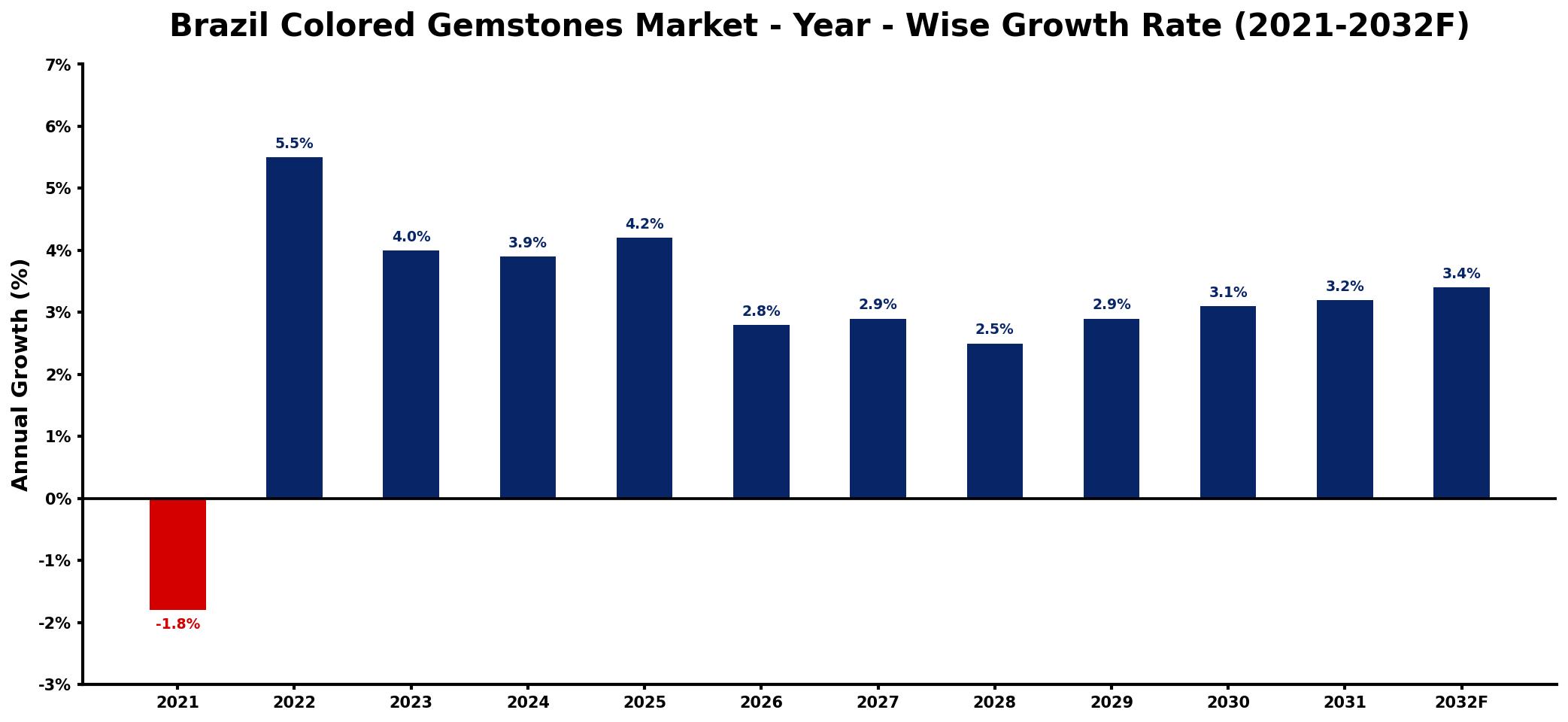
The table below presents the year‑wise growth rates along with the key drivers influencing the market
| Year | Growth Rate | Major Drivers |
| 2021 | -1.8% | decreased consumer spending on luxury |
| 2022 | 5.5% | increased tourism driving retail sales |
| 2023 | 4.0% | growing online sales platforms emerging |
| 2024 | 3.9% | rising interest in sustainable sourcing |
| 2025 | 4.2% | expansion of luxury retail spaces |
| 2026 | 2.8% | increased investment in local artisans |
| 2027 | 2.9% | growing popularity of unique designs |
| 2028 | 2.5% | growing automotive sector requirements |
| 2029 | 2.9% | increased social media marketing efforts |
| 2030 | 3.1% | rising awareness of ethical sourcing |
| 2031 | 3.2% | growing demand for customization options |
| 2032 | 3.4% | increased pharmaceutical industry usage |
Note: Market size estimations and growth projections presented in this report are based on 6Wresearch's proprietary forecasting methodology, utilizing the latest available industry data, government publications, and primary research inputs.
Brazil Colored Gemstones Market Synopsis
Ethical sourcing is currently the most significant force shaping the Brazil Colored Gemstones market. With increasing consumer demand for transparency in the supply chain, companies are being urged to adopt responsible mining practices that resonate with the values of todays conscientious buyers.
Additionally, the unique geological wealth of Brazil fosters a vibrant market landscape. The country is known for producing an array of colorful gemstones that cater to diverse consumer tastes, thereby driving growth in the jewelry and fashion sectors.
Brazil Colored Gemstones Market Key Takeaways
- The market is experiencing growth driven by a global demand for ethically sourced colored gemstones.
- Brazil's distinctive gemstone resources play a crucial role in market expansion.
- Government policies promoting sustainable mining practices are impacting market dynamics positively.
- Efforts to develop transparent supply chains are essential for market resilience.
- Emerging trends in personalized jewelry are shaping consumer preferences significantly.
Evaluation of Restraints in Brazil Colored Gemstones Market
Despite its rich resources, the Brazil Colored Gemstones market faces notable restraints. Ethical sourcing concerns loom large, as consumers demand assurance that their purchases do not contribute to environmental degradation or human rights abuses. Additionally, market saturation poses a challenge, with various players vying for attention in a competitive landscape. Price volatility of gemstones, affected by both market fluctuations and geopolitical factors, further complicates the operational environment, necessitating robust strategies from market participants to navigate these challenges effectively.
Brazil Colored Gemstones Market Trends
Current trends indicate a marked preference for customization and personalized jewelry, as consumers seek unique pieces that reflect their individual style. Furthermore, the rise of e-commerce platforms has transformed how gemstones are marketed and sold, enhancing accessibility for consumers. Technology is also playing a vital role, with advancements in gem identification and authenticity verification tools enhancing consumer confidence in their purchases.
Brazil Colored Gemstones Market Opportunities
There are significant opportunities for growth within the Brazil Colored Gemstones market, particularly through the expansion of ethical and sustainable mining practices. By investing in transparency and community-oriented initiatives, companies can strengthen brand loyalty among conscious consumers. Additionally, tapping into emerging markets and exploring innovative marketing strategies can further unlock the potential for investment and expansion in this vibrant sector.
Government Initiatives in the Brazil Colored Gemstones Market
Brazilian government initiatives focusing on sustainable mining practices are pivotal for the colored gemstones market. Policies aimed at environmental conservation and ethical mining regulations are being put into place, encouraging responsible sourcing and reducing the negative impact on local communities and ecosystems. This legislative framework not only enhances the reputation of Brazil's gemstones but also positions them favorably in international markets.
Future Insights of the Brazil Colored Gemstones Market
Looking ahead to 2026-2032, the Brazil Colored Gemstones market is poised for steady growth, supported by increasing consumer demand for ethical sourcing and customization. As global awareness of sustainability issues continues to rise, market players that embrace responsible practices will likely gain a competitive edge. Moreover, the interplay between technology and traditional craftsmanship is set to create new avenues for product differentiation and innovation.
Brazil Colored Gemstones Market Latest Developments (2025 - 2026)
Recent industry developments reflect a strong commitment to ethical sourcing and sustainability within the Brazil Colored Gemstones market. A notable trend has been the collaboration between local miners and international jewelry brands to enhance transparency in supply chains. Additionally, advancements in technology for gemstone verification have gained traction, ensuring authenticity and boosting consumer confidence in the products offered.
Brazil Colored Gemstones Market - Key Attractiveness of the Report
- 10 Years of Market Numbers
- Historical Data Starting from 2022 to 2025
- Base Year: 2025
- Forecast Data until 2032
- Key Performance Indicators Impacting the Market
- Major Upcoming Developments and Projects
Key Highlights of the Report:
- Brazil Colored Gemstones Market Outlook
- Market Size of Brazil Colored Gemstones Market, 2025
- Forecast of Brazil Colored Gemstones Market, 2032
- Historical Data and Forecast of Brazil Colored Gemstones Revenues & Volume for the Period 2022-2032F
- Brazil Colored Gemstones Market Trend Evolution
- Brazil Colored Gemstones Market Drivers and Challenges
- Brazil Colored Gemstones Price Trends
- Brazil Colored Gemstones Porter's Five Forces
- Brazil Colored Gemstones Industry Life Cycle
- Historical Data and Forecast of Brazil Colored Gemstones Market Revenues & Volume By Product Type for the Period 2022-2032F
- Historical Data and Forecast of Brazil Colored Gemstones Market Revenues & Volume By Colored Diamond for the Period 2022-2032F
- Historical Data and Forecast of Brazil Colored Gemstones Market Revenues & Volume By Emerald for the Period 2022-2032F
- Historical Data and Forecast of Brazil Colored Gemstones Market Revenues & Volume By Ruby for the Period 2022-2032F
- Historical Data and Forecast of Brazil Colored Gemstones Market Revenues & Volume By Sapphire for the Period 2022-2032F
- Historical Data and Forecast of Brazil Colored Gemstones Market Revenues & Volume By Others for the Period 2022-2032F
- Historical Data and Forecast of Brazil Colored Gemstones Market Revenues & Volume By End-Use for the Period 2022-2032F
- Historical Data and Forecast of Brazil Colored Gemstones Market Revenues & Volume By Jewelry & Ornaments for the Period 2022-2032F
- Historical Data and Forecast of Brazil Colored Gemstones Market Revenues & Volume By Bangles for the Period 2022-2032F
- Historical Data and Forecast of Brazil Colored Gemstones Market Revenues & Volume By Necklaces for the Period 2022-2032F
- Historical Data and Forecast of Brazil Colored Gemstones Market Revenues & Volume By Pendants for the Period 2022-2032F
- Historical Data and Forecast of Brazil Colored Gemstones Market Revenues & Volume By Earrings for the Period 2022-2032F
- Historical Data and Forecast of Brazil Colored Gemstones Market Revenues & Volume By Rings for the Period 2022-2032F
- Historical Data and Forecast of Brazil Colored Gemstones Market Revenues & Volume By Anklets for the Period 2022-2032F
- Historical Data and Forecast of Brazil Colored Gemstones Market Revenues & Volume By Brooches for the Period 2022-2032F
- Historical Data and Forecast of Brazil Colored Gemstones Market Revenues & Volume By Product Format for the Period 2022-2032F
- Historical Data and Forecast of Brazil Colored Gemstones Market Revenues & Volume By Natural for the Period 2022-2032F
- Historical Data and Forecast of Brazil Colored Gemstones Market Revenues & Volume By Synthetic for the Period 2022-2032F
- Brazil Colored Gemstones Import Export Trade Statistics
- Market Opportunity Assessment By Product Type
- Market Opportunity Assessment By End-Use
- Market Opportunity Assessment By Product Format
- Brazil Colored Gemstones Top Companies Market Share
- Brazil Colored Gemstones Competitive Benchmarking By Technical and Operational Parameters
- Brazil Colored Gemstones Company Profiles
- Brazil Colored Gemstones Key Strategic Recommendations






































