Brazil Concrete Chain Saw Market Size Growth Rate
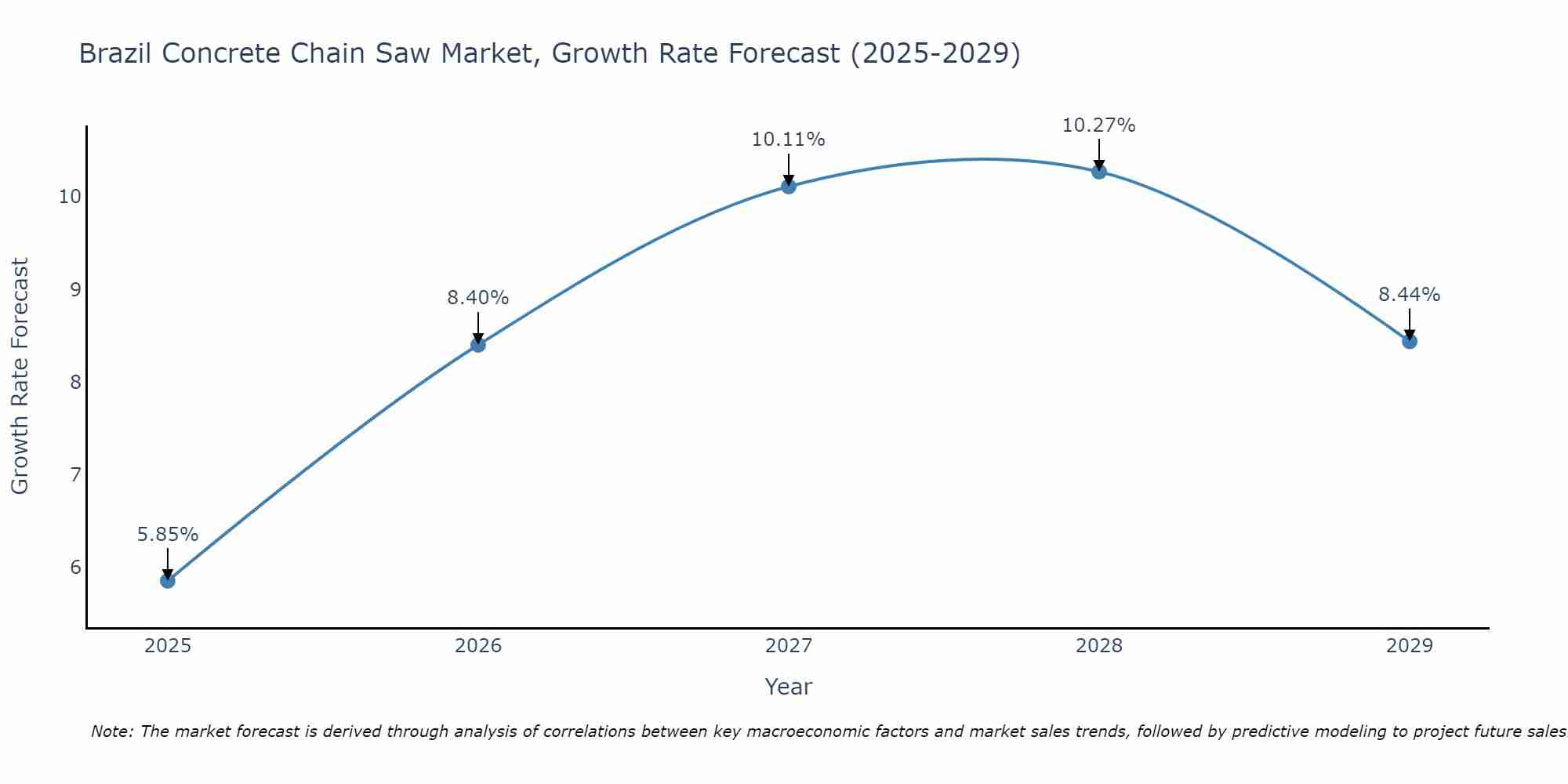
The Brazil Concrete Chain Saw Market is projected to witness mixed growth rate patterns during 2025 to 2029. Growth accelerates to 10.27% in 2028, following an initial rate of 5.85%, before easing to 8.44% at the end of the period.
Brazil Concrete Chain Saw Market Overview
The Brazil Concrete Chain Saw Market involves the production, distribution, and utilization of specialized chainsaws designed for cutting concrete, stone, masonry, and other hard materials. These saws are commonly used in construction, demolition, and renovation projects where traditional saws are impractical or inefficient. Market dynamics are shaped by factors such as infrastructure development, construction activities, technological advancements in cutting tools, and safety regulations in the construction industry.
Drivers of the market
The Brazil concrete chain saw market is driven by construction and demolition activities in the infrastructure, building, and renovation sectors. Concrete chain saws are specialized cutting tools designed to cut through concrete, masonry, and other hard materials efficiently and accurately. Market growth is influenced by factors such as urbanization, infrastructure development projects, the demand for efficient concrete cutting solutions, and advancements in chainsaw technology to improve performance, safety, and user comfort.
Challenges of the market
Challenges in this market may include ensuring operator safety, product durability, and adapting to various concrete cutting applications. Market players may also face challenges related to noise and vibration regulations, maintenance requirements, and competition from alternative cutting technologies.
Government Policy of the market
Government policies in Brazil influence the concrete chain saw market through regulations on construction equipment safety, emissions standards, and importation guidelines. These policies aim to ensure that concrete chain saws meet safety requirements, environmental regulations, and quality standards. Regulations may govern aspects such as engine emissions, noise levels, and operator safety features to enhance workplace safety and environmental sustainability. Importation regulations ensure that concrete chain saws imported into Brazil comply with these standards, fostering market integrity and consumer protection.
Key Highlights of the Report:
- Brazil Concrete Chain Saw Market Outlook
- Market Size of Brazil Concrete Chain Saw Market, 2024
- Forecast of Brazil Concrete Chain Saw Market, 2031
- Historical Data and Forecast of Brazil Concrete Chain Saw Revenues & Volume for the Period 2018 - 2031
- Brazil Concrete Chain Saw Market Trend Evolution
- Brazil Concrete Chain Saw Market Drivers and Challenges
- Brazil Concrete Chain Saw Price Trends
- Brazil Concrete Chain Saw Porter's Five Forces
- Brazil Concrete Chain Saw Industry Life Cycle
- Historical Data and Forecast of Brazil Concrete Chain Saw Market Revenues & Volume By Type for the Period 2018 - 2031
- Historical Data and Forecast of Brazil Concrete Chain Saw Market Revenues & Volume By Gas Chain Saw for the Period 2018 - 2031
- Historical Data and Forecast of Brazil Concrete Chain Saw Market Revenues & Volume By Hydraulic Chain Saw for the Period 2018 - 2031
- Historical Data and Forecast of Brazil Concrete Chain Saw Market Revenues & Volume By Pneumatic Chain Saw for the Period 2018 - 2031
- Brazil Concrete Chain Saw Import Export Trade Statistics
- Market Opportunity Assessment By Type
- Brazil Concrete Chain Saw Top Companies Market Share
- Brazil Concrete Chain Saw Competitive Benchmarking By Technical and Operational Parameters
- Brazil Concrete Chain Saw Company Profiles
- Brazil Concrete Chain Saw Key Strategic Recommendations






































