Brazil Data Protection Market Size & Growth Rate (2026-2032)
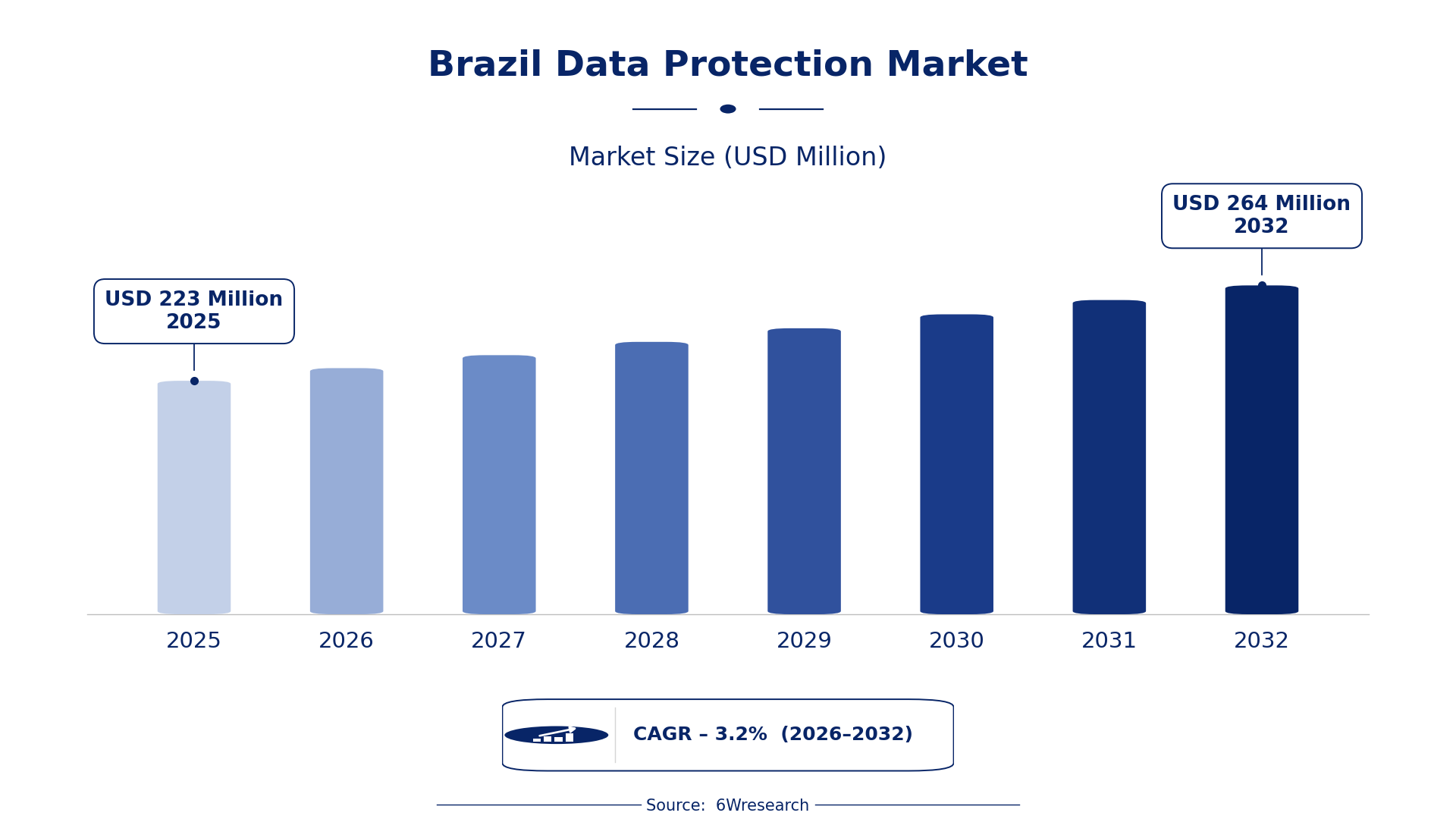
The Brazil Data Protection Market was estimated at USD 223 Million in 2025 and is projected to reach USD 264 Million by 2032, growing at a CAGR of 3.2% from 2026 to 2032.
Brazil Data Protection Market Synopsis
The Brazilian market for data protection has witnessed a marked increase in demand, particularly driven by the implementation of the General Data Protection Law (LGPD). Organizations across sectors are prioritizing investment in data security solutions to mitigate risks and ensure compliance with stringent regulations.
With rising consumer concerns regarding privacy and data breaches, there is a growing emphasis on building trust. Companies are not only focusing on compliance but are also recognizing data protection as a competitive advantage, which is further accelerating market adoption.
Brazil Data Protection Market Year-wise Growth Rate and Key Drivers
This graph illustrates the annual growth rates of the Brazil Data Protection Market from 2021 to 2032, highlighting a steady upward trajectory and projected expansion over the forecast period.
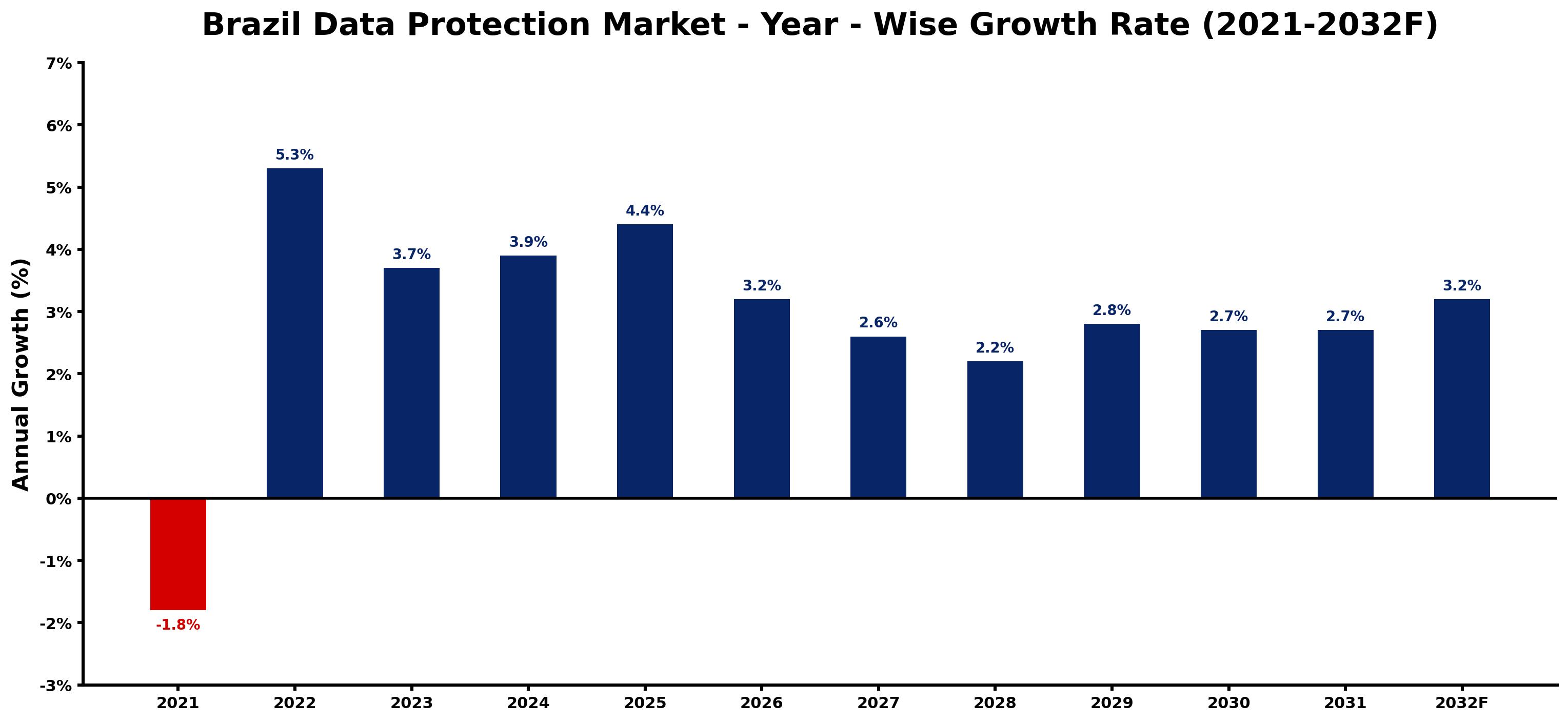
The table below presents the year‑wise growth rates along with the key drivers influencing the market
| Year | Growth Rate | Major Drivers |
| 2021 | -1.8% | LGPD compliance challenges affecting small enterprises' adaptability |
| 2022 | 5.3% | Enforcement of LGPD compliance among businesses in Brazil |
| 2023 | 3.7% | Growing awareness of data privacy among Brazilian consumers |
| 2024 | 3.9% | Increase in data breaches raising cybersecurity concerns locally |
| 2025 | 4.4% | Investment in data protection training for corporate employees |
| 2026 | 3.2% | Development of local data protection consulting firms |
| 2027 | 2.6% | Implementation of stricter regulations by ANPD authorities |
| 2028 | 2.2% | Rising adoption of cloud services necessitating data security |
| 2029 | 2.8% | Emergence of fintechs driving demand for data governance |
| 2030 | 2.7% | Collaboration between government and tech firms on regulations |
| 2031 | 2.7% | Growing need for compliance among Brazilian startups |
| 2032 | 3.2% | Increased public campaigns on personal data rights awareness |
Note: Market size estimations and growth projections presented in this report are based on 6Wresearch's proprietary forecasting methodology, utilizing the latest available industry data, government publications, and primary research inputs.
Brazil Data Protection Market Key Takeaways
Below are some of the specific key takeaways from the market, including:
- The implementation of LGPD has triggered heightened compliance investments from various organizations.
- Consumer awareness around data privacy is driving companies to adopt proactive data protection measures.
- Challenges in implementing data governance strategies continue to affect market growth.
- Investments in advanced cybersecurity solutions are on the rise to combat increasing threats.
- Regulatory compliance remains a primary concern, influencing corporate data strategies.
Evaluation of Restraints in Brazil Data Protection Market
Despite the significant growth in the Brazil Data Protection market, several factors hold back its potential. One major constraint is the complexity surrounding compliance with evolving regulatory frameworks. Many organizations struggle with the costs associated with implementing necessary data protection measures, which can deter full-scale adoption.
Additionally, the necessity for effective data governance strategies is often overlooked, leading to fragmented approaches that fail to meet compliance requirements. These challenges complicate the efforts businesses make to build and maintain stakeholder trust.
Brazil Data Protection Market Trends
The trend of integrating artificial intelligence in data protection solutions is gaining traction, offering businesses sophisticated tools to identify and mitigate risks effectively. on top of that, a shift towards decentralized data storage methods is emerging, encouraging businesses to adopt more resilient data architectures.
Collaboration between private and public sectors in establishing unified data protection standards is becoming increasingly common. This trend not only aids compliance but also enhances the overall security posture of organizations operating within Brazil.
Brazil Data Protection Market Opportunities
There is a clear opportunity for growth in the Brazil Data Protection market as organizations recognize the value of proactive data protection strategies. Businesses that invest in comprehensive data security frameworks not only ensure compliance but also enhance their reputation in the eyes of consumers.
on top of that, the need for ongoing training and awareness programs presents a lucrative avenue for service providers. As data protection becomes integral to corporate strategies, providers who can offer tailored solutions will find substantial demand.
Government Initiatives in the Brazil Data Protection Market
The Brazilian government plays a crucial role in shaping the Data Protection market through regulatory frameworks that prioritize individual privacy. Following the implementation of the LGPD, the government continues to promote compliance through various initiatives, emphasizing the significance of privacy in the digital age.
- A national awareness campaign launched in early 2025 aims to educate businesses and consumers about data rights and protection under the LGPD.
- Currently ongoing is a regulatory audit program to monitor compliance among high-risk industries, ensuring adherence to data protection regulations.
- A planned public-private partnership initiative is expected to enhance cybersecurity infrastructure across key sectors by 2027.
- The government is developing guidelines for cross-border data transfers to facilitate international business operations while protecting consumer data.
- An upcoming initiative aims to establish a centralized regulatory body focused solely on data protection to streamline compliance efforts.
Future Insights of the Brazil Data Protection Market
Looking ahead, the Brazil Data Protection market is set to grow as compliance becomes increasingly critical for businesses. With the constant emergence of new threats and regulatory changes, companies will need to invest in innovative solutions to protect their data effectively.
As technology evolves, we expect a shift towards adaptive security measures that respond in real time to breaches and vulnerabilities, ensuring organizations can keep pace with the growing demands of data privacy.
Brazil Data Protection Market Latest Developments
In the past year, the Brazil Data Protection market has seen considerable activity as organizations respond to regulatory changes and consumer demands. Businesses are rapidly adopting more advanced solutions to enhance their data security posture, influenced by the increasing number of data breaches.
- A major technology vendor announced a suite of new cybersecurity tools designed to assist organizations in meeting LGPD compliance, launched in Q3 2025.
- One leading regional operator has started a program to enhance employee training on data protection protocols, which began in early 2025 and is ongoing.
- A new collaborative initiative aimed at developing standardized data security protocols across multiple sectors is planned to kick off in late 2025.
- Several organizations are currently piloting blockchain solutions for data integrity verification, with trials expected to conclude by mid-2026.
- An upcoming rollout of a national data protection certification program is anticipated to begin in early 2026, aimed at fostering industry compliance.
Brazil Data Protection Market - Key Attractiveness of the Report
- 10 Years of Market Numbers
- Historical Data Starting from 2022 to 2025
- Base Year: 2025
- Forecast Data until 2032
- Key Performance Indicators Impacting the Market
- Major Upcoming Developments and Projects
Key Highlights of the Report:
- Brazil Data Protection Market Outlook
- Market Size of Brazil Data Protection Market, 2025
- Forecast of Brazil Data Protection Market, 2032
- Historical Data and Forecast of Brazil Data Protection Revenues & Volume for the Period 2022-2032F
- Brazil Data Protection Market Trend Evolution
- Brazil Data Protection Market Drivers and Challenges
- Brazil Data Protection Price Trends
- Brazil Data Protection Porter's Five Forces
- Brazil Data Protection Industry Life Cycle
- Historical Data and Forecast of Brazil Data Protection Market Revenues & Volume By Component for the Period 2022-2032F
- Historical Data and Forecast of Brazil Data Protection Market Revenues & Volume By Solutions for the Period 2022-2032F
- Historical Data and Forecast of Brazil Data Protection Market Revenues & Volume By Services (Professional Services and Managed Services) for the Period 2022-2032F
- Historical Data and Forecast of Brazil Data Protection Market Revenues & Volume By Deployment Mode for the Period 2022-2032F
- Historical Data and Forecast of Brazil Data Protection Market Revenues & Volume By On-premises for the Period 2022-2032F
- Historical Data and Forecast of Brazil Data Protection Market Revenues & Volume By Cloud for the Period 2022-2032F
- Historical Data and Forecast of Brazil Data Protection Market Revenues & Volume By Industry Vertical for the Period 2022-2032F
- Historical Data and Forecast of Brazil Data Protection Market Revenues & Volume By Government and defense for the Period 2022-2032F
- Historical Data and Forecast of Brazil Data Protection Market Revenues & Volume By Banking, Financial Services, and Insurance (BFSI) for the Period 2022-2032F
- Historical Data and Forecast of Brazil Data Protection Market Revenues & Volume By Healthcare for the Period 2022-2032F
- Historical Data and Forecast of Brazil Data Protection Market Revenues & Volume By IT and telecom for the Period 2022-2032F
- Historical Data and Forecast of Brazil Data Protection Market Revenues & Volume By Consumer goods and retail for the Period 2022-2032F
- Historical Data and Forecast of Brazil Data Protection Market Revenues & Volume By Education for the Period 2022-2032F
- Historical Data and Forecast of Brazil Data Protection Market Revenues & Volume By Media and entertainment for the Period 2022-2032F
- Historical Data and Forecast of Brazil Data Protection Market Revenues & Volume By Organization Size Large Enterprises for the Period 2022-2032F
- Historical Data and Forecast of Brazil Data Protection Market Revenues & Volume By SMEs for the Period 2022-2032F
- Historical Data and Forecast of Brazil Data Protection Market Revenues & Volume By Large Enterprises for the Period 2022-2032F
- Brazil Data Protection Import Export Trade Statistics
- Market Opportunity Assessment By Component
- Market Opportunity Assessment By Deployment Mode
- Market Opportunity Assessment By Industry Vertical
- Market Opportunity Assessment By Organization Size Large Enterprises
- Brazil Data Protection Top Companies Market Share
- Brazil Data Protection Competitive Benchmarking By Technical and Operational Parameters
- Brazil Data Protection Company Profiles
- Brazil Data Protection Key Strategic Recommendations






































