Peru Data Protection Market Size & Growth Rate (2026-2032)
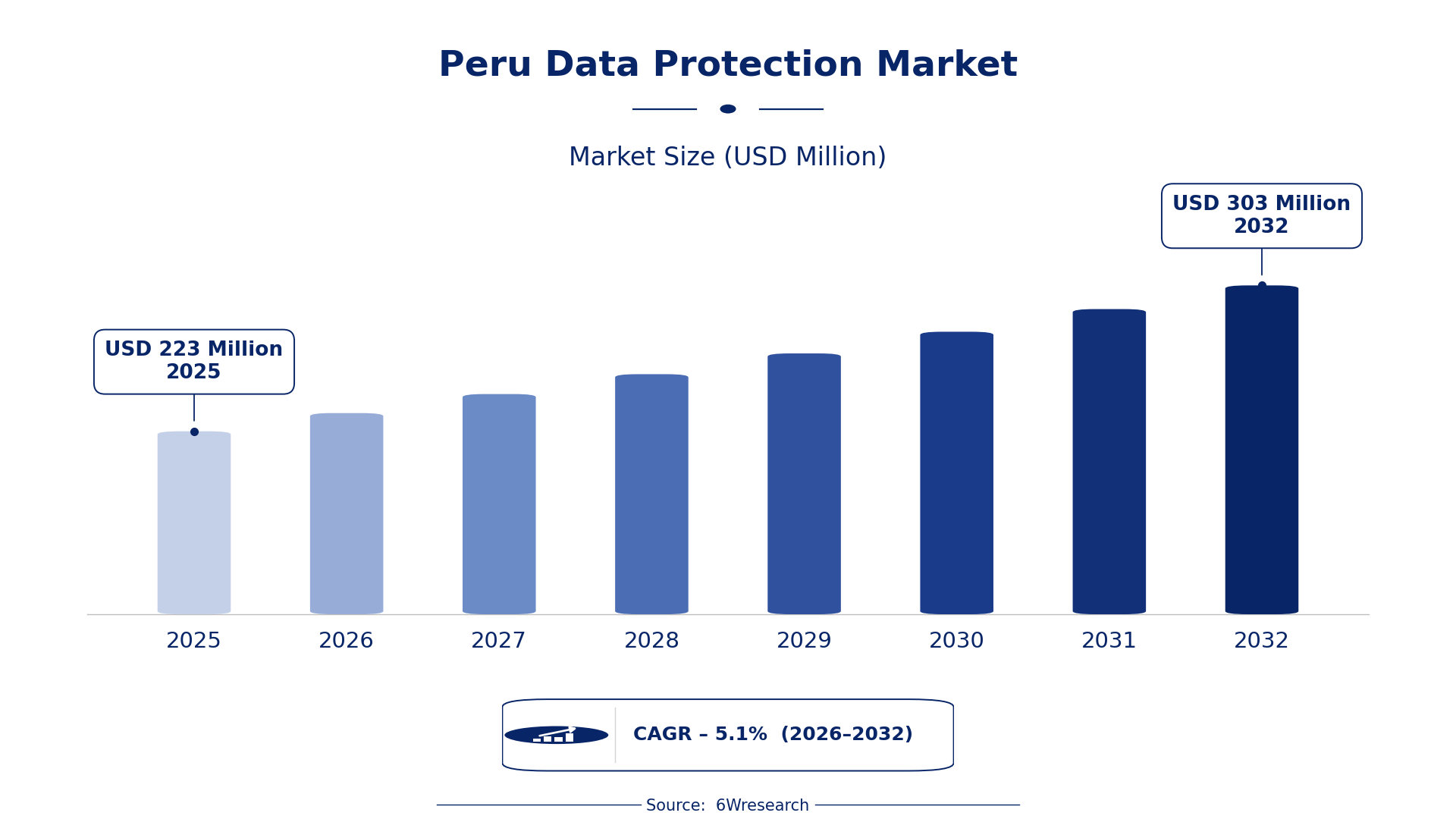
The Peru Data Protection Market was estimated at USD 223 Million in 2025 and is projected to reach USD 303 Million by 2032, growing at a CAGR of 5.1% from 2026 to 2032.
Peru Data Protection Market Synopsis
The primary force shaping the Peru Data Protection Market is the increasing awareness of cybersecurity threats. Organizations are recognizing the urgent need to protect sensitive information against an array of cyber threats, prompting a shift towards investing in comprehensive data protection solutions.
As regulatory requirements tighten, particularly with the implementation of laws like the Personal Data Protection Law, businesses are compelled to ensure compliance. This environment not only fosters growth but also creates a competitive landscape for providers of data protection services in Peru.
Peru Data Protection Market Year-wise Growth Rate and Key Drivers
This graph illustrates the annual growth rates of the Peru Data Protection Market from 2021 to 2032, highlighting a steady upward trajectory and projected expansion over the forecast period.
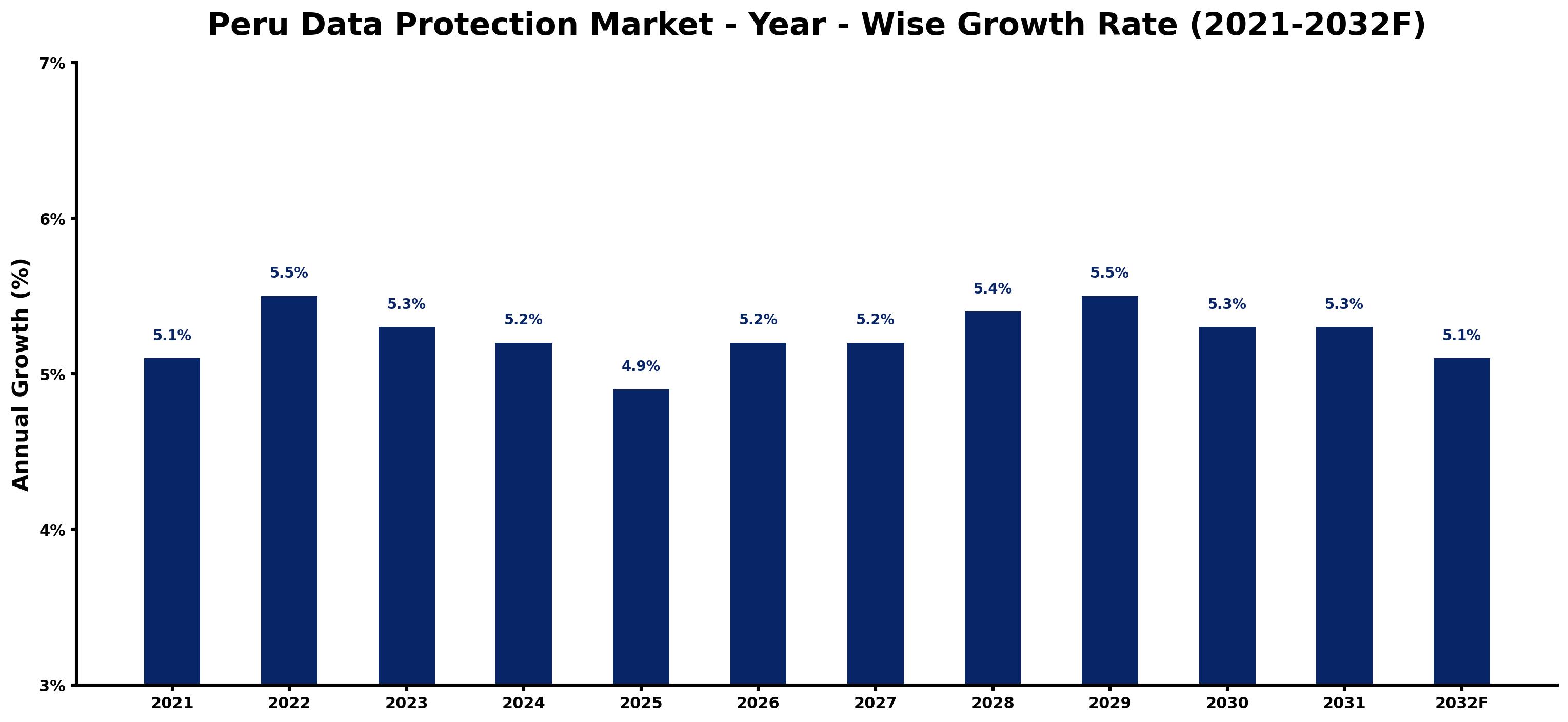
The table below presents the year‑wise growth rates along with the key drivers influencing the market
| Year | Growth Rate | Major Drivers |
| 2021 | 5.1% | Implementation of new data protection regulations by MINJUSDH. |
| 2022 | 5.5% | Rise in remote work increasing personal data vulnerabilities. |
| 2023 | 5.3% | Adoption of cloud services demanding enhanced data security. |
| 2024 | 5.2% | Local companies investing in data compliance training initiatives. |
| 2025 | 4.9% | Increasing lawsuits regarding data breaches prompting stricter protocols. |
| 2026 | 5.2% | Growing partnership of businesses with cybersecurity solution providers. |
| 2027 | 5.2% | Government digital transformation initiatives requiring data governance. |
| 2028 | 5.4% | Boost in foreign investment heightening data security concerns. |
| 2029 | 5.5% | Increased consumer demand for data privacy in services. |
| 2030 | 5.3% | Emergence of new technology standards for data protection compliance. |
| 2031 | 5.3% | Regulatory incentives encouraging businesses to adopt data practices. |
| 2032 | 5.1% | Public awareness campaigns promoting data protection significance. |
Note: Market size estimations and growth projections presented in this report are based on 6Wresearch's proprietary forecasting methodology, utilizing the latest available industry data, government publications, and primary research inputs.
Peru Data Protection Market Key Takeaways
Below are some of the specific key takeaways from the market, including:
- The market is driven by rising data privacy concerns and stringent regulations.
- Data encryption and identity management solutions are in high demand.
- Cloud computing and remote work trends are reshaping data protection strategies.
- There is a growing need for comprehensive compliance support services.
- Innovative technologies like AI and blockchain are emerging in the market.
Evaluation of Restraints in Peru Data Protection Market
One of the major limitations in the Peru Data Protection Market stems from a lack of awareness regarding data protection laws among businesses and consumers. This ignorance can lead to non-compliance, which jeopardizes sensitive information. The rapid pace of technological advancement also complicates the protection of personal data. on top of that, a weak enforcement framework and insufficient penalties for non-compliance may result in lax attitudes toward safeguarding data, making it essential for stakeholders to address these issues proactively.
Peru Data Protection Market Trends
The market is seeing a notable uptick in the adoption of advanced security measures, particularly as the impact of data breaches becomes more pronounced. Organizations are not just investing in basic protections but are leaning towards sophisticated solutions such as artificial intelligence-driven analytics to preemptively identify and mitigate risks. Another trend is the growing integration of data protection measures within cloud infrastructures, which reflect a shift towards digital transformation across sectors.
Peru Data Protection Market Opportunities
The landscape offers ample opportunities for companies specializing in data protection, especially those that can provide tailored solutions for compliance with evolving regulations. As businesses transition to more remote and digital environments, the demand for reliable data protection services is expected to surge. There is also an opening for partnerships between technology providers and enterprises seeking to enhance their data security frameworks, particularly through innovative approaches leveraging AI and blockchain.
Government Initiatives in the Peru Data Protection Market
In Peru, the regulatory environment surrounding data protection is increasingly focused on enhancing compliance and safeguarding personal data. The government has been proactive in establishing frameworks that promote data privacy while enforcing strict penalties for violations. Such initiatives are crucial, especially as public awareness regarding data protection grows.
- A national awareness campaign launched in early 2025 aimed at educating businesses about data protection laws.
- Ongoing reviews by the National Data Protection Authority to improve enforcement mechanisms and compliance monitoring.
- Planned enhancements to the Personal Data Protection Law expected to roll out by mid-2026, focusing on stricter consent requirements.
- Current pilot programs that encourage the adoption of best practices among businesses regarding data handling.
Future Insights of the Peru Data Protection Market
Looking ahead to 2026-2032, the Peru Data Protection Market is set for substantial growth, driven by increasing awareness and demand for comprehensive security measures. As cyber threats evolve, organizations will prioritize investments in advanced data protection solutions to stay compliant and secure. The interplay between regulatory pressures and the rapid adoption of digital technologies will necessitate constant innovation in data protection strategies, paving the way for both local and international players to thrive.
Peru Data Protection Market Latest Developments
In the past year, activity within the Peru Data Protection Market has intensified, highlighted by significant investments in data security technologies and a growing emphasis on compliance. Companies are actively pursuing new solutions to address the challenges posed by heightened regulatory scrutiny and cyber threats.
- A major technology vendor unveiled a new cloud-based encryption service in early 2025, aimed at helping businesses comply with local regulations.
- Currently ongoing is a partnership between local firms to develop a compliance toolkit to assist organizations in navigating the Personal Data Protection Law.
- A product upgrade initiative focusing on data loss prevention systems began in late 2025 and is expected to enhance existing security measures.
- In 2025, a pilot program aimed at small and medium enterprises for affordable data protection solutions was launched.
Peru Data Protection Market - Key Attractiveness of the Report
- 10 Years of Market Numbers
- Historical Data Starting from 2022 to 2025
- Base Year: 2025
- Forecast Data until 2032
- Key Performance Indicators Impacting the Market
- Major Upcoming Developments and Projects
Key Highlights of the Report:
- Peru Data Protection Market Outlook
- Market Size of Peru Data Protection Market, 2025
- Forecast of Peru Data Protection Market, 2032
- Historical Data and Forecast of Peru Data Protection Revenues & Volume for the Period 2022-2032F
- Peru Data Protection Market Trend Evolution
- Peru Data Protection Market Drivers and Challenges
- Peru Data Protection Price Trends
- Peru Data Protection Porter's Five Forces
- Peru Data Protection Industry Life Cycle
- Historical Data and Forecast of Peru Data Protection Market Revenues & Volume By Component for the Period 2022-2032F
- Historical Data and Forecast of Peru Data Protection Market Revenues & Volume By Solutions for the Period 2022-2032F
- Historical Data and Forecast of Peru Data Protection Market Revenues & Volume By Services (Professional Services and Managed Services) for the Period 2022-2032F
- Historical Data and Forecast of Peru Data Protection Market Revenues & Volume By Deployment Mode for the Period 2022-2032F
- Historical Data and Forecast of Peru Data Protection Market Revenues & Volume By On-premises for the Period 2022-2032F
- Historical Data and Forecast of Peru Data Protection Market Revenues & Volume By Cloud for the Period 2022-2032F
- Historical Data and Forecast of Peru Data Protection Market Revenues & Volume By Industry Vertical for the Period 2022-2032F
- Historical Data and Forecast of Peru Data Protection Market Revenues & Volume By Government and defense for the Period 2022-2032F
- Historical Data and Forecast of Peru Data Protection Market Revenues & Volume By Banking, Financial Services, and Insurance (BFSI) for the Period 2022-2032F
- Historical Data and Forecast of Peru Data Protection Market Revenues & Volume By Healthcare for the Period 2022-2032F
- Historical Data and Forecast of Peru Data Protection Market Revenues & Volume By IT and telecom for the Period 2022-2032F
- Historical Data and Forecast of Peru Data Protection Market Revenues & Volume By Consumer goods and retail for the Period 2022-2032F
- Historical Data and Forecast of Peru Data Protection Market Revenues & Volume By Education for the Period 2022-2032F
- Historical Data and Forecast of Peru Data Protection Market Revenues & Volume By Media and entertainment for the Period 2022-2032F
- Historical Data and Forecast of Peru Data Protection Market Revenues & Volume By Organization Size Large Enterprises for the Period 2022-2032F
- Historical Data and Forecast of Peru Data Protection Market Revenues & Volume By SMEs for the Period 2022-2032F
- Historical Data and Forecast of Peru Data Protection Market Revenues & Volume By Large Enterprises for the Period 2022-2032F
- Peru Data Protection Import Export Trade Statistics
- Market Opportunity Assessment By Component
- Market Opportunity Assessment By Deployment Mode
- Market Opportunity Assessment By Industry Vertical
- Market Opportunity Assessment By Organization Size Large Enterprises
- Peru Data Protection Top Companies Market Share
- Peru Data Protection Competitive Benchmarking By Technical and Operational Parameters
- Peru Data Protection Company Profiles
- Peru Data Protection Key Strategic Recommendations






































