Brazil Double Glazing Glass Market Size, Share & Growth Rate
The Brazil Double Glazing Glass Market was estimated at USD 445 Million in 2025 and is projected to reach USD 532 Million by 2032, growing at a CAGR of 2.6% from 2026 to 2032. This growth trajectory is largely propelled by heightened consumer awareness regarding energy efficiency, sustainability, and the long-term cost savings associated with double glazing installations. As Brazil's construction industry increasingly focuses on energy-efficient building practices, the double glazing glass market is well-positioned to capitalize on these trends.
Brazil Double Glazing Glass Market Year-wise Growth Rate and Key Drivers
This graph highlights how the Brazil Double Glazing Glass Market has steadily grown over the years, supported by major growth factors.
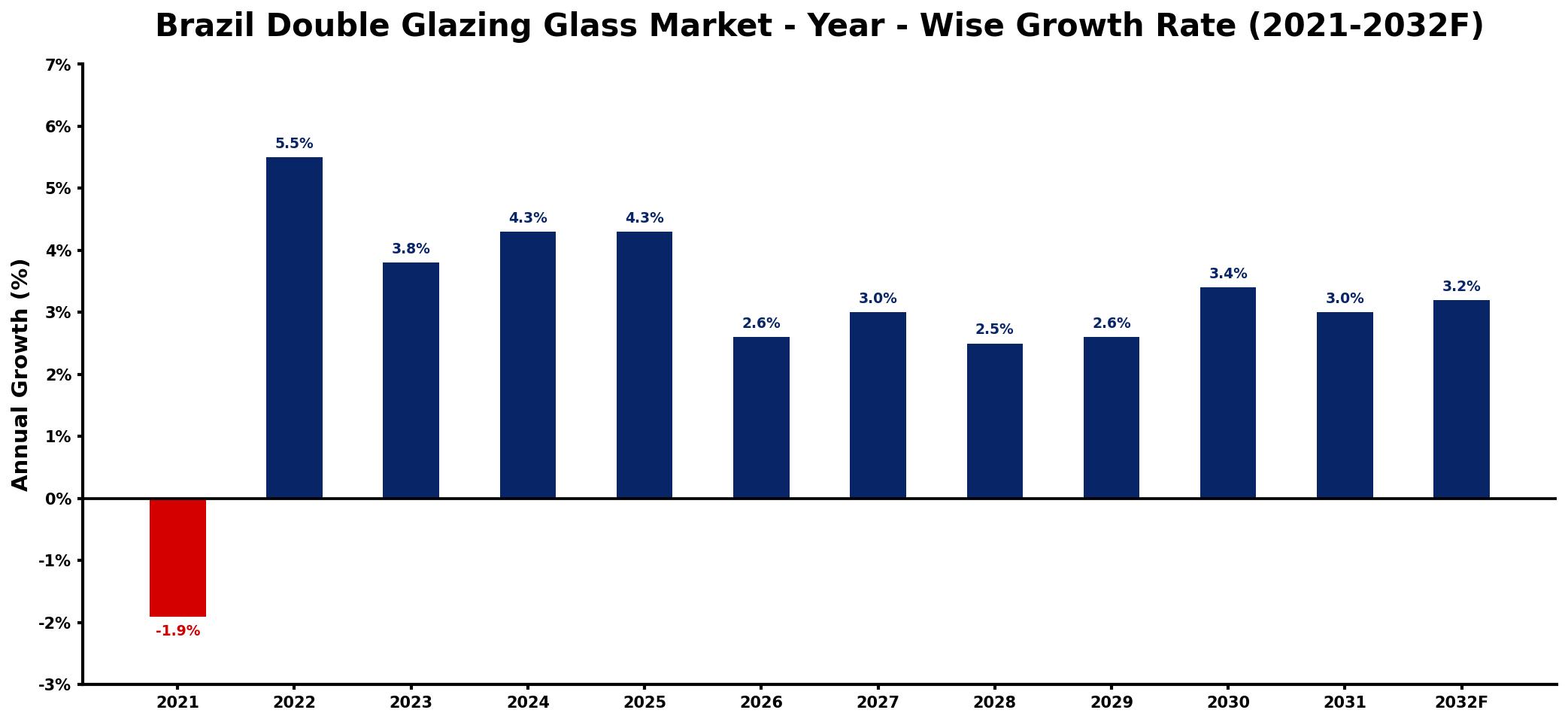
The table below presents the year‑wise growth rates along with the key drivers influencing the market
| Year | Growth Rate | Major Drivers |
| 2021 | -1.9% | Construction sector facing downturn |
| 2022 | 5.5% | Renewable energy projects increasing demand |
| 2023 | 3.8% | Urbanization driving housing investments |
| 2024 | 4.3% | Sustainable building materials adoption |
| 2025 | 4.3% | Government incentives for energy efficiency |
| 2026 | 2.6% | Expansion of commercial real estate |
| 2027 | 3.0% | Technological advancements in construction |
| 2028 | 2.5% | Rising consumer awareness for insulation |
| 2029 | 2.6% | Increased focus on building regulations |
| 2030 | 3.4% | Growing popularity of smart homes |
| 2031 | 3.0% | Investment in infrastructure projects rising |
| 2032 | 3.2% | Strengthening residential market recovery |
Note: Market size estimations and growth projections presented in this report are based on 6Wresearch's proprietary forecasting methodology, utilizing the latest available industry data, government publications, and primary research inputs.
Brazil Double Glazing Glass Market Synopsis
The Brazil double glazing glass market has recently gained momentum, driven by significant advancements in energy-efficient technologies and increasing regulations favoring sustainable construction. However, while the current growth trend is promising, it faces hurdles that could affect future expansion, particularly around public perception and initial investment costs.
Looking ahead, the market is poised for continued development as governments and industries push for more robust energy conservation measures. The rising demand in both residential and commercial sectors indicates a favorable environment for double glazing glass, signaling a shift toward eco-friendly construction methodologies.
Brazil Double Glazing Glass Market Key Takeaways
- The market is increasingly driven by consumer demand for energy-efficient and sustainable construction solutions.
- Technological advancements are enhancing the thermal performance and insulation capabilities of double glazing glass.
- Government initiatives are fostering an environment conducive to the adoption of energy-efficient building materials.
- Initial installation costs remain a barrier, affecting the widespread acceptance of double glazing solutions.
- The market's long-term outlook is positive, as awareness of the long-term benefits continues to grow.
Evaluation of Restraints in Brazil Double Glazing Glass Market
Despite the promising growth forecast, the Brazil double glazing glass market encounters significant restraints that impede its advancement. A primary limitation is the high initial cost of installation, which can deter potential consumers who may not fully understand the long-term savings offered by energy-efficient solutions. Misconceptions surrounding the effectiveness of double glazing also contribute to hesitation among consumers, as they often question whether the benefits justify the upfront investment. Addressing these concerns through education and targeted marketing campaigns will be crucial in fostering wider adoption.
Brazil Double Glazing Glass Market Trends
The market is witnessing several trends that are shaping its future landscape. A growing inclination towards sustainable and environmentally-friendly building practices has spurred demand for double glazing glass, which offers significant improvements in thermal performance. Additionally, technological innovations are continuously enhancing the product features, making them more appealing to consumers. The emphasis on smart home technologies is also influencing the integration of double glazing in newer constructions, as builders seek to enhance energy efficiency while embracing digitalization in the home environment.
Brazil Double Glazing Glass Market Opportunities
There are considerable opportunities for growth in the Brazil double glazing glass market, particularly in expanding the residential sector. As the government continues to promote energy-efficient building solutions, there is potential for new entrants to innovate and provide cost-effective double glazing solutions that cater to budget-conscious consumers. Additionally, the ongoing urbanization in Brazil is expected to drive demand for sustainable construction materials, positioning double glazing glass as a key player in future developments.
Government Initiatives in the Brazil Double Glazing Glass Market
The Brazilian government is actively encouraging the adoption of energy-efficient technologies, including double glazing glass, as part of its broader strategy to combat climate change and reduce energy consumption. Initiatives such as stringent energy efficiency regulations in construction are fostering a conducive market environment. Furthermore, the implementation of government incentives and subsidies for energy-efficient home improvements plays a critical role in boosting consumer adoption and facilitating market growth.
Future Insights of the Brazil Double Glazing Glass Market
From 2026 to 2032, the Brazil double glazing glass market is anticipated to evolve significantly, driven by increasing consumer awareness and government support for energy-efficient solutions. The market is likely to witness enhanced product innovation, focusing on reducing installation costs while maximizing performance. A gradual shift towards smarter home solutions will further integrate double glazing glass into modern construction practices, ensuring its relevance and demand in the years to come.
Brazil Double Glazing Glass Market Latest Developments (2025 - 2026)
In the recent months, the industry has seen a push for more sustainable practices among manufacturers and construction firms, emphasizing the importance of eco-friendly materials. Efforts are underway to educate consumers about the long-term benefits of double glazing glass, aiming to combat misconceptions that hinder market growth. Additionally, collaborations between government entities and private sectors are emerging, focusing on innovative solutions to enhance energy efficiency in new builds and renovations.
Brazil Double Glazing Glass Market - Key Attractiveness of the Report
- 10 Years of Market Numbers
- Historical Data Starting from 2022 to 2025
- Base Year: 2025
- Forecast Data until 2032
- Key Performance Indicators Impacting the Market
- Major Upcoming Developments and Projects
Key Highlights of the Report:
- Brazil Double Glazing Glass Market Outlook
- Market Size of Brazil Double Glazing Glass Market, 2025
- Forecast of Brazil Double Glazing Glass Market, 2032
- Historical Data and Forecast of Brazil Double Glazing Glass Revenues & Volume for the Period 2022-2032F
- Brazil Double Glazing Glass Market Trend Evolution
- Brazil Double Glazing Glass Market Drivers and Challenges
- Brazil Double Glazing Glass Price Trends
- Brazil Double Glazing Glass Porter's Five Forces
- Brazil Double Glazing Glass Industry Life Cycle
- Historical Data and Forecast of Brazil Double Glazing Glass Market Revenues & Volume By Material for the Period 2022-2032F
- Historical Data and Forecast of Brazil Double Glazing Glass Market Revenues & Volume By Glass for the Period 2022-2032F
- Historical Data and Forecast of Brazil Double Glazing Glass Market Revenues & Volume By Frame and Spacer for the Period 2022-2032F
- Historical Data and Forecast of Brazil Double Glazing Glass Market Revenues & Volume By Sealant for the Period 2022-2032F
- Historical Data and Forecast of Brazil Double Glazing Glass Market Revenues & Volume By Others for the Period 2022-2032F
- Historical Data and Forecast of Brazil Double Glazing Glass Market Revenues & Volume By Thickness for the Period 2022-2032F
- Historical Data and Forecast of Brazil Double Glazing Glass Market Revenues & Volume By Less than 10mm for the Period 2022-2032F
- Historical Data and Forecast of Brazil Double Glazing Glass Market Revenues & Volume By 10mm to 12mm for the Period 2022-2032F
- Historical Data and Forecast of Brazil Double Glazing Glass Market Revenues & Volume By More than 12mm for the Period 2022-2032F
- Historical Data and Forecast of Brazil Double Glazing Glass Market Revenues & Volume By Application for the Period 2022-2032F
- Historical Data and Forecast of Brazil Double Glazing Glass Market Revenues & Volume By Window and Door for the Period 2022-2032F
- Historical Data and Forecast of Brazil Double Glazing Glass Market Revenues & Volume By Faade for the Period 2022-2032F
- Historical Data and Forecast of Brazil Double Glazing Glass Market Revenues & Volume By Applications for the Period 2022-2032F
- Brazil Double Glazing Glass Import Export Trade Statistics
- Market Opportunity Assessment By Material
- Market Opportunity Assessment By Thickness
- Market Opportunity Assessment By Application
- Brazil Double Glazing Glass Top Companies Market Share
- Brazil Double Glazing Glass Competitive Benchmarking By Technical and Operational Parameters
- Brazil Double Glazing Glass Company Profiles
- Brazil Double Glazing Glass Key Strategic Recommendations






































