Brazil Fleet Management Market Size & Growth Rate (2026-2032)
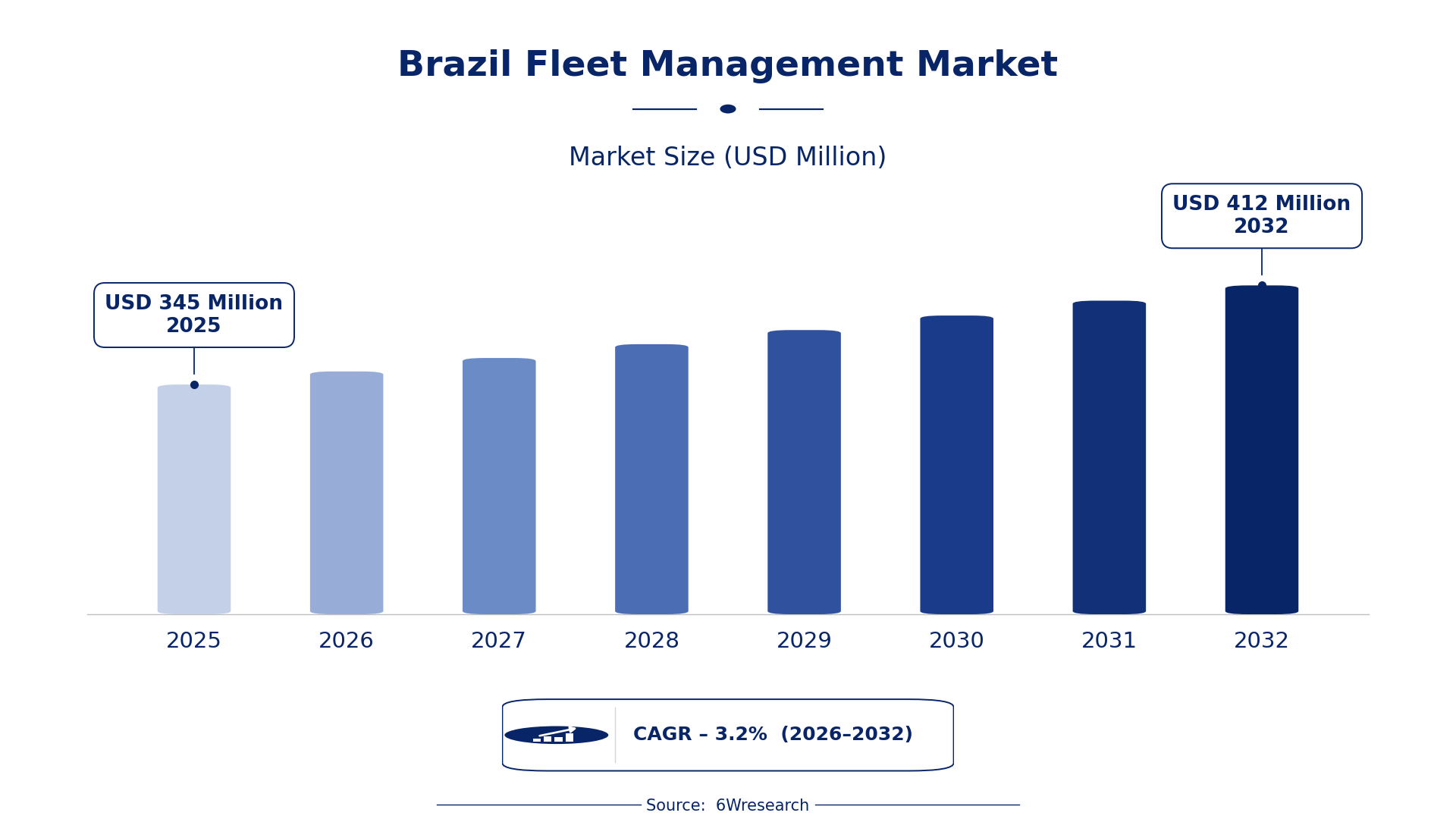
The Brazil Fleet Management Market was estimated at USD 345 Million in 2025 and is projected to reach USD 412 Million by 2032, growing at a CAGR of 3.2% from 2026 to 2032.
Brazil Fleet Management Market Synopsis
The need for enhanced operational efficiency is the primary force shaping the Brazil Fleet Management market today. As businesses look to streamline logistics processes, the adoption of advanced fleet management solutions becomes crucial for optimizing resource allocation and minimizing operational costs.
With the integration of telematics and IoT technologies, organizations are gaining unprecedented visibility over their fleet operations. This trend is driving demand for solutions that improve vehicle tracking, fuel management, and maintenance optimization, ultimately transforming how logistics firms operate in Brazil.
Brazil Fleet Management Market Year-wise Growth Rate and Key Drivers
This graph illustrates the annual growth rates of the Brazil Fleet Management Market from 2021 to 2032, highlighting a steady upward trajectory and projected expansion over the forecast period.
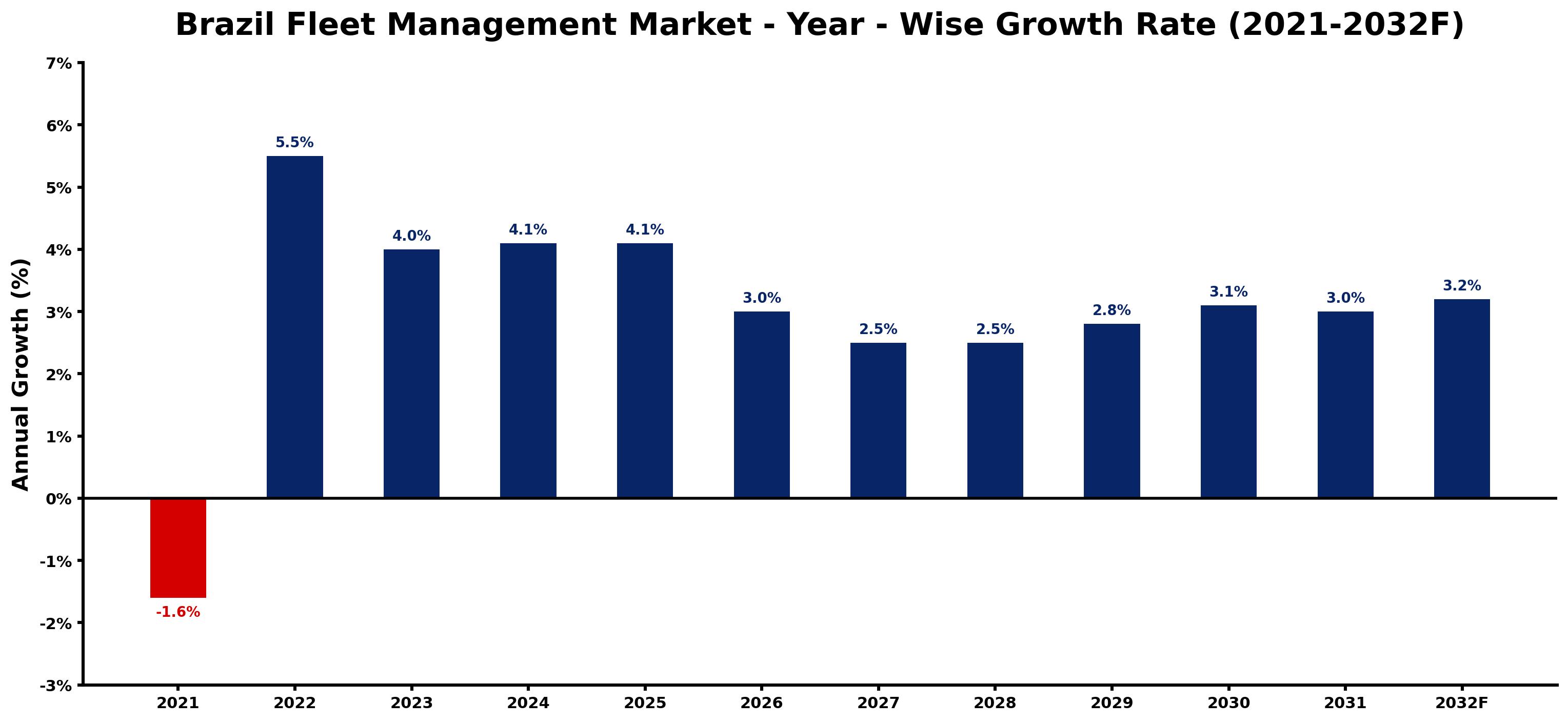
The table below presents the year‑wise growth rates along with the key drivers influencing the market
| Year | Growth Rate | Major Drivers |
| 2021 | -1.6% | High tariffs on imported fleet technology solutions |
| 2022 | 5.5% | Increased government focus on fleet efficiency regulations. |
| 2023 | 4.0% | Rise in telematics adoption among Brazilian fleet operators. |
| 2024 | 4.1% | Higher fuel prices pushing cost-effective fleet management solutions. |
| 2025 | 4.1% | Emergence of local startups offering innovative fleet tracking. |
| 2026 | 3.0% | Growing urbanization leading to more delivery vehicle needs. |
| 2027 | 2.5% | Government incentives for green fleet technologies implementation. |
| 2028 | 2.5% | Enhanced logistics integration with Brazilian agribusiness sector. |
| 2029 | 2.8% | Investment in IoT solutions for improved fleet visibility. |
| 2030 | 3.1% | Increasing cross-border trade boosting fleet management demands. |
| 2031 | 3.0% | Expanding tourism sector requiring optimized transport services. |
| 2032 | 3.2% | Adoption of data analytics for fleet operational efficiencies. |
Note: Market size estimations and growth projections presented in this report are based on 6Wresearch's proprietary forecasting methodology, utilizing the latest available industry data, government publications, and primary research inputs.
Brazil Fleet Management Market Key Takeaways
Below are some of the specific key takeaways from the market, including:
- The market is experiencing steady growth fueled by rising logistics demands.
- Telematics integration is becoming essential for competitive fleet management.
- Regulatory compliance remains a top priority for fleet operators.
- Fuel efficiency and maintenance optimization are critical focus areas.
- Data analytics is increasingly used to drive decision-making processes.
Evaluation of Restraints in Brazil Fleet Management Market
Despite the growth trajectory, the Brazil Fleet Management market faces significant restraints. Rising fuel costs pose a persistent challenge, compelling fleet managers to find innovative ways to cut expenses. on top of that, the complexity of regulatory compliance requires constant vigilance, as failing to adhere to evolving policies can lead to severe penalties. The integration of advanced telematics technology is also not without its difficulties, as it demands both financial investment and technical expertise that not all organizations possess. Addressing these obstacles requires strategic planning and a commitment to sustainable practices.
Brazil Fleet Management Market Trends
The Brazil Fleet Management market is witnessing notable trends that are reshaping its future. An increasing number of companies are adopting real-time data analytics to improve decision-making, enhancing the accuracy of fleet operations. Additionally, the shift towards sustainability is driving the incorporation of electric and hybrid vehicles into fleets. This trend is not only about compliance but also about positioning companies as environmentally responsible players in the market.
Another emerging trend is the growing use of artificial intelligence in predictive maintenance. By analyzing historical data and usage patterns, AI can forecast potential vehicle issues before they escalate, ensuring smoother operations. These trends signify a move towards more intelligent and responsible fleet management practices.
Brazil Fleet Management Market Opportunities
The market presents substantial growth and investment opportunities for stakeholders. The rising demand for sustainable fleet solutions, especially in urban areas, opens avenues for businesses specializing in electric vehicle integration. on top of that, companies that can offer advanced telematics solutions stand to gain significantly as more organizations seek to optimize their fleet operations.
Investment in data-driven technologies also promises high returns. Organizations that prioritize data analytics and integrate AI-driven solutions into their fleet management systems are likely to see enhanced operational efficiencies and cost savings. These factors create a fertile ground for innovation and competition in the Brazilian market.
Government Initiatives in the Brazil Fleet Management Market
Government policies are significantly influencing the Brazil Fleet Management market, particularly through regulations focused on safety, emissions, and vehicle tracking. Companies must keep pace with these evolving policies to maintain compliance and achieve sustainable fleet operations. Supportive government initiatives are also fostering the growth of fleet management solutions that align with environmental goals and public safety standards.
- A regulatory framework established in 2025 mandates emissions standards for commercial vehicles, encouraging fleet operators to adopt greener technologies.
- Current initiatives include the expansion of smart transportation systems, integrating vehicle tracking and telematics across urban logistics networks.
- A planned public-private initiative aims to enhance transportation infrastructure by 2028, which will benefit fleet management operations.
- Recently launched training programs focus on educating fleet managers about regulatory compliance and technological advancements in fleet management.
- Ongoing government support for electric vehicle adoption is set to reshape the market, with incentives for businesses transitioning to greener fleets.
Future Insights of the Brazil Fleet Management Market
Looking ahead to 2026-2032, the Brazil Fleet Management market is set for substantial evolution. The ongoing integration of advanced technologies will further enhance efficiency and reduce operational costs. Companies that prioritize sustainability will thrive as regulatory pressures increase, with an emphasis on reducing carbon footprints becoming a key differentiator. Additionally, the continued focus on data analytics and AI will enable more precise decision-making, positioning forward-thinking businesses to capture greater market share.
Brazil Fleet Management Market Latest Developments
Recent months have seen dynamic activity in the Brazil Fleet Management market, reflecting the sector's adaptability and innovation. Companies are increasingly focusing on technology integration and compliance with new regulations as they strive to enhance operational efficiencies.
- A new telematics solution was launched in early 2025, focusing on real-time vehicle tracking and maintenance alerts.
- In mid-2025, a partnership between two major technology vendors resulted in an innovative fleet management platform that incorporates AI-driven analytics.
- An initiative that began in late 2025 aims to retrofit existing fleets with emissions-reducing technologies, enhancing compliance with new government standards.
- A rollout of a cloud-based fleet management software is expected to begin in Q3 2026, designed to streamline logistics operations for small and medium-sized enterprises.
- Currently underway, a comprehensive training program for fleet operators is being implemented to ensure adherence to evolving regulatory requirements.
Brazil Fleet Management Market - Key Attractiveness of the Report
- 10 Years of Market Numbers
- Historical Data Starting from 2022 to 2025
- Base Year: 2025
- Forecast Data until 2032
- Key Performance Indicators Impacting the Market
- Major Upcoming Developments and Projects
Key Highlights of the Report:
- Brazil Fleet Management Market Outlook
- Market Size of Brazil Fleet Management Market, 2025
- Forecast of Brazil Fleet Management Market, 2032
- Historical Data and Forecast of Brazil Fleet Management Revenues & Volume for the Period 2022-2032F
- Brazil Fleet Management Market Trend Evolution
- Brazil Fleet Management Market Drivers and Challenges
- Brazil Fleet Management Price Trends
- Brazil Fleet Management Porter's Five Forces
- Brazil Fleet Management Industry Life Cycle
- Historical Data and Forecast of Brazil Fleet Management Market Revenues & Volume By Solution for the Period 2022-2032F
- Historical Data and Forecast of Brazil Fleet Management Market Revenues & Volume By Operations Management for the Period 2022-2032F
- Historical Data and Forecast of Brazil Fleet Management Market Revenues & Volume By Vehicle Maintenance and Diagnostics for the Period 2022-2032F
- Historical Data and Forecast of Brazil Fleet Management Market Revenues & Volume By Fleet Analytics and Reporting for the Period 2022-2032F
- Historical Data and Forecast of Brazil Fleet Management Market Revenues & Volume By Deployment Type for the Period 2022-2032F
- Historical Data and Forecast of Brazil Fleet Management Market Revenues & Volume By Cloud for the Period 2022-2032F
- Historical Data and Forecast of Brazil Fleet Management Market Revenues & Volume By On-premises for the Period 2022-2032F
- Historical Data and Forecast of Brazil Fleet Management Market Revenues & Volume By Fleet Type for the Period 2022-2032F
- Historical Data and Forecast of Brazil Fleet Management Market Revenues & Volume By Commercial Fleets for the Period 2022-2032F
- Historical Data and Forecast of Brazil Fleet Management Market Revenues & Volume By Passenger Cars for the Period 2022-2032F
- Historical Data and Forecast of Brazil Fleet Management Market Revenues & Volume By Service for the Period 2022-2032F
- Historical Data and Forecast of Brazil Fleet Management Market Revenues & Volume By Professional Services for the Period 2022-2032F
- Historical Data and Forecast of Brazil Fleet Management Market Revenues & Volume By Managed Services for the Period 2022-2032F
- Historical Data and Forecast of Brazil Fleet Management Market Revenues & Volume By Vertical for the Period 2022-2032F
- Historical Data and Forecast of Brazil Fleet Management Market Revenues & Volume By Retail for the Period 2022-2032F
- Historical Data and Forecast of Brazil Fleet Management Market Revenues & Volume By Healthcare and Pharmaceutical for the Period 2022-2032F
- Historical Data and Forecast of Brazil Fleet Management Market Revenues & Volume By Construction for the Period 2022-2032F
- Historical Data and Forecast of Brazil Fleet Management Market Revenues & Volume By Transportation and Logistics for the Period 2022-2032F
- Historical Data and Forecast of Brazil Fleet Management Market Revenues & Volume By Utilities for the Period 2022-2032F
- Historical Data and Forecast of Brazil Fleet Management Market Revenues & Volume By Oil, Gas, and Mining for the Period 2022-2032F
- Historical Data and Forecast of Brazil Fleet Management Market Revenues & Volume By Government for the Period 2022-2032F
- Historical Data and Forecast of Brazil Fleet Management Market Revenues & Volume By Other Verticals for the Period 2022-2032F
- Brazil Fleet Management Import Export Trade Statistics
- Market Opportunity Assessment By Solution
- Market Opportunity Assessment By Deployment Type
- Market Opportunity Assessment By Fleet Type
- Market Opportunity Assessment By Service
- Market Opportunity Assessment By Vertical
- Brazil Fleet Management Top Companies Market Share
- Brazil Fleet Management Competitive Benchmarking By Technical and Operational Parameters
- Brazil Fleet Management Company Profiles
- Brazil Fleet Management Key Strategic Recommendations






































