Brazil Frozen Fruit & Vegetables Market Summary
The brazil frozen fruit & vegetables market was estimated at USD 344 Million in 2025 and is projected to reach USD 411 Million by 2032, growing at a CAGR of 3.2% from 2026 to 2032.
Brazil Frozen Fruit & Vegetables Market Year-wise Growth Rate and Key Drivers
This graph highlights how the Brazil Frozen Fruit & Vegetables Market has steadily grown over the years, supported by major growth factors.
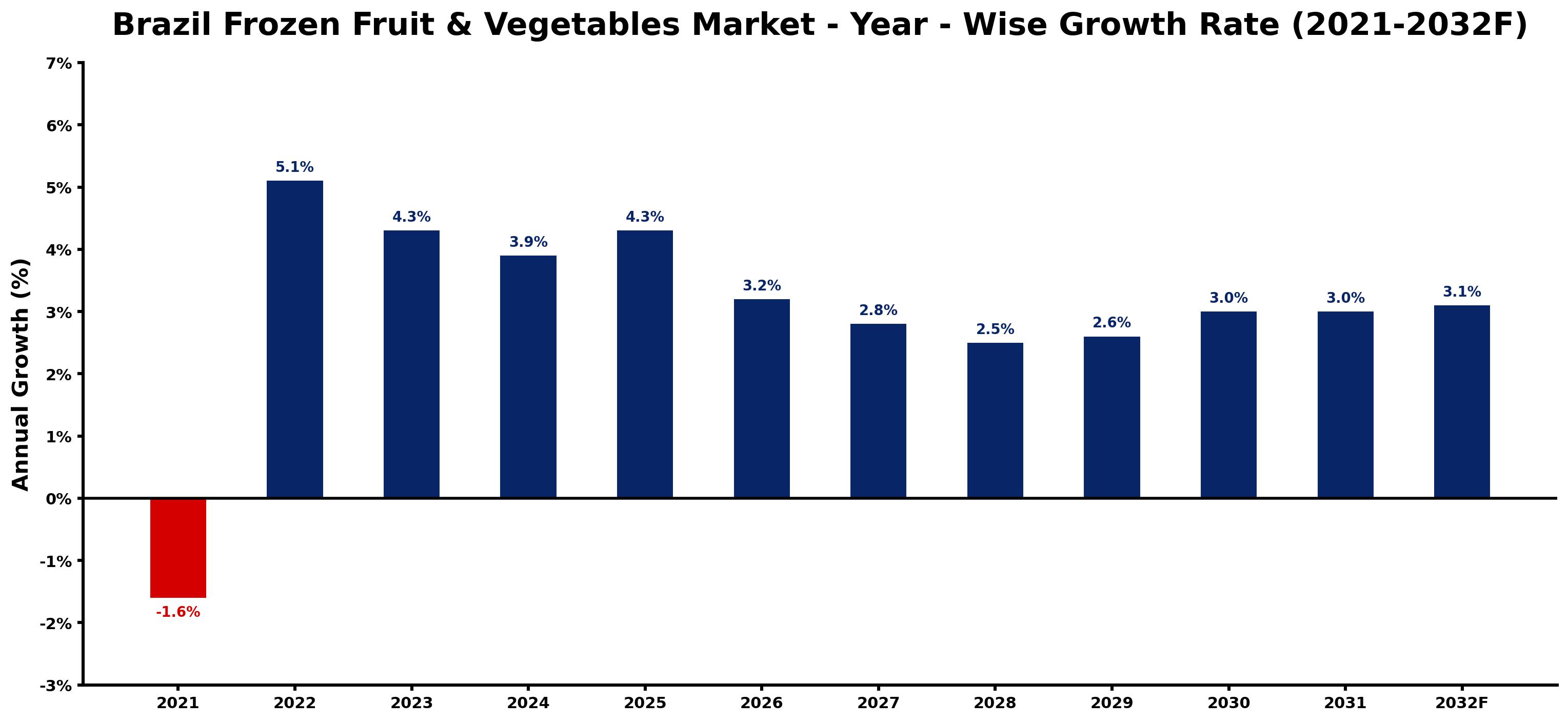
The table below presents the year wise growth rates along with the key drivers influencing the market
| Year | Growth Rate | Major Drivers |
| 2021 | -1.6% | Unfavorable weather patterns adversely affected crop yields, leading to reduced supply in the frozen produce sector. |
| 2022 | 5.1% | Increased availability of organic frozen products attracts health-conscious Brazilian consumers. |
| 2023 | 4.3% | Supply chain improvements enhance product accessibility in urban and rural locations. |
| 2024 | 3.9% | E-commerce platforms expand, making frozen produce more widely available nationwide. |
| 2025 | 4.3% | Innovative packaging solutions prolong shelf life, appealing to both retailers and shoppers. |
| 2026 | 3.2% | Post-pandemic dining habits shift towards convenience, fueling demand for frozen options. |
| 2027 | 2.8% | Collaboration between local farmers and food processors strengthens sourcing of fresh ingredients. |
| 2028 | 2.5% | Nutritional awareness campaigns influence consumer choices, favoring frozen over canned products. |
| 2029 | 2.6% | Rising disposable income allows families to invest in quality frozen food selections. |
| 2030 | 3.0% | Sustainability trends encourage brands to use eco-friendly practices in frozen food production. |
| 2031 | 3.0% | Emerging food trends highlight plant-based diets, increasing interest in frozen vegetable assortments. |
| 2032 | 3.1% | Culinary diversity in Brazil sparks demand for exotic frozen fruit varieties and blends. |
Note - Market size estimations and growth projections presented in this report are based on 6Wresearch's advanced forecasting approach, validated with industry datasets as of June 2026.
Brazil Frozen Fruit & Vegetables Market Synopsis
The Brazil Frozen Fruit Vegetables Market is projected to reach 3.2% and witness significant growth during the forecast period (2026-2032). The sector's expansion is driven by evolving consumer preferences for convenient and nutritious food options that frozen fruits and vegetables provide. With a diverse selection available year-round, this market is becoming increasingly integral to Brazilian diets, especially in urban settings.
Brazil Frozen Fruit & Vegetables Market Growth Drivers
Several key factors are driving the growth of the Brazil Frozen Fruit & Vegetables Market. The ongoing shift in dietary patterns among Brazilian consumers reflects a growing inclination towards health-conscious eating, which frozen offerings complement. This trend is fueled by:
- The demand for convenience resulting from busy lifestyles, especially in metropolitan areas where the availability of fresh produce can be limited.
- Increased awareness of the nutritional benefits of frozen fruits and vegetables, which are often flash-frozen at peak ripeness, preserving their essential vitamins and minerals.
- Technological advancements in freezing methods and packaging solutions that enhance product quality and shelf stability.
- A rise in the willingness of consumers to explore international cuisines, where frozen ingredients play a crucial role in recipe preparation.
- The growing appeal of plant-based diets and vegetarianism, leading to increased consumption of frozen vegetable options.
Brazil Frozen Fruit & Vegetables Market Challenges and Restraints
Despite its growth potential, the Brazil Frozen Fruit & Vegetables Market faces several challenges that could hinder its expansion. These include:
- Issues related to supply chain resilience, often influenced by external factors such as climate change, which can disrupt agricultural production and lead to inconsistencies in supply.
- Fluctuations in weather patterns that can significantly impact crop yields, resulting in potential shortages in the availability of key frozen products.
- The need for efficient cold chain infrastructure, which requires substantial investment to maintain product integrity from processing to retail.
- Environmental concerns surrounding energy use in refrigeration and storage, necessitating the adoption of more sustainable practices.
- Competition from other food preservation methods such as canning and drying, which may appeal to different consumer segments.
Brazil Frozen Fruit & Vegetables Market Trends and Opportunities
Current trends in the Brazil Frozen Fruit & Vegetables Market reveal promising opportunities for stakeholders. Key trends include:
- An increase in online grocery shopping, which provides consumers with greater access to frozen fruit and vegetable products, leading to higher sales.
- The emergence of innovative product lines, such as organic frozen fruits and vegetables, catering to the health-conscious demographic.
- Collaborations between food brands and chefs to create unique frozen meal solutions that stimulate consumer interest.
- Growing investment in marketing campaigns that highlight the versatility and convenience of frozen ingredients in meal preparation.
- The rise of ready-to-eat frozen meal kits, which pair well with the convenience-seeking behavior of modern consumers.
Brazil Frozen Fruit & Vegetables Market Government Investment and Initiatives
Government policies have played a significant role in shaping the Brazil Frozen Fruit & Vegetables Market. Key initiatives include:
- Regulatory frameworks that emphasize quality control, ensuring all frozen products meet international safety standards throughout the supply chain.
- Support for the development and expansion of cold chain infrastructure, which is crucial for maintaining the quality of frozen goods.
- Public funding programs aimed at enhancing agricultural productivity, which indirectly benefits the frozen market by ensuring a steady supply of raw materials.
- Incentives for businesses investing in sustainable practices, promoting environmentally friendly solutions within the frozen food sector.
- Strategic partnerships with industry stakeholders to foster innovation in freezing technologies and packaging, enhancing product appeal.
Brazil Frozen Fruit & Vegetables Market Latest Developments (May 2025 - June 2026)
Recent developments in the Brazil Frozen Fruit & Vegetables Market indicate a dynamic evolution period. Industry participants are focusing on innovating product offerings while addressing consumer preferences for health and sustainability. Companies are exploring new freezing technologies aimed at improving nutritional retention and extending shelf life. Meanwhile, marketing strategies are increasingly highlighting the health benefits and convenience of frozen produce. The growth of e-commerce is also prompting suppliers to enhance their online presence, facilitating easier access to frozen goods for consumers. Regulatory changes aimed at maintaining high safety standards may lead to innovations in packaging and logistics within the market.
Brazil Frozen Fruit & Vegetables Market - Key Attractiveness of the Report
- 10 Years of Market Numbers
- Historical Data Starting from 2022 to 2025
- Base Year: 2025
- Forecast Data until 2032
- Key Performance Indicators Impacting the Market
- Major Upcoming Developments and Projects
Key Highlights of the Report:
- Brazil Frozen Fruit & Vegetables Market Outlook
- Market Size of Brazil Frozen Fruit & Vegetables Market, 2025
- Forecast of Brazil Frozen Fruit & Vegetables Market, 2032
- Historical Data and Forecast of Brazil Frozen Fruit & Vegetables Revenues & Volume for the Period 2022-2032F
- Brazil Frozen Fruit & Vegetables Market Trend Evolution
- Brazil Frozen Fruit & Vegetables Market Drivers and Challenges
- Brazil Frozen Fruit & Vegetables Price Trends
- Brazil Frozen Fruit & Vegetables Porter's Five Forces
- Brazil Frozen Fruit & Vegetables Industry Life Cycle
- Historical Data and Forecast of Brazil Frozen Fruit & Vegetables Market Revenues & Volume By Product Type for the Period 2022-2032F
- Historical Data and Forecast of Brazil Frozen Fruit & Vegetables Market Revenues & Volume By Frozen Vegetables for the Period 2022-2032F
- Historical Data and Forecast of Brazil Frozen Fruit & Vegetables Market Revenues & Volume By Frozen Fruits for the Period 2022-2032F
- Historical Data and Forecast of Brazil Frozen Fruit & Vegetables Market Revenues & Volume By Applications for the Period 2022-2032F
- Historical Data and Forecast of Brazil Frozen Fruit & Vegetables Market Revenues & Volume By Fruits for the Period 2022-2032F
- Historical Data and Forecast of Brazil Frozen Fruit & Vegetables Market Revenues & Volume By Vegetables for the Period 2022-2032F
- Historical Data and Forecast of Brazil Frozen Fruit & Vegetables Market Revenues & Volume By Distribution Channel for the Period 2022-2032F
- Historical Data and Forecast of Brazil Frozen Fruit & Vegetables Market Revenues & Volume By Hypermarkets/Supermarkets for the Period 2022-2032F
- Historical Data and Forecast of Brazil Frozen Fruit & Vegetables Market Revenues & Volume By Convenience Stores for the Period 2022-2032F
- Historical Data and Forecast of Brazil Frozen Fruit & Vegetables Market Revenues & Volume By E-commerce for the Period 2022-2032F
- Brazil Frozen Fruit & Vegetables Import Export Trade Statistics
- Market Opportunity Assessment By Product Type
- Market Opportunity Assessment By Applications
- Market Opportunity Assessment By Distribution Channel
- Brazil Frozen Fruit & Vegetables Top Companies Market Share
- Brazil Frozen Fruit & Vegetables Competitive Benchmarking By Technical and Operational Parameters
- Brazil Frozen Fruit & Vegetables Company Profiles
- Brazil Frozen Fruit & Vegetables Key Strategic Recommendations






































