Brazil Fuel Pumps Market Growth Rate Analysis (2021 - 2031)
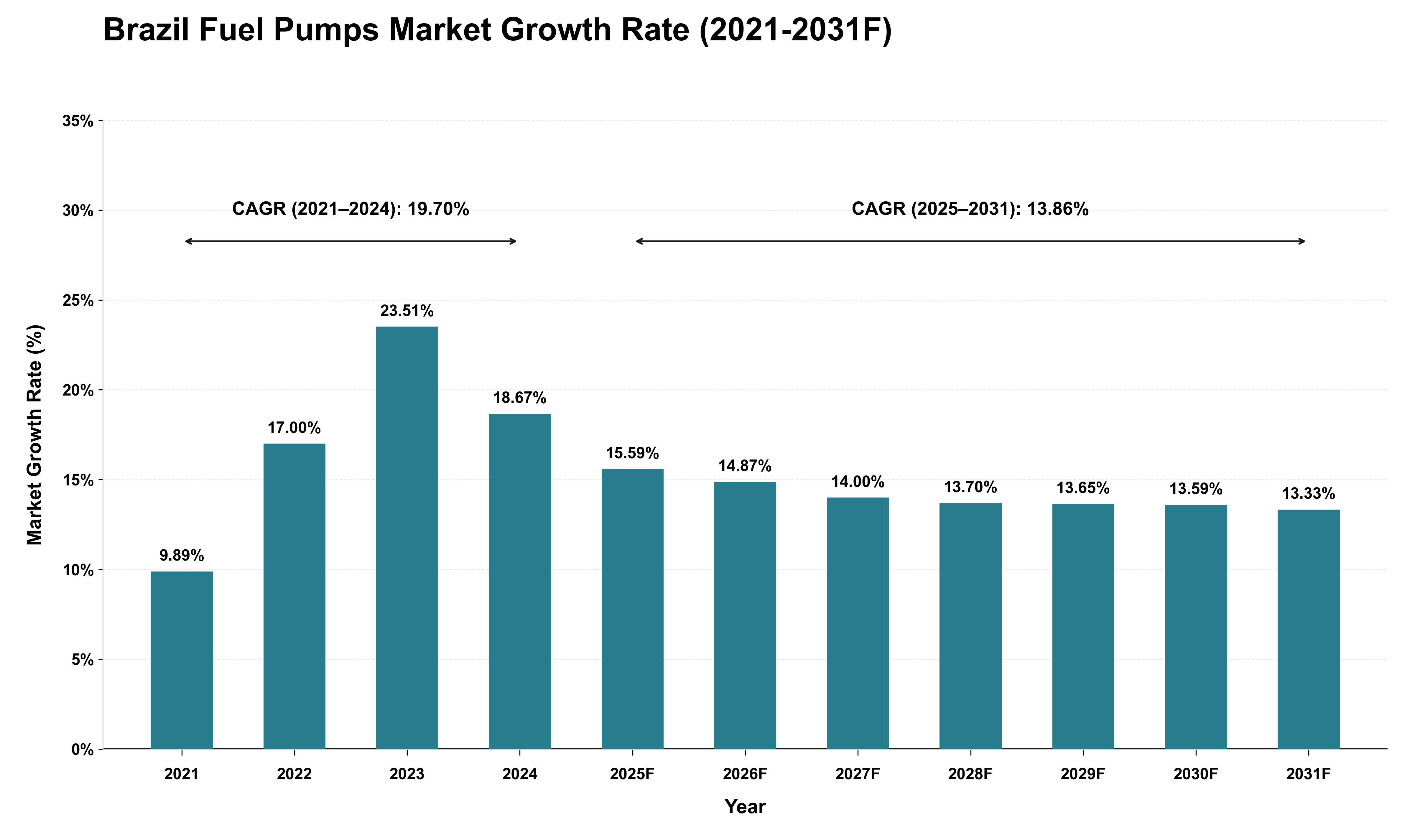
Between 2021 and 2024, the Brazil fuel pumps market experienced a robust compound annual growth rate (CAGR) of 19.70%, driven by significant end-use demand shifts primarily linked to the post-pandemic recovery in transportation and logistics sectors. The surge in annual growth rates, peaking at 23.51% in 2023, reflected heightened consumer activity and increased reliance on fuel infrastructure as global supply chains normalized following disruptions from the COVID-19 pandemic. As Brazil's economy adapted to these changes, the forecast period from 2025 to 2031 anticipates a CAGR of 13.86%, indicating a gradual deceleration as market dynamics stabilize. This projected growth will likely be influenced by ongoing investments in renewable energy technologies and evolving consumer preferences towards more efficient fuel systems, alongside fluctuating global oil prices that could impact import reliance and overall demand for traditional fuel pumps.
Key Highlights of the Report:
- Brazil Fuel Pumps Market Outlook
- Market Size of Brazil Fuel Pumps Market, 2024
- Forecast of Brazil Fuel Pumps Market, 2031
- Historical Data and Forecast of Brazil Fuel Pumps Revenues & Volume for the Period 2021- 2031
- Brazil Fuel Pumps Market Trend Evolution
- Brazil Fuel Pumps Market Drivers and Challenges
- Brazil Fuel Pumps Price Trends
- Brazil Fuel Pumps Porter's Five Forces
- Brazil Fuel Pumps Industry Life Cycle
- Historical Data and Forecast of Brazil Fuel Pumps Market Revenues & Volume By Technology for the Period 2021- 2031
- Historical Data and Forecast of Brazil Fuel Pumps Market Revenues & Volume By Mechanical for the Period 2021- 2031
- Historical Data and Forecast of Brazil Fuel Pumps Market Revenues & Volume By Electric for the Period 2021- 2031
- Historical Data and Forecast of Brazil Fuel Pumps Market Revenues & Volume By Application for the Period 2021- 2031
- Historical Data and Forecast of Brazil Fuel Pumps Market Revenues & Volume By Passenger Cars for the Period 2021- 2031
- Historical Data and Forecast of Brazil Fuel Pumps Market Revenues & Volume By Light Commercial Vehicles for the Period 2021- 2031
- Historical Data and Forecast of Brazil Fuel Pumps Market Revenues & Volume By Heavy Commercial Vehicles for the Period 2021- 2031
- Historical Data and Forecast of Brazil Fuel Pumps Market Revenues & Volume By Off High-Way Vehicles for the Period 2021- 2031
- Brazil Fuel Pumps Import Export Trade Statistics
- Market Opportunity Assessment By Technology
- Market Opportunity Assessment By Application
- Brazil Fuel Pumps Top Companies Market Share
- Brazil Fuel Pumps Competitive Benchmarking By Technical and Operational Parameters
- Brazil Fuel Pumps Company Profiles
- Brazil Fuel Pumps Key Strategic Recommendations






































