Brazil Glass Tiles Market Size, Share & Growth Rate
The Brazil Glass Tiles Market was estimated at USD 451 Million in 2025 and is projected to reach USD 539 Million by 2032, growing at a CAGR of 2.6% from 2026 to 2032. This growth trajectory is fueled by a rising demand for aesthetically pleasing and durable tiling solutions in both residential and commercial sectors. Increased focus on modern interior design and architectural innovations highlights the appeal of glass tiles as versatile elements in contemporary projects.
Brazil Glass Tiles Market Year-wise Growth Rate and Key Drivers
This graph highlights how the Brazil Glass Tiles Market has steadily grown over the years, supported by major growth factors.
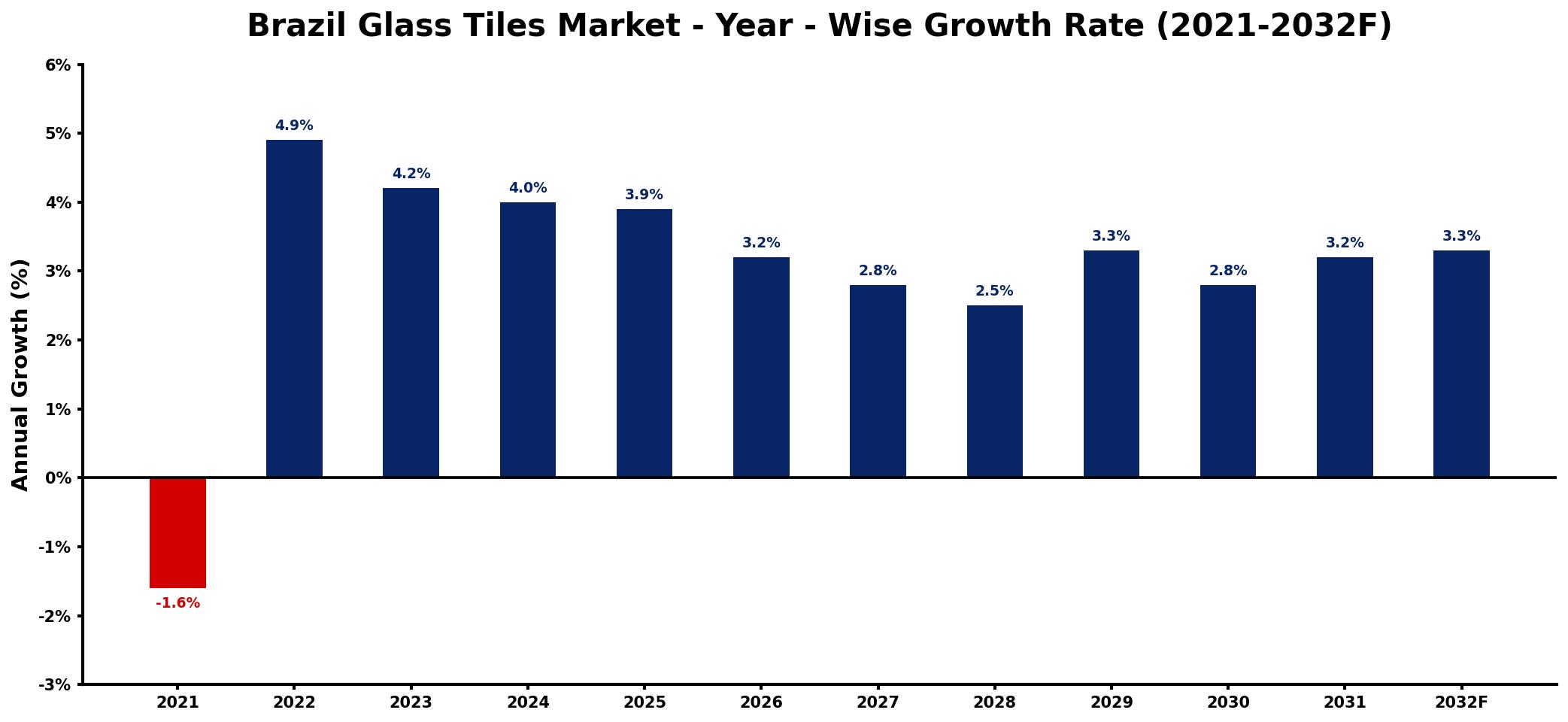
The table below presents the year‑wise growth rates along with the key drivers influencing the market
| Year | Growth Rate | Major Drivers |
| 2021 | -1.6% | Decreased construction project funding |
| 2022 | 4.9% | Rising demand for decorative surfaces |
| 2023 | 4.2% | Increased investment in renovation projects |
| 2024 | 4.0% | Urban development projects expanding rapidly |
| 2025 | 3.9% | Growing interest in sustainable materials |
| 2026 | 3.2% | Surge in home improvement activities |
| 2027 | 2.8% | Expanding commercial construction initiatives |
| 2028 | 2.5% | Rising popularity of interior design |
| 2029 | 3.3% | Increased adoption of eco-friendly products |
| 2030 | 2.8% | Growth in luxury residential markets |
| 2031 | 3.2% | Emerging trends in DIY renovations |
| 2032 | 3.3% | Investment in hospitality sector renovations |
Note: Market size estimations and growth projections presented in this report are based on 6Wresearch's proprietary forecasting methodology, utilizing the latest available industry data, government publications, and primary research inputs.
Brazil Glass Tiles Market Synopsis
The Brazil Glass Tiles Market has witnessed a surge in interest, especially within urban development projects that emphasize style and functionality. However, as the market matures, it is expected to face certain challenges regarding installation and maintenance, which could temper growth. Despite these obstacles, the inherent advantages of glass tiles ensure that they remain a popular choice among architects and designers.
Looking ahead, the market is positioning itself for a steady increase driven by innovation in manufacturing techniques and design flexibility. As consumer awareness around sustainability grows, glass tiles are expected to benefit from their alignment with eco-friendly construction trends, enhancing their appeal across various sectors.
Brazil Glass Tiles Market Key Takeaways
- The market is projected to grow steadily, showcasing a CAGR of 2.6% from 2026 to 2032.
- Glass tiles are favored for their aesthetic appeal, versatility, and durability in modern architecture.
- Consumer education on installation and maintenance is vital for market expansion.
- Government policies promoting sustainable construction practices will support market growth.
- The industry faces challenges related to installation complexities and material fragility.
Evaluation of Restraints in Brazil Glass Tiles Market
Despite the promising outlook, the Brazil Glass Tiles Market encounters several restraints that could impede growth. The fragility of glass tiles makes them less suitable for high-traffic areas, potentially limiting their application in some commercial spaces. Additionally, the complexity involved in the installation process necessitates skilled labor, which can increase project costs and timelines. Effective consumer education on proper usage and maintenance is also critical in addressing concerns regarding the longevity and durability of glass tiles, which may otherwise deter potential buyers.
Brazil Glass Tiles Market Trends
Current trends indicate a growing preference for eco-friendly and sustainable materials in construction, positioning glass tiles as a favorable choice. The introduction of innovative designs and customizable options is appealing to modern consumers seeking unique interior solutions. Furthermore, the rising popularity of open-concept spaces enhances the demand for visually striking materials like glass tiles, which can create seamless transitions between different areas of a property.
Brazil Glass Tiles Market Opportunities
Opportunities for growth within the Brazil Glass Tiles Market are significant, particularly in the residential sector as homeowners increasingly seek to enhance their living spaces with stylish materials. Moreover, the commercial real estate sector is expanding, providing a fertile ground for glass tiles in office spaces, retail outlets, and hospitality venues. Innovations in manufacturing processes that improve durability and installation efficiency could further open doors for new market entrants, inviting investment and collaboration.
Government Initiatives in the Brazil Glass Tiles Market
The Brazilian government supports the glass tiles market through policies that promote quality control and adherence to safety regulations in construction. Initiatives that encourage sustainable building practices are particularly relevant, aligning with global environmental objectives. Additionally, programs aimed at supporting small and medium enterprises within the construction sector contribute to the overall growth and development of the glass tiles market.
Future Insights of the Brazil Glass Tiles Market
As we approach 2032, the Brazil Glass Tiles Market is expected to evolve with a pronounced emphasis on sustainability and innovative design. The integration of technology in manufacturing may yield new types of glass tiles with enhanced properties, further appealing to environmentally conscious consumers. With urbanization continuing in Brazil, the demand for stylish yet durable building materials like glass tiles will likely remain robust, providing a solid foundation for ongoing market growth.
Brazil Glass Tiles Market Latest Developments (2025 - 2026)
In recent months, the glass tiles industry in Brazil has been focusing on enhancing product offerings through technological advancements and improved aesthetic designs. Manufacturers are increasingly embracing sustainable practices in their production processes, aligning with global trends in eco-friendliness. Additionally, several trade shows and exhibitions have been organized to showcase innovative uses of glass tiles, fostering greater collaboration among industry stakeholders and encouraging investment in modern architectural solutions.
Brazil Glass Tiles Market - Key Attractiveness of the Report
- 10 Years of Market Numbers
- Historical Data Starting from 2022 to 2025
- Base Year: 2025
- Forecast Data until 2032
- Key Performance Indicators Impacting the Market
- Major Upcoming Developments and Projects
Key Highlights of the Report:
- Brazil Glass Tiles Market Outlook
- Market Size of Brazil Glass Tiles Market, 2025
- Forecast of Brazil Glass Tiles Market, 2032
- Historical Data and Forecast of Brazil Glass Tiles Revenues & Volume for the Period 2022-2032F
- Brazil Glass Tiles Market Trend Evolution
- Brazil Glass Tiles Market Drivers and Challenges
- Brazil Glass Tiles Price Trends
- Brazil Glass Tiles Porter's Five Forces
- Brazil Glass Tiles Industry Life Cycle
- Historical Data and Forecast of Brazil Glass Tiles Market Revenues & Volume By Manufacturing Process for the Period 2022-2032F
- Historical Data and Forecast of Brazil Glass Tiles Market Revenues & Volume By Smalti Tiles for the Period 2022-2032F
- Historical Data and Forecast of Brazil Glass Tiles Market Revenues & Volume By Fused Tiles for the Period 2022-2032F
- Historical Data and Forecast of Brazil Glass Tiles Market Revenues & Volume By Sintered Tiles for the Period 2022-2032F
- Historical Data and Forecast of Brazil Glass Tiles Market Revenues & Volume By Cast Tiles for the Period 2022-2032F
- Historical Data and Forecast of Brazil Glass Tiles Market Revenues & Volume By Other for the Period 2022-2032F
- Historical Data and Forecast of Brazil Glass Tiles Market Revenues & Volume By Product Type for the Period 2022-2032F
- Historical Data and Forecast of Brazil Glass Tiles Market Revenues & Volume By Matte-finished Glass Tile for the Period 2022-2032F
- Historical Data and Forecast of Brazil Glass Tiles Market Revenues & Volume By Smooth Glass Tile for the Period 2022-2032F
- Historical Data and Forecast of Brazil Glass Tiles Market Revenues & Volume By End-User Industry for the Period 2022-2032F
- Historical Data and Forecast of Brazil Glass Tiles Market Revenues & Volume By Residential for the Period 2022-2032F
- Historical Data and Forecast of Brazil Glass Tiles Market Revenues & Volume By Commercial for the Period 2022-2032F
- Historical Data and Forecast of Brazil Glass Tiles Market Revenues & Volume By Infrastructure for the Period 2022-2032F
- Brazil Glass Tiles Import Export Trade Statistics
- Market Opportunity Assessment By Manufacturing Process
- Market Opportunity Assessment By Product Type
- Market Opportunity Assessment By End-User Industry
- Brazil Glass Tiles Top Companies Market Share
- Brazil Glass Tiles Competitive Benchmarking By Technical and Operational Parameters
- Brazil Glass Tiles Company Profiles
- Brazil Glass Tiles Key Strategic Recommendations






































