Brazil Naphtha Market Top 5 Importing Countries and Market Competition (HHI) Analysis
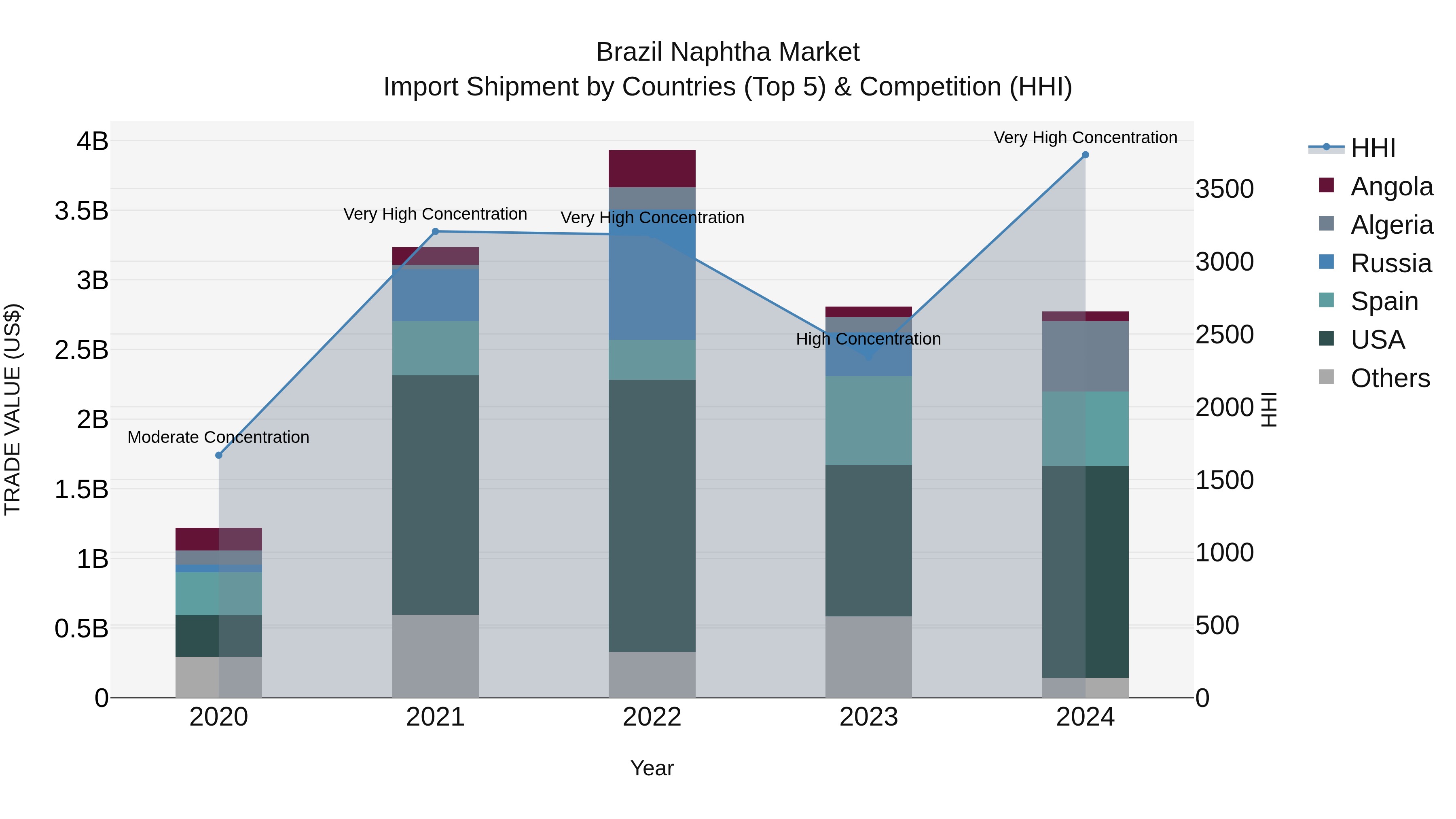
Brazil`s naphtha import shipments in 2024 saw a continued high concentration of imports from top countries including the USA, Spain, Algeria, Italy, and Angola. The Herfindahl-Hirschman Index (HHI) indicated a significant increase in concentration in 2024, reflecting a competitive market. Despite a slight decline in growth rate from 2023 to 2024, the compound annual growth rate (CAGR) for the period 2020-2024 remained strong at 22.82%. This data suggests a stable and competitive market landscape for naphtha import shipments into Brazil.
Brazil Naphtha Market Synopsis
The Brazil Naphtha Market is experiencing steady growth driven by the increasing demand from the petrochemical industry for the production of various chemicals and plastics. Naphtha is a key feedstock in the country`s petrochemical sector, particularly for the production of ethylene and propylene. The market is also influenced by factors such as fluctuating crude oil prices, government regulations, and global economic conditions. With Brazil being a major player in the Latin American petrochemical industry, the naphtha market is expected to continue its growth trajectory in the coming years. Key players in the market include Petrobras, Braskem, and Unipar, among others, who are actively involved in the production and distribution of naphtha for various industrial applications.
Brazil Naphtha Market Trends
The Brazil Naphtha Market is experiencing growth driven by increasing demand from the petrochemical industry for naphtha as a feedstock. The country`s focus on expanding its refining capacity and petrochemical production is creating opportunities for naphtha suppliers. Additionally, the growing trend towards the use of naphtha as a cleaner alternative to coal in power generation is further fueling market growth. With Brazil being a major player in the global petrochemical market, there is potential for naphtha suppliers to capitalize on this demand by establishing strategic partnerships with local refineries and petrochemical companies. Overall, the Brazil Naphtha Market presents promising opportunities for growth and investment in the coming years.
Brazil Naphtha Market Challenges
The Brazil Naphtha Market faces several challenges, including fluctuations in crude oil prices, which directly impact naphtha prices and profitability for market players. Additionally, the market is highly competitive, with both domestic and international suppliers vying for market share. Regulatory uncertainties and changing environmental policies also pose challenges for naphtha producers and consumers in Brazil. Infrastructure limitations, such as transportation and storage facilities, can further hinder market growth and efficiency. Moreover, the global shift towards renewable energy sources and the increasing focus on sustainability present long-term challenges for the naphtha market in Brazil, necessitating innovation and adaptation to meet changing consumer preferences and regulatory requirements.
Brazil Naphtha Market Investment Opportunities
The Brazil Naphtha Market is primarily driven by the growth in the petrochemical industry, which heavily relies on naphtha as a feedstock for the production of various chemicals and plastics. The increasing demand for plastics, especially in sectors such as packaging, construction, and automotive, is propelling the consumption of naphtha in Brazil. Additionally, the growth in the automotive sector in Brazil is boosting the demand for naphtha as a key component in the production of gasoline. Furthermore, the country`s expanding refining capacity and the rise in investments in infrastructure projects are also contributing to the growth of the naphtha market in Brazil. Overall, these factors are driving the demand for naphtha in Brazil and shaping the market dynamics in the region.
Brazil Naphtha Market Government Polices
The Brazilian government has implemented various policies related to the naphtha market to promote domestic production and reduce dependence on imports. These policies include tax incentives for naphtha producers, regulations to ensure the quality and safety of naphtha products, and initiatives to encourage investment in the petrochemical sector. Additionally, the government has introduced measures to promote the use of naphtha as a feedstock for the production of petrochemicals and other value-added products, aiming to boost industrial growth and create job opportunities in the country. Overall, the government`s policies aim to support the development of the Brazil naphtha market and strengthen the country`s position in the global petrochemical industry.
Brazil Naphtha Market Future Outlook
The future outlook for the Brazil Naphtha Market appears promising, driven by factors such as increasing demand from the petrochemical industry for the production of plastics and chemicals. The market is expected to witness steady growth in the coming years due to the country`s expanding industrial sector and rising investments in infrastructure projects. Additionally, the growing popularity of naphtha as a feedstock for steam crackers and refineries is anticipated to further boost market growth. However, challenges such as volatile crude oil prices and environmental concerns surrounding the use of fossil fuels may impact the market dynamics. Overall, with the increasing demand for petrochemical products and ongoing industrial developments, the Brazil Naphtha Market is poised for a positive trajectory in the foreseeable future.
Key Highlights of the Report:
- Brazil Naphtha Market Outlook
- Market Size of Brazil Naphtha Market, 2024
- Forecast of Brazil Naphtha Market, 2031
- Historical Data and Forecast of Brazil Naphtha Revenues & Volume for the Period 2021- 2031
- Brazil Naphtha Market Trend Evolution
- Brazil Naphtha Market Drivers and Challenges
- Brazil Naphtha Price Trends
- Brazil Naphtha Porter's Five Forces
- Brazil Naphtha Industry Life Cycle
- Historical Data and Forecast of Brazil Naphtha Market Revenues & Volume By Application for the Period 2021- 2031
- Historical Data and Forecast of Brazil Naphtha Market Revenues & Volume By Chemicals for the Period 2021- 2031
- Historical Data and Forecast of Brazil Naphtha Market Revenues & Volume By Energy/Fuel for the Period 2021- 2031
- Historical Data and Forecast of Brazil Naphtha Market Revenues & Volume By Others for the Period 2021- 2031
- Brazil Naphtha Import Export Trade Statistics
- Market Opportunity Assessment By Application
- Brazil Naphtha Top Companies Market Share
- Brazil Naphtha Competitive Benchmarking By Technical and Operational Parameters
- Brazil Naphtha Company Profiles
- Brazil Naphtha Key Strategic Recommendations






































