Brazil Phenol Market Top 5 Importing Countries and Market Competition (HHI) Analysis
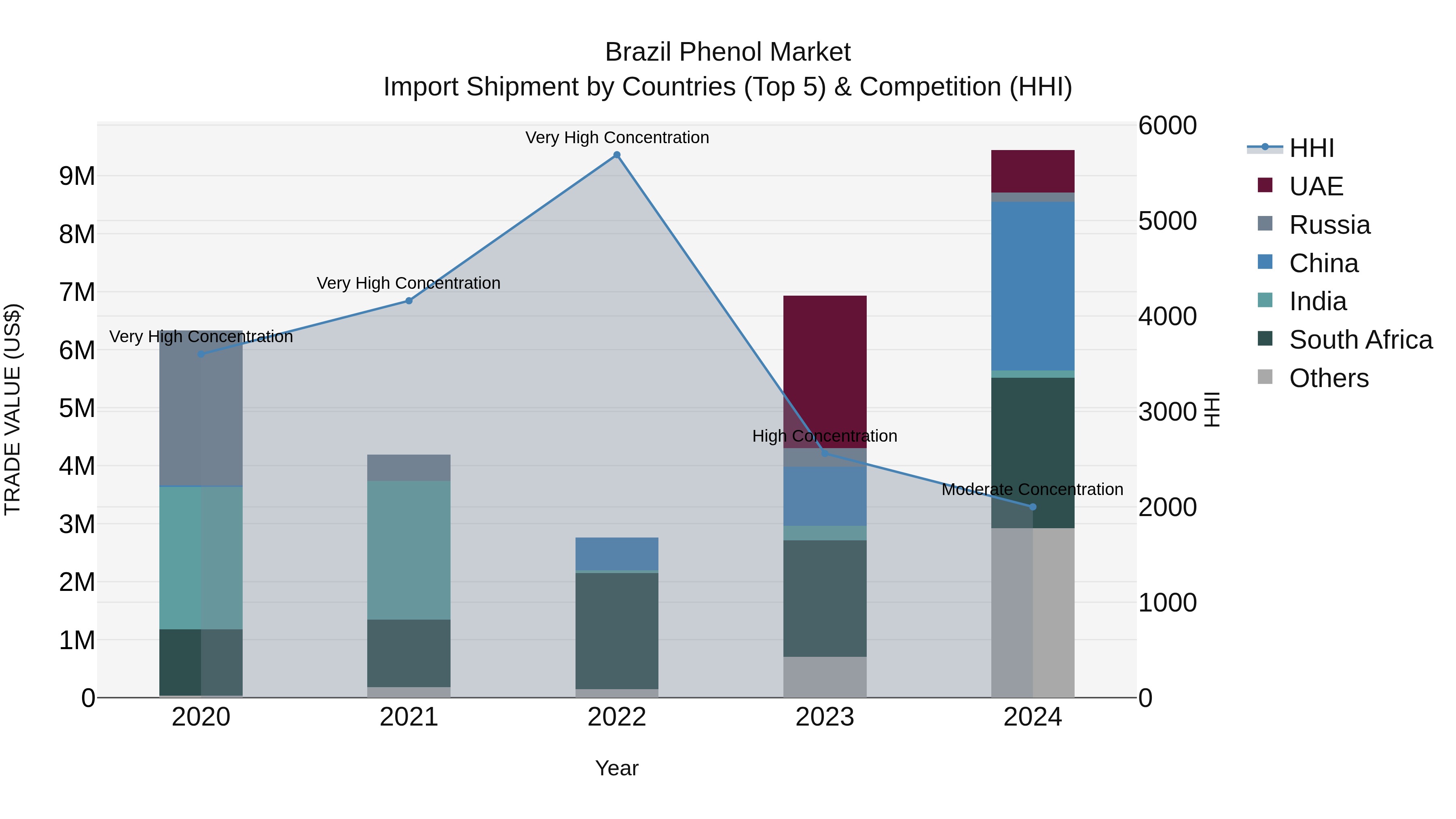
Brazil`s phenol import market in 2024 continued to be dominated by key exporters such as China, South Africa, Finland, Spain, and the UAE. The high Herfindahl-Hirschman Index (HHI) reflects a concentrated market structure. With a commendable Compound Annual Growth Rate (CAGR) of 10.49% from 2020 to 2024, the sector witnessed a notable growth spurt with a growth rate of 36.21% in 2024 alone. This data indicates a robust demand for phenol in Brazil and highlights the significant role these top exporting countries play in meeting that demand.
Brazil Phenol Market Overview
The Brazil Phenol market, a key chemical intermediate, faces challenges such as feedstock price fluctuations, environmental concerns, and the need for advanced production technologies. Addressing these challenges is essential for market players to maintain a competitive edge in the phenol industry, which is vital for various downstream sectors.
Drivers of the market
The Brazil Phenol market is being driven by the expanding chemical and plastics industries. Phenol is a key raw material for the production of resins, adhesives, and various plastic products. The growth in construction activities, automotive manufacturing, and the demand for consumer goods has led to an increased need for phenol. This, in turn, acts as a major driver for the phenol market in Brazil.
Challenges of the market
The Brazil Phenol market, vital in the production of plastics and resins, encounters challenges related to raw material availability and price volatility. Phenol production relies on benzene, which faces market fluctuations and supply chain disruptions. Companies in this sector need strategic planning to mitigate risks associated with raw material procurement and maintain stable production.
Government Policy of the market
Government policies regarding chemical production, safety standards, and environmental protection play a pivotal role in shaping the Brazil Phenol market. Regulations on chemical manufacturing processes, waste disposal, and worker safety impact phenol production. Industry players must align with these policies to ensure sustainable and compliant operations in the phenol market.
Key Highlights of the Report:
- Brazil Phenol Market Outlook
- Market Size of Brazil Phenol Market, 2024
- Forecast of Brazil Phenol Market, 2031
- Historical Data and Forecast of Brazil Phenol Revenues & Volume for the Period 2018 - 2031
- Brazil Phenol Market Trend Evolution
- Brazil Phenol Market Drivers and Challenges
- Brazil Phenol Price Trends
- Brazil Phenol Porter's Five Forces
- Brazil Phenol Industry Life Cycle
- Historical Data and Forecast of Brazil Phenol Market Revenues & Volume By End-users for the Period 2018 - 2031
- Historical Data and Forecast of Brazil Phenol Market Revenues & Volume By Bisphenol A for the Period 2018 - 2031
- Historical Data and Forecast of Brazil Phenol Market Revenues & Volume By Phenolic Resins for the Period 2018 - 2031
- Historical Data and Forecast of Brazil Phenol Market Revenues & Volume By Caprolactam for the Period 2018 - 2031
- Historical Data and Forecast of Brazil Phenol Market Revenues & Volume By Alkyl Phenyls for the Period 2018 - 2031
- Historical Data and Forecast of Brazil Phenol Market Revenues & Volume By Others for the Period 2018 - 2031
- Brazil Phenol Import Export Trade Statistics
- Market Opportunity Assessment By End-users
- Brazil Phenol Top Companies Market Share
- Brazil Phenol Competitive Benchmarking By Technical and Operational Parameters
- Brazil Phenol Company Profiles
- Brazil Phenol Key Strategic Recommendations






































