Brazil Sports Nutrition Market Size, Share & Growth Rate
The Brazil Sports Nutrition Market was estimated at USD 219 Million in 2025 and is projected to reach USD 259 Million by 2032, growing at a CAGR of 2.4% from 2026 to 2032. This growth trajectory is propelled by a burgeoning fitness culture and a dramatic shift towards health-oriented lifestyles among Brazilian consumers. The increasing participation in sports activities and fitness regimes, along with a growing recognition of the importance of nutritional supplements, is significantly driving demand for sports nutrition products across various demographics.
Brazil Sports Nutrition Market Year-wise Growth Rate and Key Drivers
This graph highlights how the Brazil Sports Nutrition Market has steadily grown over the years, supported by major growth factors.
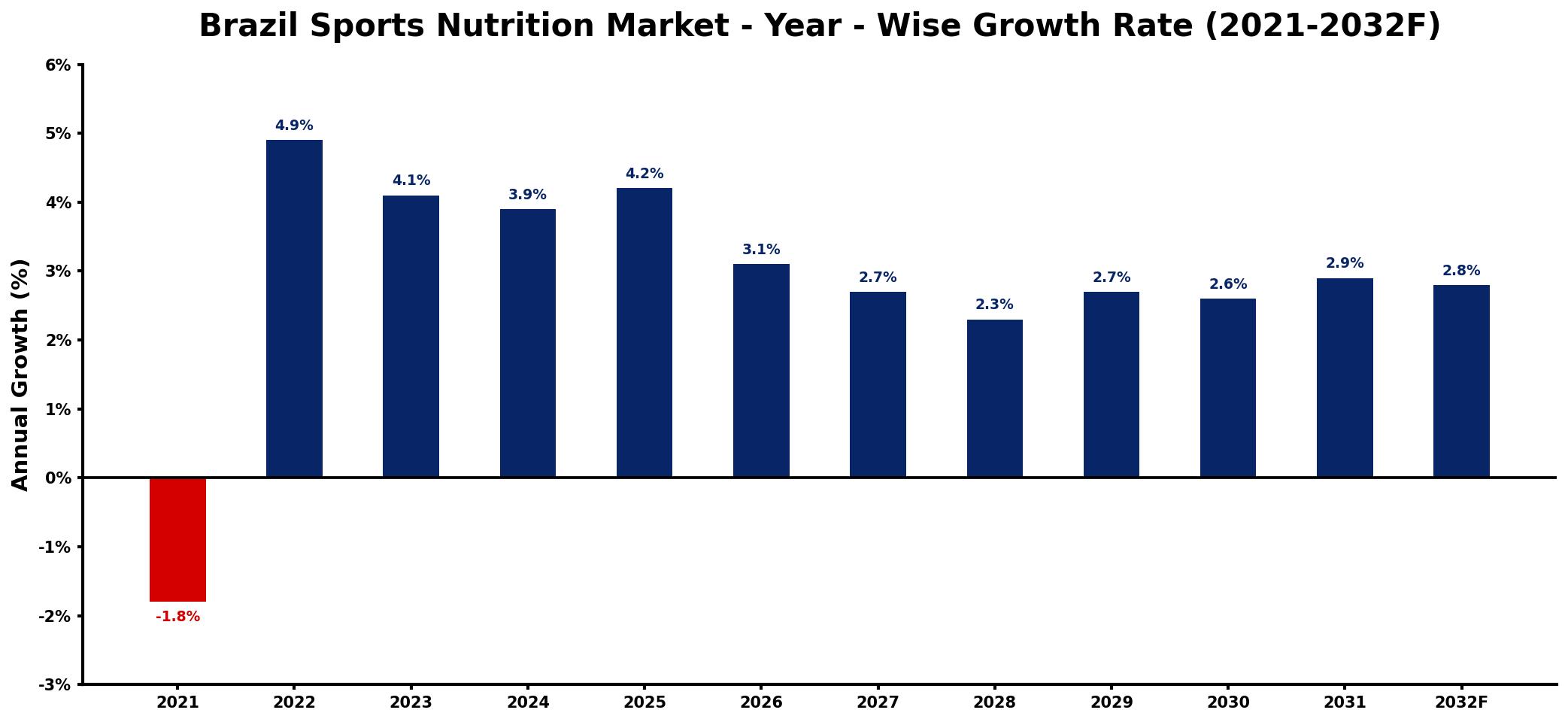
The table below presents the year‑wise growth rates along with the key drivers influencing the market
| Year | Growth Rate | Major Drivers |
| 2021 | -1.8% | Consumer interest shifted downward |
| 2022 | 4.9% | Health awareness campaigns launched |
| 2023 | 4.1% | Emerging fitness trends rise |
| 2024 | 3.9% | Investment in wellness initiatives |
| 2025 | 4.2% | New distribution channels created |
| 2026 | 3.1% | Collaborations with fitness influencers |
| 2027 | 2.7% | Increased online retail presence |
| 2028 | 2.3% | Growing demand for plant-based |
| 2029 | 2.7% | Expansion of fitness facilities |
| 2030 | 2.6% | Adoption of active lifestyle habits |
| 2031 | 2.9% | Technological advancements in products |
| 2032 | 2.8% | Focus on holistic health approaches |
Note: Market size estimations and growth projections presented in this report are based on 6Wresearch's proprietary forecasting methodology, utilizing the latest available industry data, government publications, and primary research inputs.
Brazil Sports Nutrition Market Synopsis
The most compelling force currently shaping the Brazil Sports Nutrition Market is the rising health consciousness among consumers. This heightened awareness has prompted individuals, from amateur athletes to everyday fitness enthusiasts, to prioritize nutrition as an integral component of their wellness routines. As a result, the demand for specialized products, such as protein supplements and energy bars, is witnessing unprecedented growth.
Moreover, the impact of social media cannot be understated; platforms like Instagram and TikTok have amplified the visibility of fitness influencers who advocate for sports nutrition products. This social proof not only educates the public on nutritional benefits but also cultivates a consumer base eager to invest in their fitness and health journeys through targeted dietary supplements.
Brazil Sports Nutrition Market Key Takeaways
- The market is experiencing steady growth due to increased health awareness and active lifestyles.
- Protein supplements, energy bars, and sports drinks are driving significant consumer demand.
- Government regulations focus on safety and efficacy, shaping product development and marketing.
- Transparency and quality assurance are paramount as consumers scrutinize ingredient sourcing.
- Increased competition is pushing brands to innovate and differentiate their product offerings.
Evaluation of Restraints in Brazil Sports Nutrition Market
While the market is on an upward trajectory, it faces several formidable restraints. Chief among these are the stringent regulatory requirements governing product formulation and marketing claims, which demand substantial investments in research and development. Companies must navigate a complex landscape to ensure compliance while still meeting consumer expectations for quality and efficacy. Additionally, the growing emphasis on transparency has led to consumers increasingly scrutinizing the origins and manufacturing processes of products, compelling brands to adopt rigorous quality assurance measures throughout their supply chains. These factors create a challenging environment for new entrants and existing players alike, as the competition intensifies and the market becomes more discerning.
Brazil Sports Nutrition Market Trends
Several current trends are shaping the Brazil Sports Nutrition Market. Plant-based proteins are gaining traction as consumers seek cleaner and more sustainable alternatives to traditional sources. Additionally, convenience-oriented products, like ready-to-drink nutritional shakes, are becoming increasingly popular among on-the-go consumers. Moreover, personalized nutrition, where products are tailored to individual health goals and dietary needs, is emerging as a significant market trend, driven by advancements in technology and consumer demand for customized solutions.
Brazil Sports Nutrition Market Opportunities
Amid the challenges, there exist genuine opportunities for growth and investment. Companies can leverage the rising trend of e-commerce to reach a wider audience, particularly younger consumers who prefer shopping online. Furthermore, the development of innovative products that cater to specific dietary needs, such as gluten-free or keto-friendly options, can enhance market share. Partnerships with fitness centers, gyms, and health influencers can also create avenues for brand visibility and consumer engagement, paving the way for sustained growth in the Brazilian market.
Government Initiatives in the Brazil Sports Nutrition Market
The Brazilian government has implemented a series of regulations to ensure the safety and efficacy of dietary supplements and sports nutrition products. Stringent labeling requirements and quality control standards are in place to safeguard consumer interests and promote informed decision-making. Additionally, governmental collaborations with industry stakeholders aim to enhance research and education surrounding sports nutrition, fostering an environment conducive to market growth and innovation.
Future Insights of the Brazil Sports Nutrition Market
Looking ahead to the period from 2026 to 2032, the Brazil Sports Nutrition Market is poised for continued expansion. The convergence of increasing health consciousness, evolving dietary preferences, and innovative product development will drive market dynamics. As consumers become more discerning about nutritional choices, brands that prioritize quality, transparency, and personalized offerings will likely emerge as leaders in this competitive landscape. The integration of technology into product development and marketing strategies will further enhance growth potential, positioning the market favorably for future advancements.
Brazil Sports Nutrition Market Latest Developments (2025 - 2026)
Recent developments in the Brazil Sports Nutrition Market indicate a significant shift towards innovation and consumer engagement. Numerous brands are launching new product lines that emphasize natural ingredients and cater to the growing demand for plant-based options. Furthermore, there has been a marked increase in collaborations between sports nutrition companies and fitness influencers, aiming to leverage social media platforms for targeted marketing campaigns. This strategic alignment is enhancing brand visibility and consumer loyalty, establishing a dynamic landscape for future growth.
Brazil Sports Nutrition Market - Key Attractiveness of the Report
- 10 Years of Market Numbers
- Historical Data Starting from 2022 to 2025
- Base Year: 2025
- Forecast Data until 2032
- Key Performance Indicators Impacting the Market
- Major Upcoming Developments and Projects
Key Highlights of the Report:
- Brazil Sports Nutrition Market Outlook
- Market Size of Brazil Sports Nutrition Market, 2025
- Forecast of Brazil Sports Nutrition Market, 2032
- Historical Data and Forecast of Brazil Sports Nutrition Revenues & Volume for the Period 2022-2032F
- Brazil Sports Nutrition Market Trend Evolution
- Brazil Sports Nutrition Market Drivers and Challenges
- Brazil Sports Nutrition Price Trends
- Brazil Sports Nutrition Porter's Five Forces
- Brazil Sports Nutrition Industry Life Cycle
- Historical Data and Forecast of Brazil Sports Nutrition Market Revenues & Volume By Type for the Period 2022-2032F
- Historical Data and Forecast of Brazil Sports Nutrition Market Revenues & Volume By Sports Food for the Period 2022-2032F
- Historical Data and Forecast of Brazil Sports Nutrition Market Revenues & Volume By Sports Drinks for the Period 2022-2032F
- Historical Data and Forecast of Brazil Sports Nutrition Market Revenues & Volume By Sports Supplements for the Period 2022-2032F
- Historical Data and Forecast of Brazil Sports Nutrition Market Revenues & Volume By Distribution Channel for the Period 2022-2032F
- Historical Data and Forecast of Brazil Sports Nutrition Market Revenues & Volume By Supermarkets/Hypermarkets for the Period 2022-2032F
- Historical Data and Forecast of Brazil Sports Nutrition Market Revenues & Volume By Specialty Stores for the Period 2022-2032F
- Historical Data and Forecast of Brazil Sports Nutrition Market Revenues & Volume By Convenience Stores for the Period 2022-2032F
- Historical Data and Forecast of Brazil Sports Nutrition Market Revenues & Volume By Online Stores for the Period 2022-2032F
- Historical Data and Forecast of Brazil Sports Nutrition Market Revenues & Volume By Other Distribution Channels for the Period 2022-2032F
- Brazil Sports Nutrition Import Export Trade Statistics
- Market Opportunity Assessment By Type
- Market Opportunity Assessment By Distribution Channel
- Brazil Sports Nutrition Top Companies Market Share
- Brazil Sports Nutrition Competitive Benchmarking By Technical and Operational Parameters
- Brazil Sports Nutrition Company Profiles
- Brazil Sports Nutrition Key Strategic Recommendations






































