United States (US) Sports Nutrition Market Size, Share & Growth Rate
The United States (US) Sports Nutrition Market was estimated at USD 139 Million in 2025 and is projected to reach USD 163 Million by 2032, growing at a CAGR of 2.3% from 2026 to 2032. This growth trajectory is fueled by an increasing consumer focus on health and fitness, driving demand for products that enhance athletic performance and overall well-being. As fitness trends continue to evolve and the health and wellness industry expands, the market is poised for sustained growth.
United States (US) Sports Nutrition Market Year-wise Growth Rate and Key Drivers
This graph highlights how the United States (US) Sports Nutrition Market has steadily grown over the years, supported by major growth factors.
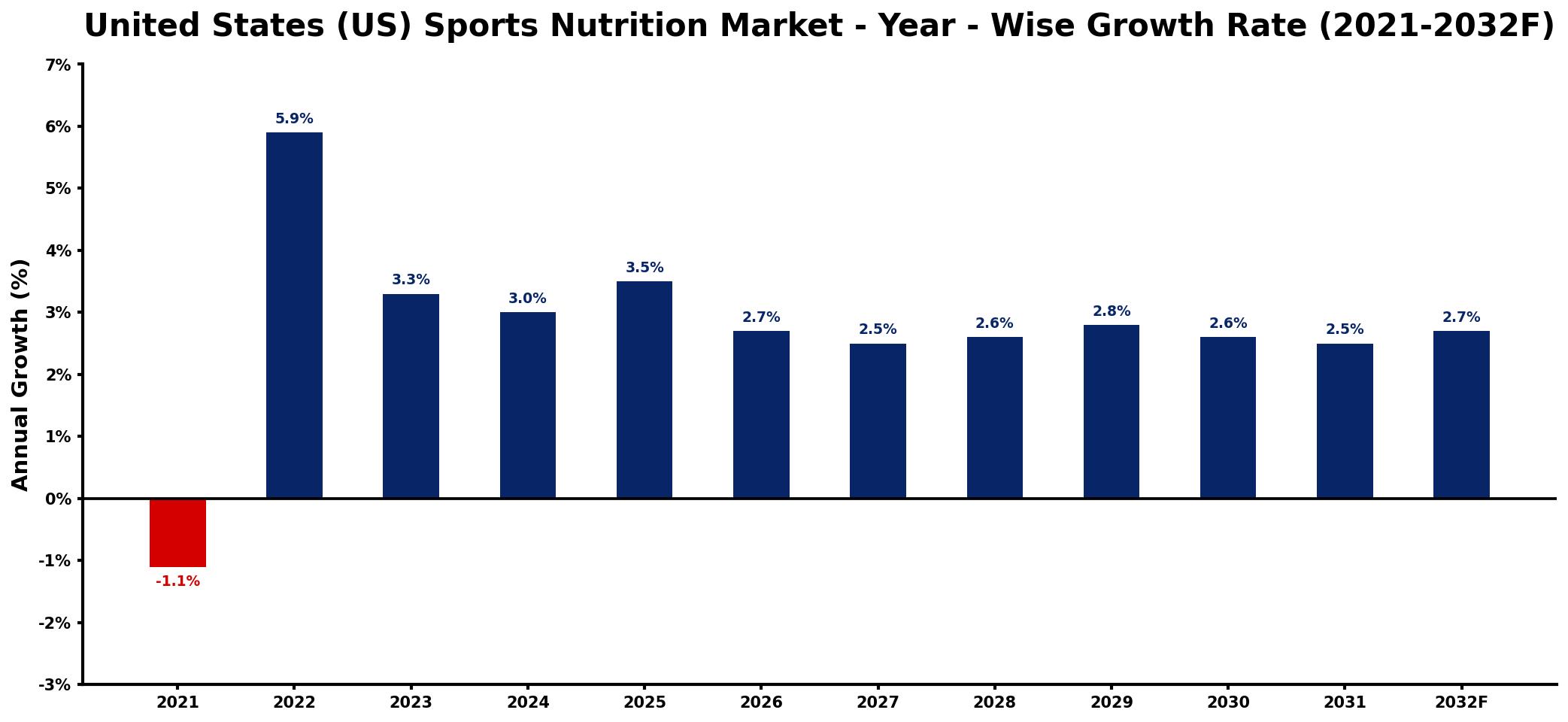
The table below presents the year‑wise growth rates along with the key drivers influencing the market
| Year | Growth Rate | Major Drivers |
| 2021 | -1.1% | shifts in consumer purchasing behavior |
| 2022 | 5.9% | rise in fitness lifestyle adoption |
| 2023 | 3.3% | increased online retail penetration |
| 2024 | 3.0% | growing health awareness campaigns |
| 2025 | 3.5% | expansion of fitness technology offerings |
| 2026 | 2.7% | increased investment in wellness initiatives |
| 2027 | 2.5% | growing popularity of plant-based alternatives |
| 2028 | 2.6% | emergence of personalized supplement solutions |
| 2029 | 2.8% | enhanced marketing strategies targeting millennials |
| 2030 | 2.6% | growth in corporate wellness programs |
| 2031 | 2.5% | increased collaboration with fitness influencers |
| 2032 | 2.7% | expanding industrial usage applications |
Note: Market size estimations and growth projections presented in this report are based on 6Wresearch's proprietary forecasting methodology, utilizing the latest available industry data, government publications, and primary research inputs.
United States (US) Sports Nutrition Market Synopsis
In the United States, the demand for sports nutrition products is significantly influenced by the rising health consciousness among consumers. A growing number of individuals are integrating fitness into their daily routines, resulting in heightened demand for protein powders, energy bars, and performance supplements tailored to diverse fitness goals.
The product landscape encompasses a wide range of offerings, from traditional protein shakes to innovative ready-to-drink beverages and on-the-go snacks. This diversification is crucial, as consumers increasingly seek convenient and effective solutions to support their active lifestyles and recovery needs.
United States (US) Sports Nutrition Market Key Takeaways
- Consumer awareness around health and fitness continues to drive market growth.
- Innovative product development is paramount, with a notable shift toward clean-label and natural ingredients.
- Collaboration with influencers and athletes enhances brand visibility in a competitive landscape.
- E-commerce is transforming the retail environment, providing broader access to sports nutrition products.
- Investment in personalized nutrition solutions is becoming a critical focus area for brands.
Evaluation of Restraints in United States (US) Sports Nutrition Market
Despite the promising growth trajectory, the US Sports Nutrition Market faces several limitations. The influx of new entrants has intensified competition, leading to price wars that strain profit margins. Additionally, strict regulations imposed by the FDA on health claims and ingredient transparency necessitate vigilance from companies. Consumer education remains critical, as misinformation can detract from sales, making it imperative for brands to foster trust and transparency with their clientele.
United States (US) Sports Nutrition Market Trends
The landscape of the US Sports Nutrition Market is being shaped by notable trends. A rising demand for plant-based and vegan products reflects a broader societal shift towards sustainability and ethical consumption. Additionally, personalized nutrition—tailored to individual dietary needs and fitness goals—is becoming increasingly sought after. Theres also a growing interest in functional ingredients, as consumers look for products that not only support performance but also contribute to overall health.
United States (US) Sports Nutrition Market Opportunities
Significant opportunities for investment are emerging in the US Sports Nutrition Market. Brands focusing on innovative product development, particularly in the realm of plant-based options and personalized nutrition, are likely to capture the attention of health-conscious consumers. E-commerce continues to expand its influence, offering brands avenues to reach wider demographics and enhance their market presence. Moreover, forging partnerships with fitness influencers can amplify reach and establish credibility, driving growth in this competitive arena.
Government Initiatives in the United States (US) Sports Nutrition Market
Government oversight plays a critical role in the US Sports Nutrition Market, primarily through the FDA's regulations on dietary supplements. The Dietary Supplement Health and Education Act (DSHEA) outlines the framework for safety and labeling standards, ensuring consumers have access to accurate information. Additionally, the FDA's enforcement of Good Manufacturing Practices (GMP) reinforces product quality and safety. The Federal Trade Commission (FTC) also monitors advertising claims to safeguard consumers from misleading information, promoting fair competition.
Future Insights of the United States (US) Sports Nutrition Market
Looking ahead to the period from 2026 to 2032, the United States Sports Nutrition Market is poised for robust expansion. This will be driven by an ever-increasing emphasis on health and wellness, particularly among younger demographics. The integration of technology—such as wearables and fitness apps—will further transform consumer engagement, allowing individuals to track their fitness and nutrition goals effectively. As the market evolves, brands that prioritize innovation and adaptability will likely thrive in this dynamic environment.
United States (US) Sports Nutrition Market Latest Developments (2025 - 2026)
Recent developments in the US Sports Nutrition Market indicate a notable shift towards innovative product offerings and enhanced consumer engagement strategies. Brands are increasingly adopting e-commerce platforms to enhance accessibility to their products. Moreover, collaborations with fitness influencers and athletes are being utilized to boost visibility and credibility in the marketplace. The focus on clean-label products continues to gain traction, with consumers actively seeking transparency in ingredient sourcing and health benefits.
United States (US) Sports Nutrition Market - Key Attractiveness of the Report
- 10 Years of Market Numbers
- Historical Data Starting from 2022 to 2025
- Base Year: 2025
- Forecast Data until 2032
- Key Performance Indicators Impacting the Market
- Major Upcoming Developments and Projects
Key Highlights of the Report:
- United States (US) Sports Nutrition Market Outlook
- Market Size of United States (US) Sports Nutrition Market, 2025
- Forecast of United States (US) Sports Nutrition Market, 2032
- Historical Data and Forecast of United States (US) Sports Nutrition Revenues & Volume for the Period 2022-2032F
- United States (US) Sports Nutrition Market Trend Evolution
- United States (US) Sports Nutrition Market Drivers and Challenges
- United States (US) Sports Nutrition Price Trends
- United States (US) Sports Nutrition Porter's Five Forces
- United States (US) Sports Nutrition Industry Life Cycle
- Historical Data and Forecast of United States (US) Sports Nutrition Market Revenues & Volume By Type for the Period 2022-2032F
- Historical Data and Forecast of United States (US) Sports Nutrition Market Revenues & Volume By Sports Food for the Period 2022-2032F
- Historical Data and Forecast of United States (US) Sports Nutrition Market Revenues & Volume By Sports Drinks for the Period 2022-2032F
- Historical Data and Forecast of United States (US) Sports Nutrition Market Revenues & Volume By Sports Supplements for the Period 2022-2032F
- Historical Data and Forecast of United States (US) Sports Nutrition Market Revenues & Volume By Distribution Channel for the Period 2022-2032F
- Historical Data and Forecast of United States (US) Sports Nutrition Market Revenues & Volume By Supermarkets/Hypermarkets for the Period 2022-2032F
- Historical Data and Forecast of United States (US) Sports Nutrition Market Revenues & Volume By Specialty Stores for the Period 2022-2032F
- Historical Data and Forecast of United States (US) Sports Nutrition Market Revenues & Volume By Convenience Stores for the Period 2022-2032F
- Historical Data and Forecast of United States (US) Sports Nutrition Market Revenues & Volume By Online Stores for the Period 2022-2032F
- Historical Data and Forecast of United States (US) Sports Nutrition Market Revenues & Volume By Other Distribution Channels for the Period 2022-2032F
- United States (US) Sports Nutrition Import Export Trade Statistics
- Market Opportunity Assessment By Type
- Market Opportunity Assessment By Distribution Channel
- United States (US) Sports Nutrition Top Companies Market Share
- United States (US) Sports Nutrition Competitive Benchmarking By Technical and Operational Parameters
- United States (US) Sports Nutrition Company Profiles
- United States (US) Sports Nutrition Key Strategic Recommendations






































