Burkina Faso Cement Market Growth Rate Analysis (2025 - 2031)
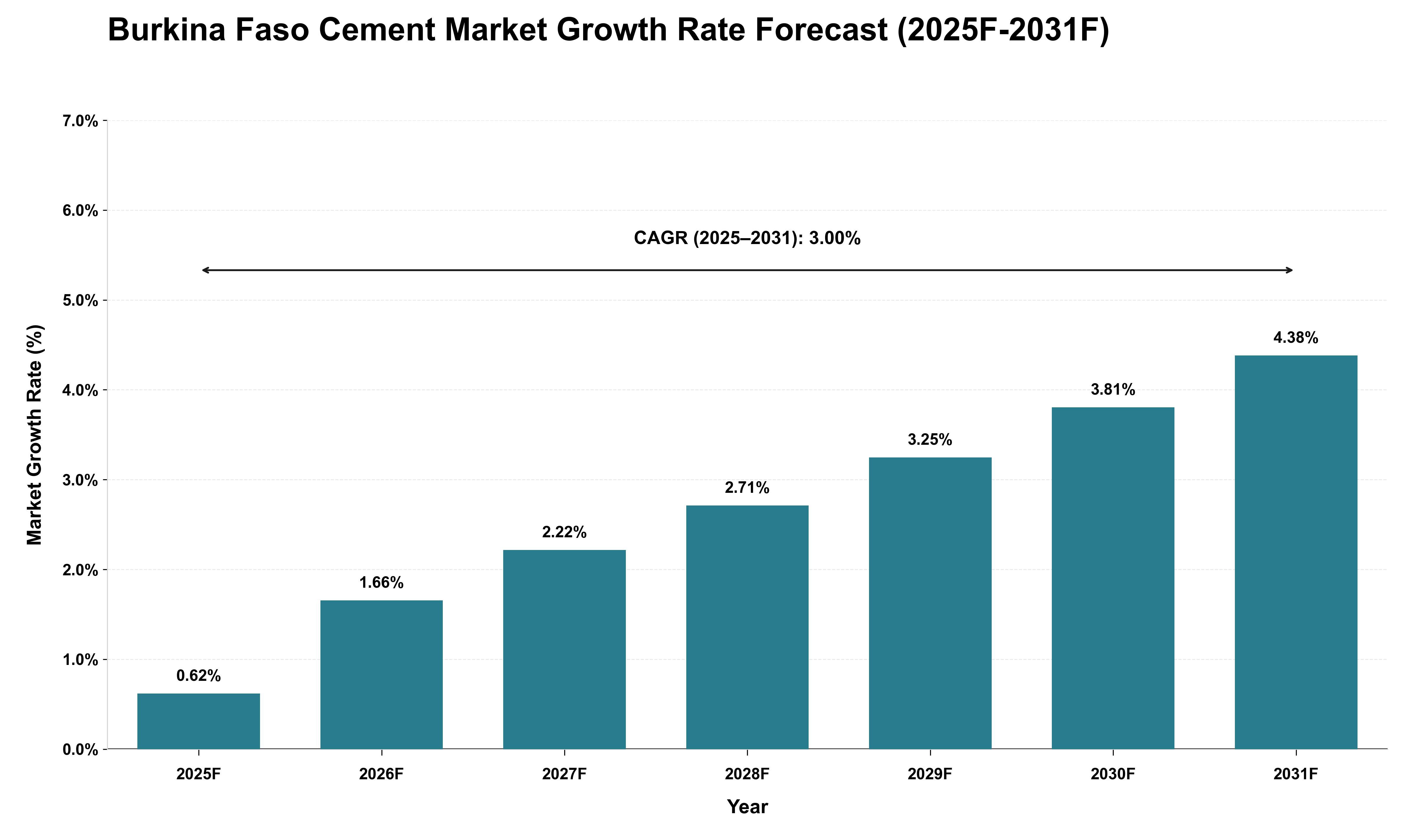
The forecast for the Burkina Faso cement market will reflect a gradual acceleration in growth, driven by macroeconomic factors such as urbanization, infrastructure development, and population growth. As the economy expands, the demand for cement is expected to rise, particularly in construction and public works projects. The projected CAGR of 3.00% from 2025 to 2031 indicates a strengthening trajectory, with annual growth rates increasing from 0.62% in 2025 to 4.38% by 2031. This upward trend suggests that as investment in infrastructure becomes more pronounced and import dependencies are addressed through local production enhancements, the market will experience enhanced resilience against external shocks. Furthermore, cyclical trends in construction activity will likely align with broader economic cycles, reinforcing the positive outlook for cement consumption during this period.
Key Highlights of the Report:
- Burkina Faso Cement Market Outlook
- Market Size of Burkina Faso Cement Market, 2024
- Forecast of Burkina Faso Cement Market, 2031
- Historical Data and Forecast of Burkina Faso Cement Revenues & Volume for the Period 2021-2031
- Burkina Faso Cement Market Trend Evolution
- Burkina Faso Cement Market Drivers and Challenges
- Burkina Faso Cement Price Trends
- Burkina Faso Cement Porter`s Five Forces
- Burkina Faso Cement Industry Life Cycle
- Historical Data and Forecast of Burkina Faso Cement Market Revenues & Volume By Product for the Period 2021-2031
- Historical Data and Forecast of Burkina Faso Cement Market Revenues & Volume By Portland for the Period 2021-2031
- Historical Data and Forecast of Burkina Faso Cement Market Revenues & Volume By Others for the Period 2021-2031
- Historical Data and Forecast of Burkina Faso Cement Market Revenues & Volume By Application for the Period 2021-2031
- Historical Data and Forecast of Burkina Faso Cement Market Revenues & Volume By Residential for the Period 2021-2031
- Historical Data and Forecast of Burkina Faso Cement Market Revenues & Volume By Non-residential/Infrastructure for the Period 2021-2031
- Burkina Faso Cement Import Export Trade Statistics
- Market Opportunity Assessment By Product
- Market Opportunity Assessment By Application
- Burkina Faso Cement Top Companies Market Share
- Burkina Faso Cement Competitive Benchmarking By Technical and Operational Parameters
- Burkina Faso Cement Company Profiles
- Burkina Faso Cement Key Strategic Recommendations






































