Canada Cogeneration Equipment Market Highlights
| Report Name | Canada Cogeneration Equipment Market |
| CAGR | 7.2% |
| Growing Sector | Industrial |
| Forecast Period | 2025-2031 |
Topics Covered in Canada Cogeneration Equipment Market Report
The Canada Cogeneration Equipment Market report thoroughly covers the market by capacity, by fuel, by technology, and by application. The market report provides an unbiased and detailed analysis of the ongoing market trends, opportunities/high growth areas, and market drivers which would help the stakeholders to devise and align their market strategies according to the current and future market dynamics.
Canada Cogeneration Equipment Market Synopsis
The Canada cogeneration equipment market is experiencing steady growth driven by increasing demands for efficient and sustainable energy solutions. Cogeneration, also known as combined heat and power (CHP), is the simultaneous production of electricity and useful heat from the same energy source, typically natural gas, biomass, or waste. This approach not only improves energy efficiency but also reduces greenhouse gas emissions, aligning with Canada's environmental goals. Key sectors such as manufacturing, commercial buildings, and district heating are adopting cogeneration technologies to reduce energy costs and enhance reliability. Moreover, supportive government policies and incentives are further fueling the market expansion, as businesses and communities seek to optimize their energy resources and minimize their environmental footprint.
According to 6Wresearch, Canada Cogeneration Equipment Market size is projected to witness a CAGR of 7.2% during the forecast period of 2025-2031. The cogeneration equipment market in Canada is primarily driven by the country's focus on sustainable energy solutions and emissions reduction. With increasing government policies aimed at reducing carbon footprints and promoting energy efficiency, cogeneration—also known as combined heat and power (CHP)—stands out as a critical technology to achieve these goals. The rising costs of electricity and heating fuel also encourage industries to seek cogeneration solutions, which allow simultaneous production of electricity and useful heat, thereby optimizing energy use and lowering operational expenses.
the high initial capital investment required for the installation and integration of cogeneration systems. This cost can be daunting for small to medium enterprises (SMEs), which often lack the financial resources to invest in such infrastructure. Additionally, the complexity of integrating cogeneration systems with existing power and heat networks can pose logistical and technical difficulties. Regulatory hurdles and the need for skilled personnel to operate and maintain these systems further compound the challenges faced by market participants.
Canada Cogeneration Equipment Market: Leading Players
The Canadian cogeneration equipment market is characterized by a diverse array of leading players who are driving innovation and development in this sector. Prominent companies such as General Electric, Siemens AG, and Mitsubishi Hitachi Power Systems are at the forefront, offering advanced and efficient cogeneration solutions. These industry leaders are known for their cutting-edge technology and commitment to sustainability, which help businesses reduce energy costs and carbon footprints. Additionally, players like MAN Diesel & Turbo SE and Cummins Inc. also have a significant presence in Canada, providing tailored solutions to meet the specific energy needs of different industries.
Canada Cogeneration Equipment Market: Government Initiatives
The Canadian government has been instrumental in fostering the growth of the cogeneration equipment market through a range of strategic initiatives. These efforts are primarily aimed at enhancing energy efficiency and reducing greenhouse gas emissions. Various financial incentives and subsidies have been introduced to encourage the adoption of cogeneration systems among industrial and commercial sectors. Additionally, regulatory frameworks, such as carbon pricing and tax credits, have been implemented to promote cleaner energy solutions, further driving the demand for cogeneration equipment. By supporting research and development in advanced technologies, the government also aims to position Canada as a leader in sustainable energy practices, thereby boosting the overall cogeneration market.
Future Insights of Canada Cogeneration Equipment Market
The future of the cogeneration equipment market in Canada appears promising, driven by increasing demand for sustainable energy solutions and stringent environmental regulations. As industries and communities strive to reduce their carbon footprint, cogeneration systems, known for their efficiency in utilizing waste heat from power generation, are becoming increasingly attractive. Technological advancements are also anticipated to enhance equipment efficiency and reduce costs, thereby widening market adoption. Moreover, governmental incentives and policies encouraging green energy initiatives are expected to further bolster the market's growth. As a result, stakeholders in the Canadian energy sector are poised to capitalize on these emerging opportunities by investing in cogeneration technologies and infrastructure.
Canada Cogeneration Equipment Market trends
- Increasing Demand for Energy Efficiency – There is a growing trend towards the adoption of cogeneration equipment in Canada due to its ability to enhance energy efficiency and reduce greenhouse gas emissions.
- Rising Industrial and Commercial Applications – The use of cogeneration equipment is expanding across various industries, including manufacturing and commercial sectors, due to their cost-effectiveness and reliability.
- Growth in Renewable Energy Integration - There is an increasing trend of integrating renewable energy sources like biomass and biogas with cogeneration systems, aligning with Canada's renewable energy goals.
Investment opportunities in Canada Cogeneration Equipment Market
- Industrial Sector Expansion – With Canada's industrial sector expanding, there is a growing need for efficient energy solutions. Investing in cogeneration equipment is a strategic move to cater to the energy demands of industries such as manufacturing, chemicals, and petrochemicals.
- Partnerships with Utility Companies – Collaborating with existing utility companies to offer cogeneration solutions provides investment opportunities by enhancing grid reliability and reducing energy costs for consumers.
- Urban Infrastructure Development - As urban areas in Canada continue to grow, there is an increasing need for reliable and efficient power systems. Cogeneration equipment investments can support this infrastructure development, promising a lucrative market.
Above 60MW to dominate the market - By capacity
According to Ravi Bhandari, Research Head, 6Wresearch, the cogeneration equipment market in Canada for installations above 60MW is witnessing steady growth, driven by the increasing demand for energy efficiency and sustainable power solutions. This segment caters primarily to large industrial facilities and utility-scale projects, where the integration of combined heat and power (CHP) systems can significantly cut operational costs and environmental impact. The market is also supported by favorable government policies and incentives that promote the adoption of cleaner energy technologies. Key players in this segment are continually innovating, focusing on improving the efficiency and reliability of their cogeneration systems to meet the evolving needs of their clients while also adhering to stringent environmental standards.
Biomass to dominate the market – By fuel
The biomass cogeneration equipment market in Canada is witnessing significant growth, driven by the country's commitment to sustainable energy solutions and reducing carbon emissions. Biomass cogeneration, an efficient method of generating electricity and heat simultaneously from organic materials, is particularly appealing in Canada due to its abundant forestry resources and agricultural residues. This renewable energy source not only helps in reducing reliance on fossil fuels but also supports rural economies through job creation in biomass supply chains. Canadian government initiatives and incentives further bolster the adoption of biomass cogeneration technologies, making it a key player in the nation's renewable energy landscape.
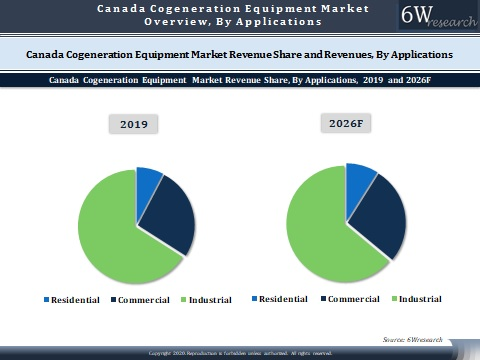
Industrial to dominate the market – By application
The industrial cogeneration equipment market in Canada is experiencing significant growth as industries strive to enhance energy efficiency and reduce carbon emissions. Cogeneration, or combined heat and power (CHP), involves the simultaneous production of electricity and heat from a single fuel source, offering an efficient use of energy. In Canada, industries such as manufacturing, chemical processing, and food production are increasingly adopting cogeneration systems to lower operational costs and improve energy reliability. The government's focus on sustainable energy practices and financial incentives further propels the market.
Gas turbine to dominate the market – By technology
The gas turbine sector is a significant component of the cogeneration equipment market in Canada. Gas turbines are highly efficient for converting natural gas and other fuels into electricity and heat, making them a popular choice for cogeneration systems that aim to increase energy efficiency and reduce emissions. In Canada, the demand for gas turbines in cogeneration projects is fueled by the country's emphasis on sustainable energy solutions and its substantial natural gas resources. As industries and facilities seek cost-effective ways to manage energy consumption and minimize environmental impact, gas turbines provide an optimal solution due to their reliability, flexibility, and ability to support both base-load and peak-load energy demands.
Key Attractiveness of the Report
- 10 Years Market Numbers.
- Historical Data Starting from 2021 to 2024.
- Base Year: 2024
- Forecast Data until 2031.
- Key Performance Indicators Impacting the Market.
- Major Upcoming Developments and Projects.
Key Highlights of the Report:
- Canada Cogeneration Equipment Market Outlook
- Market Size of Canada Cogeneration Equipment Market, 2024
- Forecast of Canada Cogeneration Equipment Market, 2031
- Historical Data and Forecast of Canada Cogeneration Equipment Revenues & Volume for the Period 2021 - 2031
- Canada Cogeneration Equipment Market Trend Evolution
- Canada Cogeneration Equipment Market Drivers and Challenges
- Canada Cogeneration Equipment Price Trends
- Canada Cogeneration Equipment Porter's Five Forces
- Canada Cogeneration Equipment Industry Life Cycle
- Historical Data and Forecast of Canada Cogeneration Equipment Market Revenues & Volume By capacity for the Period 2021 - 2031
- Historical Data and Forecast of Canada Cogeneration Equipment Market Revenues & Volume by Up to 30 MW for the Period 2021 - 2031
- Historical Data and Forecast of Canada Cogeneration Equipment Market Revenues & Volume by 31 MW – 60 MW, for the Period 2021 - 2031
- Historical Data and Forecast of Canada Cogeneration Equipment Market Revenues & Volume by Above 60 MW for the Period 2021 - 2031
- Historical Data and Forecast of Canada Cogeneration Equipment Market Revenues & Volume by fuel for the Period 2021 - 2031
- Historical Data and Forecast of Canada Cogeneration Equipment Market Revenues & Volume By Natural Gas for the Period 2021 - 2031
- Historical Data and Forecast of Canada Cogeneration Equipment Market Revenues & Volume by Biomass, for the Period 2021 - 2031
- Historical Data and Forecast of Canada Cogeneration Equipment Market Revenues & Volume by Coal for the Period 2021 - 2031
- Historical Data and Forecast of Canada Cogeneration Equipment Market Revenues & Volume by Others for the Period 2021 – 2031
- Historical Data and Forecast of Canada Cogeneration Equipment Market Revenues & Volume by application for the Period 2021 – 2031
- Historical Data and Forecast of Canada Cogeneration Equipment Market Revenues & Volume by Residential for the Period 2021 – 2031
- Historical Data and Forecast of Canada Cogeneration Equipment Market Revenues & Volume by Commercial for the Period 2021 – 2031
- Historical Data and Forecast of Canada Cogeneration Equipment Market Revenues & Volume by Industrial for the Period 2021 – 2031
- Historical Data and Forecast of Canada Cogeneration Equipment Market Revenues & Volume by Technology for the Period 2021 – 2031
- Historical Data and Forecast of Canada Cogeneration Equipment Market Revenues & Volume by Reciprocating Engine for the Period 2021 – 2031
- Historical Data and Forecast of Canada Cogeneration Equipment Market Revenues & Volume by Steam Turbine for the Period 2021 – 2031
- Historical Data and Forecast of Canada Cogeneration Equipment Market Revenues & Volume by Combined Cycle for the Period 2021 – 2031
- Historical Data and Forecast of Canada Cogeneration Equipment Market Revenues & Volume by Gas Turbine for the Period 2021 – 2031
- Historical Data and Forecast of Canada Cogeneration Equipment Market Revenues & Volume by Others for the Period 2021 – 2031
- Canada Cogeneration Equipment Import Export Trade Statistics
- Market Opportunity Assessment By application
- Market Opportunity Assessment by Product Type
- Canada Cogeneration Equipment Top Companies Market Share
- Canada Cogeneration Equipment Competitive Benchmarking by Technical and Operational Parameters
- Canada Cogeneration Equipment Company Profiles
- Canada Cogeneration Equipment Key Strategic Recommendations
Market Covered
The report offers a comprehensive study of the subsequent market segments:
By Capacity
- Up to 30 MW
- 31 MW – 60 MW
- Above 60 MW
By Fuel
- Natural Gas
- Biomass
- Coal
- Others
By Applications
- Residential
- Commercial
- Industrial
By Technology
- Reciprocating Engine
- Steam Turbine
- Combined Cycle Gas Turbine
- Others