Canada Medical Gases Market: Import Trend Analysis
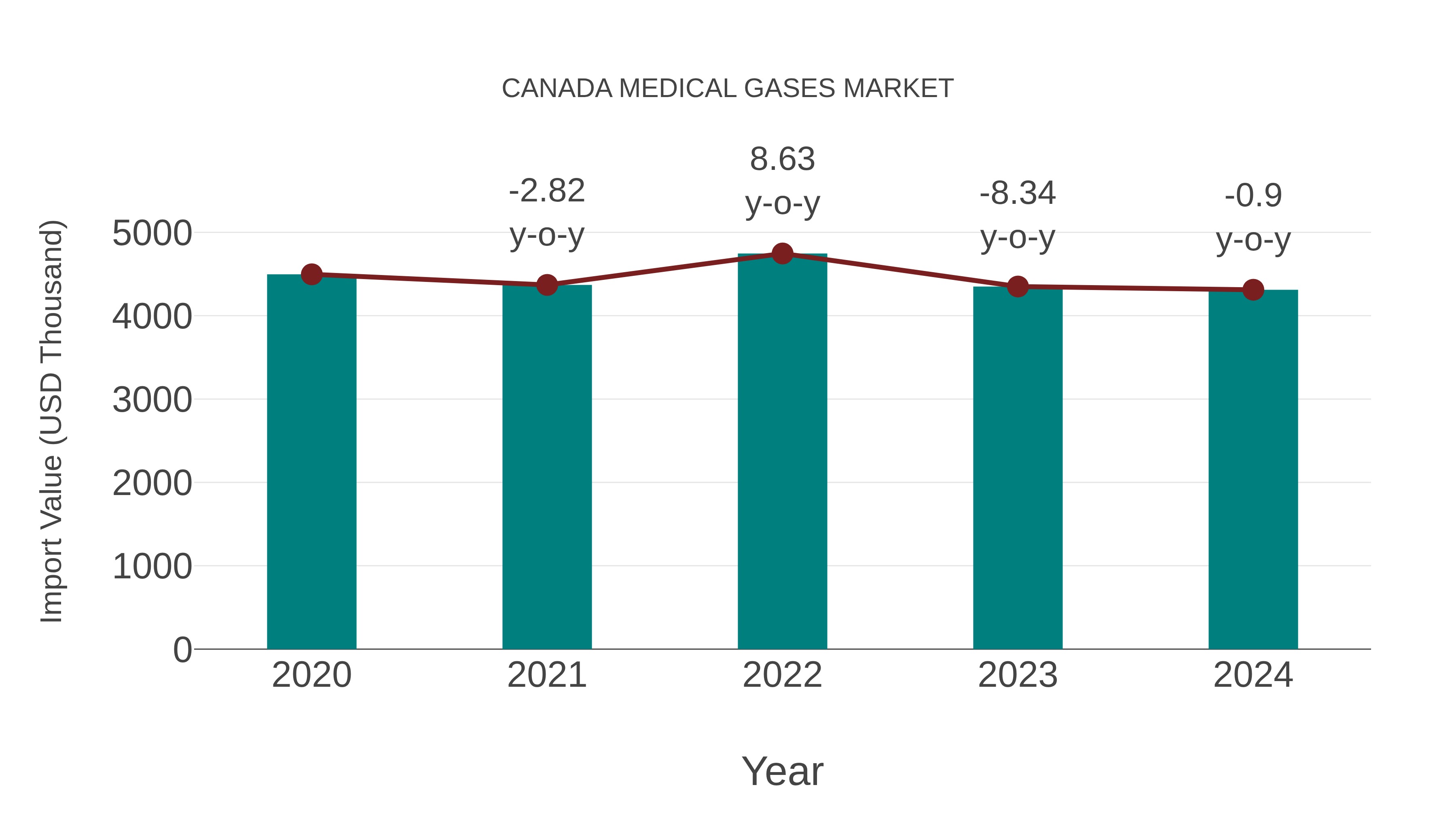
In the Canada medical gases market, import trends showed a decline from 2023 to 2024, with a growth rate of -0.9%. The compound annual growth rate (CAGR) for imports between 2020 and 2024 stood at -1.04%. This negative momentum could be attributed to shifting demand patterns or changes in trade policies impacting market stability.
Canada Medical Gases Market Overview
The Canada medical gases market is a rapidly evolving sector driven by factors such as the increasing prevalence of chronic diseases, growing geriatric population, and advancements in healthcare infrastructure. The market comprises various gases such as oxygen, nitrogen, carbon dioxide, and nitrous oxide that are essential for respiratory therapies, anesthesia, and other medical applications. Key players in the market offer a wide range of medical gas products and services to hospitals, clinics, and home healthcare settings. Regulatory compliance, technological innovations, and a focus on patient safety are crucial factors shaping the market landscape. The Canada medical gases market is expected to witness steady growth in the coming years, with a continued emphasis on improving healthcare delivery and patient outcomes.
Canada Medical Gases Market Trends
The Canada medical gases market is witnessing several notable trends. One significant trend is the increasing adoption of home healthcare services, leading to a growing demand for medical gases such as oxygen and nitrous oxide for use in home settings. Another key trend is the rising prevalence of chronic respiratory diseases, driving the need for medical gases for therapeutic purposes. Additionally, technological advancements in gas delivery systems and the growing focus on ensuring patient safety are influencing market growth. Moreover, the shift towards eco-friendly and sustainable gases is gaining traction among healthcare providers, leading to the development of greener options in the medical gases sector. Overall, these trends are shaping the Canada medical gases market towards innovation, accessibility, and efficiency in delivering essential healthcare services.
Canada Medical Gases Market Challenges
In the Canada medical gases market, one of the key challenges faced is regulatory requirements and compliance. The industry is highly regulated to ensure the safety and quality of medical gases used in healthcare settings. Companies operating in this market must adhere to strict guidelines set by Health Canada and other regulatory bodies, which can often be complex and time-consuming to navigate. Additionally, there is a constant need to stay updated with changing regulations and standards, which can pose a challenge for businesses trying to maintain compliance. Ensuring proper storage, handling, and transportation of medical gases also adds to the complexity, as any lapses in these areas can have serious consequences for patient safety. Overall, regulatory challenges remain a significant hurdle for companies operating in the Canada medical gases market.
Canada Medical Gases Market Investment Opportunities
The Canada medical gases market presents a promising investment opportunity due to the increasing demand for medical gases in healthcare facilities, especially in light of the ongoing COVID-19 pandemic. With a growing aging population and rising incidence of chronic diseases, the need for medical gases such as oxygen, nitrogen, and nitrous oxide is expected to rise. Additionally, advancements in medical technology and the expansion of healthcare infrastructure in Canada further support the market growth. Investors can consider opportunities in medical gas manufacturing companies, distribution networks, and specialized equipment providers. Furthermore, collaborations with healthcare institutions and regulatory compliance expertise can also be key areas for investment in the Canada medical gases market.
Canada Medical Gases Market Government Policy
The Canada medical gases market is regulated by Health Canada, which sets out guidelines and regulations to ensure the safe production, distribution, and use of medical gases across the country. Medical gases must meet specific quality and purity standards outlined in the Canadian Pharmacopoeia, and manufacturers are required to comply with Good Manufacturing Practices (GMP) to ensure product safety and efficacy. Additionally, medical gas distributors and healthcare facilities must adhere to strict storage, handling, and transportation guidelines to prevent contamination and ensure patient safety. Health Canada also monitors the market to prevent price gouging and maintain affordability of medical gases for healthcare providers. Overall, government policies in Canada aim to maintain high standards of quality, safety, and affordability in the medical gases market to safeguard patient health and well-being.
Canada Medical Gases Market Future Outlook
The Canada medical gases market is projected to experience steady growth in the coming years due to factors such as an aging population, increasing prevalence of chronic diseases, and advancements in healthcare infrastructure. The demand for medical gases, including oxygen, nitrogen, helium, and carbon dioxide, is expected to rise as these gases are essential for various medical procedures and treatments. Additionally, the growing focus on patient safety and the increasing adoption of home healthcare services are likely to further drive the market growth. Technological innovations in gas delivery systems and the expanding use of medical gases in diagnostic and therapeutic applications are anticipated to create new opportunities for market players. Overall, the Canada medical gases market is poised for expansion and is expected to witness a positive outlook in the foreseeable future.
Key Highlights of the Report:
- Canada Medical Gases Market Outlook
- Market Size of Canada Medical Gases Market,2025
- Forecast of Canada Medical Gases Market, 2032
- Historical Data and Forecast of Canada Medical Gases Revenues & Volume for the Period 2022-2032F
- Canada Medical Gases Market Trend Evolution
- Canada Medical Gases Market Drivers and Challenges
- Canada Medical Gases Price Trends
- Canada Medical Gases Porter's Five Forces
- Canada Medical Gases Industry Life Cycle
- Historical Data and Forecast of Canada Medical Gases Market Revenues & Volume By Technology Type for the Period 2022-2032F
- Historical Data and Forecast of Canada Medical Gases Market Revenues & Volume By Fractional Distillation for the Period 2022-2032F
- Historical Data and Forecast of Canada Medical Gases Market Revenues & Volume By Molecular Sieve for the Period 2022-2032F
- Historical Data and Forecast of Canada Medical Gases Market Revenues & Volume By Semipermeable Membrane for the Period 2022-2032F
- Historical Data and Forecast of Canada Medical Gases Market Revenues & Volume By Physical Separators for the Period 2022-2032F
- Historical Data and Forecast of Canada Medical Gases Market Revenues & Volume By Application Area for the Period 2022-2032F
- Historical Data and Forecast of Canada Medical Gases Market Revenues & Volume By Therapeutic Applications for the Period 2022-2032F
- Historical Data and Forecast of Canada Medical Gases Market Revenues & Volume By Pharmaceutical Manufacturing for the Period 2022-2032F
- Historical Data and Forecast of Canada Medical Gases Market Revenues & Volume By Diagnostic Applications for the Period 2022-2032F
- Historical Data and Forecast of Canada Medical Gases Market Revenues & Volume By Drug Discovery for the Period 2022-2032F
- Historical Data and Forecast of Canada Medical Gases Market Revenues & Volume By Quality Control for the Period 2022-2032F
- Historical Data and Forecast of Canada Medical Gases Market Revenues & Volume By End User for the Period 2022-2032F
- Historical Data and Forecast of Canada Medical Gases Market Revenues & Volume By Hospitals for the Period 2022-2032F
- Historical Data and Forecast of Canada Medical Gases Market Revenues & Volume By Home Healthcare for the Period 2022-2032F
- Historical Data and Forecast of Canada Medical Gases Market Revenues & Volume By Pharmaceutical Companies for the Period 2022-2032F
- Historical Data and Forecast of Canada Medical Gases Market Revenues & Volume By Academic Institutions for the Period 2022-2032F
- Historical Data and Forecast of Canada Medical Gases Market Revenues & Volume By Emergency Service Providers for the Period 2022-2032F
- Historical Data and Forecast of Canada Medical Gases Market Revenues & Volume By Product Type for the Period 2022-2032F
- Historical Data and Forecast of Canada Medical Gases Market Revenues & Volume By Oxygen Gases for the Period 2022-2032F
- Historical Data and Forecast of Canada Medical Gases Market Revenues & Volume By Carbon Dioxide Gases for the Period 2022-2032F
- Historical Data and Forecast of Canada Medical Gases Market Revenues & Volume By Nitrogen Gases for the Period 2022-2032F
- Historical Data and Forecast of Canada Medical Gases Market Revenues & Volume By Helium Gases for the Period 2022-2032F
- Historical Data and Forecast of Canada Medical Gases Market Revenues & Volume By Gas Mixtures for the Period 2022-2032F
- Canada Medical Gases Import Export Trade Statistics
- Market Opportunity Assessment By Technology Type
- Market Opportunity Assessment By Application Area
- Market Opportunity Assessment By End User
- Market Opportunity Assessment By Product Type
- Canada Medical Gases Top Companies Market Share
- Canada Medical Gases Competitive Benchmarking By Technical and Operational Parameters
- Canada Medical Gases Company Profiles
- Canada Medical Gases Key Strategic Recommendations






































